

By Tech & Culture Desk
Published: November 2025
Main Facts: The Mia Goth Incident and the Illusion of Social Media
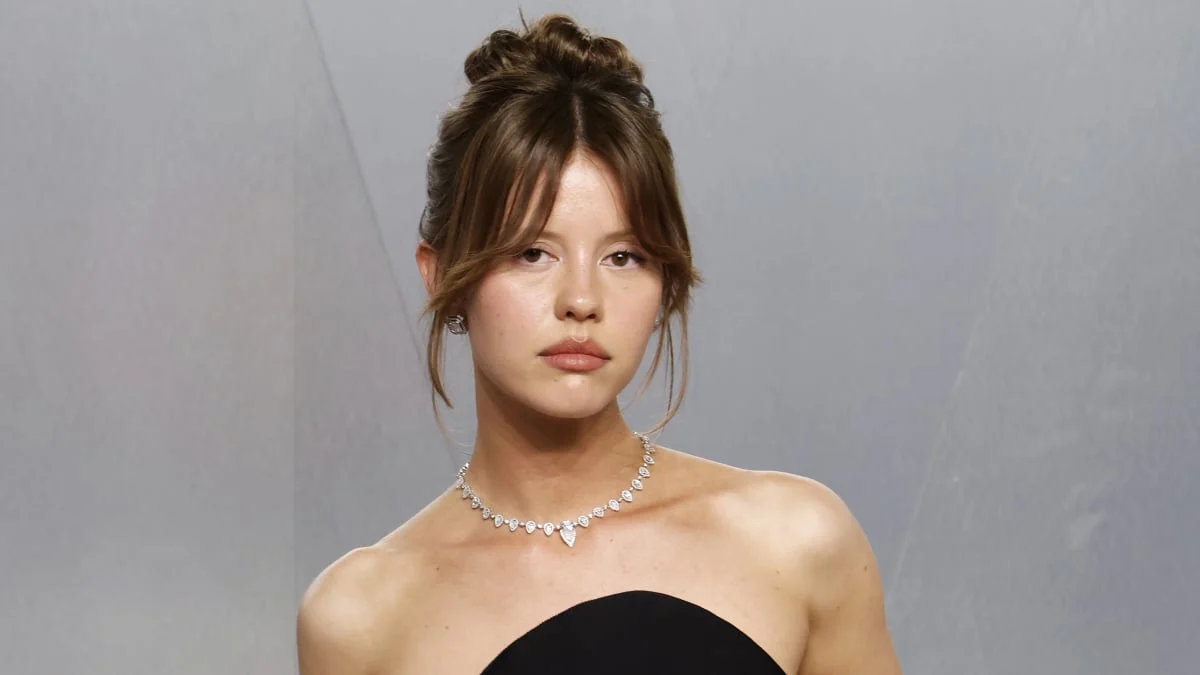
In an era where synthetic media can convincingly mimic reality, celebrities are increasingly finding themselves forced to defend their own existence against the phantom footprints of artificial intelligence. The latest casualty of this escalating digital phenomenon is actress Mia Goth, star of horror touchstones Pearl and MaXXXine.
Following news of Goth’s actual divorce filing from actor Shia LaBeouf, the internet was suddenly flooded with a hyper-specific, completely fabricated narrative. An Instagram post materialized on a verified fan account, @miagoth_, depicting the actress wearing a cheeky t-shirt bearing the phrase: "MY EX IS MY BIGGEST FAN." Paired deliberately with Beyoncé’s anthemic breakup track, "Single Ladies (Put a Ring on It)," the post was custom-built to look like a calculated, public-facing response to her high-profile split.
There was only one problem: Mia Goth does not have social media, and the image was entirely AI-generated.
Despite the glaring red flags, the sophisticated hoax managed to bypass critical evaluation by mainstream media outlets initially. High-profile publications, including People magazine, briefly reported on the image as if it were a genuine selfie posted directly by Goth to chronicle her post-divorce fashion choices. Though the article and the original post have since been scrubbed, the incident laid bare a terrifying vulnerability in how public information is consumed, verified, and weaponized online.
Chronology: The Anatomy of a Modern Deepfake Hoax
To understand how an AI-generated image can rapidly mutate into mainstream news, it is necessary to examine the sequence of events that brought the Mia Goth controversy to light:
- Weeks Prior to the Incident: Mia Goth files for divorce from Shia LaBeouf, sparking heightened public interest and media scrutiny surrounding the actress’s personal life.
- The Post Goes Live: A verified Instagram fan account boasting over one million followers,
@miagoth_, uploads the fabricated image of Goth in the "MY EX IS MY BIGGEST FAN" shirt, accompanied by Beyoncé’s audio track. - Mainstream Pick-Up: Major entertainment publications and celebrity gossip feeds mistake the AI-generated artifact for an authentic, organic social media post, writing up articles detailing Goth’s "statement" t-shirt.
- Representation Steps In: Goth’s legal and public relations team intervenes, confirming that the actress does not use social media and that the image is a counterfeit deepfake.
- The Pushback: Representatives reveal they had already filed multiple unanswered complaints with Instagram regarding the account’s ongoing dissemination of manipulated images under a verified "blue check" badge.
- Platform Action: Following media inquiries and escalated pressure, Meta ultimately removes the
@miagoth_account for impersonating a public figure.
Supporting Data: A Broader Epidemic of Synthetic Exploitation
The Mia Goth incident is far from an isolated anomaly. It is part of a systemic wave of AI-driven impersonation, content theft, and digital forgery that is fundamentally altering the internet landscape.
A landmark March investigation by Indicator uncovered a disturbing ecosystem of AI-generated influencer accounts. Researchers identified six distinct accounts totaling roughly a million Instagram followers that systematically posted fabricated celebrity encounters. Among them, an account under the handle @ayannasoblack circulated hyper-realistic, fake gym photographs featuring the user alongside major cultural icons like Dwayne "The Rock" Johnson and John Cena. Tellingly, nearly all of these fraudulent accounts were monetized, utilizing their fabricated proximity to real celebrities to drive traffic to Fanvue profiles selling synthetic adult content.
Furthermore, the mechanics of generative AI are increasingly being used to cannibalize artists’ actual livelihoods:
- Comedians and Creators: Independent performers have reported finding their stand-up routines, jokes, and stage personas cloned by AI avatars. Comedian Sarah Purdum publicly noted that women’s creative material is routinely siphoned and repurposed to feed audiences for "sexy AI models."
- High-Profile Deepfakes: In January 2024, nonconsensual, sexually explicit AI-generated images of Taylor Swift spread like wildfire across social media platforms, forcing the performers’ union SAG-AFTRA to condemn the phenomenon as "upsetting, harmful, and deeply concerning." Months later, Swift was forced to reckon with another AI fabrication—this time, manipulated images falsely depicting her endorsing Donald Trump—which she explicitly cited when announcing her actual political endorsement of Kamala Harris.
- Targeted Political and Social Misdirection: In 2025, actress Scarlett Johansson faced an unauthorized AI-generated video that depicted her and other Jewish celebrities participating in a video protesting Ye’s antisemitism. Despite agreeing with the anti-hate sentiment of the message, Johansson vehemently opposed being conscripted into a digital narrative without her consent, warning that the ends do not justify the means when reality itself is compromised.
- The Deceased: The exploitation extends beyond the living. In October 2025, filmmaker Zelda Williams publicly begged internet users to stop flooding her digital spaces with AI-generated recreations of her late father, Robin Williams, stating plainly that the synthetic resurrections were "NOT what he’d want."
Official Responses: The Battle Between Talent and Tech Giants
The friction between high-profile talent and social media conglomerates centers on a fundamental disagreement regarding platform responsibility.
When pressed about the verified status of the @miagoth_ fan account, Goth’s representative, Christine Tripicchio, did not mince words. She expressed profound disbelief that an entity dedicated to publishing counterfeit media could clear Meta’s strict verification hurdles.
"The fact that this fan account meets Instagram’s criteria to qualify for a ‘blue check’ is disconcerting on a fundamental level," Tripicchio told The Verge. "Beyond that, it is incomprehensible that Instagram evidently prioritizes the dissemination of forged and manipulated images over the protection and integrity of a public figure’s likeness."
In response to the mounting pressure and media requests, a Meta spokesperson issued a concise statement: "This account has been removed for impersonating a public figure."
However, the removal of a single account does little to address Meta’s broader structural policies regarding artificial intelligence. According to Meta’s published guidelines, the mere presence of AI-generated content does not automatically trigger a content removal. Unless a piece of manipulated media violates explicit community standards—such as rules against direct bullying, harassment, or non-consensual sexual imagery—Meta generally permits the content to remain online, relying instead on "AI info" labels to provide passive context.
Even these labeling systems have proven erratic. Meta initially deployed labels reading "Made with AI," but later walked them back to "AI info" following widespread complaints that minor photo retouching was unfairly penalizing everyday photographers. Furthermore, Meta’s detection systems rely heavily on invisible digital watermarks and technical metadata—markers that bad actors are increasingly adept at stripping away or evading entirely. If an image slips past automated detection, it bears no label at all, leaving consumers to assume authenticity by default.
Implications: Losing Our Hold on Reality
The implications of the Mia Goth deepfake extend far beyond the mild annoyance of a fabricated outfit or a fictitious breakup response. They strike at the very heart of societal trust, media literacy, and bodily autonomy in the digital age.
When Scarlett Johansson remarked, "We must call out the misuse of AI, no matter its messaging, or we risk losing a hold on reality," she articulated a growing existential dread shared by artists, journalists, and public figures alike. If a verified fan account with a million followers can fabricate an entire public life for an actress who refuses to use social media—and successfully fool established journalistic institutions in the process—then the baseline social contract of the internet is broken.
We are entering a post-truth digital ecosystem where seeing is no longer believing. For celebrities, this means enduring a perpetual game of digital whack-a-mole, constantly playing defense against an infinite supply of synthetic hallucinations. For the public, it means navigating a labyrinth of deepfakes designed to manipulate emotions, sway elections, monetize pornography, and distort historical and cultural truths.
As generative AI tools become cheaper, faster, and indistinguishable from reality, the burden of proof is shifting dangerously. Platforms like Instagram and Meta face an urgent moral and operational imperative: either reform the verification and moderation systems that allow bad actors to weaponize fake media under the guise of authenticity, or watch as the digital public square devolves into a theater of mirrors where nothing is real and accountability is impossible.
 Nana Muazin
 Reynand Wu
 Asro
Asro
