

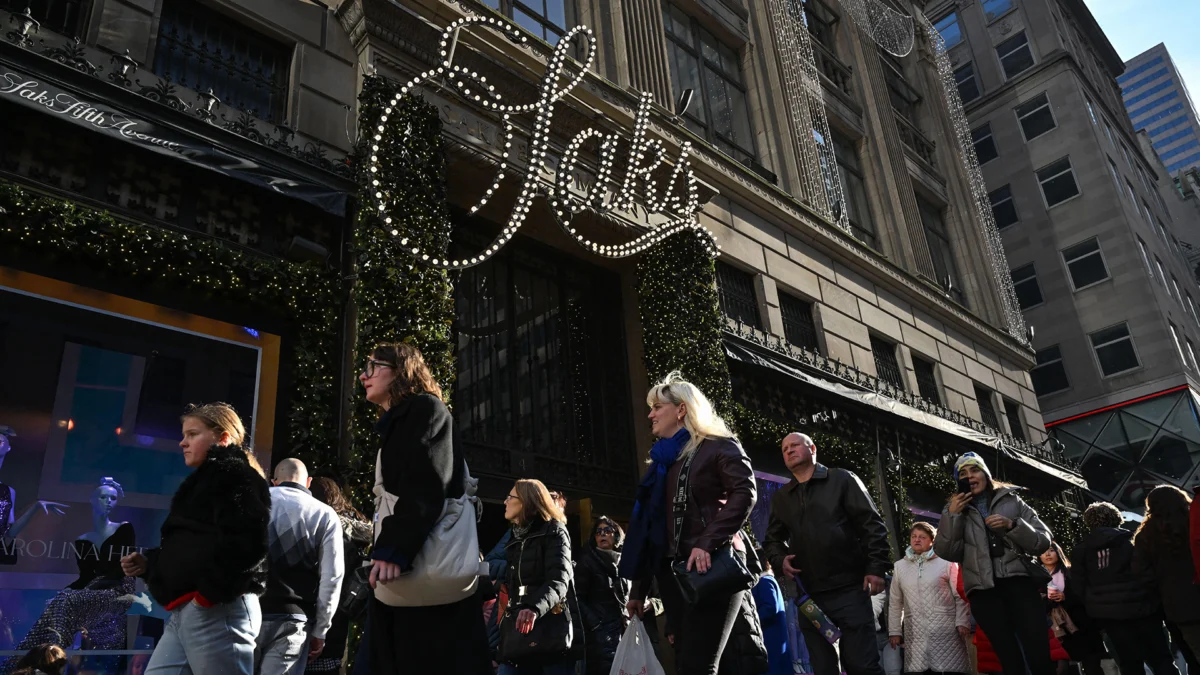
Long before shopping was governed by algorithms, tracking cookies, and targeted social media ads, it had Saks Fifth Avenue.
For generations of luxury consumers, Saks served as the ultimate arbiter of elegance, glamour, and impeccably curated taste. As Donatella Versace once famously declared inside its Midtown Manhattan flagship, "Saks is New York." Yet, its gravitational pull extended far beyond the five boroughs. Sumptuous outposts across the United States became cultural and economic destinations in their own right, defining the pinnacle of American retail opulence.

Today, however, that legacy faces its greatest test. Burdened by staggering debt, a controversial mega-merger, and a severe erosion of trust among both shoppers and high-end designers, the historic department store network has undergone a radical transformation. Emerging from Chapter 11 bankruptcy protection under a new corporate banner—Exemplar Luxury Group—the enterprise is attempting an uphill climb to reclaim its former prestige. Whether it can win back the affection of a skeptical luxury market remains one of the most closely watched sagas in global retail.
Main Facts: The Anatomy of a Luxury Collapse
The crisis that engulfed Saks Global—the parent company combining Saks Fifth Avenue, Neiman Marcus, Bergdorf Goodman, and discount arms like Saks Off 5th—culminated in a landmark bankruptcy filing carrying $3.4 billion in debt.

For decades, the retailer’s floors were synonymous with unbridled indulgence. From Armani and Zegna tailoring to Oscar de la Renta gowns, snakeskin Gucci loafers, Montblanc fountain pens, and Dior fragrances, Saks was the reliable one-stop destination for high-end consumers. Footwear was a crown jewel; its massive eighth-floor designer shoe department at the Manhattan flagship was so legendary that in 2007, the United States Postal Service granted it a dedicated zip code: 10022-SHOE.
Yet, the traditional grand-department-store model—characterized by cavernous floors packed with sprawling inventory—has faced systemic pressures. The rise of e-commerce, brand-owned flagships, resale platforms like The RealReal, and post-pandemic shifts in fashion (such as the decline of corporate suiting) severely impacted foot traffic.

These industry-wide headwinds were compounded by internal financial turbulence. Following its acquisition of Neiman Marcus, Saks Global became financially overextended. Vendors went unpaid, resulting in barren sales floors, sporadic sizing, and widespread customer alienation. By the time the dust settled, scores of independent designers and major luxury houses alike were left holding millions of dollars in unpaid invoices.
Chronology: A Timeline of Decline and Restructuring
The seeds of Saks Global’s financial distress were sown long before its final bankruptcy filing, driven by a series of high-stakes corporate maneuvers and leveraged buyouts.

- 2013: Hudson’s Bay Company (HBC), a storied Canadian retailer with roots dating back to 1670, acquires Saks Fifth Avenue. To finance the deal and subsequent ventures, heavy debt is placed onto the retail operations, including mortgaging the Fifth Avenue flagship for roughly $1.2 billion in 2014.
- 2016–2018: HBC acquires off-price retailer Gilt Groupe for $250 million to bolster Saks Off 5th, only to sell it years later at a reported steep loss, adding further recurring financial strain.
- December 2024: Saks Fifth Avenue finalizes its high-profile acquisition of Neiman Marcus under the newly minted entity Saks Global, championed by executive chairman Richard Baker. The deal emphasizes real estate assets alongside retail operations but saddles the combined company with crushing liabilities.
- Late 2024–Early 2025: Operational fractures manifest publicly. Sales floors grow increasingly sparse as vendors—facing mounting unpaid bills and communication breakdowns routed through overseas administrative offices—halt shipments.
- January 2026: Saks Global officially files for Chapter 11 bankruptcy protection, listing billions in debt. Richard Baker steps down from his executive role, shifting his public focus back to real estate.
- Spring 2026: Following extensive restructuring and an infusion of $1.75 billion in new capital, the company emerges from bankruptcy under the new name Exemplar Luxury Group. Twenty-one underperforming department stores and over 60 off-price locations are permanently closed.
- March–June 2026: Exemplar announces that nearly 600 brands have resumed shipping goods. Flagship locations report improving foot traffic, though rebuilding long-term industry trust remains an ongoing battle.
Supporting Data: The Ledger of Losses
Court documents and industry disclosures filed during the restructuring process shed light on the immense financial toll the bankruptcy exacted on the luxury ecosystem. The debt owed to major fashion houses and conglomerates was staggering:
- Chanel: Owed more than $136 million at the time of the filing.
- Kering (Gucci, Saint Laurent, Bottega Veneta): Approximately $60 million.
- Richemont (Cartier, Montblanc, Chloé): Roughly $30 million.
- The Estée Lauder Companies (La Mer, Tom Ford, Le Labo): Nearly $16 million.
- Independent Designers & Specialty Brands: Collectively owed tens of millions more through independent financiers like Hilldun, which guaranteed payments for approximately 180 fashion and beauty brands.
While global conglomerates possessed the financial cushioning to absorb these losses through their own standalone boutiques and international reach, independent labels faced existential threats. Numerous small-to-midsize beauty and fashion brands reported missing six-figure payouts, forcing them to cancel runway shows, slash marketing budgets, and lay off significant portions of their workforces—in some cases, stalling their growth trajectories by years.

Official Responses and Stakeholder Perspectives
Executives, legal representatives, and retail experts have offered sharp critiques regarding the management decisions that precipitated the crisis.
Lorenzo Marinuzzi, a partner at Morrison Foerster representing unsecured creditors such as Chanel and LVMH, pointedly criticized the leadership’s dual focus on real estate and legacy debt servicing. "When you’re telling your vendors that you don’t have money to pay them for goods they’ve delivered, yet you’re paying off legacy Hudson’s Bay debt, it rubs people the wrong way," Marinuzzi noted. Critics argued that Richard Baker’s background as a real estate magnate prioritized property dealmaking over the delicate, relationship-driven nuances of luxury retail merchandising.

When approached for comment regarding his tenure, Baker declined to comment on Saks. Exemplar Luxury Group similarly declined multiple requests to make current executives available for interviews, choosing instead to focus on operational forward momentum.
Meanwhile, front-line retail workers and independent creators voiced profound frustration. Anita Berger, a former senior salesperson at the now-closed St. Louis Saks location, recalled customers comparing the depleted floors to discount outlet stores. Daniel Wingate, founder of the designer women’s apparel collection Wingate, described encountering bureaucratic impasses when attempting to resolve payment disputes through overseas administrative hubs. "In the end, it felt like that was a stunt to just delay your payments," he remarked.

Implications: The Future of Luxury Department Stores
The restructuring of Saks Global into Exemplar Luxury Group marks a pivotal inflection point for American luxury retail. The events have triggered a paradigm shift in how high-end brands view department store partnerships.
According to Aaron Cheris, a partner at Bain & Company, restoring faith requires breaking a dangerous consumer and supplier "doom loop." While Exemplar’s injection of $1.75 billion has successfully coaxed hundreds of brands back onto the sales floor—with early reports indicating rising year-over-year sales—complete institutional recovery is far from guaranteed.

Disillusioned shoppers who encountered empty racks, heavy markdowns, and diminished service during the retailer’s "funky period" are adopting a wait-and-see approach. Furthermore, independent labels burned by unpaid invoices are increasingly shifting their wholesale allocations toward competitors like Bloomingdale’s and Nordstrom, potentially redrawing the map of American department store dominance.
As the dust settles on one of the most turbulent chapters in fashion retail history, the central question remains: Can Exemplar Luxury Group convince the world that this is truly a "new day one," or will the legacy of Saks Fifth Avenue forever be shadowed by the algorithms and financial missteps of its past?
 Asro
Asro
 Lina Irawan
 Lina Hope
