

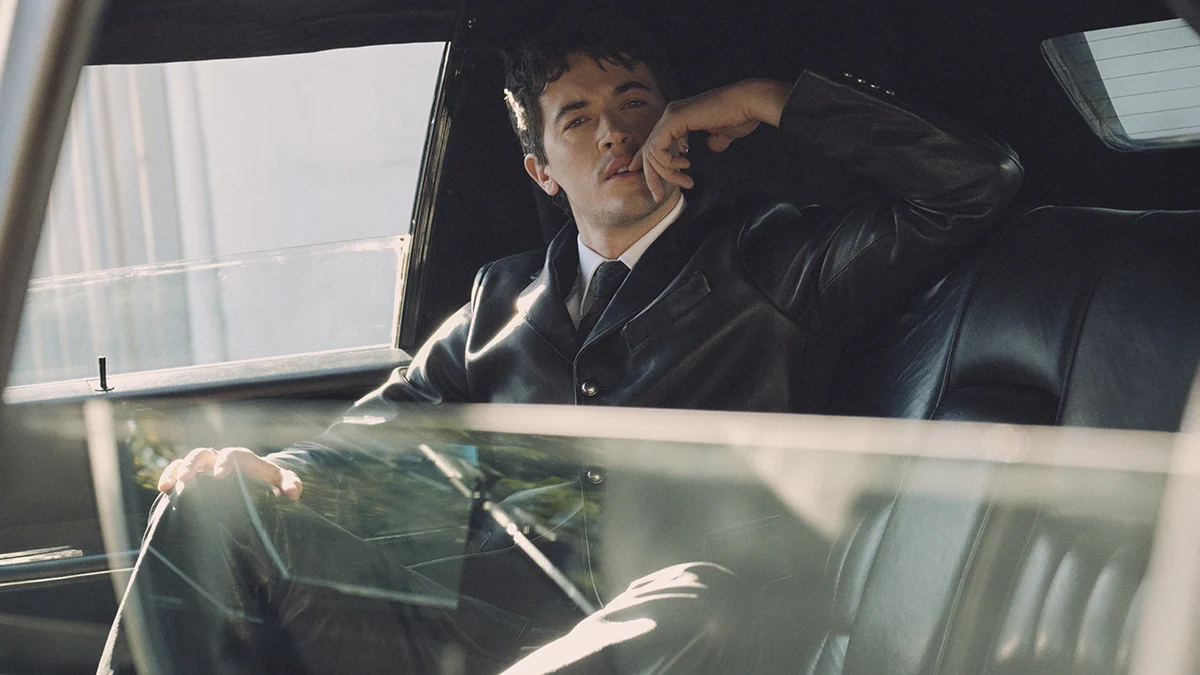
Every Broadway season possesses a singular theatrical event that transcends mere entertainment, morphing instead into a cultural imperative—a production that feels less like a night out and more like an absolute moral obligation. This season, that distinction belongs to the high-profile, star-studded return of Aaron Sorkin’s seminal courtroom drama, A Few Good Men.
The iconic military thriller has officially descended upon the Lincoln Center Theater for a strictly limited 13-week engagement. Leading the charge is British breakout star Tom Blyth, who steps into the razor-sharp military boots of Lt. Daniel Kaffee—a role immortalized by Tom Cruise in Rob Reiner’s iconic 1992 cinematic adaptation. Blyth’s casting underscores a broader, highly successful trend currently sweeping the Great White Way: pairing fast-rising Hollywood talent with legendary theatrical properties to generate massive mainstream appeal, driving eager audiences to the box office in droves.
Yet, the star power extending from this revival is not limited to youth and rising cinematic capital. Blyth is joined on stage by multi-Emmy Award winner Bradley Whitford, who assumes the formidable mantle of the uncompromising Col. Nathan Jessep—a character famously brought to terrifying life on screen by Jack Nicholson. Whitford, celebrated for his indelible work in The West Wing, The Handmaid’s Tale, and Jordan Peele’s Get Out, boasts a deeply poetic, full-circle history with Sorkin’s text. Long before commanding the stage as Jessep, Whitford actually appeared in the original 1989 Broadway production of A Few Good Men, initially playing Lt. Jack Ross before eventually stepping into the role of Kaffee himself.
Guiding this powerhouse ensemble is six-time Tony Award-winning director Michael Arden. Arden’s illustrious résumé—featuring acclaimed Broadway milestones such as Spring Awakening, Once on This Island, Parade, and Maybe Happy Ending—ensures that this revival will not merely rest on the laurels of its source material, but will instead offer a fresh, visceral theatrical pulse.
However, as any seasoned theatergoer will attest, the most dramatic trial of this production will not unfold beneath the lights of the Vivian Beaumont Theater stage. It will be waged at the box office, where securing prime center-orchestra seats has already devolved into a high-stakes competitive sport.
Chronology of a Modern Classic: From Script to Stage and Screen
To fully understand the gravity of this theatrical event, one must trace the remarkable lineage of A Few Good Men, a property that cemented Aaron Sorkin as a master storyteller long before the advent of The West Wing or The Social Network.

- November 1989: Aaron Sorkin’s military courtroom drama makes its Broadway debut at the Music Box Theatre. Directed by Don Scardino, the original production runs for nearly 900 performances, establishing Sorkin as a formidable new voice in American drama and earning critical acclaim for its razor-sharp dialogue and high-stakes moral interrogations.
- December 1992: Castle Rock Entertainment releases the feature film adaptation, directed by Rob Reiner and scripted by Sorkin himself. Boasting an all-star cast featuring Tom Cruise, Jack Nicholson, Demi Moore, Kevin Bacon, and Kiefer Sutherland, the film becomes a massive critical and commercial success, netting four Academy Award nominations, including Best Picture. The line, "You can’t handle the truth!", etches itself permanently into global pop-culture lexicon.
- Decades Intervening: The play becomes a staple of regional theater, high school auditoriums, and community playhouses across the globe, celebrated for its structural brilliance and searing examination of institutional loyalty versus individual ethics.
- October 8, 2026: The Lincoln Center Theater revival launches its first preview performances, drawing immense media attention and generating instant buzz across theatrical circles.
- October 29, 2026: The official opening night takes place at the Vivian Beaumont Theater, met with rapturous applause from critics and audiences alike.
- January 10, 2027: The final curtain falls on the 13-week limited engagement, concluding what promises to be one of the highest-grossing limited runs of the decade.
Supporting Data and Production Overview
For those looking to secure a glimpse of this theatrical triumph before it departs, the essential logistics underscore both the prestige and the exclusivity of the engagement:
- Production A Few Good Men
- Playwright: Aaron Sorkin
- Director: Michael Arden (Six-time Tony Award winner)
- Venue: Lincoln Center Theater (Vivian Beaumont Theater, 150 West 65th Street, New York, N.Y.)
- Key Cast Members:
- Tom Blyth as Lt. Daniel Kaffee
- Bradley Whitford as Col. Nathan Jessep
- Key Dates:
- First Preview: October 8, 2026
- Opening Night: October 29, 2026
- Closing Date: January 10, 2027
- Box Office Reality: Center-orchestra seats have consistently surpassed the $300 threshold at press time, reflecting high demand and limited supply across the 13-week window.
Official Responses and Creative Insights
The transition of A Few Good Men back to Broadway has sparked considerable commentary from its creative architects, shedding light on why this specific story resonates so powerfully in the contemporary sociopolitical landscape.
Speaking about the enduring relevance of the script, Aaron Sorkin has frequently noted that the core conflict of the play—the tension between blind obedience to military hierarchy and the dictates of personal conscience—never truly ages. In a world where institutional accountability is constantly scrutinized, the moral quandaries faced by Lt. Kaffee and his legal team carry an urgent contemporary weight.
Director Michael Arden approached the revival with a distinct vision, emphasizing the claustrophobia of the courtroom and the psychological warfare embedded within Sorkin’s dialogue. "It’s not just about a murder trial at Guantanamo Bay," Arden noted during early press previews. "It’s an excavation of what men in power demand of the young people they send to protect them. The stakes are primal."
Tom Blyth, whose meteoric rise has taken him from indie darling to blockbuster franchise lead (The Hunger Games: The Ballad of Songbirds & Snakes, People We Meet on Vacation, Billy the Kid, and The Gilded Age), expressed both reverence and excitement regarding stepping onto the New York stage to follow in the footsteps of Tom Cruise.
"Kaffee is an incredible psychological puzzle," Blyth shared with cultural chroniclers. "He starts as a guy who wants the easy way out—the plea deal, the quiet settlement—and is forced by circumstances and the sheer weight of his own integrity to stand up against systemic intimidation. Playing that live, eight times a week, is the ultimate artistic marathon."

Meanwhile, Bradley Whitford’s return to the material has added a rich meta-narrative layer to the production. Having experienced the universe of A Few Good Men from multiple angles over three decades, Whitford brings a lived-in authority to Col. Jessep. His interpretation avoids simple villainy, instead framing Jessep as a tragic, uncompromising zealot who genuinely believes his harsh methods are the bedrock of national security.
Implications for the Broadway Ecosystem
The arrival of A Few Good Men at Lincoln Center Theater carries broader implications for the current state of commercial and non-profit theater in New York City.
1. The Power of Hollywood Cross-Pollination
The casting of Tom Blyth highlights a proven economic formula for modern theater: leveraging young, internationally recognized screen stars to introduce Gen-Z and millennial audiences to classic dramatic literature. While purists sometimes debate the motivations behind star-driven casting, the undeniable reality is that actors like Blyth serve as vital cultural conduits, filling seats with demographic groups that traditional revivals often struggle to capture.
2. The Economics of Limited Runs
By capping the engagement at 13 weeks, Lincoln Center Theater has engineered a textbook scarcity model. In an era where ticket buyers face rising inflation and discretionary spending pressures, a finite window creates immediate urgency. The result is robust advance ticket sales and premium pricing resilience, proving that event theater remains largely insulated from wider economic fluctuations.
3. The Sorkin Brand on Stage
Aaron Sorkin’s relationship with Broadway has always been a bellwether for American dramatic tastes. Following the massive success of stage adaptations like To Kill a Mockingbird, the triumphant return of A Few Good Men reaffirms that Sorkin’s signature brand of rat-a-tat dialogue, ethical idealism, and high-stakes courtroom drama remains foundational to the American theatrical canon.
As the curtain rises night after night at the Vivian Beaumont Theater, the audience is reminded that the truth—much like the price of admission—is something we must all eventually confront. With tickets dwindling fast ahead of the final bow on January 10, 2027, theatergoers would do well to heed the unwritten warning: secure your seats now, before time runs out.
 Sagoh
Sagoh
 Basiran
 rifanmuazin
