

For years, the podcast industry has grappled with an "identity crisis" regarding measurement. Unlike the precise, pixel-based tracking of web display ads or the granular analytics of social media video, podcast advertising has historically relied on a blend of legacy metrics—downloads and impressions—that often fail to capture the nuanced reality of how a listener interacts with a host-read endorsement or a dynamic ad insertion.
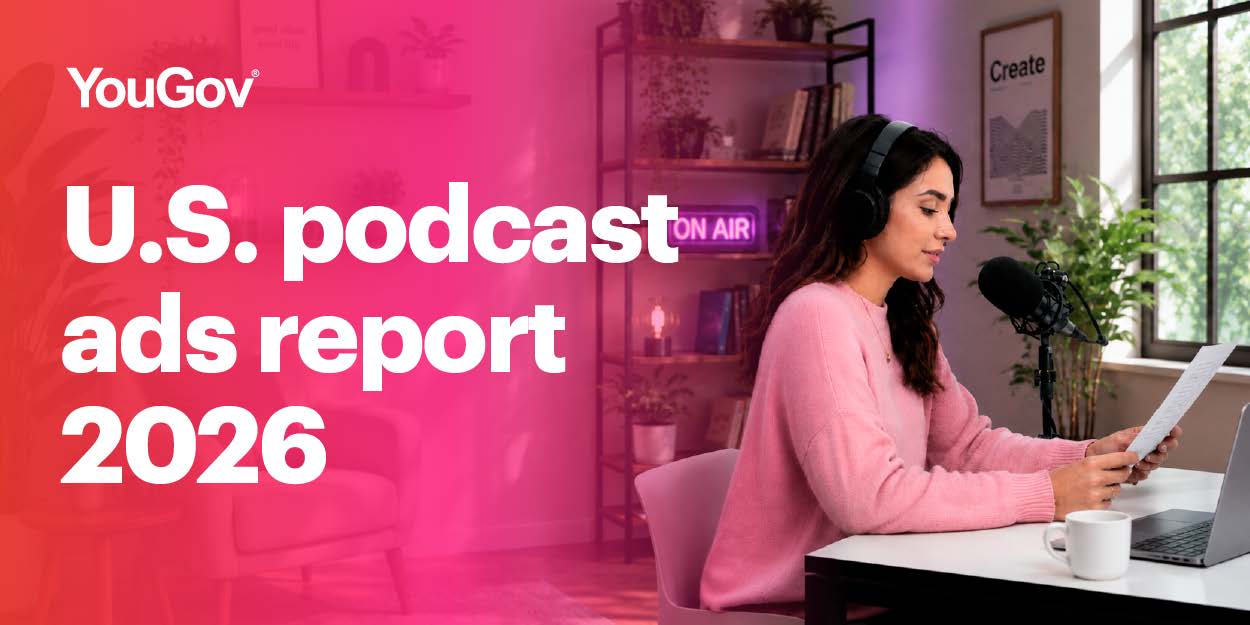
As we move deeper into 2026, the industry is finally shifting its focus from mere reach to genuine resonance. A new report by YouGov, the U.S. Podcast Ads Report 2026, provides a long-overdue deep dive into the psychological and behavioral patterns of the modern podcast listener, offering a roadmap for advertisers looking to navigate an increasingly fragmented media landscape.
The Core Challenge: Beyond the Skip Button
The primary frustration for podcast advertisers has always been the "passive" nature of the medium. Listeners are often multitasking—commuting, exercising, or performing household chores—which creates a high barrier for brand recall. The "skip" button, now a standard feature in almost every major podcast player, has become the primary metric of concern for marketing agencies.
However, the YouGov report, which surveyed over 1,300 U.S. adults (including a focused cohort of 800+ dedicated podcast listeners), suggests that the industry’s obsession with the skip button may be misplaced. The research indicates that effectiveness is not binary; it is not simply "heard" or "skipped." Instead, effectiveness is a spectrum determined by trust, relevance, and the format of the delivery.
Chronology of an Industry Shift
To understand why this report is a watershed moment for the medium, one must look at the evolution of the podcast advertising market over the last three years:
- 2023–2024 (The Optimization Era): The industry focused heavily on dynamic ad insertion (DAI) and improved attribution modeling. The goal was to prove that podcast ads could drive "clicks" and direct sales, mirroring the performance-marketing standards of the internet.
- 2025 (The Video Transition): As major platforms like Spotify and YouTube pushed harder into video podcasting, the industry began to realize that the "rules" of audio advertising didn’t perfectly map onto the hybrid video-audio experience.
- 2026 (The Resonance Era): The current landscape, as defined by the YouGov report, marks a transition toward qualitative understanding. Advertisers are no longer just asking "Did they listen?" but rather "What did they feel?" and "What did they do next?"
Decoding Engagement: What the Data Says
The YouGov data shatters several myths surrounding the podcast listener. Contrary to the belief that listeners are entirely "checked out," the report reveals that trust remains the primary currency of the medium.

1. The Power of Host-Read Ads
Host-read advertisements continue to outperform pre-recorded spots by a significant margin. The report highlights that listeners view the host as a "trusted advisor." When a host introduces a product, the listener’s cognitive resistance is lower than it would be during a traditional, polished radio commercial.
2. The Rise of the Video-Audio Hybrid
The integration of video into the podcasting ecosystem has changed the consumption funnel. According to the study, listeners who consume podcasts on video-first platforms (like YouTube) demonstrate a higher tendency for "immediate action"—specifically, searching for the brand while the video is still playing. Conversely, audio-only listeners exhibit a longer "incubation period," often returning to the brand hours or days later.

3. The "Action" Metric
The report identifies three distinct stages of response:
- The Search: The listener Googles the product or visits the URL mentioned.
- The Consideration: The listener adds the item to a mental or digital "wishlist."
- The Conversion: The final purchase, often influenced by the frequency of the ad over a multi-episode arc.
Implications for Advertisers and Creators
The implications of these findings are profound for both the sell-side and the buy-side of the podcast market.

For advertisers, the message is clear: Stop chasing the "perfect" conversion metric and start investing in "brand sentiment." If a listener hears an ad five times over a month, the likelihood of a purchase increases exponentially compared to a single, high-frequency blast. The report suggests that podcast advertising should be treated more like long-term brand building than short-term direct response.
For creators, the data provides a strong argument for maintaining creative control. The report finds that "ad-read fatigue" occurs when the advertisement feels disconnected from the show’s tone. When creators are given the leeway to integrate the ad into their natural narrative flow, listener engagement remains stable, even if the ad length increases.

Industry Voices: The Debate on Standards
The recent interview on the Sound Off Podcast featuring Dan Misener of Bumper highlights the broader tension in the industry regarding data. Misener points out that while everyone wants "standards," the industry is actually better served by a flexible, decentralized approach.
"We’re not trying to create standards," Misener remarked, noting that the market is already self-regulating. Advertisers are finding ways to buy and verify inventory without needing a centralized industry body to issue a white paper every fiscal year. This sentiment echoes the findings of the YouGov report: that performance is often found in the "wild," through direct relationships and specialized, high-intent audiences, rather than through monolithic, platform-wide metrics.

Global Context: From Africa to the Americas
While the YouGov report focuses on the U.S., the broader podcast ecosystem is seeing rapid innovation globally. As noted in the Into The Podverse podcast, the challenge of AI transcription and localization is becoming a massive growth vector. In markets where "code-switching" (the use of multiple languages in a single conversation, such as Hausa and Pidgin in Nigeria) is common, legacy AI tools fail. The innovation of new, context-aware transcription models is opening up entire continents of listeners to the podcast advertising market, proving that the medium’s growth is truly global.
The Future of "The Daily" and Beyond
The competitive landscape for podcasts remains dominated by giants—The Daily continues to hold the #1 spot on Apple Podcasts in the U.S., while The Joe Rogan Experience maintains a firm grip on the Spotify charts. However, the "Long Tail" of podcasting—niche shows like All the Books! or the investigative, academic-adjacent Seemingly Unrelated—is where the highest engagement rates often reside.

For an advertiser, the choice between the "reach" of a titan and the "resonance" of a niche show is the definitive strategic decision of 2026. The data suggests that a balanced portfolio, utilizing the high-frequency reach of the top 100 podcasts for brand awareness, paired with the deep-trust environments of niche shows for conversion, provides the optimal ROI.
Conclusion: A More Mature Medium
The podcast industry has effectively reached its adolescence. The "Wild West" days of unverified downloads and guestimates are ending. We are entering an era where data is used to inform creativity, not replace it.

As evidenced by the YouGov report, the "skip button" is not the end of the conversation—it is simply a filter. The listeners who remain, the ones who listen through the ad read, and the ones who search for the product after the show are the core of a highly valuable, attentive, and loyal consumer base. For brands that respect the audience’s time and intelligence, the podcast medium remains one of the most potent advertising channels available in the modern digital age.
To gain a competitive edge in your media buying strategy, the full YouGov U.S. Podcast Ads Report 2026 is currently available for download, offering detailed demographic breakdowns and actionable insights for your upcoming campaigns.
 Asep Darmawan
 Jia Lissa
 Neng Nana
