

The Nürburgring Nordschleife—affectionately and infamously dubbed the "Green Hell"—has long served as the ultimate crucible for automotive engineering. For decades, manufacturers have flocked to the Eifel mountains in Germany to validate their horsepower, chassis dynamics, and sheer audacity. Yet, for all the high-octane drama of human-piloted record attempts, a new chapter is being written in the history of the track, one that requires no pulse behind the steering wheel.
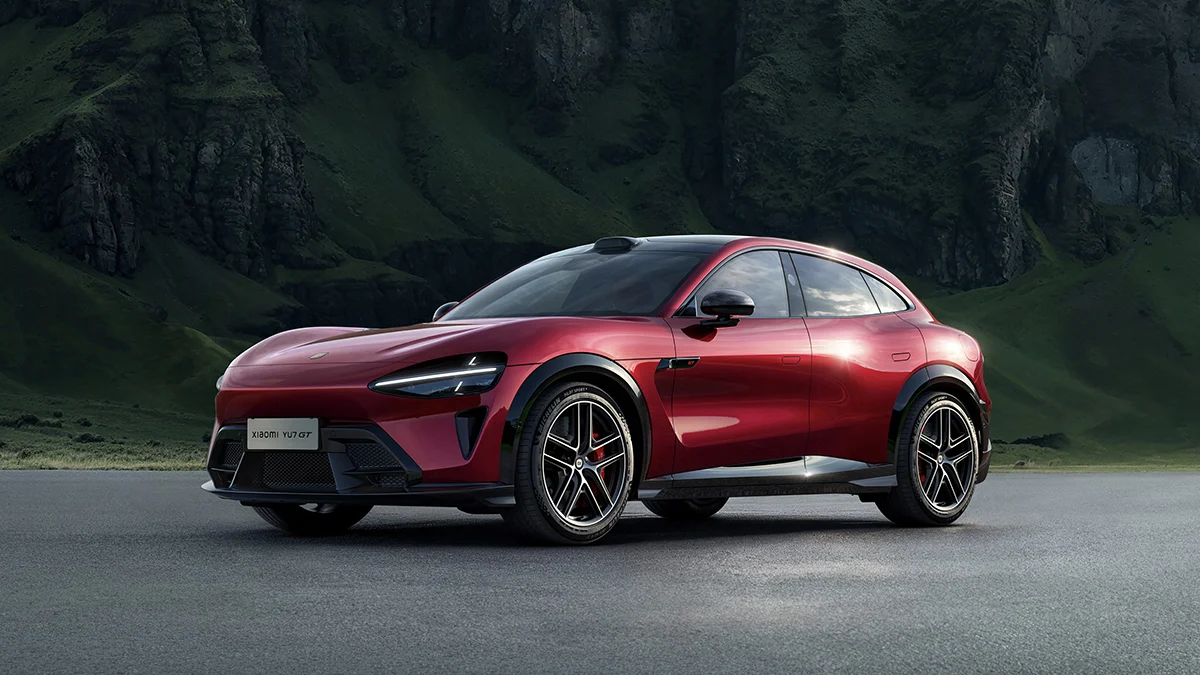
Xiaomi, the Chinese electronics giant that has rapidly pivoted from dominating the smartphone market to disrupting the automotive industry, has officially etched its name into the Nürburgring record books once again. Its high-performance electric SUV, the YU7 GT, has set a monumental benchmark: the fastest autonomous lap in the history of the 12.94-mile circuit. This feat, achieved without a single human input, signals a paradigm shift in how we perceive the capabilities of artificial intelligence in extreme driving environments.
The Record: A Masterclass in Machine Precision
On Monday morning, the Nürburgring officially confirmed that the Xiaomi YU7 GT completed a full lap of the Nordschleife in 10:29.483 minutes. While seasoned track enthusiasts might note that human-driven hypercars can lap the circuit in under seven minutes, the context of this achievement is transformative.
The YU7 GT navigated 73 distinct turns—33 left and 40 right—while managing over 1,000 feet of elevation change, all through autonomous logic. During the run, the SUV reached a peak speed of 210 km/h (130 mph) on the Döttinger Höhe straight. Unlike a human driver, who relies on instinct and visual cues, the YU7 GT relied on a sophisticated fusion of lidar, radar, cameras, and high-frequency GPS positioning to interpret the track’s undulating topography.
The footage released by the Nürburgring provides a surreal viewing experience: the steering wheel turns with rhythmic, binary precision, correcting for the massive G-forces exerted on the chassis without the slightest hesitation. It is a sterile, calculated performance that marks the first official, verified autonomous lap of the legendary circuit.
Chronology of Xiaomi’s Meteoric Rise
To understand the significance of this milestone, one must examine the compressed timeline of Xiaomi’s automotive journey. Only a few years ago, the company was primarily known for its consumer electronics, such as the Leica-equipped 14 Ultra smartphone.
The Foundation (2021–2023)
Xiaomi officially announced its entry into the electric vehicle (EV) market in 2021, pledging a massive investment to catch up to industry leaders. By 2023, the industry was skeptical, viewing the move as a tech company’s vanity project. Those doubts were silenced when the SU7, the company’s super sedan, began posting impressive performance figures, eventually becoming one of the fastest EVs on the Nürburgring during the 2024 season.
The SUV Breakthrough (May 2025)
The momentum gathered steam in late May 2025, when the YU7 GT first made international headlines. It smashed the record for the fastest SUV ever to traverse the Nordschleife, clocking in at 7:22.755. This result was not merely a marginal improvement; it obliterated the previous record held by the Audi RS Q8 Performance by nearly 14 seconds. It proved that Xiaomi’s platform was not just a clever software gimmick, but a robust hardware powerhouse capable of sustained high-speed performance.
The Autonomous Milestone (June 2026)
The current record follows the success of the May 2025 performance. By stripping the cockpit of human intervention, Xiaomi transitioned the YU7 GT from a driver’s tool to an autonomous machine. This progression highlights a rapid iterative development cycle that mirrors the company’s "agile" software development roots.
Technical Specifications: The Anatomy of a Record-Breaker
The YU7 GT is a testament to the versatility of the electric powertrain. With a silhouette that draws inevitable comparisons to the Ferrari Purosangue, the YU7 GT is designed to be as visually aggressive as it is mechanically potent.
Powertrain and Dynamics
At the heart of the YU7 GT is a sophisticated dual-motor architecture capable of producing a combined 990 horsepower. This output allows the SUV to sprint from 0 to 60 mph in under three seconds, a figure that puts it in the company of the world’s most elite hypercars. To handle such power, the vehicle employs advanced torque vectoring, which is essential for managing the complex cornering dynamics of the Nordschleife.

Autonomous Infrastructure
While the consumer-facing version of the YU7 GT features an advanced autonomous driving suite designed for public roads—utilizing a suite of sensors including long-range LiDAR and high-resolution cameras—the record-setting vehicle utilized a modified software stack. This "Track Mode" autonomous setup is designed to push the vehicle to the limits of tire adhesion, a far more dangerous and complex task than highway lane-keeping. Engineers had to calibrate the vehicle to recognize track-specific markings and to predict the behavior of the chassis under high-speed thermal load, which is significantly different from typical traffic scenarios.
Official Responses and Industry Reception
The Nürburgring organization, historically protective of its reputation, has been surprisingly vocal in its support of the Xiaomi trial. By providing a platform for the autonomous lap, the circuit is signaling that it intends to remain relevant as the automotive industry transitions toward automation.
Industry analysts have been equally intrigued. "What Xiaomi has done," noted one automotive consultant, "is bridge the gap between ‘driver assistance’ and ‘robotic performance.’ They have proven that the software stack is no longer the limiting factor for high-speed autonomy; the bottleneck is now purely mechanical—thermal management and tire compound longevity."
Conversely, some critics argue that an autonomous lap lacks the "soul" of a human-driven lap. However, Xiaomi’s leadership has framed the achievement not as a replacement for human racing, but as a proof-of-concept for the safety and precision of their future autonomous systems. The message is clear: if the car can handle the "Green Hell" without a driver, it can handle the chaotic environment of a busy urban intersection with ease.
Implications for the Future of Mobility
The implications of the YU7 GT’s record-breaking run are profound, extending far beyond the borders of the Eifel mountains.
1. Safety Calibration
By subjecting their autonomous system to the extreme stresses of the Nürburgring, Xiaomi is stress-testing its software in ways that traditional road testing cannot replicate. The data gathered from this lap will likely be used to refine the company’s "emergency avoidance" algorithms, making their consumer vehicles safer for the average driver.
2. The Normalization of Autonomous Performance
There is a growing trend of "autonomous-first" design. As vehicles like the YU7 GT demonstrate that they can outperform human drivers in specific, high-stakes environments, the stigma against autonomous driving may begin to dissipate. The transition from "the car is helping me drive" to "the car is driving" is being smoothed by the cachet of performance records.
3. The New Power Struggle
The race to the top of the Nürburgring is no longer just about who has the largest internal combustion engine. It is now a battle of software architecture, battery cooling efficiency, and algorithmic intelligence. Brands that cannot compete in the digital space are finding themselves left behind by tech-first manufacturers like Xiaomi.
Conclusion
Xiaomi’s record-setting run with the YU7 GT is more than a mere marketing stunt. It is a declaration of intent. In a world where the lines between consumer electronics and automotive engineering are blurring, Xiaomi has positioned itself as a formidable force.
As we look toward the future, the Nürburgring will likely see more "driverless" attempts, but Xiaomi will forever hold the title of the pioneer who proved that the machine is ready to take the wheel on the most dangerous road in the world. Whether this is the beginning of the end for the human race car driver or the birth of a new, collaborative era of performance, one thing is certain: the Green Hell has a new, silent, and incredibly fast resident. The future of driving may not require a driver at all.
 Evan Lee Salim
 Asep Darmawan
 Laily UPN
