

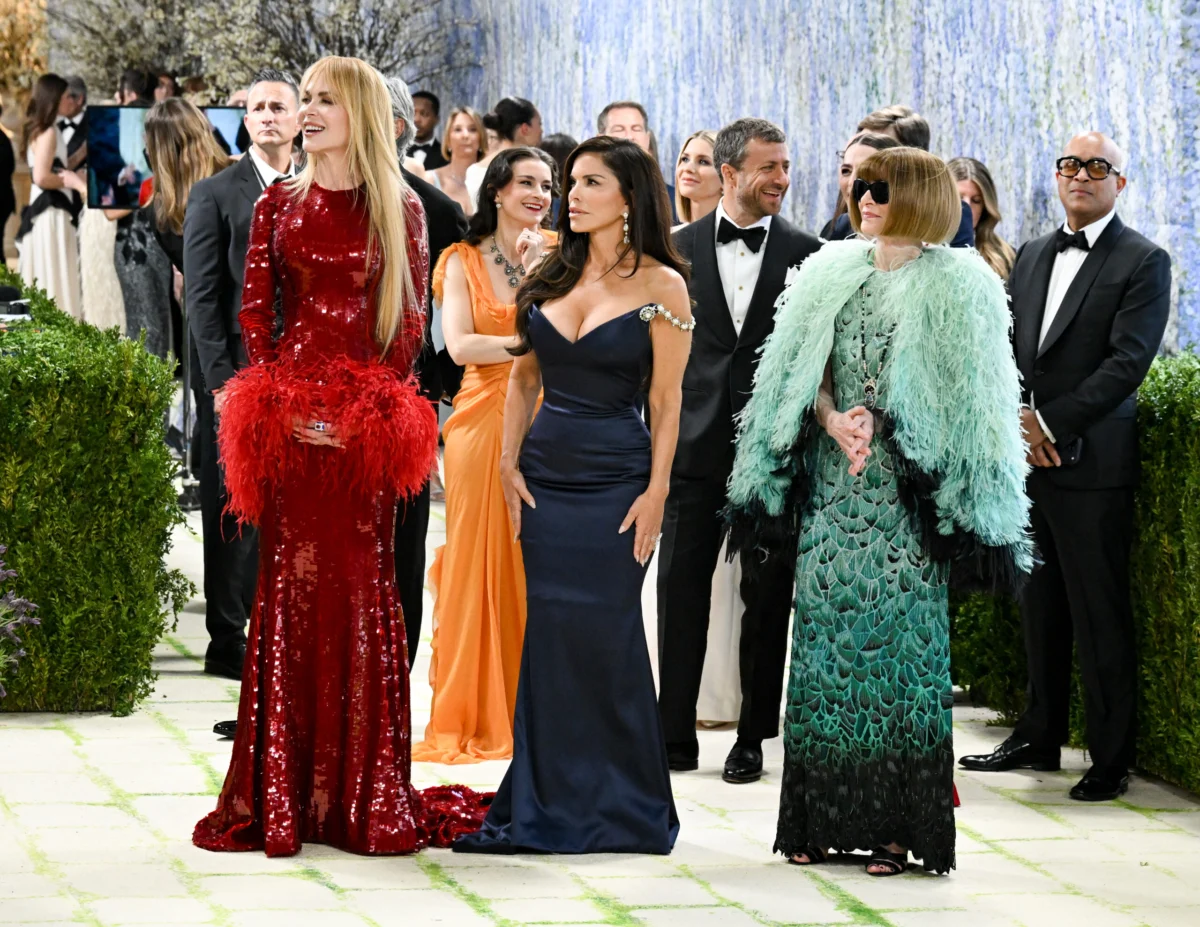
For decades, the first Monday in May served as the undisputed high-water mark of the fashion calendar. A sprawling, high-stakes spectacle, the Met Gala was once a bastion of exclusivity, where the intersection of high art, celebrity, and high-fashion craftsmanship created a rare cultural alchemy. However, as the 2026 edition of the Costume Institute Benefit concluded, it became increasingly clear that the event’s prestigious crown has not just slipped—it has been traded for the cold, hard currency of corporate sponsorship.
What was once a curated playground for the fashion elite has, over the past few years, morphed into a reflection of broader societal shifts: the rise of influencer culture, the encroaching dominance of corporate moguls, and an alarming decline in intellectual rigor. As the red carpet lights dimmed this year, the question remained: can the "Oscars of Fashion" survive its own identity crisis?
The Commercialization of the Carpet: The Bezos Era
The most glaring symbol of the gala’s shifting priorities arrived in the form of its honorary chairs: Jeff Bezos, the founder and executive chairman of Amazon, and his wife, Lauren Sánchez Bezos. Their presence was not merely a matter of social standing; it was a transactional milestone. Reports indicate that the couple funneled at least $10 million into the coffers of the Metropolitan Museum of Art to secure their hosting duties.
The implications of this sponsorship are as ironic as they are unsettling. Amazon, the titan of global e-commerce, has arguably done more to erode the foundations of the fashion industry than any other single entity. By prioritizing hyper-fast, low-cost manufacturing, the company has effectively accelerated the "fast fashion" cycle, contributing to a degradation of garment quality and a devaluation of the artisan’s labor.
To have the architects of this system presiding over an exhibition celebrating the "art" of costume design is a dissonance that has not been lost on industry critics. Furthermore, rumors regarding the couple’s interest in acquiring Condé Nast—the parent company of Vogue—have cast a long shadow over the proceedings. The sight of the Costume Institute, led by Anna Wintour, aligning so closely with the tech industry’s most controversial figures suggests a survivalist strategy that prioritizes financial stability over the integrity of the fashion house.
A Chronology of the 2026 Gala
The evening unfolded in a series of predictable, if underwhelming, beats. The theme, "Fashion is Art," was designed to encourage attendees to engage with the dressed body as a vehicle for historical and contemporary expression. The accompanying exhibition, "Costume Art," promised an ambitious look at the body in its various states—classical, aging, and pregnant.
However, the reality on the red carpet failed to meet the lofty intellectual standards set by the curators. Instead of a creative exploration of the theme, the carpet became a repetitive cycle of visual cliches.
- The Early Arrivals: The initial hours were marked by a lack of risk-taking. Many guests opted for safe, evening-gown aesthetics more suited to the Academy Awards than the avant-garde spirit of the Met.
- The Creative Echo Chamber: As the night progressed, a startling lack of originality emerged. Three separate high-profile guests—Lauren Sánchez Bezos, Claire Foy, and Julianne Moore—all opted to interpret the theme through the same painting: John Singer Sargent’s Portrait of Madame X.
- The Statue Satiety: Perhaps most jarring was the obsession with sculptural mimicry. Nearly 15 attendees, including the Jenner sisters and Doja Cat, appeared as literal interpretations of famous statues. This trend transformed the gala into a homogeneous display, lacking the nuanced storytelling that has defined the event’s best years.
- The Outliers: The monotony was eventually broken by a handful of attendees who actually did the homework. Bad Bunny, draped in inventive prosthetics; Madonna, channeling the surrealist tension of Leonora Carrington; and Beyoncé, in a stunning Olivier Rousteing piece, offered a masterclass in how to translate the theme into a living, breathing work of art.
Supporting Data: The Financial Record
While the artistic merit of the evening was debated, the fiscal success of the 2026 Gala is indisputable. The Costume Institute announced a record-breaking $42 million raised for the museum—an $11 million increase over the previous year.

This, of course, is the "Bezos Effect." The massive influx of capital from the honorary chairs provided the financial padding necessary to reach these figures. For the museum, the trade-off is clear: by inviting the tech elite into the inner sanctum of the art world, they have secured the budget required for the next decade of exhibits. Yet, one must ask: what is the cost of this capital? If the price of financial success is the dilution of the gala’s unique cultural weight, is the museum losing its soul to save its balance sheet?
Official Responses and Industry Sentiment
The Metropolitan Museum of Art has remained steadfast in its messaging, framing the event as a necessary evolution. Through its official channels, the museum highlights the "made possible by" credit given to the Bezos family, viewing their contribution as a philanthropic triumph.
However, behind closed doors, the sentiment within the fashion industry is more fractured. Designers and editors have expressed concern that the "influencer-fication" of the gala—a process that began in 2021—has reached its terminal phase. By prioritizing social media reach and corporate checkbooks over genuine creative vision, the institution risks alienating the very designers who provide the intellectual framework for the Costume Institute’s work.
The Implications for Fashion’s Future
The 2026 Met Gala serves as a microcosm of a larger problem: the encroachment of the "corporate aesthetic" into the creative industries. When fashion becomes a commodity to be bought and sold by the highest bidder, the ability for the medium to act as a provocative, artistic, or even revolutionary force is severely diminished.
The "Fashion is Art" theme was intended to be an exploration of human expression. Instead, it became a critique of the industry’s own creative bankruptcy. If the red carpet continues to serve as a platform for safe, unimaginative, and sponsor-led choices, the gala will cease to be a cultural event and will instead become a glorified corporate retreat.
As the industry moves forward, the Costume Institute faces a critical juncture. It must decide whether it wants to be a museum that happens to host a party, or a party that happens to have a museum attached to it. The record-breaking $42 million is a short-term victory that secures the building, but it does little to secure the legacy of fashion as a serious, intellectual discipline.
For the guests, the designers, and the public, the message from the 2026 gala was clear: the era of the "exclusive, artistic, high-fashion event" is fading. In its place is a new, glossy, and undeniably corporate reality. Whether this iteration of the Met Gala can regain its status as a temple of style or if it is destined to remain a monument to the influence of the uber-wealthy, only time—and the next first Monday in May—will tell.
 Nana
Nana
 Ali Ikhwan
 Iffa Jayyana
