

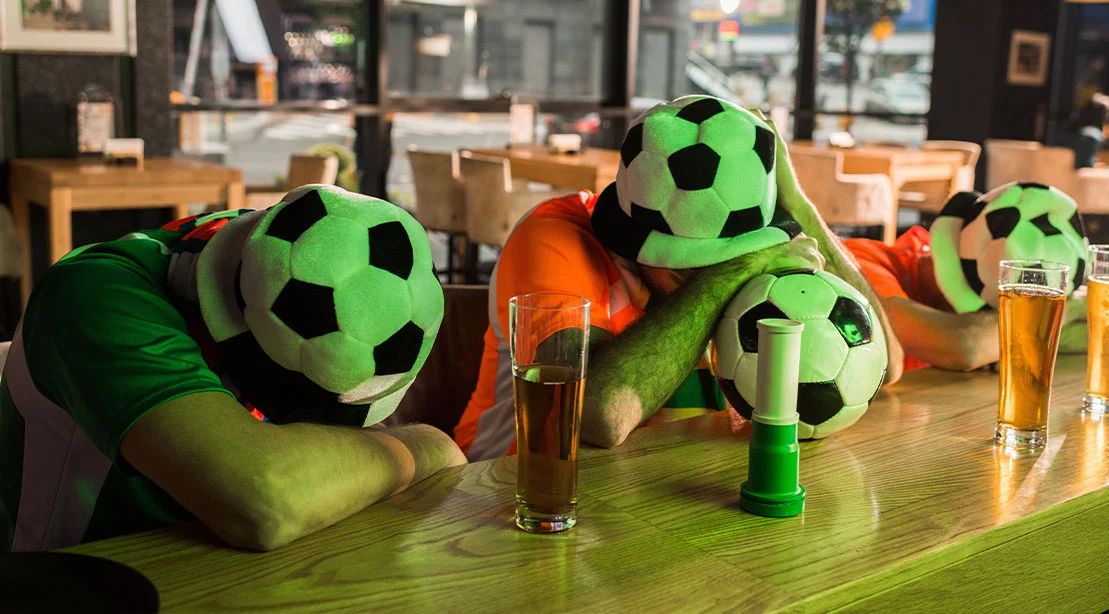
As North America plays host to the largest iteration of the FIFA World Cup in history, the tournament has become more than a battle of tactical brilliance on the pitch—it has become an endurance test for millions of supporters globally. While the host cities in Canada, Mexico, and the United States buzz with palpable excitement, a different reality is unfolding across the Atlantic, the Middle East, and beyond. For fans in far-flung time zones, the 2026 World Cup has transformed into a high-stakes experiment in circadian rhythm disruption, forcing supporters to weigh their passion for the beautiful game against the biological necessity of sleep.
The Cost of Passion: Analyzing the Global Sleep Deficit
The logistical challenge of hosting a tournament spanning three time zones across the North American continent has created a unique dilemma for international viewers. To quantify the toll this tournament has taken on global fans, statisticians at LiveScore.com conducted a comprehensive analysis of the 48 teams confirmed for the group-stage fixtures.
The study employed a rigorous methodology to determine "sleep opportunity lost." By defining a standard 11:00 p.m. to 7:00 a.m. sleep window for each nation, analysts mapped the kickoff times of every match against these local hours. A deduction of two hours and 45 minutes was applied whenever a game interfered with this window. This specific duration accounts for the 15-minute pre-match build-up, the two-hour regulation match slot, and a 30-minute buffer for post-match analysis and reaction—the "cooling down" period that is essential for any devoted fan.
For nations spanning multiple time zones, the data utilized the average of the primary civil time zone. While the term "sleep opportunity lost" refers to potential disruption rather than confirmed medical sleep deprivation, the data paints a vivid picture of a world running on caffeine and adrenaline.
Chronology of Disruption: The Group Stage Rankings
The data reveals a stark disparity in how different regions experienced the group stage. Leading the table of sleep-deprived nations is Algeria, whose supporters faced a staggering 8.25 hours of disrupted rest. The "Fennecs" fans were forced to navigate three separate matches occurring during the dead of night in local time.
Following Algeria, Tunisia (7.75 hours) and Iraq (7.00 hours) round out the top three, proving that the geographical distance between the Middle East and North America creates a punishing schedule for those unwilling to miss a single minute of action.
Table: Top 8 Nations by Sleep Opportunity Lost
| Rank | Team | Group | Disrupted Sleeps | Total Sleep Opportunity Lost |
|---|---|---|---|---|
| 1 | Algeria | J | 3 | 8.25 hours |
| 2 | Tunisia | F | 2 | 7.75 hours |
| 3 | Iraq | I | 2 | 7.00 hours |
| 4 | Norway | I | 2 | 6.00 hours |
| 5 | Czechia | A | 2 | 5.50 hours |
| 6 | Sweden | F | 2 | 5.50 hours |
| 7 | DR Congo | K | 2 | 5.50 hours |
| 8 | Saudi Arabia | H | 2 | 5.50 hours |
For these nations, the tournament became an exercise in sacrifice. Whether it was setting multiple alarms or opting for all-nighters to stay in sync with the North American broadcast schedule, the commitment required to follow one’s home team has reached an unprecedented level of intensity.
The Geography of Advantage: Winners and Losers
Interestingly, the data suggests that geography is the ultimate arbiter of fan comfort. While proximity to North America is often viewed as an advantage, the time zone offsets actually provide unique benefits to nations in the Asia-Pacific region. Australia, New Zealand, and South Korea, for instance, found themselves in a relatively enviable position. Due to their extreme distance, their match times often aligned with morning or afternoon slots in their home countries, effectively bypassing the "midnight oil" requirement that plagued North African and European fans.
For the fourteen teams that experienced at least one "ruined" night of sleep, the tournament was a periodic struggle. However, for the eight nations topping the chart, the World Cup was a sustained, two-week assault on their sleep hygiene, potentially affecting productivity, mood, and health in their respective home countries.
The Knockout Stage: Escalating Tensions and Hours
As the tournament transitions from the group stage to the knockout rounds, the stakes—and the sleep deficits—are climbing. The "win-or-go-home" nature of the bracket brings a heightened level of emotional stress, making the decision to stay awake even more difficult for the dedicated supporter.
The case of Algeria is particularly telling. Having qualified for the final 32, they faced a high-profile showdown against Switzerland on Friday, July 3. Scheduled for 8:00 p.m. Vancouver time, the match kicked off at 4:00 a.m. in Algeria. For the average fan, this meant either sacrificing the night’s sleep entirely or waking up in the pre-dawn darkness to catch the match.
While some nations like Tunisia and Iraq saw their teams eliminated—effectively ending the "sleep struggle" for their respective populations—those remaining in the tournament must now prepare for a final stretch that demands total physiological commitment. The 2026 FIFA World Cup is no longer just a display of athletic prowess; it is a global test of human endurance, where the players compete on the grass and the fans compete against the clock.
Implications for the Future of Global Sports
The data provided by LiveScore.com raises important questions about the future of global sporting events. As FIFA continues to expand the World Cup, the challenge of balancing local broadcasting rights, player health, and fan engagement across disparate time zones will only intensify.
When a tournament of this magnitude is hosted in a single continent, it inevitably favors the local timezone. However, the cultural and economic impact of the World Cup is truly global. For organizations like FIFA, the "sleep opportunity" metric serves as a reminder that the fan experience is not merely about the stadium environment—it is about the accessibility of the product to a global audience.
Furthermore, there is a psychological component to this fatigue. The "staying awake to debate team tactics" phenomenon is a staple of football culture. When sleep deprivation is layered onto the intense scrutiny of managerial decisions, refereeing controversies, and the heartbreak of penalties, it creates a volatile mix. Fans are watching, but they are watching through a lens of exhaustion, which can amplify both the joy of victory and the agony of defeat.
Conclusion: The Ultimate Fan Sacrifice
As the 2026 World Cup marches toward its conclusion, the legacy of this tournament will be defined by more than just the goals scored or the trophies lifted. It will be remembered as the tournament that kept the world awake. For the Algerian fan base and others in high-impact time zones, the sacrifice of sleep is a badge of honor—a testament to the unwavering loyalty that characterizes football fans worldwide.
While the players may receive the accolades and the tactical analysis, the millions of fans watching from the shadows of the night deserve recognition for their endurance. In the end, the 2026 World Cup has proven that no matter the time zone or the toll on one’s sleep schedule, the passion for the game remains the ultimate driver. Whether one is watching from a sun-drenched stadium in North America or a dimly lit living room in Algiers, the desire to witness history remains stronger than the need for a full night’s rest.
The tournament remains an endurance test, and as the final whistle approaches, the only question that remains is: how much more sleep are the fans willing to trade for the glory of their national team? The answer, given the dedication seen thus far, is likely: as much as it takes.
 Lina Hope
 rifanmuazin
 Laily UPN
