

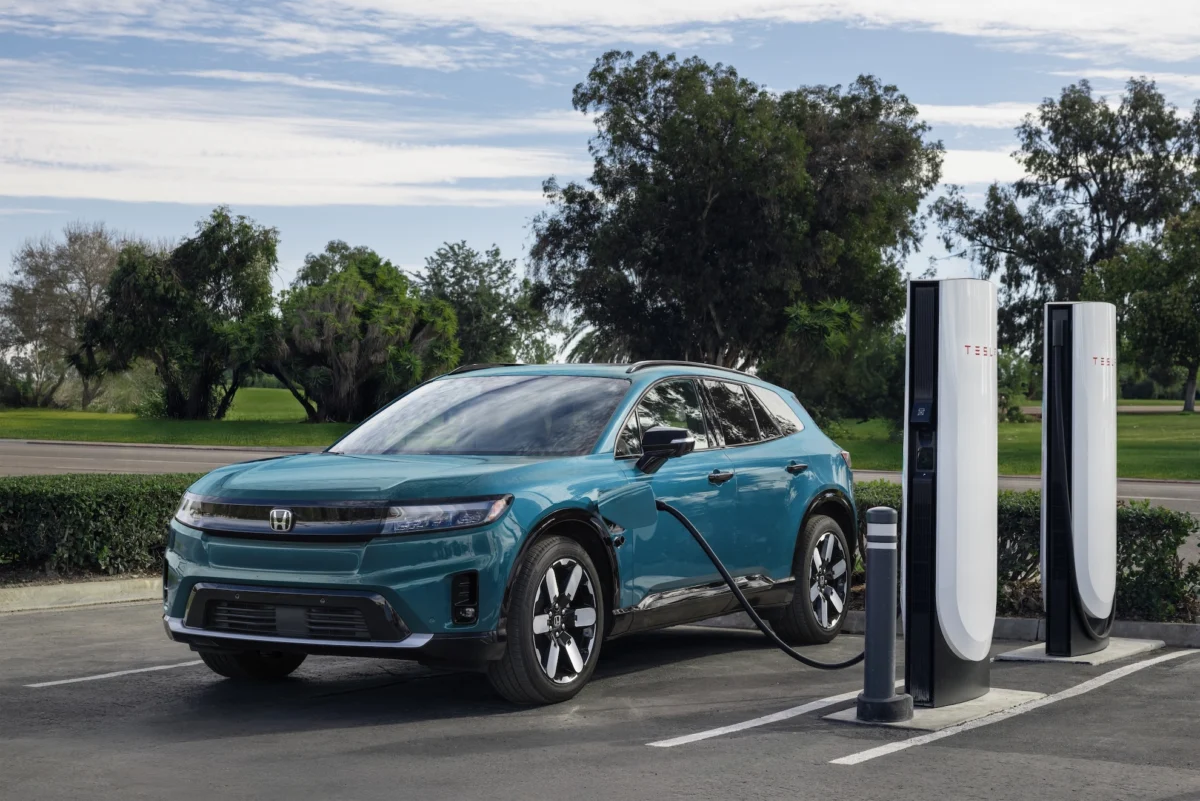
The landscape of the American automotive industry is undergoing a seismic shift. In mid-2026, the dream of an immediate, all-electric transition has hit a wall of economic, regulatory, and logistical hurdles. The recent, quiet confirmation from Honda that it is officially ceasing production of the Prologue—the last all-electric vehicle in its U.S. portfolio—serves as the definitive bookend to a period of intense, perhaps premature, electrification optimism.
This isn’t merely a localized corporate decision; it is a symptom of a broader, systemic retreat from the U.S. electric vehicle (EV) market. While global markets continue to embrace electrification with relative stability, the U.S. is experiencing a "K-shaped" divergence. As automakers pull the plug on ambitious projects and scale back existing lineups, the American consumer is finding their options significantly winnowed.
The Factors Driving the Exit
The collapse of the $7,500 federal tax credit in late 2025 acted as a "triple-punch" to the industry, stripping away the primary incentive that bridged the price gap between internal combustion engine (ICE) vehicles and EVs. However, the current exodus is driven by a complex confluence of factors:

- Tariffs and Trade Policy: The shifting geopolitical landscape and new, aggressive tariff structures have made importing foreign-made EVs—or components—prohibitively expensive.
- Shifting Consumer Preferences: Despite the hype, mainstream buyers have proven hesitant to adopt EVs at the pace manufacturers anticipated, with many gravitating back toward hybrids.
- Corporate Pivot to Autonomy and AI: Companies like Tesla are signaling that the next era of value isn’t in electric powertrains, but in the software-defined, autonomous, and robotic future.
- Regulatory Pressures: Evolving standards regarding "connected vehicle technology" have created a regulatory minefield, effectively barring specific manufacturers from the U.S. market.
A Statistical Snapshot of the Cooling Market
Data provided by Kelley Blue Book and Cox Automotive for the second quarter of 2026 paints a sobering picture. While 247,226 EVs were sold—representing roughly 5.8% of the total U.S. market—this figure is fundamentally disconnected from the growth trajectory seen in 2024 and early 2025.
Comparing year-over-year performance, the decline is stark. Q2 2026 sales were 20.5% lower than the same period in 2025. This downward trend is a continuation of the volatility that saw Q4 2025 sales plummet 36% compared to the final quarter of 2024. While new entrants like the Rivian R2 offer a glimmer of hope, the industry at large is currently in a defensive posture, prioritizing cash flow and high-volume, legacy-gasoline models over the thin margins of current-generation EVs.
The Chronology of Cancellation: Who Left and Why?
The following list tracks the major departures from the U.S. market as of mid-2026.

1. The Afeela "Ghost"
Perhaps the most notable absence is the Afeela. Born from a high-profile joint venture between Sony and Honda in 2022, the Afeela was the darling of the Consumer Electronics Show (CES). Despite a massive marketing blitz and a presence at major tech events like TechCrunch Disrupt, the reality of production proved insurmountable. In March 2026, the joint venture officially terminated the project, citing the same economic pressures that forced Honda to scrub its own proprietary EV plans.
2. Honda and Acura’s "Zero" Pivot
Honda’s retreat is perhaps the most dramatic. After unveiling its "0 Series" at CES 2025—featuring a futuristic Saloon and Space-Hub—the company abruptly halted development in March 2026. This move was explicitly linked to U.S. tariffs and the inability to compete with low-cost Chinese imports. The Prologue, which had seen reasonable success (moving roughly 39,000 units in 2025), was ultimately sacrificed as Honda moved to consolidate its manufacturing efforts back toward its core, profitable gasoline-powered SUVs.
3. Hyundai’s Economic Calculus
Hyundai has been a standout in the EV space, but even they are not immune. In March 2026, the automaker announced the discontinuation of the Ioniq 6 in the U.S. market. The reasoning is largely logistical; the Ioniq 6 is produced in South Korea, making it a primary target for trade-related cost increases. Conversely, Hyundai’s U.S.-assembled models, such as the Ioniq 5 and Ioniq 9, remain core components of their domestic strategy.

4. Nissan’s Ariya Exit
Nissan’s decision not to produce a 2026 model year for the Ariya SUV was a quiet, decisive move. As an early pioneer of the EV space with the Leaf, Nissan’s inability to find long-term success with the Ariya suggests that even veteran electric automakers are struggling to maintain a foothold in the current, highly competitive U.S. environment.
5. The Polestar Ban
Polestar, the Swedish brand under the Geely umbrella, provides the most acute example of regulatory intervention. The U.S. government’s ban on Chinese-connected vehicle technology forced the company into a corner. Without specific authorization from the Department of Commerce—which was granted to its sibling company, Volvo—Polestar was effectively barred from introducing new models. While they continue to support existing owners, their future in the U.S. is now under a heavy cloud of geopolitical uncertainty.
6. Tesla’s Strategic Departure: Model S and X
Tesla’s move to end the production of the Model S and Model X in spring 2026 marks a historic transition. The company is essentially cannibalizing its luxury heritage to clear factory space in Fremont for the production of Optimus robots and the development of the Cybercab. By focusing on volume (Model 3 and Y) and speculative, high-margin AI/autonomous tech, Tesla is redefining itself from a "car company" to a "tech infrastructure" company.

7. Volkswagen’s Pivot to Gas
Volkswagen’s retreat from the ID.4 in the U.S. is a clear-eyed move to maximize profitability. By converting its Chattanooga plant to favor high-volume, gas-powered SUVs like the Atlas, VW is bowing to the reality of American demand. While the ID Buzz is slated for a potential return in 2027, the current absence of a 2026 model leaves a significant gap in their American lineup.
Official Responses and Industry Implications
The official justifications provided by these manufacturers share a common thread: "market conditions." In corporate parlance, this covers a multitude of sins, ranging from the lack of government subsidies to the sheer cost of retooling massive industrial complexes.
"The industry is currently in a state of recalibration," says one industry analyst. "Automakers invested billions on the premise that the transition would be linear. It has proven to be exponential in its difficulty and cyclical in its demand."

The implications are profound. First, the U.S. market is becoming increasingly polarized. The "middle" of the market—affordable, practical EVs—is being hollowed out, leaving only the very expensive, high-performance vehicles or the very cheap, entry-level gasoline options. Second, the reliance on foreign supply chains is becoming a liability rather than an asset. Manufacturers that cannot localize production within North America are finding themselves at a severe competitive disadvantage.
Conclusion: The Long Road Ahead
The death of the Honda Prologue and the exit of these various models should not be viewed as the end of the electric vehicle in America, but rather the end of the "first wave" of speculative, subsidized electrification. The market is currently undergoing a painful, but perhaps necessary, correction.
As we look toward 2027 and beyond, the companies that survive will likely be those that have successfully navigated the "connected vehicle" regulations, localized their supply chains, and, crucially, managed to align their product offerings with what the American consumer actually wants to buy, rather than what the regulatory environment dictates they should buy. The era of the "all-in" EV bet has ended; the era of cautious, opportunistic electrification has begun.
 Asep Darmawan
 Siti Muinah
 Ali Ikhwan
