

This story is an extended exploration from our weekly newsletter, "In the Loupe." For more insights into the evolving world of horology, sign up here.
When the modern enthusiast thinks of American watchmaking, the mind inevitably drifts to the titans of the industrial age: Waltham, Elgin, and the legendary Hamilton. It is a common misconception that the story of fine horology is a narrative written almost exclusively in the boardrooms and ateliers of Switzerland. However, long before the steam engine powered the mass production of American timepieces in the mid-19th century, the American colonies were already a hotbed of mechanical sophistication.
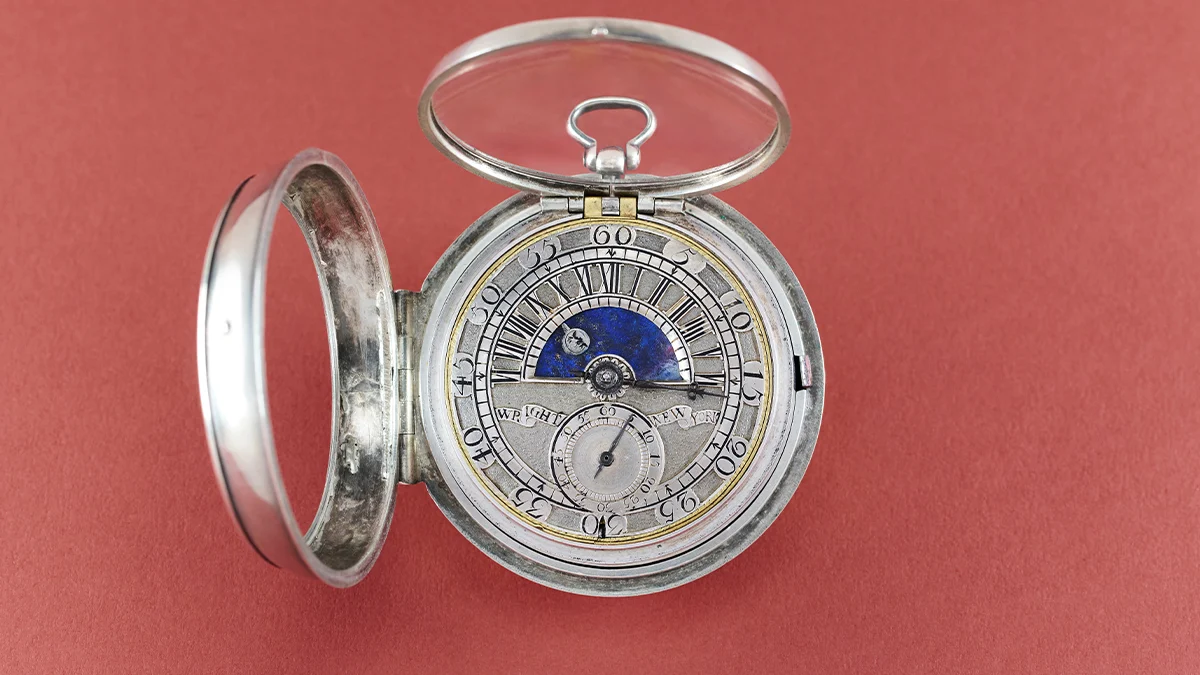
To understand the current golden age of independent watchmaking, one must first look at the 18th century, a time when a mechanical watch was not merely a tool for telling time—it was the absolute pinnacle of human technology, artistic expression, and social status.
The Mechanical Magic of the Colonial Era
"The highest level of technology, pure magic that was ever done," says antiquarian horologist Richard Newman, describing the landscape of 18th-century watchmaking. In an era before the democratization of the wristwatch, a timepiece was an extreme luxury, accessible only to the landed gentry and the most successful merchants.
Today’s fervent obsession with independent makers—those who value artisanal finishing and singular provenance—is not a new phenomenon; it is a full-circle return to the ideals of the 1700s. Newman, who has spent decades studying these early American treasures, argues that the current renaissance of small-scale production mirrors the bespoke nature of the colonial era. "Back in an era when the maker that signed the watch actually had his or her hands on it, they did the work," Newman explains. "That is what I love about what has been happening in the watch world for the last 30 years. Makers are designing and putting their stamp on what they want to offer in small quantities. It is a resurgence of the original ideal."

Chronology: A History of American Timekeeping
While the records of colonial horology are as fragile as the movements themselves, the timeline of early American watchmaking is slowly being reconstructed through probate records and colonial newspapers.
- 1760s: The emergence of specialized pocket-watch production in British America. Advertisements from this period indicate that while few watches survive with definitive provenance, the trade was firmly established in cities like Philadelphia and Boston.
- 1775–1783: The Revolutionary War era. This period marked a transition where timekeeping became essential for military synchronization. It is widely believed that George Washington utilized watches to coordinate the movements of his generals, marking one of the first recorded instances of tactical horological synchronization in military history.
- Late 18th Century: The rise of the "American Finisher." Because the colonies lacked the massive industrial infrastructure of Europe, watchmakers operated as highly skilled assemblers. They imported unfinished movements (ébauches) from England and applied their own unique regulation, finishing, and engraving.
- 1790s: The age of the Founding Father collectors. Figures like Thomas Jefferson began commissioning custom clocks and watches, signaling a shift toward horological literacy among the American elite.
The Reality of Production: A Collaborative Network
One of the most persistent myths about colonial watchmaking is the idea of the "lone genius" creating a watch from scratch, from the mainspring to the dial. In reality, the 18th-century model was a complex, decentralized ecosystem, remarkably similar to the modern supply chains of high-end independent watchmaking.
"There could have been 80 to 130 individuals involved in the making of a single pocket watch," Newman explains. The process was a division of labor: one specialist might focus on the fusee chain, another on the escapement wheels, and yet another on the balance spring. The watchmaker whose name appeared on the dial was the conductor of this orchestra. He was responsible for the final assembly, the adjustment, and the delicate art of finishing.
For today’s collector, who is accustomed to debating the origins of a movement or the pedigree of an ébauche, this historical context provides a sense of continuity. The American watchmaker of 1770 was, in essence, a modern "independent" in his approach to sourcing, finishing, and branding.
Beyond the Movement: The Watch as Decorative Art
Modern collectors are often hyper-fixated on technical specifications—calibers, tourbillons, and power reserves. Newman suggests that to truly appreciate an 18th-century watch, one must shift the perspective from pure engineering to decorative art.

"Watches are fashion, jewelry, status, and phenomenal design," he says. "The whole idea of the watch as jewelry has been largely ignored by the modern market." Because these items do not fit neatly into the pigeonholed categories of "furniture" or "silverware," many museums and private collections have historically overlooked them. However, the men who created these watches were often the same master goldsmiths and silversmiths who crafted the luxury goods of the era.
Collectors should look for the subtle cues: the proportions of the case, the quality of the enamel on the dial, the depth of the hand-engraving, and the balance of the overall design. These are the markers of a master craftsman, and they are exactly the qualities that distinguish a $5,000 watch from a $50,000 piece of horological art today.
Official Perspectives: Washington and Jefferson as Horologists
The Founding Fathers were not just political architects; they were discerning, albeit varied, consumers of technology.
George Washington, in particular, displayed an affinity for the absolute best the world had to offer. He was a known admirer of French horology—the "Ferrari" of the 18th century. By securing pieces from Jean-Antoine Lépine, a revolutionary figure who helped modernize watch design, Washington positioned himself as an elite collector. His ability to recognize and acquire the best horological technology of his day is a testament to his status as a man of refined, international taste.
Thomas Jefferson’s relationship with timekeeping was more hands-on, if less successful. His correspondence with Philadelphia watchmaker Robert Leslie reveals a deep, intellectual curiosity about how things worked. However, as Newman points out with a chuckle, "He was a crappy clock designer." Jefferson’s attempt to design a movement for his home at Monticello was a noble, if flawed, experiment. While the clock did not perform to his expectations, the effort itself is a perfect illustration of how deeply embedded the pursuit of precision was in the American intellectual tradition long before the Industrial Revolution.

Implications for the Modern Collector: "Peeling Back the Onion"
As we witness an explosion of interest in modern independent watchmaking, the implications for the future of the hobby are clear. The current market is driven by a desire for intimacy, hand-finishing, and personal provenance—the very same values that defined the work of Thomas Harland, John Cairns, and Henry Voight.
Newman’s advice to the modern collector is to "peel the onion back." While the journey into horology usually begins with the contemporary wristwatch, there is a vast, rewarding history beneath the surface. By studying the early American watchmakers, collectors gain a deeper understanding of what it means to sign one’s work.
The names have changed, the scales of production have evolved, and the watches have migrated from the waistcoat pocket to the wrist, but the fundamental questions remain the same: Does the object demonstrate mastery? Is it designed with integrity? Does it reflect the identity of the maker?
Two hundred and fifty years later, these questions continue to drive the most important conversations in the watch world. For the collector willing to look beyond the modern hype, the story of American horology is not just a dusty chapter in a textbook—it is a living, breathing tradition that informs the very best of what we wear on our wrists today. Whether it is an 18th-century verge fusee or a 21st-century hand-finished caliber, the pursuit of horological excellence remains a timeless endeavor.
 Evan Lee Salim
 Asep Darmawan
 Laily UPN
