

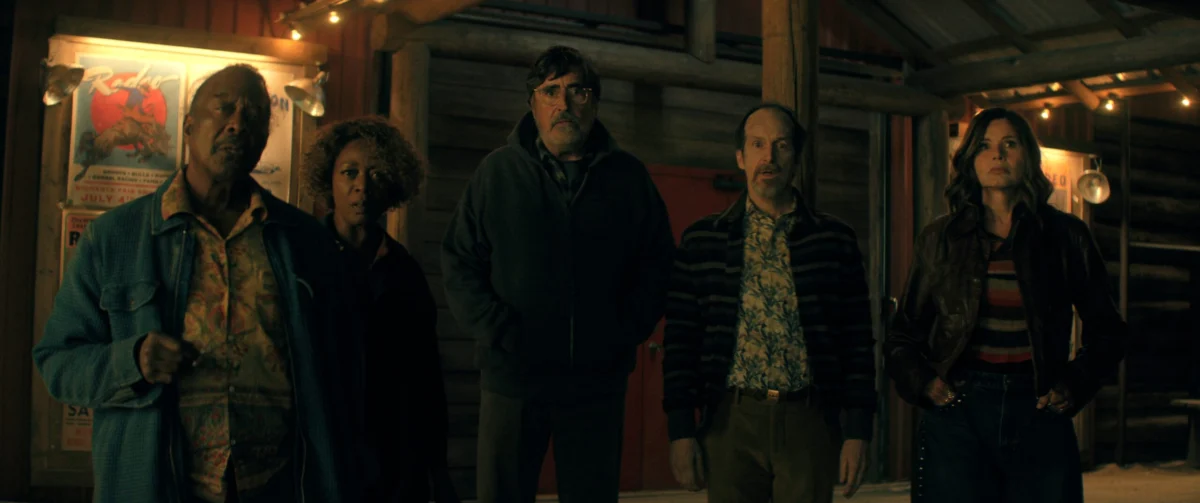
In the high-stakes ecosystem of modern television, a cancellation notice is typically viewed as a death knell for a show’s awards season prospects. When the news drops that a series has been axed, the immediate assumption—both within the industry and among the viewing public—is that the project has been relegated to the annals of television history. However, for Netflix’s The Boroughs, the recent announcement of its cancellation does not necessarily mean the end of its journey toward the 2026 Emmy stage.
As the 2025-26 television season continues to cull its roster, The Boroughs joins a dubious list of notable casualties, including Palm Royale, Gen V, and The Late Show With Stephen Colbert. Yet, historical precedent suggests that the Academy of Television Arts & Sciences is often unfazed by a network’s decision to pull the plug. A show’s sudden departure from the airwaves does not invalidate the artistry that preceded it, and as we look toward the 2026 Emmys, The Boroughs remains a potent contender in several categories.

The Resilience of the "Canceled" Contender
The phenomenon of the "canceled winner" is far more common than casual observers might expect. Last year, for instance, Prime Video’s ballet-themed drama Étoile, spearheaded by the creative powerhouse duo Amy Sherman-Palladino and Dan Palladino, was unceremoniously canceled just one week before the nominations-round voting began. Despite the premature closure, the industry recognized the quality of the production, granting Étoile nominations for Best Choreography and Best Cinematography. The series eventually secured a win for Best Choreography, proving that voters remain committed to rewarding excellence, regardless of a show’s current status on the network’s schedule.
This trend is not a modern anomaly. In 2009, the whimsical and beloved Pushing Daisies claimed four of the five categories for which it was nominated. Kristin Chenoweth, who took home the statuette for Best Comedy Supporting Actress, delivered an iconic, bittersweet acceptance speech: "I’m unemployed now, so I’d like to be on Mad Men." The show’s other wins—covering non-prosthetic makeup, costumes, and art direction—highlighted the technical mastery that often goes ignored in the noise surrounding a show’s cancellation.

A Technical Powerhouse: The Case for The Boroughs
The Boroughs is currently eligible in the drama categories for this year’s Emmys, and its submission list reads like a who’s who of prestige television talent. The show has submitted eight actors for consideration: Alfred Molina (Sam Cooper), Denis O’Hare (Wally Baker), Clarke Peters (Art Daniels), Geena Davis (Renee Joyce), Alfre Woodard (Judy Daniels), Ed Begley Jr. (Edward), Bill Pullman (Jack), and Mary McDonnell (The Duchess).
Beyond the marquee names, the show is exceptionally well-positioned for below-the-line recognition. Its production design, score, and music supervision have been lauded by critics. Music supervisor Nora Felder, a previous Emmy winner for her transformative work on Stranger Things—specifically for bringing Kate Bush’s "Running Up That Hill" to a new generation—is a key factor here. Her work on The Boroughs, which included the strategic use of David Bowie’s "Golden Years" and a rare licensing deal for Bruce Springsteen’s "Thunder Road," could easily secure her another nomination. The latter, which served as a vital plot device, demonstrates the kind of nuanced musical curation that Emmy voters frequently champion.

The Duffer Brothers Connection and Industry Shifts
The cancellation of The Boroughs carried a unique weight, given its billing as an "aged-up Stranger Things." Executive-produced by the Duffer brothers, the show was meant to capture the same cultural lightning in a bottle. However, the timing of the cancellation—occurring just two days after Paramount announced a November 2028 release date for an "event film" to be written and directed by the Duffers—signals a broader shift in the creators’ careers. Having departed their exclusive Netflix deal last summer to focus on theatrical features, the Duffers’ transition mirrors the industry’s ongoing move away from long-term serialized streaming commitments toward high-impact cinematic projects.
Voices from the Set: Creators and Cast Reflect
Despite the abrupt end, the creative team and cast remain proud of their work. Guest star Jane Kaczmarek, who played the role of Lilly, told Gold Derby that the experience was deeply fulfilling. "Maybe Lilly will keep haunting him, I don’t know," Kaczmarek said, reflecting on her character’s arc. "That was just a wonderful experience."

Creators Jeffrey Addiss and Will Matthews, who spoke with Gold Derby last week, confirmed that they had mapped out a future for the characters well beyond Season 1. "We know how it ends, because we know how it all ties up," Addiss noted. "But if we don’t get a second season, we feel like we left the characters in a really good place." This narrative closure, intended or not, provides a sense of completeness that may make the show more palatable to voters who are often hesitant to reward shows that end on unresolved cliffhangers.
Historical Context: A Legacy of Post-Cancellation Wins
The history of the Emmys is paved with shows that found glory only after their doors were closed. The following timeline serves as a reminder that the Academy often honors what it deems "the best" long after the marketing budget has dried up:

- 1970: The NBC sitcom My World and Welcome to It secured two wins, including Best Comedy Series and Best Comedy Actor for William Windom, despite only lasting a single season.
- 1979: Ron Leibman won Best Drama Actor for the one-season courtroom drama Kaz.
- 1983: Taxi secured three acting wins for Judd Hirsch, Carol Kane, and Christopher Lloyd, a final victory lap after the show was axed by NBC.
- 1983/1988: Tyne Daly won multiple awards for Cagney & Lacey during its tumultuous run of cancellations and revivals.
- 1990s: Shows like China Beach, thirtysomething, and Picket Fences became beacons of quality that produced major acting wins, even while being unceremoniously removed from the schedule.
- 1993: The Ben Stiller Show won for Best Variety Writing after being canceled by Fox mid-season.
- 2000/2001: Freaks and Geeks proved that even a single season could sustain two Emmy cycles, winning for casting in 2000.
- 2006: Blythe Danner won for Huff after Showtime pulled the plug. That same year, the system began to evolve as networks like FX submitted the Andre Braugher-led Thief as a limited series, resulting in a win for Best Limited/Movie Actor.
- 2007: Deadwood and Studio 60 on the Sunset Strip collected awards in craft and guest acting categories, proving that even "one-and-done" prestige projects could hold their own.
- 2021: Lovecraft Country stunned pundits by nabbing 18 nominations and two wins, including a guest acting trophy for Courtney B. Vance, for its only season.
- 2024: The Idol managed a win for Best Choreography a full year after its cancellation.
Implications for the 2026 Awards Race
As the industry prepares for the 2026 Emmy ceremony, the status of The Boroughs serves as a case study in the longevity of prestige television. While the lack of a second season effectively eliminates the show from future consideration, the "limited" nature of its current iteration may actually benefit it in the eyes of voters. By evaluating the show as a complete, albeit short, artistic statement, voters can strip away the baggage of commercial performance and focus entirely on the quality of the performances and production values.
Ultimately, the Emmy Awards have never been strictly about ratings or longevity. They are about the recognition of craft. If The Boroughs finds itself standing on the podium in 2026, it will join a long and storied list of programs that proved a show’s value is measured not by how long it stays on the air, but by the indelible mark it leaves on those who watched it. The cancellation of a show is a business decision, but the legacy of its creative output is a matter of record—and that record is something no network executive can edit.
 Ammar Sabilarrohman
 Siti Muinah
 Iffa Jayyana
