

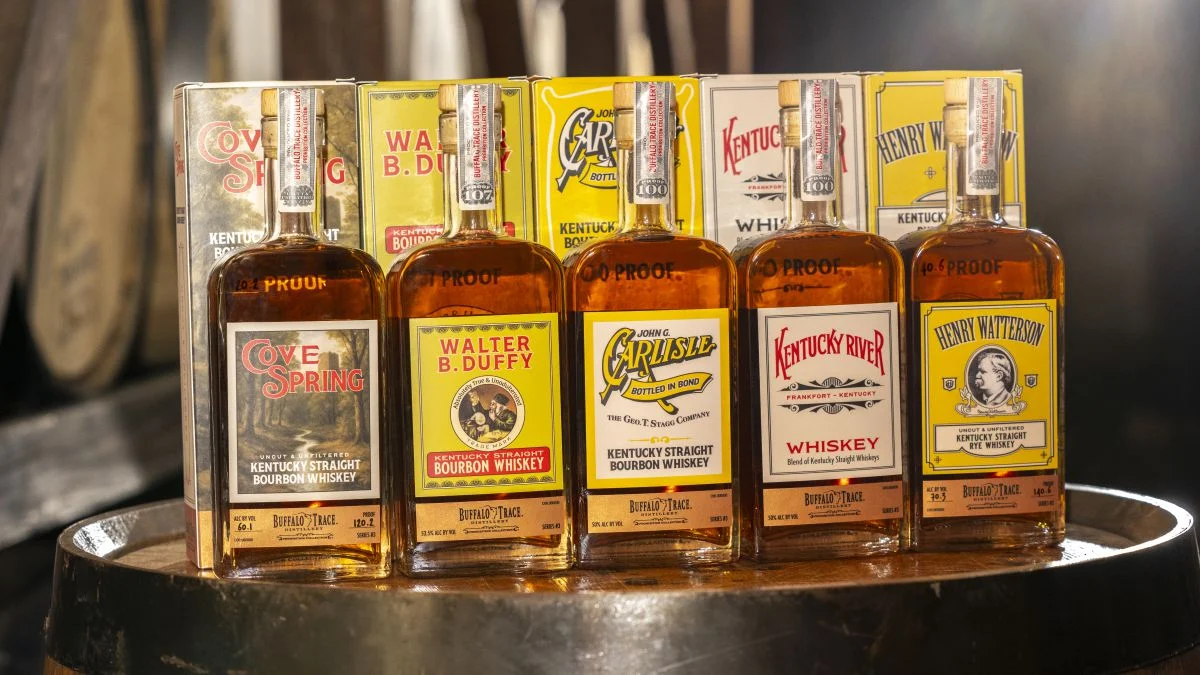
In the rarified world of American whiskey, few names command the reverence of Buffalo Trace. The Frankfort, Kentucky, distillery has spent the better part of a century cultivating an aura of exclusivity, producing a roster of “unicorn” bottles—from the elusive Pappy Van Winkle and the Antique Collection to the legendary E.H. Taylor, Jr. Tornado Survivor—that define the secondary market. Yet, for all its modern accolades, the distillery’s true soul lies in its resilience.
Returning for 2026, the Buffalo Trace Prohibition Collection serves as a liquid history lesson, pulling long-forgotten brands and production methods out of the ashes of the 18th Amendment. This third iteration of the series is more than just a marketing exercise; it is an exploration of the "Noble Experiment," featuring five distinct expressions, including one of the most potent rye whiskeys ever to emerge from the distillery’s hallowed stills.
The History of the Noble Experiment: A Medicinal Necessity
To understand the weight of the Prohibition Collection, one must look back to the early 20th century. During the years between 1920 and 1933, the United States was a dry nation. However, the federal government carved out a critical loophole: the Volstead Act allowed for the production and distribution of “medicinal whiskey.”
At the time, the facility now known as Buffalo Trace operated under the name George T. Stagg Distillery. Under the steady hand of its president, Albert B. Blanton, the distillery was one of only six in the entire country granted a federal license to continue producing spirits for medicinal purposes. Physicians could write prescriptions for patients suffering from everything from snakebites to depression, and the distillery would fill them.
While modern science has largely debunked the notion that whiskey is a cure-all, the cultural history remains intact. These labels—brands that once sat behind pharmacy counters—are being brought back to life, honoring the ingenuity of a distillery that managed to survive when thousands of others shuttered their doors permanently.
A Deep Dive into the 2026 Prohibition Collection
The 2026 edition of the Prohibition Collection is a curation of unique profiles, each tethered to a specific figure or landmark from the distillery’s storied past. Master Distiller Harlen Wheatley emphasizes that this collection is about more than just taste; it is about preservation.
“The Prohibition Collection gives us the opportunity to bring important chapters of our distillery’s history back to life,” Wheatley said in an official statement. “Each year, we uncover stories, brands, and whiskey traditions that might otherwise have been lost to time. By reimagining these historic whiskeys, we honor the resilience, ingenuity, and determination that carried this distillery through one of the most challenging periods in American whiskey history.”
The 2026 Lineup: A Breakdown of the Five Expressions
The collection arrives as a five-bottle set, housed in a bespoke wooden case. Each 375-ml bottle is encased in a paper carton featuring a replica of the vintage prescription cutouts used during the era.
1. Henry Watterson
Named after the Pulitzer Prize-winning journalist and congressman who served as a staunch advocate for the whiskey industry during the Volstead era, this expression is the undeniable titan of the set. Bottled at a searing 140.6 proof, this Kentucky straight rye whiskey is a “hazmat” bottling that commands respect. Official tasting notes highlight a complex profile of intense rye spice, sharp citrus peel, and fresh green herbs.
2. Kentucky River
This 100-proof blend of Kentucky straight whiskeys honors the distillery that Albert Blanton oversaw during his rise to prominence. It offers a more approachable, balanced experience compared to the Watterson, featuring a palate of baked apple, seasoned oak, and warm, buttery pastry notes.

3. John G. Carlisle
A tribute to the congressman instrumental in the passage of the Bottled in Bond Act of 1897, this expression leans into the history of the O.F.C. Distillery, where Colonel E.H. Taylor, Jr. once stood. This 100-proof Kentucky straight bourbon is designed to showcase the intersection of fruit and grain, with notes of orchard fruit, tropical notes, toasted vanilla, and a lingering hint of rye spice.
4. Walter B. Duffy
Named for the successor who took control of the O.F.C. Distillery following George T. Stagg’s death, this is a sophisticated blend of 10- and 14-year-old bourbons. Bottled at 107 proof, it leans into the deeper, wood-influenced spectrum of the collection, characterized by notes of graham cracker, toasted corn, and deep, resonant oak.
5. Cove Spring
Rounding out the collection is a nod to the natural resources that made the distillery viable in the first place: the water source of the O.F.C. Distillery. Cove Spring is a 120.2-proof wheated bourbon. It provides a sweet, soft finish to the set, delivering notes of sweet corn, macerated red fruits, and a nuanced spice profile.
The Mechanics of Scarcity and Market Value
The retail landscape for the Prohibition Collection is as complicated as the history it commemorates. With a suggested retail price of $1,000 for the set, the collection is positioned firmly in the “luxury collector” tier. However, given the extreme scarcity and the pedigree of Buffalo Trace, the $1,000 tag is effectively a baseline.
On the secondary market, where supply is dictated by auction houses and private collectors, the price is expected to climb significantly. Because these bottles are highly allocated, availability at the MSRP level will be limited to top-tier retailers and direct-to-consumer lotteries. For the average enthusiast, acquiring a set will likely require either immense patience or a willingness to pay a significant premium.
Implications for the Whiskey Industry
The success of the Prohibition Collection signals a broader shift in how major distilleries approach their portfolios. There is a growing consumer appetite for “narrative-driven” spirits—products that are not just aged in wood but are aged in the context of history.
By reviving these long-dead brands, Buffalo Trace is effectively performing a form of corporate archaeology. This strategy does several things for the brand:
- Brand Legitimacy: It reinforces the idea that Buffalo Trace is the “keeper of the flame” for American whiskey.
- Diversification: It allows the distillery to experiment with mash bills and proof points that don’t fit into their core product lines like Eagle Rare or Blanton’s.
- Collector Engagement: It creates a recurring event—a "drop" culture—that keeps the brand at the center of the conversation for high-end collectors.
However, the trend also raises questions about the future of the market. As these collections become more frequent and more expensive, the barrier to entry for the average consumer continues to rise. While the historical education provided by the Prohibition Collection is invaluable, the exclusivity of the product ensures that this history remains accessible primarily to those with significant disposable income.
Conclusion
The 2026 Prohibition Collection is a masterclass in heritage branding. It manages to bridge the gap between the dark, desperate days of the 1920s and the thriving, high-end collector market of the 2020s. Whether one views it as a piece of history to be studied or a liquid asset to be traded, the collection is a testament to the fact that, for a company like Buffalo Trace, the past is never really gone. It is simply resting in a barrel, waiting for the right moment to be rediscovered.
As the industry moves forward, the Prohibition Collection will likely be remembered as one of the most successful efforts to humanize the massive, industrial scale of modern distilling by focusing on the names, the people, and the prescriptions that kept the spirit of American whiskey alive through its darkest hour.
 Ali Ikhwan
 Laily UPN
 Raul Delapena Setiawan
