

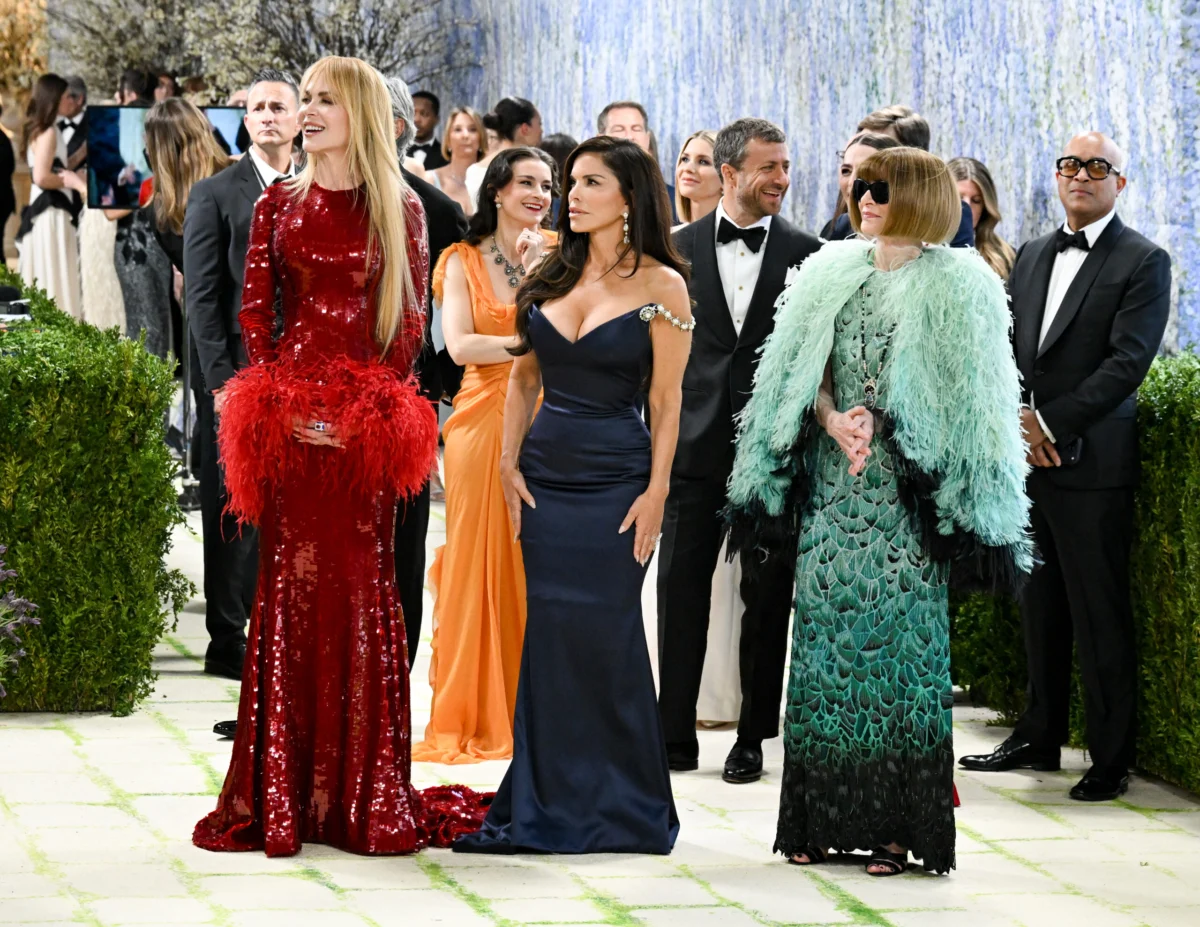
For decades, the first Monday in May has functioned as the unofficial “Super Bowl of Fashion.” From the steps of the Metropolitan Museum of Art, a carefully curated procession of A-listers, designers, and cultural titans has historically dictated the aesthetic zeitgeist for the coming year. However, as the 2026 edition of the Met Gala concludes, a lingering sentiment remains among industry insiders and fashion historians alike: the gala’s prestigious crown is not merely slipping; it is being auctioned off to the highest bidder.
The Shift: From Exclusive Prestige to Corporate Commodity
The Met Gala has always been a transaction—a symbiotic exchange of philanthropic capital for cultural capital. Yet, the post-pandemic era has accelerated a jarring transition. The 2021 and 2022 events, characterized by a sudden influx of influencers and social media personalities, signaled a departure from the “old guard” exclusivity that once defined the Costume Institute’s crown jewel.
While the influencer experiment eventually lost its footing—revealing that viral reach does not necessarily translate to red-carpet gravitas—a more formidable force has risen to fill the void: the corporate titan. If the influencers were an attempt to stay relevant in a digital-first economy, the rise of the mogul marks a surrender to the mechanics of late-stage capitalism.
The Bezos Era: A $10 Million Sponsorship
The most glaring manifestation of this shift arrived in February with the announcement that Jeff Bezos, founder and executive chairman of Amazon, and his wife, Lauren Sánchez Bezos, would serve as honorary chairs. Following the announcement, reports surfaced that the couple had personally contributed at least $10 million to the event.
The Metropolitan Museum of Art’s official communications have been transparent, if not blunt, regarding this dynamic, explicitly highlighting that this year’s exhibition and gala were “made possible” by the couple. This financial reality has triggered a profound ethical dissonance within the fashion community. Critics argue that the gala’s embrace of the Bezos family is inherently contradictory. Amazon, a primary driver of the modern fast-fashion ecosystem, has played a central role in the systematic degradation of clothing quality and the erosion of sustainable labor practices.
By crowning the faces of “disposable” retail as the patrons of the Costume Institute—an institution dedicated to the preservation of fashion as an elevated art form—the gala risks undermining its own mission. The optics are further complicated by persistent, widely discussed rumors regarding the couple’s potential interest in acquiring Condé Nast, the publishing powerhouse behind Vogue. The suggestion that the very people who have commodified the industry might soon own the magazine that validates it has created a palpable sense of unease regarding the future of fashion journalism.
Thematic Ambition vs. Red Carpet Reality
The 2026 theme, “Fashion is Art,” was designed to be an intellectual exploration of the dressed body as an embodied art form. The accompanying exhibit, “Costume Art,” aimed to survey the human form through various lenses: the classical, the pregnant, the aging, and the naked. It was an ambitious, academic premise that demanded rigor from its attendees.
However, the red carpet told a different story. In the realm of high fashion, the Met Gala is expected to be a laboratory for avant-garde expression. Instead, the 2026 red carpet felt like a disjointed collage of safe, corporate-approved choices. A recurring critique throughout the evening was the “Oscar-ification” of the looks; many guests appeared in silhouettes that would have been better suited for a standard red carpet walk than for the most experimental night in fashion.
The Problem of Creative Homogeneity
The lack of creative diversity was perhaps most evident in the prevalence of literal, uninspired references. With the entire canon of art history at their disposal, the result was a staggering lack of imagination.

- The Madame X Trend: The “Portrait of Madame X” was referenced by three separate high-profile guests—Lauren Sánchez Bezos (Schiaparelli), Claire Foy (Erdem), and Julianne Moore (Bottega Veneta)—each iteration failing to offer a fresh perspective on the iconic Sargent painting.
- The Statue Saturation: At least 15 attendees, including the Jenner sisters, Heidi Klum, and Doja Cat, arrived as various interpretations of classical sculpture.
This trend suggests a reliance on basic search-engine results rather than the deep-dive research that once defined the “Anna Wintour era” of the gala. When the elite of the entertainment industry rely on the same five Google images to dictate their sartorial choices, the result is a sterile, homogenized aesthetic that contradicts the very notion of “art.”
The Exceptions: A Trio of Excellence
Despite the broader creative stagnation, a few attendees managed to break the mold. Bad Bunny, appearing in arresting “old man” prosthetic makeup, demonstrated a commitment to the theme that extended beyond mere clothing. Madonna’s Saint Laurent look, inspired by Leonora Carrington’s The Temptation of St. Anthony, provided the kind of surrealist narrative the theme demanded. Similarly, Beyoncé’s collaboration with Olivier Rousteing, which reimagined Caroline Durieux’s The Visitor, showcased a level of research and execution that stood in sharp relief to the surrounding monotony. These moments were not just fashion statements; they were performances, proving that the Met Gala can still be a venue for true creative dialogue when the focus remains on artistry rather than optics.
Financial Implications and Future Trajectory
From a purely fiscal perspective, the 2026 Met Gala was an unparalleled success. The Costume Institute reported a record-breaking $42 million raised, an $11 million increase over the previous year. This surge is directly attributable to the “Bezos effect.”
For the Metropolitan Museum of Art, the calculation is clear: in an era of tightening arts funding and fluctuating institutional support, the influx of capital from high-net-worth individuals provides a necessary, albeit controversial, safety net. The question, however, is at what cost this financial security comes.
As the gala continues to lean into corporate sponsorship, it risks losing the very thing that made it a cultural institution: its status as an arbiter of taste. When the patrons of the event are selected for their net worth rather than their contribution to the arts, the barrier between “fashion as art” and “fashion as product” dissolves.
The Institutional Response
To date, the Costume Institute, Anna Wintour, and the leadership at Condé Nast have remained steadfast in their strategy. By integrating the new moguls of industry into the heart of the gala, they are effectively bridging the divide between Silicon Valley wealth and the legacy fashion world. Supporters argue that this is simply the evolution of the gala, reflecting the current state of the global economy where the tech billionaire has replaced the industrialist or the aristocrat as the primary benefactor of the arts.
However, the dissonance remains. As the Met Gala looks toward 2027, the central conflict remains unresolved: Can an event that claims to celebrate the sanctity of art continue to thrive while being bankrolled by the very forces that prioritize mass-market commodification?
For now, the gala stands on firm financial ground, but its cultural foundation appears increasingly precarious. The red carpet of 2026 proved that while money can buy a chair at the table, it cannot buy the creative spark that defines the history of the art form the event is meant to honor. As the industry moves forward, the pressure will mount for the Met to decide whether it wants to be a museum of living art or a showroom for the corporate elite.
 Nana
Nana
 Ali Ikhwan
 Iffa Jayyana
