

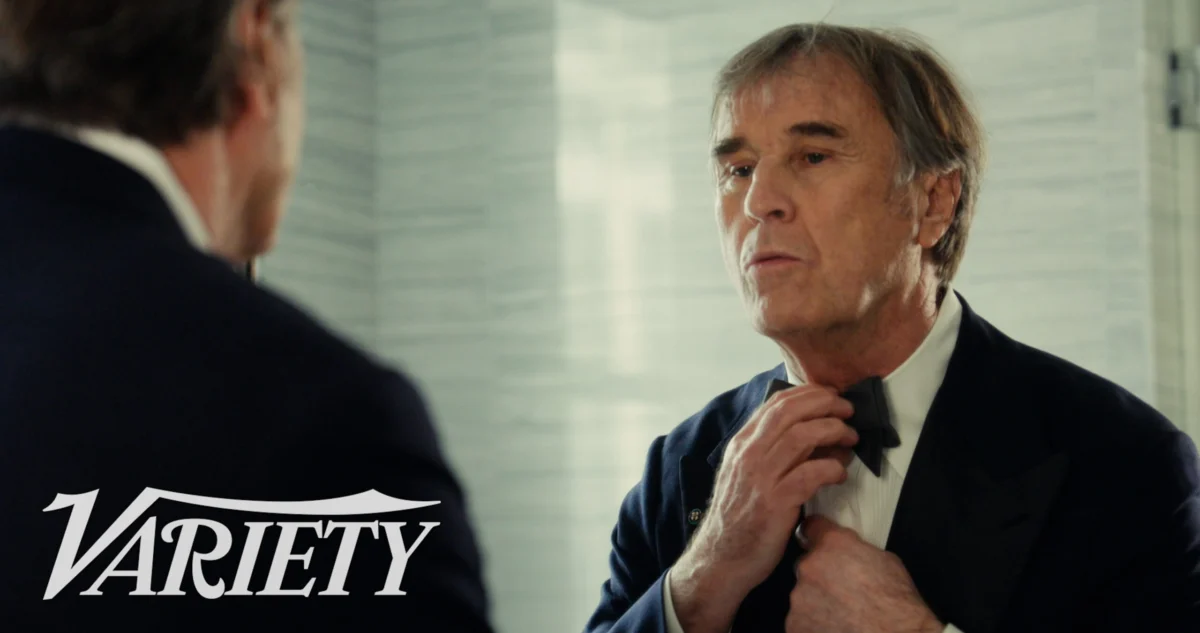
At the dawn of the new documentary Brunello: The Gracious Visionary, the camera captures a quiet, almost liturgical scene: Brunello Cucinelli, the titan of Italian luxury, walking through his Umbrian vineyards at night. He is surrounded by dozens of small, contained fires—a traditional method to protect the vines from the biting frost. At over 70 years old, Cucinelli navigates this landscape with the fluid confidence of a man who has not only built a global empire but has meticulously curated a personal ecosystem rooted in history, philosophy, and human dignity.
Last Tuesday, the setting shifted from the rolling hills of Solomeo to the electric pulse of New York City. Cucinelli, accompanied by his wife Federica and their daughters, graced the red carpet at an exclusive gala screening. The event served as a high-profile precursor to the North American theatrical release of the documentary, distributed by Blue Fox Entertainment. Yet, even amidst the flashbulbs and the bustle of Manhattan, Cucinelli remained a man of remarkable composure, eager to impart the narrative of a life defined not by the luxury of cashmere, but by the weight of humanistic values.
The Genesis of a Humanist: A Chronology of Purpose
The story of Brunello Cucinelli is often simplified to his rise as the "King of Cashmere," beginning in 1978 with a line of brightly colored, durable pullovers. However, the true narrative arc of his life began long before he touched a loom.
Born into a modest, rural farming family in Italy, Cucinelli’s early life was marked by the simplicity of the soil. The pivotal moment in his trajectory occurred when he was a young man, overhearing his father recount the indignities he suffered in a factory job. The profound sense of shame and lack of respect his father experienced became the catalyst for Cucinelli’s life’s work. He made a silent vow: if he were ever to lead a company, he would place human dignity at the center of the enterprise.
From Farmhand to Fashion Mogul
- 1978: Cucinelli founds his company, launching the iconic cashmere sweaters that would revolutionize the knitwear industry.
- The Early Years: Meeting his wife, Federica, in his teens provided the personal foundation for his eventual professional success; she became his entry point into the nuances of the fashion world.
- The Solomeo Restoration: As the company prospered, Cucinelli turned his attention to Solomeo, a medieval hamlet near Perugia. He invested millions in restoring an earthquake-damaged castle to serve as the brand’s headquarters.
- Philanthropic Expansion: Over decades, his commitment to the village grew, encompassing the development of public parks, the renovation of a local church, the construction of a world-class theater, and the establishment of a library housing over 500,000 volumes.
- 2021: Cucinelli delivers a seminal speech at the G20 Summit, urging world leaders to act as "temporary guardians of Creation."
- 2024: Brunello: The Gracious Visionary hits North American theaters, codifying his philosophy for a global audience.
A Company as a Creative Hive
To step into a Cucinelli facility is to witness an inversion of the traditional industrial model. The atmosphere is less "factory" and more "creative hive." Workers are paid significantly above the industry average, laboring under natural light with ample breaks for communal meals. For Cucinelli, the business was never solely a vehicle for profit; it was a living laboratory where his theories of "humanistic capitalism" could be tested and refined.
This philosophy has permeated the brand’s DNA. Federica Cucinelli, who oversees the Brunello and Federica Cucinelli Foundation, describes their journey as a "true fairytale." She reflects on their 54 years together, noting that the documentary serves as a monument to a life shared. "I never would have imagined that we would one day see the story of our lives turned into a film," she admits.
The Succession of Values
As the patriarch prepares for the future, the question of legacy looms large. The business is now a multi-generational endeavor. Their daughters, Carolina and Camilla, serve as vice presidents, actively interpreting the brand for a modern, digital-native generation.
At the New York gala, the sisters demonstrated how the company’s aesthetic—and ethics—are being passed down. Carolina opted for a "very feminine dress" paired with a non-traditional jacket, while Camilla showcased a color-blocked tuxedo, designed specifically to embody the company’s philosophy of breaking from rigid, monochromatic standards.
"We feel a profound sense of responsibility toward the company and the people who work alongside us every day," Carolina told Variety. "We were instilled with the concept of work as a noble pursuit: one free of coercion yet driven by a great passion. We are now weaving it into our daily work, with the hope of carrying this company and its values forward into the future."
Official Responses and Artistic Intent
Director Giuseppe Tornatore, known for his poetic sensibilities, was handpicked by Cucinelli to helm the documentary. "I wanted Giuseppe to undertake this project because he is a poet, and I believe that poets are the greatest human beings on earth," Cucinelli explained.
The film utilizes a mix of documentary footage and re-enactments, weaving together testimonials from celebrities, peers, and family members. It is intended as a testament—a record of how they have lived and a roadmap for those who will follow.
Cucinelli is candid about the challenges of succession. "One may inherit ownership, but never the actual capacity for entrepreneurship," he notes, though he is clearly comforted by the passion his daughters bring to the table. He views the film not as a promotional tool, but as a "living testament" meant to inspire the next generation to stay the course of humanistic capitalism.
Implications: The Global Reach of a Small Village
The influence of Cucinelli extends far beyond the fashion industry. His mention in popular culture—from the fictionalized narrative in Emily in Paris to the cultural shorthand of The Devil Wears Prada 2—underscores his status as a modern icon. Yet, he is eager to decouple his message from his own celebrity.
The core of his message remains remarkably consistent: "Replace fear with hope. Have a dream. Look up at the sky."
The Call to Action
For Cucinelli, the documentary is a final, urgent message to the world. He calls for a new era of business, one where the "temporary custodians of humanity" prioritize the long-term health of the planet and the dignity of the individual over the short-term quarterly gain.
The film’s success in Italy—where it garnered over $1 million during a brief, seven-day run—suggests that audiences are hungry for this message of "Gracious Vision." As it prepares for its North American debut on July 24, the film stands as a significant cultural artifact. It invites viewers to reconsider the relationship between the products they buy and the hands that make them.
Conclusion: A Legacy for the Future
As the documentary begins its North American run, the implications of Cucinelli’s life work are more relevant than ever. In an era of rapid technological disruption and environmental anxiety, the idea of "human sustainability" offers a necessary counter-narrative.
Brunello Cucinelli has spent decades proving that profit and purpose are not mutually exclusive. By restoring the soul of his company alongside the physical stones of Solomeo, he has created a model that challenges the standard capitalist playbook. Whether his vision will survive the test of time remains the central question of the documentary, but for now, the message is clear: the future belongs to those who view their work not as a means to an end, but as a noble, poetic pursuit of human dignity.
“Brunello: The Gracious Visionary” will open in theaters across the United States and Canada on July 24.
 Ali Ikhwan
 Iffa Jayyana
 Siti Muinah
