

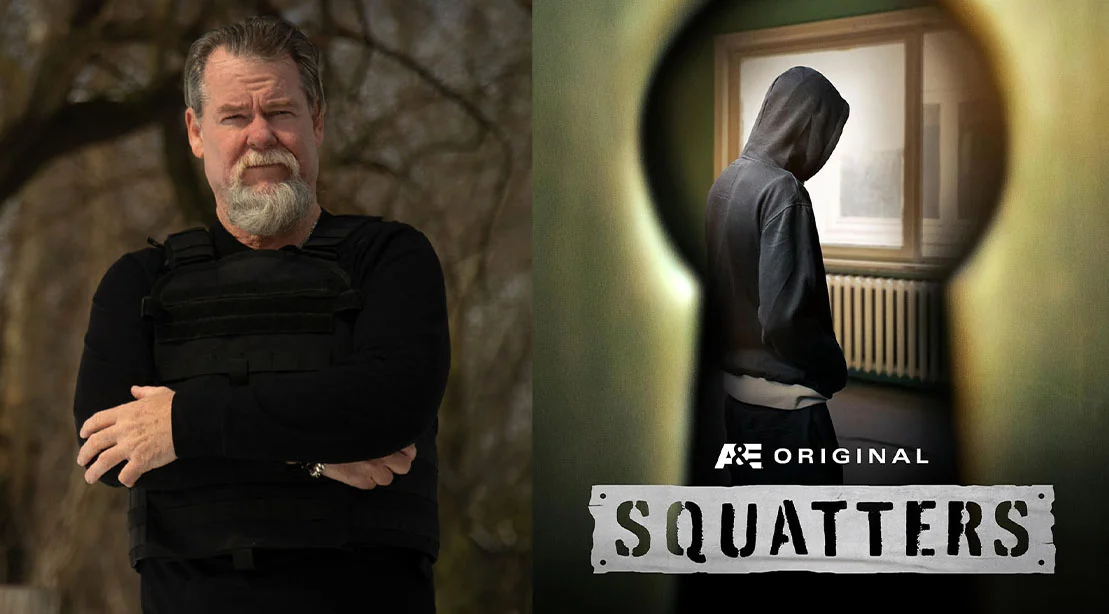
In an era where property rights are increasingly mired in complex legal gridlock, a new type of protector has emerged from the fringes of the real estate world. Flash Shelton, the star of A&E’s hit reality-docuseries Squatters, has transformed a personal tragedy into a specialized mission: reclaiming homes from individuals who refuse to leave. With a background in security, boxing, and martial arts, Shelton possesses the physical prowess of an action hero, yet he insists that his most effective tools are not his fists, but his composure, his psychological tactics, and his deep understanding of property law.
The Origin Story: A Personal Crisis Ignites a Movement
The moniker "Flash" suggests a man of action, but Shelton’s journey into the high-stakes world of property reclamation began with a quiet, devastating moment. In 2019, following the death of his father, Shelton sought to help his mother sell the family home. It was supposed to be a straightforward transition, a way to move forward after a loss. Instead, he discovered that the property had been commandeered by a group of more than half-a-dozen squatters.
When Shelton approached local law enforcement, he was met with the same wall of frustration that has faced countless property owners across the United States. Due to nuanced and often antiquated tenant-at-will laws, police frequently categorize these situations as “civil matters” rather than criminal trespassing, leaving owners helpless while squatters exploit the legal system to remain in residence.
Refusing to accept this defeat, Shelton took matters into his own hands. He spent days staking out the property, meticulously documenting the occupants’ habits. Once the group vacated the premises, he entered the home armed with a legal rental agreement signed by his mother. By re-establishing possession of the home, he successfully shifted the power dynamic. He informed the squatters that they were now in violation of the law, threatening prosecution if they did not leave. They complied, and in that moment, the "Squatter Hunter" was born.
From Bouncer to Strategist: The Evolution of a Protector
To understand Shelton’s effectiveness, one must look at his unconventional resume. Long before he was an internet sensation and a television star, he was learning the art of crowd control in the trenches of the nightlife industry.
A Background in Controlled Force
Shelton started working as a bouncer at the age of 21, a role that required constant vigilance and the ability to maintain order in volatile environments. He transitioned into competitive boxing and traveled the country, essentially acting as the real-life embodiment of the character Dalton from the cult classic Roadhouse. His job was to clean up troubled bars, train security staff, and handle aggressive patrons without allowing a situation to devolve into a chaotic brawl.
His expertise is further bolstered by his training in Wing Chun Kung Fu, a Southern Chinese martial art that emphasizes close-range self-defense and economy of motion. These experiences provided him with the physical confidence to enter high-stress environments, but they also taught him a vital lesson: violence is a failure of control.
The Philosophy of De-escalation
Despite his ability to handle himself in a fight, Shelton’s primary goal is always de-escalation. He holds certifications in conflict resolution and utilizes meditation to ensure that he arrives at a property with a calm heart rate and a clear head.
"Squatters have this entitled personality," Shelton notes. "I meditate a little bit prior, so that I can lower my heart rate, and I’m not going in with adrenaline already. Because if my physical body is already escalated when we have our first confrontation, I’m going to have a very difficult time."
When he does have to go hands-on, it is never with the intent to harm, but to neutralize a threat to himself or his team—which includes his son, Michael, and his colleague, Cameron. He describes one instance where he had to restrain a squatter simply so that a weapon could be safely removed from the room. His strength is used to dampen the energy of a confrontation, not to ignite it.
Tactics of the Trade: Psychological Warfare
Shelton’s methods for ousting squatters are as creative as they are effective. While he relies heavily on his legal knowledge and documentation, he isn’t afraid to lean into psychological pressure to make a home an inhospitable environment for those who shouldn’t be there.
In one notable episode of Squatters, Shelton leveraged a common phobia—snakes—to expedite the departure of trespassers. By introducing the presence of reptiles into the environment, he created a level of discomfort that the squatters found impossible to ignore. Furthermore, he often adopts the persona of a "nightmare roommate." By moving into the shared space and making the environment untenable, he forces the squatters to realize that their free ride is over. It is a game of patience and psychological attrition, one that Shelton almost always wins.
The Legal and Societal Implications
Shelton’s rise to fame has highlighted a massive gap in the American justice system. The existence of his profession is, in many ways, an indictment of the current legal climate regarding property rights.
The "Civil Matter" Dilemma
The central issue, according to legal experts, is that many state laws were written to protect legitimate tenants from unscrupulous landlords. Unfortunately, these same laws are now being weaponized by individuals who move into properties with the sole intent of staying as long as possible without paying rent. Because police are hesitant to arrest individuals who claim to have "tenant rights," property owners are forced into years of costly litigation in civil court.
Shelton acknowledges that his work is a stop-gap measure. "There was a problem, and it’s a worldwide problem," he says. "I felt like I needed to work to change laws. I was getting a lot of attention, and I wanted to put that toward something good."
Preventive Measures: How to Protect Your Home
Shelton is not just interested in removal; he is passionate about prevention. His primary advice to homeowners is as simple as it is effective: install high-quality security cameras.
"If I had a camera on my mom’s house originally, I wouldn’t be the Squatter Hunter today," he explains. Cameras provide objective evidence of entry, which is the difference between a civil dispute and a criminal trespassing charge. By clearly documenting the exact moment a stranger enters a home, property owners can provide the police with the evidence necessary to act decisively, potentially preventing a months-long legal ordeal.
Official Responses and the Future of Property Security
While law enforcement agencies have been slow to comment on individual cases, the broader debate surrounding squatters’ rights has reached legislative chambers. Some states are beginning to pass "anti-squatting" bills that clarify the distinction between a tenant and a trespasser, aiming to make it easier for police to intervene without fear of lawsuits.
Shelton’s show, Squatters, has become a lightning rod for this conversation, exposing the public to the reality of the crisis. By highlighting the emotional and financial toll that squatters take on families, the show has shifted the narrative from "landlord-tenant dispute" to "property rights protection."
As Shelton continues to take on cases, he remains a polarizing yet essential figure in the real estate landscape. Whether he is viewed as a vigilante or a necessary public servant, his impact is undeniable. He has provided a voice for the countless homeowners who felt abandoned by the system, and his methods have offered a blueprint for reclaiming peace of mind in a volatile housing market.
For those interested in following his work or learning more about the legal intricacies of property protection, Squatters airs on Tuesdays at 10 pm and 10:30 pm ET/PT on A&E. As the legal system continues to grapple with the realities of property rights in the 21st century, Flash Shelton remains on the front lines, one house at a time.
 Lina Hope
 rifanmuazin
 Laily UPN
