

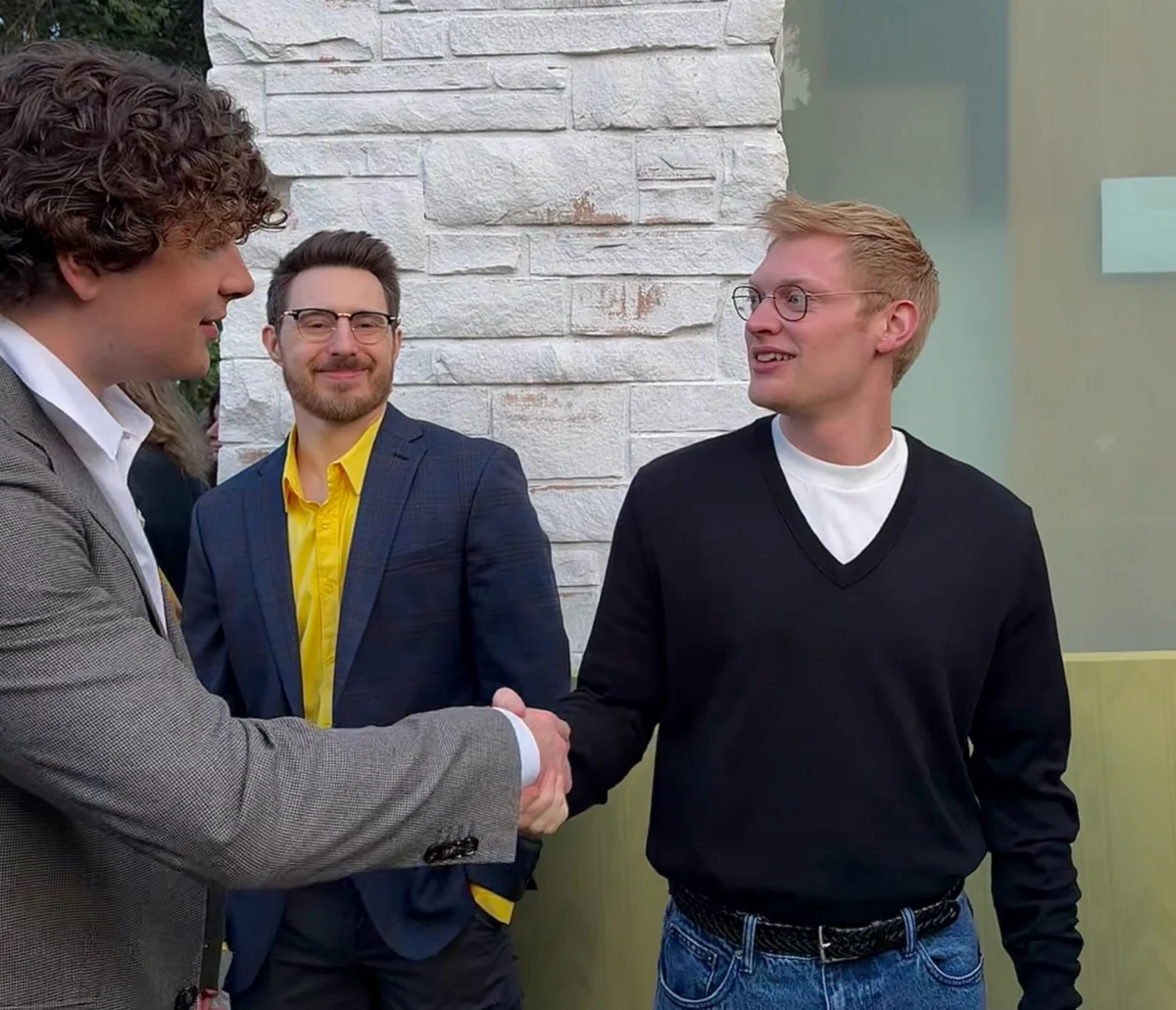
The landscape of modern horror is undergoing a seismic transformation, one where the barrier between digital-first creators and major studio machinery is not just thinning, but dissolving entirely. In May, a single photograph posted to Instagram by Jason Blum, the CEO of the newly merged Blumhouse-Atomic Monster powerhouse, captured this evolution in real-time. The image featured two of the genre’s fastest-rising auteurs, Kane Parsons and Curry Barker, shaking hands on a red carpet. To the uninitiated, it was a simple industry greeting; to Blum, it was a prophecy.
“If you want to know where horror is going, it’s that handshake,” Blum remarked. However, as the industry looks closer at that frame, another figure emerges—one who has spent a decade building the very foundation these new creators stand upon. James A. Janisse, the co-founder of the YouTube juggernaut Dead Meat, was captured in the background of that same photo. Now, in an exclusive move that cements his transition from critic to kingmaker, Janisse and his creative partner Chelsea Rebecca are launching "Fresh Meat," a groundbreaking horror short-film competition and theatrical anthology designed to bridge the gap between independent digital creators and the global box office.
Main Facts: The "Fresh Meat" Initiative
In a strategic partnership with Atlas Entertainment’s Atlas Literary and the newly formed Hades Film, Dead Meat has officially announced "Fresh Meat." This initiative is not merely a talent search but a comprehensive production pipeline. The competition invites filmmakers from across the globe to submit original horror shorts, with the ultimate goal of selecting approximately ten films to be woven into a feature-length anthology for theatrical release.
The project is spearheaded by Janisse and Rebecca, whose Dead Meat brand boasts over 7 million subscribers and nearly 2,000 videos. Their collaborator, Hades Film, is a theatrical horror label recently launched by Alex Hertzberg and Ahmet Zappa, specifically tailored to resonate with Gen Z audiences. Unlike traditional film festivals or "exposure-based" competitions, "Fresh Meat" is built on a model of financial equity. Winning filmmakers will receive cash awards and a direct share of the anthology’s profits, alongside first-look consideration for feature-length development through a joint venture between Dead Meat and Hades Films.

Furthermore, the initiative has taken a firm ethical stance in the current technological climate: the use of generative AI is strictly prohibited. This "creator-first" ethos reflects the core values Janisse and Rebecca have championed throughout their decade-long tenure as the internet’s most trusted horror ambassadors.
Chronology: From Viral "Backrooms" to Theatrical Realities
The road to "Fresh Meat" is paved with the viral successes of the digital age. The timeline of this emergence began in earnest with Kane Parsons, whose The Backrooms series transformed "liminal space" aesthetics into a global phenomenon, eventually leading to a feature deal with A24 and Atomic Monster. Following closely was Curry Barker, whose short film Obsession caught the attention of Blumhouse, proving that YouTube was no longer just a hobbyist platform, but a premiere scouting ground for major IP.
The specific genesis of the "Fresh Meat" project traces back to the collaborative efforts of Dead Meat and their representation at The.Team. Over the last several years, Janisse and Rebecca have refined their roles as curators through their "Kill Count" series and the Dead Meat Horror Awards.
The immediate timeline for the competition is as follows:

- July 18: The fifth annual Dead Meat Horror Awards stream live, serving as a precursor to the official launch.
- July 25: Submissions for "Fresh Meat" officially open to the public.
- August 24: The submission window closes.
- September: Evaluation and selection process conducted by Dead Meat and Hades Film.
- October 12: The planned theatrical release date for the "Fresh Meat" feature anthology, handled by Variance Films.
This aggressive turnaround—from submission to cinema in less than three months—underscores the agility of the Hades Film model and the demand for timely, relevant horror content.
Supporting Data: The Power of the Dead Meat Community
To understand why a major entity like Atlas Entertainment would partner with a YouTube channel, one must look at the data behind the Dead Meat brand. Since its inception, the channel has become the epicenter of horror discourse online.
- Reach: With 7 million subscribers and a library of 1,800+ videos, Dead Meat generates millions of views weekly.
- Demographics: The audience is primarily composed of the "horror-literate" Gen Z and Millennial cohorts—the exact demographic that currently drives the domestic box office for films like Smile, Talk to Me, and Barbarian.
- Engagement: The "Kill Count" series does more than tally on-screen deaths; it provides technical analysis of practical effects, cinematography, and script structure. This has effectively educated a generation of viewers on the "how" and "why" of filmmaking, creating a highly sophisticated consumer base.
By leveraging this existing community, "Fresh Meat" bypasses the traditional, often prohibitively expensive marketing cycles of independent film. The audience is already built-in, and their feedback will be integrated into the selection process, ensuring the final anthology has a pre-verified market fit.
Official Responses: Industry Leaders Weigh In
The endorsement of Jason Blum serves as a significant validation of this new path. “James and Chelsea know this genre inside and out,” Blum told IndieWire. “Their audience is exactly who these movies are for.” This sentiment is echoed by those directly involved in the project’s infrastructure.

Alex Hertzberg, CEO of Atlas Literary and principal at Hades Film, emphasizes the "hospitality" of the Dead Meat brand. “They have held the audience’s hand and made it okay to explore all manner of horror,” Hertzberg noted. “They’ve taken something that’s intimidating and potentially upsetting and really made it accessible over years.”
For Janisse and Rebecca, the project is a return to their roots. Both attended film school and moved to Los Angeles with the same aspirations as the filmmakers they are now seeking to discover. “We’ve been there: fresh to Los Angeles, wanting to make movies, having no money,” Rebecca shared. “There have been countless meetings to figure out the logistics of how we can make sure filmmakers are fully supported by this.”
Dan Levitt, SVP of original content at The.Team, views the initiative as a sustainable evolution of talent scouting. “The relationship Dead Meat has fostered with its audience… has formed the perfect foundation for projects like ‘Fresh Meat.’ It’s about opening up the doors to find fresh, innovative, and hopefully terrifying stories in a way that respects the creator.”
Implications: A New Era for the Horror Box Office
The launch of "Fresh Meat" carries profound implications for the future of the film industry, particularly in how "gatekeeping" is being replaced by "curation."

1. The Democratization of the Feature Film
Historically, the path to a theatrical feature required a series of gatekeepers: agents, festival programmers, and studio executives. By creating a direct pipeline from a YouTube submission to a theatrical release via Variance Films, Dead Meat is democratizing the path to professional success. This model suggests that "talent" is no longer defined by proximity to Hollywood, but by the ability to captivate an audience digitally.
2. Profit-Sharing as the New Standard
The decision to offer filmmakers a stake in the box office and first-look deals is a direct challenge to the "work-for-hire" or "exposure" models that have dominated the indie short-film circuit for decades. If "Fresh Meat" proves successful, it may force other anthologies and festivals to reconsider their financial relationships with creators.
3. The AI Divide
By explicitly banning generative AI, Dead Meat is planting a flag in the ground for human-led creativity. In an industry currently embroiled in debates over the role of automation, this move ensures that the "Fresh Meat" anthology remains a showcase for craft, practical ingenuity, and human perspective—elements that the horror community has traditionally valued above all else.
4. Gen Z and the Theatrical Experience
With Hades Film specifically targeting Gen Z, the project addresses the industry’s greatest anxiety: how to get younger audiences into theaters. By utilizing influencers like Janisse and Rebecca—who are viewed as peers rather than distant corporate entities—the project frames the theatrical experience as a community event. The planned TVOD (Transactional Video on Demand) rollout following the theatrical window further ensures the content meets the audience where they are.

Conclusion
The "handshake" Jason Blum highlighted was more than a moment of mutual respect; it was a signal that the next generation of horror icons is already here, and they aren’t waiting for permission to enter the building. Through "Fresh Meat," James A. Janisse and Chelsea Rebecca are transitioning from the role of observers to the role of architects.
As submissions open on July 25, the horror world will be watching to see who the next "Kane Parsons" or "Curry Barker" might be. One thing is certain: the future of horror will be found in the innovative, the independent, and the terrifyingly human voices that Dead Meat is now ready to bring to the big screen.
 Jia Lissa
 Lina Irawan
 Iffa Jayyana
