

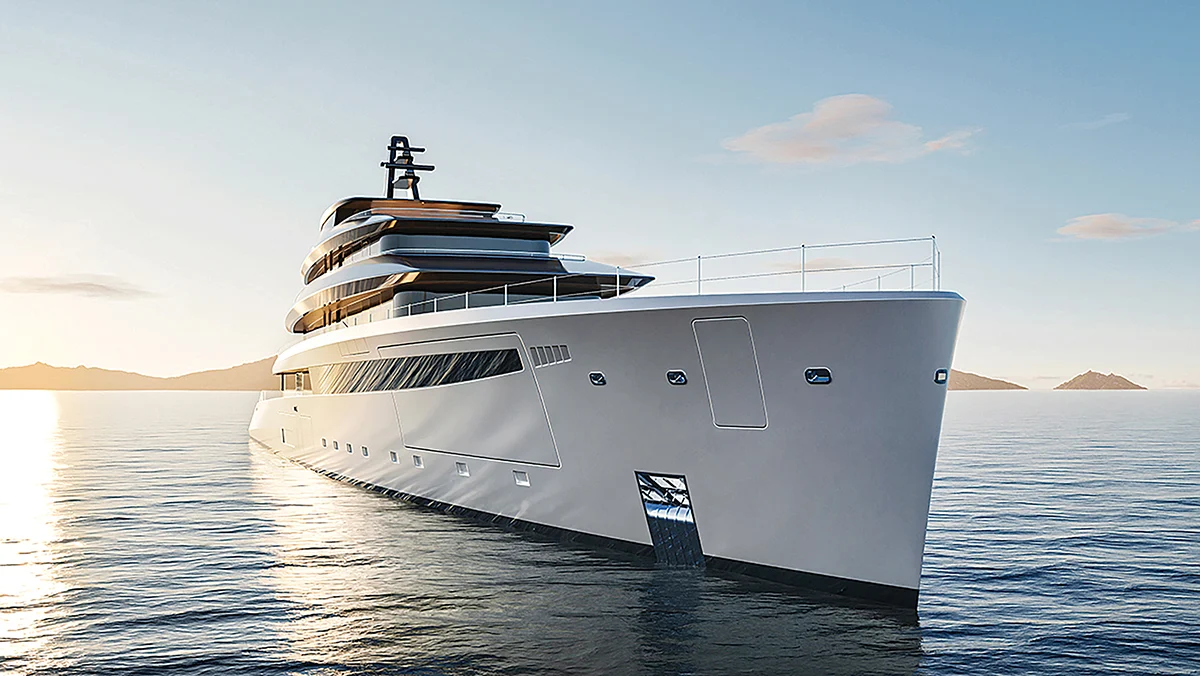
For decades, the standard vocabulary of superyacht ownership was defined by excess. Massive beach clubs served as temples of hedonism, multi-tier sun decks were built for champagne-soaked lounging, and itineraries prioritized idle cruising from one exclusive port-of-call to the next. The goal was simple: conspicuous consumption wrapped in teak and polished steel.
Today, however, the paradigm has experienced a seismic shift. Walk onto the bridge deck or into the aft spaces of the world’s most advanced custom vessels, and you are far more likely to encounter a state-of-the-art cryotherapy chamber, a specialized hyperbaric unit, or a crew of certified wellness coaches than an overflow of vintage spirits. Onboard regimens have pivoted decisively from chilling out to working out. Longevity, biohacking, and holistic health have officially become the ultimate status symbols of maritime luxury.
Main Facts: The Wellness Transformation at Sea
The transformation of the superyacht industry from a floating playground into a waterborne wellness clinic is no longer a fringe movement for health-obsessed billionaires—it is the new baseline for high-end maritime design. Shipyards, naval architects, and bespoke charter agencies are redesigning vessels from the keel up to support human optimization, prioritizing physical vitality, mental clarity, and long-term health.
This shift is visible across every tier of the market, from multi-hundred-foot gigayachts to semi-custom explorer vessels.
- The Infrastructure of Health: Modern superyachts now incorporate clinical-grade recovery tools, including snow showers, infrared therapy walls, chromotherapy baths, and ice-shaving stations, alongside traditional saunas and steam rooms.
- Redefined Spatial Planning: Rather than relegating fitness areas to cramped, windowless spaces below deck, contemporary naval architects place gyms, spas, and sports courts in prime real estate—such as bridge decks and expansive aft beach clubs.
- The Evolution of Crew: Superyacht crew members are no longer hired solely for seamanship and hospitality. Captains, management companies, and owners actively seek out crew with advanced certifications as yoga instructors, licensed massage therapists, and nutrition-focused culinary artists.
- Ecosystem-Level Design: Wellness is no longer viewed as a checklist of isolated amenities. Shipyards are engineering entire vessel ecosystems that carefully manage air purification, natural light penetration, acoustic noise reduction, and thermal comfort to enhance sleep quality, recovery, and energy levels.
Chronology: From Lounging to Longevity
To understand how the superyacht industry arrived at this wellness-obsessed era, it is helpful to trace the gradual evolution of life on board over the past decade.

Phase 1: The Traditional Era of Leisure
Historically, superyachts were designed primarily for relaxation and entertainment. Social dynamics on board revolved around formal dining, sunbathing, and late-night gatherings. While basic gym equipment—usually a stationary bicycle or a treadmill—was often tucked into a spare corner, it was rarely utilized as a core component of the voyage.
Phase 2: The Fitness Integration
As health and fitness consciousness entered the mainstream in the 2010s, yacht owners began demanding dedicated exercise spaces. Beach clubs, once reserved exclusively for water-toy storage and lounging, were transformed into functional gyms. Helipads began doubling as makeshift tennis and pickleball courts during extended anchorages. Personal trainers became regular fixtures on elite charter itineraries.
Phase 3: The Holistic Voyage
By the late 2010s and early 2020s, everyday fitness evolved into structured, holistic routines. A prime example of this transition is experienced by professionals like Sean Joyce, who spent years working as a deckhand and wellness coach aboard luxury explorer vessels.
During a notable three-month voyage spanning from Bali to Sweden aboard a 241.5-foot explorer yacht, Joyce’s daily routine with the 70-year-old owner and his 30-something son set a new standard for maritime travel. Every morning over coffee, Joyce would present three curated running routes—categorized as easy, medium, or hard. The duo would select their challenge, head ashore to run while the yacht cruised down the coast to meet them at the finish line, and immediately plunge into ice baths upon returning to the vessel.
"Their day was centered around wellness, rather than lounging," recalls Joyce, who now works as a project manager at Cookson Adventures, crafting bespoke charters centered on holistic health.

Phase 4: The Era of Conscious Longevity
Today, the movement has matured into a full-scale redesign of the superyacht architecture itself. Shipyards are no longer adding wellness features as retrofits; they are building entire structural and mechanical ecosystems centered on human longevity.
Supporting Data and Notable Vessels
The shift toward wellness-centric engineering is best illustrated by the groundbreaking vessels launched or unveiled over the past few years, which demonstrate how shipbuilders are redefining maritime architecture.
1. Kismet (Lürssen, 400 Feet)
Delivered two years ago, this massive gigayacht features a Balinese-inspired spa that rivals land-based wellness retreats. Alongside orthodox amenities like a traditional sauna, plunge pool, and private treatment room, Kismet houses advanced recovery tech including a cryotherapy chamber, an ice-shaving station, and a chromotherapy bath designed to influence mood and cellular recovery through light therapy.
2. Project Ananda (Heesen, 236 Feet)
Unveiled by Dutch shipyard Heesen, Project Ananda is engineered from the blueprints up as a waterborne spa. Its nearly 1,100-square-foot beach club accommodates a comprehensive wellness circuit: a sauna, a steam room, an ice bath, a snow shower, a dedicated treatment room, and even a clinical-grade hyperbaric chamber.
3. Ahpo (Lürssen, 377 Feet)
Conceived by Venetian design firm Nuvolari Lenard, Ahpo was purposefully engineered around the principles of extended cruising and healthy living. Co-founder Dan Lenard notes that every single design decision—spanning spatial planning, interior atmospheric controls, and traffic circulation—was optimized to promote vitality on board, moving far beyond the traditional sky-deck gym.

4. Sea Rover Series (Dutch Design, 140 Feet)
Demonstrating that the wellness trend is not restricted to gigayachts, California entrepreneur Scott Blum developed the Sea Rover series after failing to find a production model that matched his active lifestyle. Built in the Netherlands, the 140-foot vessel flips conventional yacht layouts entirely. Its spa, gym, and sports court occupy prime real estate on the bridge deck, while an atrium-like "skywell" channels natural light through every level. Crucially, the vessel’s interior dimensions were dictated by its hot- and cold-plunge pools and infrared therapy wall. "Whatever came after that was secondary," Blum states.
Official Responses and Industry Perspectives
Industry leaders and innovators are unanimous in their assessment that the demand for onboard wellness is structural, permanent, and rapidly accelerating.
-
Laurens Last, Owner of Heesen:
"Owners are becoming far more informed about how their environment affects sleep, recovery, energy levels, and long-term health."
Last emphasizes that future superyacht design will increasingly treat elements such as advanced air purification, optimized natural light diffusion, comprehensive acoustic noise reduction, and precise thermal comfort as mandatory infrastructure rather than luxury upgrades.

-
Dan Lenard, Co-Founder of Nuvolari Lenard:
"Longevity is becoming a new expression of luxury."
Lenard explains that true modern prestige is no longer measured purely by the square footage of marble or the rarity of wood veneers, but by how successfully a vessel contributes to the physical and mental preservation of its occupants.
-
Scott Blum, Founder of the Sea Rover Project:
"By putting the spa before the staterooms, this design flips the superyacht script from conspicuous consumption to conscious longevity."

-
Sean Joyce, Project Manager at Cookson Adventures:
"Yachting is obsessed with health and wellness… Guests no longer want to spend weeks eroding their healthy habits while at sea. They want to return home feeling transformed, energized, and optimized."
Implications: The Future of Maritime Luxury
The rapid pivot toward wellness-integrated superyachts carries profound implications for the global maritime industry, interior architecture, and luxury travel markets.
1. Architectural Evolution
Naval architects and marine engineers must now collaborate closely with medical professionals, sleep scientists, and holistic health practitioners. Designing a quiet, vibration-free environment with medical-grade air filtration requires revolutionary approaches to hull vibration dampening, HVAC engineering, and acoustic insulation.
2. The Redefinition of Luxury Real Estate
For generations, the most coveted interior spaces on a yacht—such as the upper deck aft or forward-facing master suites—were reserved for grand social entertaining or panoramic views. By surrendering these prime vantage points to gyms, yoga studios, and recovery clinics, owners are signaling a fundamental shift in values. Health is viewed as the ultimate luxury asset, one that cannot be bought off-the-shelf and must therefore be engineered into the physical spaces where we live and travel.

3. Crew Training and Hospitality Standards
The standard job description for superyacht crew is undergoing a permanent rewrite. Maritime academies and crew placement agencies are seeing a surge in demand for specialized certifications. A modern chief stewardess or deckhand who also holds credentials in breathwork instruction, personal training, or sports massage possesses an immense competitive advantage in the high-end charter market.
4. The Broader Cultural Ripple Effect
As ultra-high-net-worth individuals increasingly normalize longevity-focused travel, these innovations will inevitably trickle down into broader sectors of the hospitality and residential design industries. Just as private aviation and superyachts have historically driven trends in high-end interior design and automation, the "conscious longevity" yacht movement is establishing a new global benchmark for how human environments should function.
Ultimately, the modern superyacht is shedding its historical reputation as a floating monument to excess. In its place rises a sophisticated, highly optimized vessel designed for a singular purpose: empowering its guests to live better, recover faster, and extend their prime years while navigating the world’s most breathtaking waters.
 Evan Lee Salim
 Asep Darmawan
 Laily UPN
