

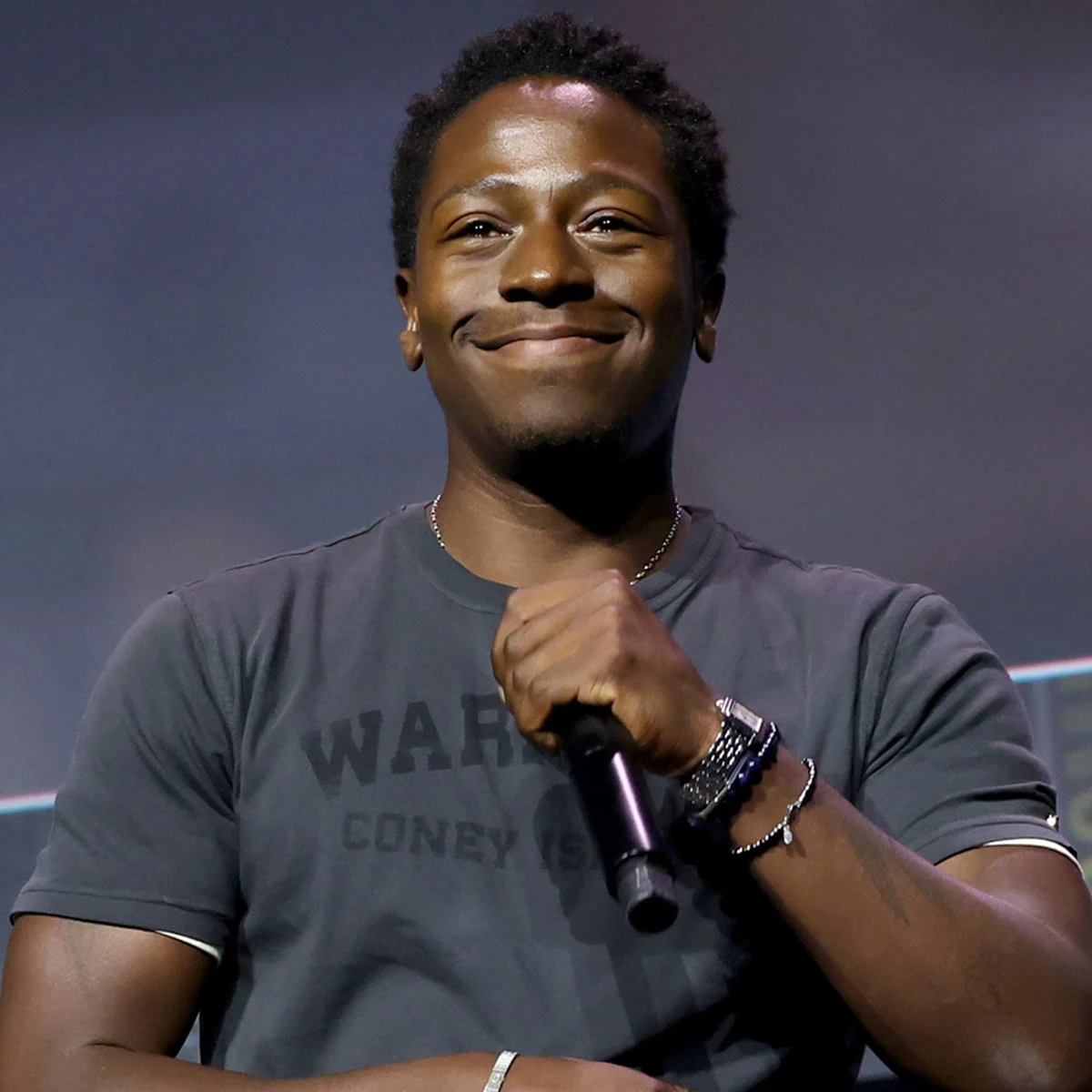
The Marvel Cinematic Universe (MCU) is entering a new era of legacy and transformation. As fans look toward the December 15, 2028, release of Black Panther 3, the spotlight has shifted to David Jonsson, the Industry and Alien: Romulus star recently confirmed to take up the mantle of the legendary superhero. Following the tragic passing of Chadwick Boseman in 2020 and the poignant narrative shift in Wakanda Forever, Jonsson’s casting as the adult Prince T’Challa II marks a significant milestone in the franchise’s history.
The Physical Transformation: A Hero’s Journey
The path to embodying the Protector of Wakanda is as rigorous as it is transformative. On September 19, Jonsson provided his followers on Instagram with an intimate, raw look at his training regimen. In a series of photos, the 33-year-old actor showcased a disciplined routine, visibly exhausted yet driven, as he prepares to step into a role that requires peak athletic conditioning.
Beyond the weight room, Jonsson highlighted the essential, often overlooked reality of high-octane franchise filmmaking: recovery. One clip featured the actor in his trailer, stretching between takes while listening to Frank Ocean—a quiet, grounded moment of preparation before returning to the intensity of the set. The actor’s recent shirtless reveal, showcasing a chiseled physique, has already generated significant buzz, signaling that he is fully committed to the physical demands of the character.
A Legacy of Casting: From Iron Man to T’Challa
The selection of Jonsson follows a long, storied tradition of casting choices that have defined the last two decades of superhero cinema. Marvel Studios President Kevin Feige has long maintained that casting is the "secret sauce" of the MCU, often favoring actors who bring a specific gravitas or "humanity" to larger-than-life roles.
The Iron Man Precedent
The casting of Robert Downey Jr. as Tony Stark remains the benchmark for the studio. At the time, director Jon Favreau fought to cast the actor, despite significant industry pushback regarding Downey’s personal history. Favreau saw the parallels between Stark’s own redemption arc and the actor’s journey. As Feige famously noted, "The MCU would not exist without Robert Downey Jr." The risk proved to be the most lucrative gamble in Hollywood history.
The "Captain America" Search
Similarly, the search for Steve Rogers was described by Feige as "super hard." Chris Evans, initially hesitant due to the sheer scale of the commitment and his own personal anxieties, ultimately accepted the role after internal reflection. His performance became the moral anchor of the first three phases of the MCU, proving that the right casting can transcend the source material.
The Black Panther Foundation
Chadwick Boseman’s casting as T’Challa was, by all accounts, an effortless alignment of talent and character. Executive producer Nate Moore suggested Boseman during a meeting, and the team reached out immediately. There were no auditions and no lengthy negotiations. Boseman’s performance not only broke records but also solidified Black Panther as the first superhero film to receive a Best Picture nomination at the Academy Awards. The decision to not recast T’Challa following Boseman’s death was a deliberate move to honor his singular contribution, making the introduction of his onscreen son, T’Challa II, a delicate and highly anticipated narrative progression.
Supporting Data: The Anatomy of an MCU Star
The MCU’s casting process is rarely a straightforward path. It is a complex ecosystem of screen tests, chemistry reads, and, occasionally, "near misses" that become part of Hollywood lore:
- The Thor Rivalry: Chris Hemsworth’s casting as Thor was born from a "brotherly rivalry." After Liam Hemsworth almost landed the role, Chris channeled his frustration into a second audition, which ultimately won over the studio.
- The Loki Twist: Tom Hiddleston originally auditioned for the role of Thor. After seeing his performance, the studio realized his nuanced approach was better suited for the god of mischief, Loki.
- The Hulk’s Evolution: The transition from Edward Norton to Mark Ruffalo highlighted Marvel’s need for "collaborative spirit" in its ensemble films, a shift that transformed the Hulk from a standalone struggle into a vital team player.
- The Guardians’ Human Element: Chris Pratt’s transformation for Guardians of the Galaxy is frequently cited as a turning point. James Gunn initially had reservations, but 20 seconds into Pratt’s audition, he knew he had found his Peter Quill.
Official Responses and Strategic Implications
As Black Panther 3 moves into production, the addition of legendary actor Denzel Washington—whose role remains shrouded in secrecy—alongside returning stars Letitia Wright, Lupita Nyong’o, and Winston Duke, sets the stage for a massive cinematic event. Ryan Coogler, returning to write and direct, continues to steer the franchise with a focus on emotional depth and cultural significance.
For David Jonsson, the pressure is immense, yet his approach remains measured. During a recent Comic-Con appearance, he offered a humble perspective on joining the Marvel family: "I don’t want to say too much because I want to let the screen do the talking. But believe me, the honor is entirely mine."
The Strategic Shift
The implications of this casting are clear: Marvel is looking to bridge the gap between the established legacy of the Infinity Saga and the next generation of heroes. By casting an actor with Jonsson’s dramatic range, the studio is signaling that the third Black Panther film will continue to prioritize character-driven storytelling over spectacle alone.
The Path Forward
The journey to 2028 is long, and the expectations for Black Panther 3 are unprecedented. The franchise is no longer just about adapting comic books; it is about managing a cinematic cultural touchstone. With the blend of seasoned veterans like Denzel Washington and the rising talent of David Jonsson, the project represents a fusion of theater-level acting and blockbuster scale.
As fans continue to analyze every workout photo and cryptic social media update, one thing remains certain: the mantle of the Black Panther is in a state of evolution. Whether the story will explore the burden of kingship, the complexities of the throne, or the weight of a father’s legacy, the industry, and the audience, are watching closely.
The evolution of the Marvel hero has always been about more than just costumes and powers—it has been about the actors who dare to fill those boots. If history is any indicator, David Jonsson is not just stepping into a role; he is entering a lineage of performers who have helped redefine what a modern hero looks like. As the countdown to December 15, 2028, begins, the focus remains on the training, the preparation, and the promise of a new king of Wakanda.
 Sagoh
Sagoh
 Siti Muinah
 Nana
Nana
