

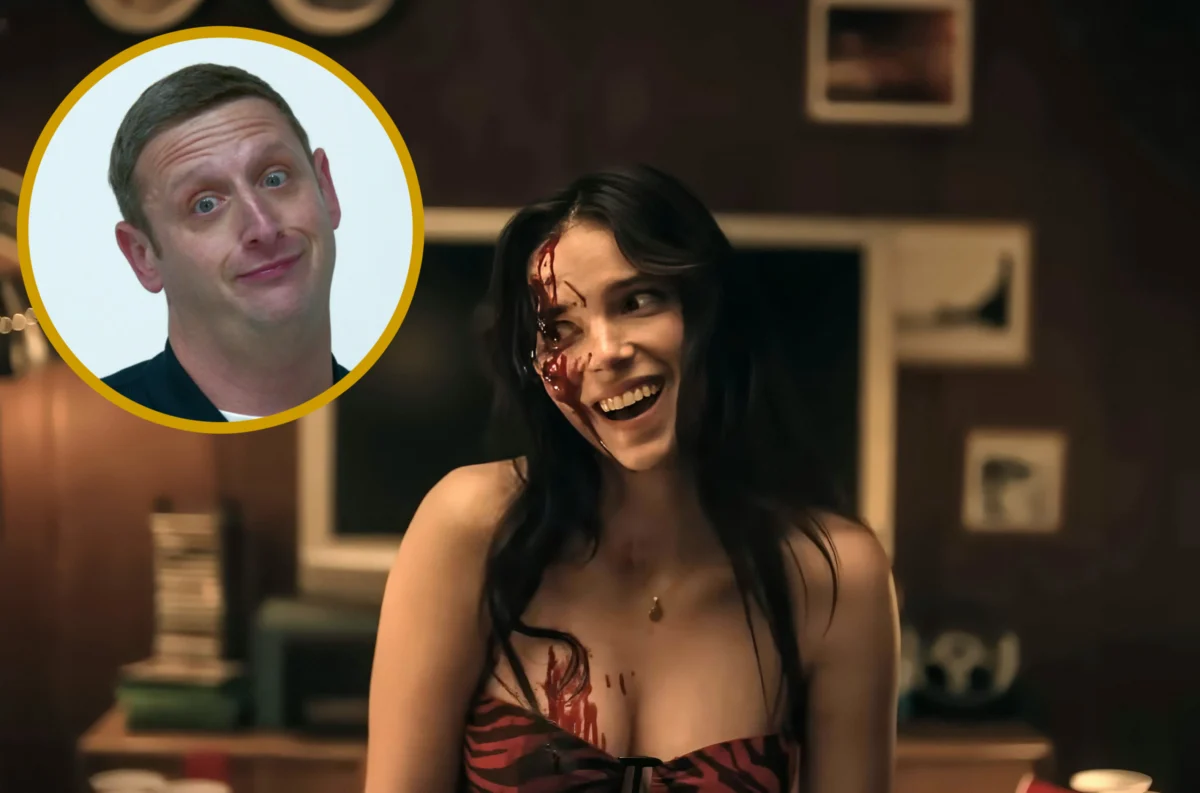
In the landscape of modern cinema, few stories have captured the cultural zeitgeist quite like Curry Barker’s Obsession. Acquired by Focus Features following a seismic debut at last year’s Toronto International Film Festival (TIFF), the film represents a paradigm shift in how indie features are greenlit, marketed, and consumed. Barker, a 26-year-old visionary who transitioned from the DIY aesthetics of YouTube to the high-stakes world of feature filmmaking, has delivered what is arguably the most fascinating cinematic phenomenon of 2026. Currently sitting as the fourth-highest-grossing domestic release of the year, Obsession has transcended its micro-budget roots to become a genuine cultural touchstone, even sparking serious conversations about a potential Academy Awards campaign for its breakout star, Inde Navarrette.
However, as the film settles into its role as a bona fide blockbuster, it has also become a lightning rod for the internet’s most obsessive investigative impulses. Amidst the legitimate discourse surrounding the film’s tension-filled narrative and Navarrette’s scene-stealing performance, one bizarre, unverified mystery has dominated social media forums and fan-theory threads: Is comedy titan Tim Robinson in Obsession?
The IMDb Anomaly and the Power of Speculation
The genesis of this peculiar rumor lies within the digital architecture of IMDb. For weeks, sharp-eyed Redditors and eagle-eyed fans combing through the film’s credits noted that the co-creator and star of the hit sketch series I Think You Should Leave and the recent sensation The Chair Company was listed in the cast as "Background."
In the era of streaming and instant access, the "background actor" credit is often a breeding ground for myth-making. Fans immediately began theorizing that Robinson, known for his penchant for surrealist, niche humor, had inserted himself into Barker’s film as a hidden "Easter egg." The internet’s collective imagination ran wild with scenarios: Was he tucked away in a crowded restaurant scene? Was he a background extra in a panic-stricken city street, perhaps "slopping up a steak" in a callback to his iconic I Think You Should Leave sketches?
The presence of a credit on a site as widely trusted as IMDb gave the rumor a veneer of legitimacy. For a generation of moviegoers raised on "blink-and-you-miss-it" cameos and director-led pranks, the idea that a comedic heavyweight like Robinson would make a non-speaking, inconspicuous appearance in an intense horror-thriller seemed not only plausible but entirely in character.
Chronology of a Viral Rumor
The timeline of this rumor is a case study in how misinformation—or at least misattribution—spreads in the digital age.
- September 2025: Obsession premieres at TIFF to critical acclaim. The buzz surrounding Curry Barker’s transition from YouTuber to auteur begins.
- Early 2026: As the film hits theaters and begins its climb up the domestic box office charts, users on Reddit begin tracking the film’s credits with obsessive detail. The discovery of Tim Robinson’s name on the IMDb page acts as the catalyst.
- May 2026: An interview with Curry Barker in Culture magazine adds fuel to the fire. Barker reveals that he had previously reached out to Robinson for unspecified reasons and that the two had exchanged messages. This nugget of truth—that a professional connection existed—was immediately conflated by the public with the idea that a professional collaboration had occurred.
- Late May 2026: Gold Derby, investigating the claim, secures an interview with Robinson and his Chair Company cinematographer, Ashley Connor.
- June 30, 2026: The scheduled date for the film’s digital release, providing a definitive opportunity for fans to pause, zoom, and analyze every frame in search of the elusive comedian.
The Intersection of Digital Media and Traditional Film
The confusion surrounding Robinson’s involvement is symptomatic of a larger shift in the industry. Curry Barker represents a new breed of filmmaker—one who understands the language of the internet, the power of algorithmic discovery, and the importance of maintaining an online community. By coming from YouTube, Barker invited a level of scrutiny that traditional directors rarely face. His audience is one that is accustomed to "decoding" content, searching for clues, and treating a film as an interactive puzzle rather than a passive viewing experience.
When Barker revealed his prior correspondence with Robinson, he likely intended it as a transparent look at his networking process. However, in the high-velocity environment of social media, that transparency was repurposed into evidence. The internet does not care for nuance; it cares for narrative. The narrative of "Tim Robinson hiding in a horror movie" was simply too entertaining to let go of, regardless of the lack of corroborating evidence.
The Official Response: Setting the Record Straight
The fervor reached its peak when Gold Derby had the opportunity to ask the man himself. During an interview regarding his recent work on The Chair Company, the question was posed directly to Robinson.
"No," Robinson stated definitively. "I haven’t even seen it."
The answer was blunt, characteristically dry, and entirely devoid of the "meta" ambiguity fans were hoping for. There was no secret wink, no allusion to a deleted scene, and no confirmation of a hidden cameo. The IMDb credit, it seems, was a classic case of digital misinformation—an unverified addition by a user that took on a life of its own, ballooning into a piece of "accepted" trivia that had no basis in reality.
Implications for Film Literacy and IMDb Reliability
The Obsession/Robinson saga serves as a cautionary tale for modern media consumption. It highlights the inherent fallibility of crowdsourced databases. While IMDb remains an essential tool for film historians and audiences, it is not immune to the "Wiki-fication" of information, where an enthusiastic or mischievous user can inject false data that is then picked up by secondary sources and news aggregators, eventually creating a feedback loop of false consensus.
Furthermore, this episode underscores the unique challenges faced by creators like Curry Barker. As filmmakers who have built their brands on the internet, they are subject to a level of "fan-policing" that borders on the fanatical. Every frame, every background extra, and every peripheral credit is now subject to intense, often forensic, analysis. While this level of engagement is a testament to the film’s impact, it also creates a landscape where the truth is often buried under layers of viral conjecture.
Conclusion: The Search for Meaning in the Digital Void
As Obsession prepares for its digital release on June 30, the "Tim Robinson mystery" will likely persist, even after his direct denial. There is a psychological comfort in the search—a desire to find a hidden layer of humor in a dark thriller, or a connection between two disparate creative worlds. Even when provided with the facts, the "obsessives" of the internet may still choose to believe that Robinson is hidden in the shadows, waiting to be found.
For now, however, the record is clear. Obsession remains a triumph of independent filmmaking, a 26-year-old’s dream brought to the big screen, and a commercial powerhouse. It does not need a surprise cameo from a comedy icon to justify its place in the 2026 box office record books. Its success is built on the strength of its direction, the quality of its writing, and the power of its performances—not on the imagined presence of a sketch comedian who, by his own admission, hasn’t even bought a ticket.
As the film moves to home screens, it will undoubtedly undergo the "frame-by-frame" treatment. Perhaps in the process, viewers will find something else entirely—a new detail, a hidden thematic thread, or a genuine Easter egg that hasn’t been debunked. But for those looking for Tim Robinson, the answer remains a firm, resolute "no." Sometimes, the most interesting part of a phenomenon isn’t the mystery itself, but the way we choose to create it.
 Ammar Sabilarrohman
 Siti Muinah
 Iffa Jayyana
