

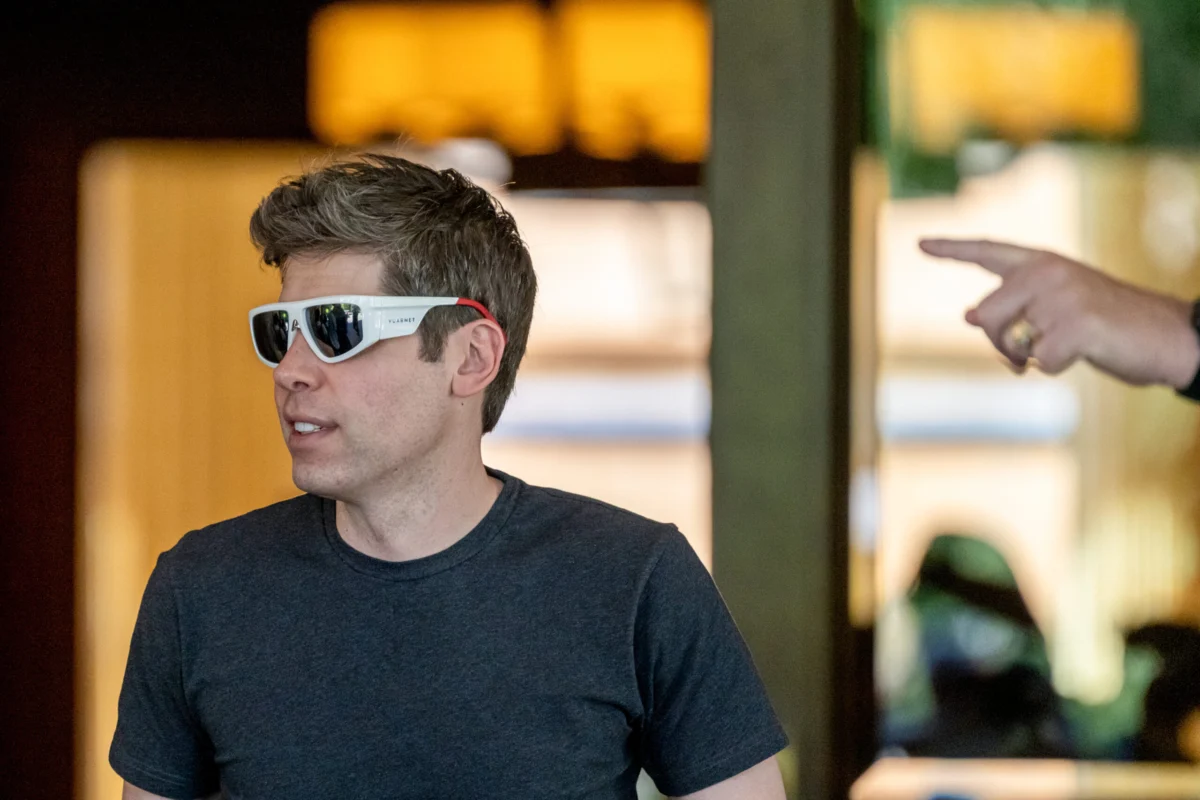
The escalating digital feud between OpenAI CEO Sam Altman and SpaceX founder Elon Musk has transcended the typical banter of Silicon Valley executives. Over the weekend of July 11–13, 2026, the two titans of industry engaged in a heated public exchange that highlighted a fundamental rift in the current tech landscape: the aggressive, high-stakes promise of orbital data centers versus the cold, unforgiving economic reality of space logistics.
As SpaceX navigates the complexities of its historic $2 trillion IPO, the company’s valuation has become inextricably linked to the concept of "space-compute"—the idea that AI inference models can be efficiently processed in orbit. Altman’s critique, while biting, has inadvertently shined a spotlight on a narrative that investors may be choosing to ignore.
The Genesis of the Conflict: A Clash of Visions
The latest confrontation began when Elon Musk publicly accused Sam Altman of being a "scammer," a label that has become a staple of Musk’s recent social media repertoire when addressing his rivals. Altman’s retort, calling the SpaceX CEO "homeboy" before pivoting to a sharp critique of the space-compute business model, caught the industry by surprise.
"Homeboy, you’re the one selling public market investors on short-term space datacenters," Altman wrote on X.
While the tone was informal, the substance of the argument is significant. Altman is essentially calling out a disconnect between the marketing of "orbital AI" and the engineering feasibility of such a project. To the casual observer, the idea of a space-based supercomputer sounds like the pinnacle of human achievement. To the subject-matter expert, however, the math simply does not support a near-term transition to space-based compute infrastructure.
Chronology of the Space-Compute Hype
The narrative of orbital compute has been building momentum for over eighteen months, tracking alongside the unprecedented rise in SpaceX’s market capitalization.
- February 2026: Engineering analyses begin circulating regarding the "brutal economics" of orbital AI, highlighting the extreme energy requirements of modern LLMs compared to the power generation capabilities of current-generation satellites.
- March 2026: Starcloud, a startup dedicated to orbital data centers, secures a $170 million Series A round, signaling a wave of investor enthusiasm despite significant technical hurdles.
- May 2026: SpaceX files its S-1 registration for its IPO. The documentation hints at a future where Starship serves as the primary vessel for launching massive orbital compute nodes.
- June 2026: A TechCrunch investigation reveals that the primary driver for SpaceX’s record-breaking valuation is not just launch services or Starlink, but the promise of an "orbital neocloud."
- July 13, 2026: The public social media spat between Altman and Musk erupts, marking the first time a major industry peer has publicly questioned the viability of the SpaceX business model.
Supporting Data: Why Gravity and Cost are the Ultimate Arbiters
The fundamental tension in the space-compute sector lies in the "Iron Triangle" of space economics: cost-per-kilogram, power density, and thermal management.
The Launch Economics Problem
For orbital data centers to be profitable, they must compete with the plummeting costs of terrestrial data centers, which benefit from massive scale, cheap renewable energy, and immediate physical access for maintenance. SpaceX’s IPO roadshow leaned heavily on the promise of the Starship rocket’s full reusability.
However, current data from the S-1 filings suggests a "murky" path to full reusability. If SpaceX is forced to discard second stages for the foreseeable future, the cost-per-launch remains significantly higher than what is required to make space-based processing competitive with terrestrial facilities. Industry analysts note that for every kilogram launched, the overhead of cooling systems—which are exponentially harder to maintain in a vacuum—adds weight and cost that effectively cancels out the benefits of being in orbit.
The Power Density Gap
Current AI inference models, such as those powering the next generation of GPT, require massive amounts of power and high-speed data throughput. Solar panels on current satellites struggle to provide the constant, high-wattage power required for enterprise-grade compute nodes. Unless there is a breakthrough in orbital power generation—such as nuclear fission-based power for space—the "compute" element of these satellites remains essentially a toy compared to a single server rack on the ground.
Official Responses and Industry Skepticism
The reaction to the Musk-Altman exchange has been polarized. Supporters of Musk argue that he has a history of defying "experts" who claimed his projects—from Tesla to SpaceX’s initial landing of rockets—were impossible. Musk’s response, "We start flying them next year," suggests that he is operating on a timeline of rapid iteration that typically leaves traditional analysts behind.
Conversely, the team at Google, which has spent significant resources exploring orbital compute through internal research projects, has been notably more conservative. Their internal white papers emphasize that while orbital compute has a role in specific, low-latency applications (like real-time satellite imagery analysis), it is not a replacement for the massive cloud infrastructure that underpins the modern internet.
Implications for Investors and the AI Boom
The implications of this debate extend far beyond a disagreement between two billionaires. They touch on the heart of the current stock market rally. If the "SpaceXAI" thesis—the idea that SpaceX will dominate the cloud infrastructure of the future—is built on shaky technical ground, the $2 trillion valuation may be vulnerable to a significant correction.
The 2030s Reality Check
Most engineers who have analyzed the problem conclude that the technology required to support true orbital data centers at scale is a decade away. This requires:
- True Reusability: A launch vehicle that can be turned around in days, not months, at a cost that is a fraction of current benchmarks.
- Manufacturing at Scale: The ability to produce sophisticated, radiation-hardened compute nodes at the speed and cost of consumer electronics.
- Orbital Power Grids: A reliable method of generating or transferring terawatts of power in the vacuum of space.
While Musk’s ambition is undeniable, the gap between "flying a satellite" and "hosting the world’s AI infrastructure" is vast.
Conclusion: Vision vs. Reality
The spat between Sam Altman and Elon Musk serves as a necessary, if abrasive, reality check. In the race to monetize the AI boom, investors have shown a willingness to bet on the "next big thing" regardless of its current technical readiness.
SpaceX remains a pioneer in aerospace engineering, but the transition from a logistics company to an infrastructure provider for the world’s most demanding compute tasks is a monumental leap. As July 16 approaches and the 13th test flight of Starship looms, the world will be watching—not just to see if the rocket lands, but to see if the dream of a space-based data center can survive the harsh physics of reality.
For now, the experts are advising caution. While the stars may be the goal, the ground remains the foundation upon which the future of AI will be built for the foreseeable future. The "Space-Compute" revolution is currently less of a revolution and more of a vision, waiting for the technology to catch up to the valuation.
 Asep Darmawan
 Siti Muinah
 Ali Ikhwan
