

The podcasting industry has long grappled with a fundamental irony: while it commands some of the most loyal and attentive audiences in the media landscape, the efficacy of its advertising model remains shrouded in a fog of measurement uncertainty. For years, stakeholders have operated on the assumption that because listeners are "lean-forward" participants, they are naturally receptive to ads. However, a new report from YouGov, the U.S. Podcast Ads Report 2026, suggests the reality is far more nuanced. As listeners increasingly multitask, skip through host-read segments, or tune out during mid-roll breaks, the industry faces a reckoning regarding how it tracks, proves, and delivers value.
The Measurement Crisis: Beyond the "Skip" Button
For the better part of a decade, the primary metric of success for podcast advertising was the download—a proxy for reach that failed to account for actual human behavior. Today, the conversation has shifted. Advertisers are no longer satisfied with knowing a file was downloaded; they demand to know whether the message was received and, more importantly, acted upon.
The challenge is exacerbated by the rise of the "skip" button. Unlike broadcast radio, where ads were historically an unavoidable cost of entry, the digital nature of podcasting empowers users to curate their experience. This friction—the tension between ad monetization and the user experience—is the central theme of the 2026 landscape.
Chronology: The Evolution of Podcast Monetization
To understand why the industry is at this inflection point, we must look at the trajectory of the medium:
- 2010–2015: The Wild West. Monetization was dominated by direct-response ads, often host-read. The barrier to entry was high, and measurement was largely anecdotal, relying on coupon codes and vanity URLs.
- 2016–2020: The Professionalization Era. As major networks and streaming giants (Spotify, Amazon, SiriusXM) entered the fray, dynamic ad insertion (DAI) became the standard. This allowed for better targeting but sparked concerns about the "intrusiveness" of programmatic ads.
- 2021–2024: The Video Pivot. The "YouTube-ification" of podcasts introduced a new visual element. Consumption shifted from purely audio-only to video-first for many top-tier shows, further complicating the engagement narrative.
- 2025–2026: The Data Maturity Phase. We are currently in a period where brands are demanding holistic attribution. The YouGov report represents this shift, moving away from simple reach metrics toward behavioral science and psychological impact.
Supporting Data: What the 2026 Report Reveals
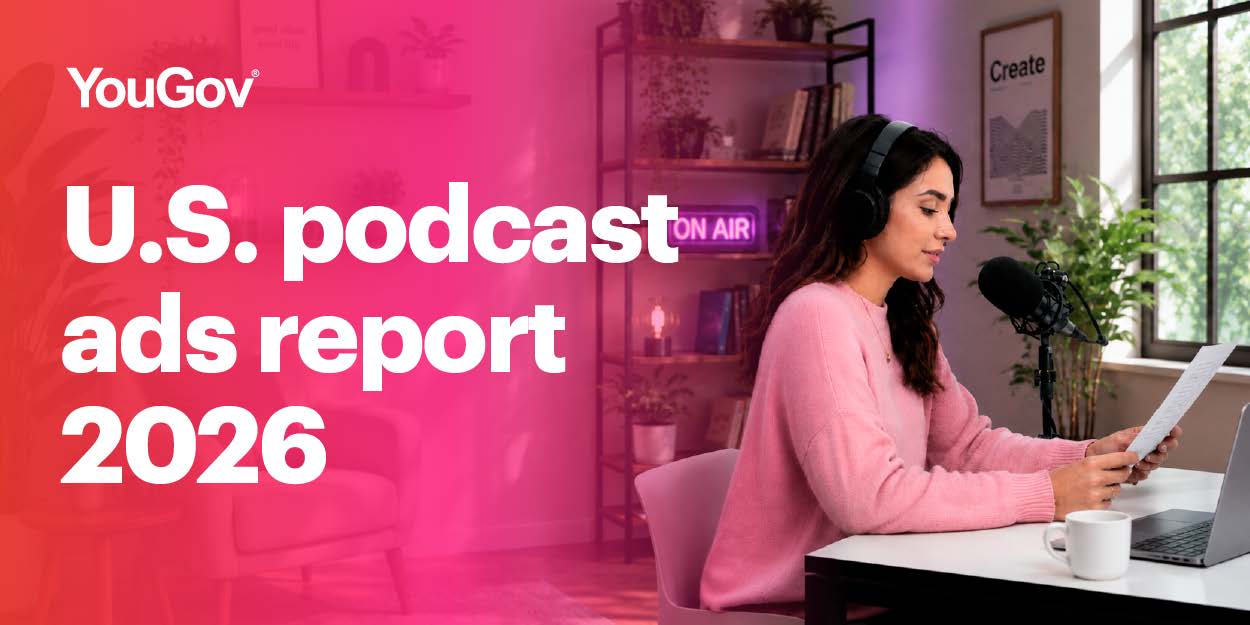
The U.S. Podcast Ads Report 2026 provides a data-backed lens through which to view these shifts. Surveying over 1,300 U.S. adults—including a robust sample of over 800 dedicated podcast listeners—the report highlights critical discrepancies between advertiser assumptions and listener behaviors.
Key Insights:
- The Trust Factor: Host-read ads continue to outperform scripted spots in terms of audience trust. Listeners perceive host endorsements as an extension of the relationship they have with the podcaster.
- The Video Effect: Interestingly, the study found that video podcasts significantly change the "ad fatigue" threshold. When listeners see the creator delivering the ad, engagement spikes compared to static audio inserts.
- The Path to Conversion: The report tracks the "customer journey" from the moment of hearing an ad to the point of purchase. It found that while direct response is common, "passive consideration"—where a listener researches a brand long after the episode ends—is the most under-reported metric in the industry.
Official Perspectives and Industry Implications
Industry analysts argue that the industry has spent too long treating podcasts as "radio on-demand." The reality, according to current market research, is that podcasts function more like social media platforms.

"The listeners aren’t just consuming content; they are participating in a parasocial relationship," notes one industry analyst. "When you interrupt that flow with an ad, the context is everything. If the ad feels like a disruption, they skip. If it feels like a recommendation, they act."
The implication for publishers is clear: the "one-size-fits-all" approach to ad inventory is dying. Future growth will rely on high-fidelity creative—ads that are produced with the same care as the content itself. Furthermore, platforms are under increased pressure to provide granular data that demonstrates not just how many ears heard an ad, but how many brains processed the brand sentiment.

The Rise of Creative Serendipity
While the data provides the "how," the content provides the "why." Podcasts like Curated by Chance—a show where a randomizing algorithm drives creative prompts—exemplify the new wave of audio storytelling. By leaning into the unpredictable, these creators are building deeper reservoirs of audience loyalty.
For brands, this creates a new challenge: how to sponsor content that is inherently erratic or experimental? The answer lies in alignment. Brands that embrace the ethos of the creator, rather than forcing a rigid corporate script into a loose conversation, are seeing significantly higher return on ad spend (ROAS).

Looking Ahead: The Future of Engagement
As we move into the second half of 2026, the industry is bracing for several key shifts:
- Contextual Intelligence: Advanced AI will likely begin matching ads to the specific sentiment of an episode segment, rather than just the genre of the show.
- Integrated Commerce: Expect to see deeper integrations between podcast platforms and e-commerce, allowing for "one-click" purchases directly within the listening app.
- The Decline of Irrelevant Programmatic: As listeners become more sophisticated, they are becoming increasingly hostile toward programmatic ads that feel out of place. Quality over quantity will become the dominant strategy for ad revenue.
Conclusion: A Call for Transparency
The U.S. Podcast Ads Report 2026 serves as a stark reminder that the "danger zone" of podcast advertising isn’t the skip button itself—it’s the failure of the industry to adapt to the changing habits of its audience. The listeners are there, they are attentive, and they are willing to spend. But they are also more empowered than ever to tune out noise that doesn’t add value to their experience.

For advertisers and podcasters alike, the message is simple: prioritize the listener’s experience, leverage the unique trust inherent in the audio medium, and stop chasing vanity metrics. The future of podcasting is not about how many people you reach; it’s about how many you convert through authentic, high-quality engagement. As the market matures, those who ignore these behavioral truths will find themselves left behind in the silent spaces between episodes.
To dive deeper into the specific findings on audience response, trust metrics, and the impact of video versus audio, stakeholders are encouraged to download the full U.S. Podcast Ads Report 2026. Understanding the shifting tides of listener behavior is no longer a competitive advantage—it is a necessity for survival in the modern audio landscape.
 Asep Darmawan
 Jia Lissa
 Neng Nana
