


Even within the highest echelons of the anime medium—among universally acclaimed masterpieces like Cowboy Bebop and Fullmetal Alchemist: Brotherhood—fans and critics can almost always point to a filler installment, a sluggish pacing dip, or an isolated weak chapter they are tempted to skip during a rewatch. Achieving sustained narrative excellence across an entire television run is a monumental challenge. Yet, a select few anime defy this trend, maintaining a relentless level of quality where every single episode advances the overarching plot, develops thematic depth, and pushes the boundaries of visual art.
Main Facts: The Anatomy of a Flawless Anime Run
When evaluating what makes an anime feel structurally and narratively "complete," viewers generally look for three core pillars:
- Zero Wasted Time: The elimination of redundant filler episodes that halt momentum.
- Thematic Cohesion: An overarching message or philosophical inquiry that expands naturally with each progressive chapter.
- Character Integrity: Protagonists and supporting casts who undergo meaningful, believable evolution without artificial plot contrivances.
While subjective taste will always dictate individual favorites—ranging from the tranquil, episodic contemplations of Mushi-shi to the grand scale of Legend of the Galactic Heroes—certain series stand out for refusing to compromise their artistic vision. Below is an in-depth chronological exploration of five anime that prove brevity, ambition, and uncompromising focus can yield nothing short of perfection.
Chronology of Excellence: The Five Masterpieces
5. Monster (2004–2005) — Studio: Madhouse
- Episode Count: 74 Episodes
- Chronological Focus: A patient, post-Cold War psychological descent into morality and complicity.
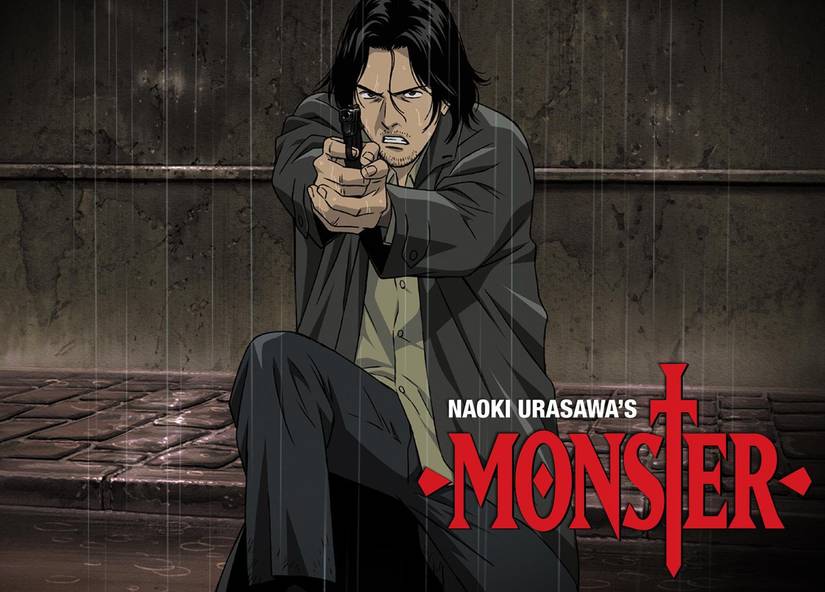
The term "masterpiece" is frequently overused in modern media discourse, but it fits Naoki Urasawa’s Monster comfortably. Adapted faithfully by Madhouse over 74 episodes, the series takes its time unraveling a complex philosophical mystery without ever letting up on the tension of a deadly cat-and-mouse game.

The narrative kicks off in West Germany, centering on Dr. Kenzo Tenma, a brilliant neurosurgeon whose career implodes after he chooses to save a young boy named Johan Liebert instead of operating on a politically influential patient. Years later, Tenma makes a chilling discovery: the child whose life he preserved has grown into a deeply manipulative serial killer. This premise sets off a sweeping manhunt and a haunting moral dilemma. Monster is remarkable because its scope extends far beyond Tenma and Johan; virtually every supporting character possesses a fully fleshed-out emotional arc, turning detours into essential pieces of a grander puzzle.
4. FLCL (2000–2001) — Studios: Production I.G / Gainax
- Episode Count: 6 OVA Episodes
- Chronological Focus: A concentrated, frantic explosion of adolescence and coming-of-age anxiety.
While FLCL later expanded into an extended franchise via subsequent seasons and collaborations, the original six-episode OVA released at the turn of the millennium remains a singular, lightning-in-a-bottle achievement.
The story follows Naota Nandaba, an ordinary, sullen 12-year-old suburban boy whose life is upended when Haruko Haruhara—an erratic alien woman riding a Vespa—runs him over and cracks his skull with a Rickenbacker bass guitar. Suddenly, giant robots and mechanical entities begin erupting from a portal inside Naota’s head. Beneath the chaotic visual gags, fourth-wall breaks, and frenetic action, FLCL delivers a profound metaphor for the humiliation and confusion of puberty. Naota is desperate to feel mature, projecting a false sense of adulthood, while his inner turmoil literally manifests as monsters bursting from his skull. With only six episodes, the series wastes not a single second of its runtime.
3. Steins;Gate (2011) — Studio: White Fox
- Episode Count: 24 Episodes
- Chronological Focus: A meticulously structured shift from quirky comedy to high-stakes, tragic science fiction.
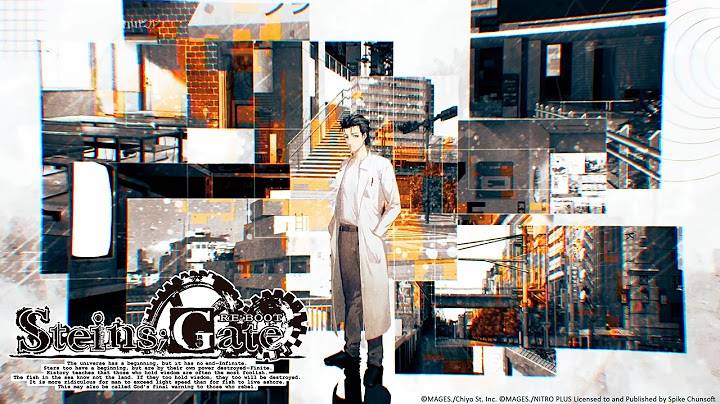
Based on the acclaimed visual novel by Mages and 5pb., Steins;Gate utilizes a standard 24-episode television format to craft one of the most airtight time-travel narratives in animation history.

Set in Akihabara, the story follows Rintaro Okabe, an eccentric self-proclaimed "mad scientist" operating under the alias Hououin Kyouma. Alongside his lab members, Okabe inadvertently converts a microwave into a device capable of sending text messages into the past ("PhoneWave"). Each alteration shifts them across divergent world lines, leaving Okabe as the sole witness to alternate realities. The early episodes intentionally adopt a slow, slice-of-life comedic rhythm—a choice that proves vital. By making the audience genuinely care about the lab and its quirky inhabitants, the narrative sets up the devastating emotional toll that follows when time begins to snap back.
2. The Tatami Galaxy (2010) — Studio: Madhouse
- Episode Count: 11 Episodes
- Chronological Focus: A cyclical, looping exploration of college regret and the illusion of the "rose-colored life."
Directed by Masaaki Yuasa, The Tatami Galaxy made history as the first television series to win the Grand Prize for Animation at the Japan Media Arts Festival. Across 11 inventive episodes, it employs rapid-fire dialogue, elastic art styles, and shifting perspectives to dissect the anxieties of university life.
The unnamed protagonist is a third-year Kyoto University student consumed by regret, convinced that he wasted his youth by joining the wrong student club. Each episode drops him into an alternative reality where he chooses a different campus organization, yet every path inevitably leads to the same dead ends, frustration, and the familiar interference of his eccentric peer, Ozu. Through this looping narrative structure, Yuasa dismantles the illusion that happiness is found by making the "right" choice. Meaning, the series argues, is derived not from chasing perfection in alternate realities, but from accepting the flaws of the life one is already living.
1. Paranoia Agent (2004) — Studio: Madhouse
- Episode Count: 13 Episodes
- Chronological Focus: A surreal psychological anthology charting the spread of urban mass hysteria.
Conceived by the late visionary Satoshi Kon, Paranoia Agent is a tight 13-episode television experiment that examines how private psychological terror can mutate into collective societal panic.
The plot begins with Tsukiko Sagi, a character designer struggling under immense pressure to follow up on the massive success of her pink dog mascot, Maromi. Tsukiko claims she was attacked by a young boy on inline skates wielding a curved golden bat—an assailant the media quickly dubs "Lil’ Slugger" (Shounen Bat). As similar attacks multiply across Tokyo, Kon pivots the narrative into an anthology-style sequence of vignettes, profiling various individuals who are buckling under distinct social pressures. Lil’ Slugger manifests precisely when his victims seek escape from their crushing realities, turning the series into a chilling examination of escapism, professional anxiety, and urban alienation.
Supporting Data: Why Episodic Density Matters
To understand why these five series achieve near-universal praise for their pacing, it helps to examine structural metrics:
| Series Title | Episode Count | Primary Studio | Narrative Style | Filler Percentage |
|---|---|---|---|---|
| Monster | 74 | Madhouse | Slow-burn Mystery / Thriller | 0% (Direct Adaptation) |
| FLCL (OVA) | 6 | Production I.G / Gainax | Experimental Coming-of-Age | 0% |
| Steins;Gate | 24 | White Fox | Sci-Fi / Psychological Drama | 0% (Foundational Setup) |
| The Tatami Galaxy | 11 | Madhouse | Episodic Loop / Philosophical | 0% |
| Paranoia Agent | 13 | Madhouse | Vignette / Psychological Horror | 0% |
Unlike long-running shonen franchises that often rely on padding to allow source material to catch up, short-form and deliberately paced masterpieces operate with strict economy. Every single scene functions as either character development, world-building, or thematic reinforcement.
Industry & Creator Responses
The mastery demonstrated by these specific titles has been widely discussed by prominent figures within the global animation industry.
When discussing The Tatami Galaxy, directors frequently cite Masaaki Yuasa’s willingness to abandon conventional aesthetic norms in favor of pacing that matches psychological velocity rather than real-time movement. Similarly, Satoshi Kon’s structural approach in Paranoia Agent has been studied by psychological thriller creators as a masterclass in how an overarching mystery can serve as a narrative vehicle for social commentary rather than mere plot mechanics.
Anime historians often point to Steins;Gate as the gold standard for adapting visual novels—a medium notoriously difficult to translate into television due to branching paths. By anchoring the narrative to Okabe’s singular perspective and emotional attachments, White Fox successfully sidestepped the common pitfall of rushed pacing that plagues many game adaptations.
Implications for the Future of Anime Storytelling
The enduring legacy of Monster, FLCL, Steins;Gate, The Tatami Galaxy, and Paranoia Agent offers a powerful blueprint for contemporary studios. In an era dominated by multi-season runtimes, seasonal fatigue, and streaming models that sometimes prioritize quantity over artistic focus, these concise masterclasses serve as a reminder of the power of restraint.
By valuing narrative economy, embracing complex psychological themes, and ensuring that every single episode serves a vital purpose, creators can craft works that feel monumental regardless of their runtime. For viewers, revisiting these series highlights a reassuring truth: when an anime refuses to waste your time, the journey from the first frame to the final credit roll remains unforgettable.
 Layla Zulfa
 Nana
Nana
 Evan Lee Salim
