

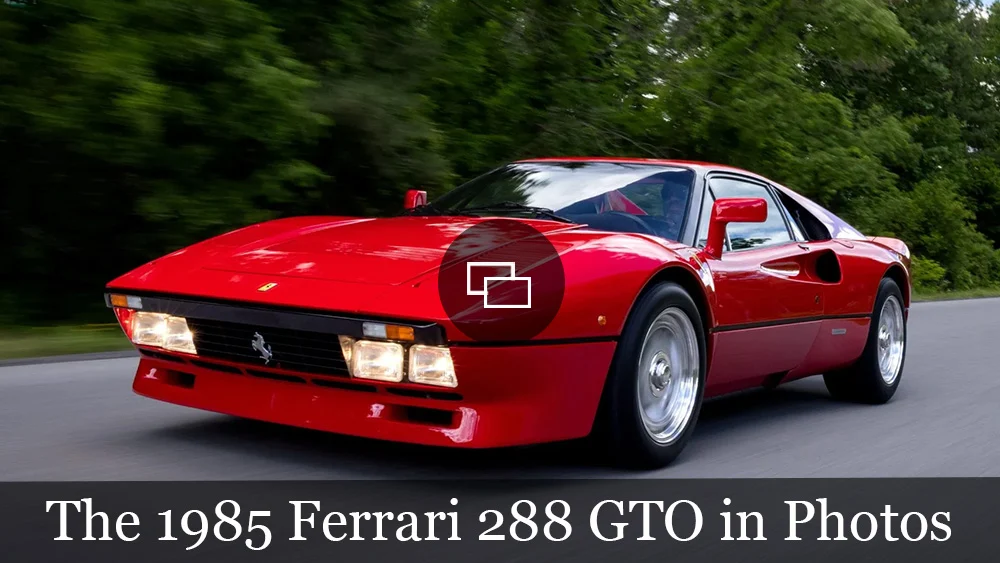
In the digital landscape of high-end automotive collecting, few platforms have commanded as much influence as Bring a Trailer (BaT). From its humble beginnings as a curated enthusiast blog highlighting interesting finds across the web, it has evolved into a titan of the auction world. Today, that meteoric trajectory reaches a landmark moment: the auction site has officially listed its 250,000th lot. To celebrate this significant quarter-million milestone, the platform has secured a vehicle of unparalleled pedigree—a 1985 Ferrari 288 GTO.
This listing represents more than just a high-value transaction; it is a cultural statement. It marks the inaugural appearance of the 288 GTO on the Bring a Trailer platform, cementing the site’s transition from a niche hobbyist destination to a primary marketplace for the world’s most coveted blue-chip investments.
Main Facts: The Prancing Horse That Defined an Era
The 1985 Ferrari 288 GTO is widely regarded by automotive historians as the first true "modern supercar." Debuting in 1984, it was the genesis of a lineage that would eventually define the Prancing Horse’s performance hierarchy for decades to come, paving the way for the F40, F50, Enzo, and the hybrid-powered LaFerrari.

The specific vehicle currently under the hammer is a testament to the GTO’s enduring allure. As one of the first 200 examples produced, it carries historical weight. Its bodywork, a muscular composition of lightweight composite and Kevlar panels, is finished in the quintessential Rosso Corsa. Interestingly, the car’s provenance reveals a brief period early in its life when it was finished in a silver hue, though it has since been restored to its factory-correct red.
The car sits on period-correct 16-inch Speedline multi-piece wheels, housing a cabin defined by classic black leather upholstery. While minimalist by modern standards, the interior remains highly functional, notably including the period-luxury addition of air conditioning. With only 14,000 miles on the odometer and possessing the coveted Ferrari Classiche certification, this vehicle represents an investment-grade acquisition for any serious collector.
Chronology: From Group B Aspirations to Road-Going Legend
To understand the gravity of the 288 GTO, one must look back to the mid-1980s. The model’s existence is inextricably linked to the short-lived but legendary FIA Group B rally circuit. Ferrari, recognizing the rapid evolution of automotive engineering, intended the 288 GTO to be their homologation special for this intense category of motorsport.

- 1984: The 288 GTO is unveiled at the Geneva Motor Show. It is designed to satisfy the requirement that at least 200 road-going versions must be built to qualify for the rally class.
- 1984–1987: A total of 272 examples are manufactured. While the Group B rally plans were ultimately abandoned due to the series’ increasing danger and regulatory shifts, the car had already captured the imagination of the world.
- Late 1980s–Present: The GTO transitions from a high-performance homologation special to a cornerstone of the classic car market. Its scarcity, combined with its technological breakthrough as the first production car to use twin-turbocharging effectively, has driven its valuation into the multi-million dollar stratosphere.
- 2026: Bring a Trailer marks its 250,000th auction lot by featuring this specific 1985 example, signaling a new chapter in the democratization of high-end supercar trading.
Supporting Data: Engineering the Benchmark
The heart of the 288 GTO is its 2.9-liter, mid-mounted, twin-turbocharged V-8 engine. In an era when naturally aspirated engines were the norm, the GTO utilized twin IHI turbochargers to produce an output of 389 horsepower and 366 lb-ft of torque.
The technical specifications remain impressive even by contemporary standards:
- Redline: 7,700 rpm.
- Transmission: Five-speed manual dog-leg gearbox.
- Performance: 0–60 mph in roughly 5 seconds, with a top speed of 179 mph.
- Rarity: With only 272 units in existence, it remains the rarest of the "Big Five" Ferrari halo cars.
The vehicle’s performance was not merely about raw numbers; it was about the integration of chassis balance and power delivery. The use of a longitudinal engine mounting—an unusual configuration for the time—allowed for superior weight distribution, creating a handling characteristic that journalists of the era described as telepathic.

Official Perspectives: The Market’s Reaction
The reaction from the collector community has been immediate and emphatic. With eight days remaining in the auction cycle at the time of writing, bidding has already surged to $6.75 million. This price point reflects the growing confidence among high-net-worth investors in digital-first auction platforms.
"The 288 GTO is the holy grail for many, not just because of its speed, but because it represents the moment Ferrari truly entered the modern performance era," says one prominent automotive analyst. "Seeing it on Bring a Trailer for their 250,000th lot is poetic. It proves that the digital auction space has reached a level of trust and volume that can handle the most precious assets in the automotive world."
The listing also provides a level of transparency rarely seen in traditional brick-and-mortar auction houses. Potential bidders have access to an exhaustive photo gallery and a detailed history, including the car’s mid-life color change and the comprehensive documentation provided by the Ferrari Classiche program, which authenticates that the car retains its original engine and chassis components.

Implications: The Future of High-End Collecting
The inclusion of the 288 GTO in a digital auction is a bellwether for the future of the automotive market. Historically, cars of this caliber were the exclusive domain of prestigious, invitation-only events like the auctions held at Pebble Beach or by RM Sotheby’s.
The shift toward platforms like Bring a Trailer suggests several key trends:
- Digital Trust: Collectors are increasingly comfortable committing millions of dollars to a vehicle based on digital documentation and third-party inspection reports rather than physical pre-auction previews.
- Global Accessibility: By removing the geographical barriers of physical auction houses, the global reach of the internet is driving prices higher. Bidders from Tokyo, London, and New York can compete on a level playing field.
- The Professionalization of the Hobby: The rise of Bring a Trailer and similar sites has forced a higher standard of reporting. Sellers must now provide deep-dive histories, undercarriage photos, and cold-start videos, effectively raising the bar for the entire market.
- The "Halo" Effect: As platforms reach these types of milestones, they naturally attract the most pristine inventory. This creates a feedback loop: the best cars attract the most serious bidders, which in turn attracts even better cars.
As the auction clock winds down on this 1985 Ferrari 288 GTO, the result will likely be viewed as a benchmark for the next decade of supercar trading. Whether the final bid breaks records or simply sets a new floor for the model, one thing is certain: the era of the traditional, gatekept auction house is facing a formidable, digital-native competitor. For the collector who eventually places the winning bid, they will not only be acquiring a piece of automotive history; they will be securing a footnote in the digital history of the motorcar itself.
 Evan Lee Salim
 Asep Darmawan
 Laily UPN
