

The landscape of personal computing is undergoing a seismic shift. For decades, the mouse, keyboard, and touchscreen have reigned supreme as the primary conduits between human intent and digital execution. However, the rapid ascent of generative AI has created a new, pressing problem: how do we interact with intelligent agents that are becoming increasingly capable, yet remain tethered to clunky, non-native interfaces?
This fundamental question has sparked a gold rush in Silicon Valley and beyond. From wearable rings and AI-infused pins to specialized desktop keypads, startups are racing to define the "next big thing" in human-computer interaction. The latest entrant to this crowded field is Aina, a Bengaluru- and San Francisco-based startup that is betting on an action-oriented philosophy to cut through the noise of the current "context-capture" craze.
The Rise of Aina: A New Contender in the Hardware Arena
Aina (meaning "mirror" in Hindi) has officially arrived on the scene with a fresh $5.5 million in Series A funding. The round was led by Redstart Labs (Info Edge India) and 360 ONE, with significant participation from global investors including MIXI Global Investments, Antler, and the Blume Founders Fund.
The backing is as notable for its strategic nature as it is for its pedigree. The round attracted high-profile individual investors who have been at the center of the Indian tech ecosystem’s growth, including WhatsApp head Kunal Shah, Razorpay co-founders Harshil Mathur and Shashank Kumar, and Scribd founder Tikhon Bernstam. This influx of capital signals a strong market belief that while software AI models are rapidly advancing, the hardware through which they are accessed remains an unsolved puzzle.
A Founder’s Pedigree
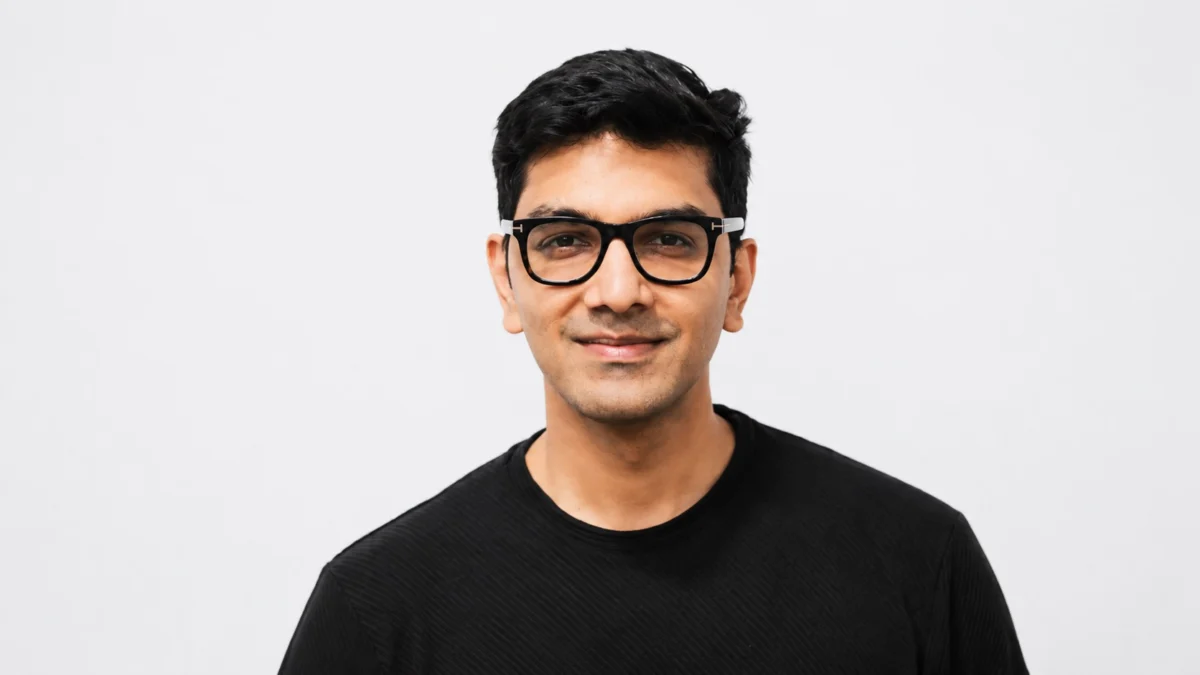
Aina was born out of the vision of Apoorv Shankar, a veteran in the hardware space. Previously serving as the VP of Hardware at the well-regarded smart ring maker Ultrahuman, Shankar is no stranger to the complexities of wearable tech. His history includes the founding of LazyCo, a startup focused on creating hardware interfaces that simplified device control—a venture that was eventually acquired by Ultrahuman.
Shankar’s transition from a successful exit to the launch of Aina is driven by a mix of technological optimism and professional frustration. Having observed the initial wave of AI hardware, including devices like the Rabbit R1 and the Humane AI Pin, Shankar felt there was a missing link.
"I left Ultrahuman last year because I was just super curious about the space of AI interfaces," Shankar shared in an interview. "Devices like Rabbit and Humane Pin had launched, and I had my own disappointments with them. However, I was just excited that we are seeing interfaces being a thing now. And as an engineer turned product designer, this was the hottest thing I could imagine myself building."
Chronology: From Mirage to Dune
The evolution of Aina—originally operating under the internal moniker "Project Mirage"—has been marked by a rapid iterative process. Before landing on its flagship product, the team experimented with three distinct hardware concepts:

- Dune: A compact, three-key "macro" keyboard designed for context-aware control. It allows users to manage meeting microphones, cameras, and trigger complex scripts based on the active application.
- Radiance: A tabletop remote specifically for video conferencing, featuring a physical dial for volume control and dedicated buttons for joining calls, toggling AI notetakers, and voice modulation.
- Shift: An "agentic" button designed to be a single-tap trigger for repetitive AI tasks, effectively serving as a physical bridge between the user and their smartphone’s automated workflows.
The Pivot to Simplicity
In early field testing, the data was clear: users gravitated toward the simplicity and versatility of the Dune. The realization that the Dune’s form factor could effectively bundle the utility of the other two prototypes led the team to focus their development resources on shipping it first.
This decision reflects a broader trend in hardware design: the shift from "passive" to "active" devices. By launching the Dune, Aina is positioning itself to learn in real-time how users want to automate their workflows. Rather than guessing the perfect interface, they are allowing the market to dictate the evolution of their product line.
The Hardware Landscape: Who is Winning the Race?
The market is currently flooded with competing visions of the future. The hardware sector can generally be categorized into three distinct strategies:
1. The Context-Capture Wearables
Startups like Plaud and Pocket are betting on "always-on" capture. Their devices—ranging from AI-enabled pins to credit-card-sized pucks—are designed to record meetings, transcribe conversations, and summarize life’s daily interactions. Similarly, Bee and Friend are pushing the boundaries of wearable companions that act as silent observers of the user’s day.
2. Smart Glasses
The "heads-up" approach is perhaps the most ambitious. Meta Ray-Bans have set the gold standard for blending aesthetics with AI functionality, while Even Realities has rapidly ascended to a $1 billion valuation. These devices assume that the future of interaction lies in augmenting the user’s vision rather than occupying their hands.
3. Agentic Keypads and Macro Controllers
This is where Aina, along with companies like Work Louder, finds its niche. These devices recognize that power users—developers, creative professionals, and managers—don’t necessarily want a "companion" in their ear. They want a physical, tactile controller that can execute commands across multiple software layers. This segment is growing alongside the rise of agentic AI models like OpenAI’s Codex and Claude Code, which require precise, human-led triggers to function effectively.
Supporting Data and Industry Implications
The lack of a "clear winner" in form factor is both an opportunity and a risk for the industry. As Qualcomm recently noted, they are actively testing over 40 different devices for AI interaction. This fragmentation suggests that the future of AI hardware may not be a "one-size-fits-all" gadget, but rather a spectrum of tools tailored to specific professional and personal contexts.
The "Agentic" Shift
Aina’s strategy diverges from the passive recording devices that have dominated the headlines. Shankar is vocal about his disdain for the "always-listening" approach, which he views as a failure of design imagination.

"I think you have enough context, you have in your phone and your laptop all the time, and we haven’t even started using that well," Shankar argues. "We are building an action-oriented device that will use the context to help you control and trigger workflows."
This philosophy aligns with the broader move toward "Agentic AI"—systems that do not just provide information, but perform tasks. By building a hardware device that acts as a physical trigger for these agents, Aina is effectively creating a "control panel" for the AI era.
Looking Ahead: The Future of Aina
With the Dune currently hitting the market, Aina is already looking toward its next iteration. While the company remains tight-lipped regarding the specifics of its next device, the lessons learned from the Dune, Radiance, and Shift are already being synthesized.
The next step for the startup is a closed beta testing phase with a select group of users. This move is critical; as the AI industry moves from "chat-based" interaction to "action-based" interaction, the hardware that bridges this gap will be the one that provides the most seamless user experience.
The Verdict on AI Hardware
The sheer volume of funding and innovation flowing into the hardware space proves one thing: the era of the screen-only interface is waning. Whether through smart glasses, rings, or macro keypads, the next decade of computing will be defined by how we physically interact with the digital intelligence that surrounds us.
Aina’s emergence is a testament to the fact that the most successful devices may not be the ones that record the most data, but the ones that allow us to control our digital lives with the highest degree of precision and efficiency. As the startup continues to iterate, it faces the same challenge as its competitors: turning a "hot" new idea into a daily habit for millions of users.
For now, the race is wide open. With a strong team, a clear product roadmap, and a distinct philosophy that prioritizes action over observation, Aina is positioned as a serious player in the quest to build the definitive interface of the AI age. As the market continues to consolidate, one thing remains certain: the hardware we use tomorrow will look, and feel, nothing like the smartphones of today.
 Asep Darmawan
 Siti Muinah
 Ali Ikhwan
