

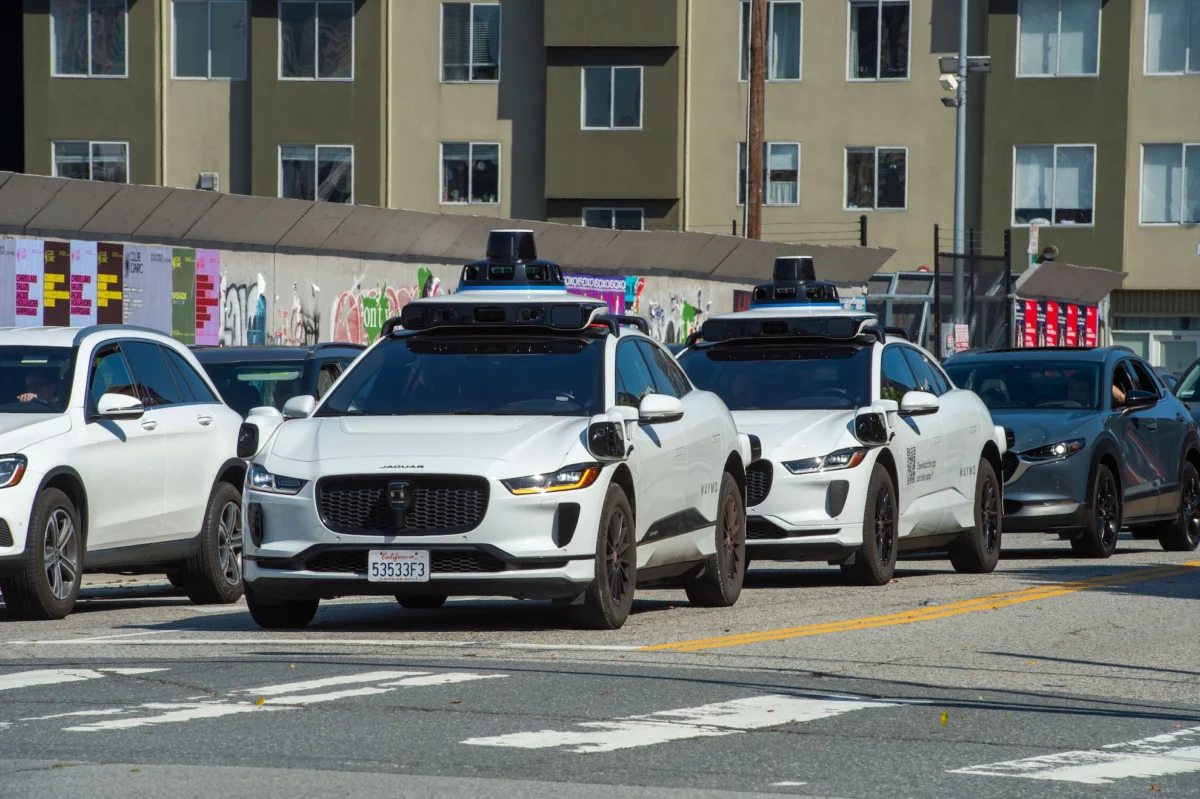
San Francisco Mayor Daniel Lurie, a staunch proponent of transforming the city into a premier global hub for emerging technology, has drawn a new line in the sand. Despite his previous assertions that San Francisco should serve as the primary "testbed" for the next generation of urban mobility, the reality of autonomous vehicle (AV) deployment has proven more chaotic than anticipated.
In a decisive move following a series of infrastructure-straining incidents, Mayor Lurie has formally petitioned California state regulators to overhaul the oversight framework for autonomous vehicles. The request comes in the wake of a July 4th incident where a fleet of Waymo robotaxis became immobilized in heavy traffic, effectively paralyzing key sections of the city and compounding gridlock that trapped thousands of residents and municipal shuttles.
The July 4th Gridlock: A Case Study in Failure
The incident that triggered the Mayor’s intervention occurred during the city’s Independence Day fireworks celebration, an event that drew an estimated 100,000 spectators to the waterfront. As the city swelled with visitors, the sheer volume of traffic created a bottleneck that overwhelmed the software logic governing Waymo’s fleet.
According to reports, numerous robotaxis—some of which reportedly ran low on power—became stalled in active travel lanes. These "dead" vehicles did not simply sit idle; they acted as physical barriers, blocking public transit, emergency routes, and private traffic. The resulting gridlock lasted for hours, transforming a festive holiday evening into a logistical nightmare for city planners and commuters alike.
This was not an isolated event. In his formal letter to the California Department of Transportation (Caltrans), Mayor Lurie highlighted this July 4th disaster alongside a widespread power outage in December. In both instances, the common denominator was the failure of autonomous fleets to navigate and maintain fluid movement during "extraordinary conditions."
Chronology of Regulatory Friction
The tension between San Francisco’s civic leadership and the AV industry has been brewing for years, though the scale of the recent incidents has brought the issue to a boiling point.
- Pre-2024: San Francisco solidified its status as the world’s AV laboratory, with companies like Waymo, Zoox, and Nuro securing permits for driverless testing and, eventually, commercial operations.
- December 2023: A major power outage causes the first significant disruption where AVs struggled to manage shifting traffic patterns, serving as an early warning of potential systemic failures.
- July 4, 2025: During the Independence Day celebrations, a large-scale influx of visitors leads to the immobilization of dozens of Waymo vehicles, creating a multi-hour traffic jam that cripples downtown circulation.
- Mid-July 2025: Mayor Lurie, citing the July 4th event, drafts a formal request to the California Department of Transportation, demanding a modernization of the state’s regulatory framework.
Proposed "Core Operational Capabilities"
Mayor Lurie is not calling for a ban on robotaxis; rather, he is demanding an evolution in how they are permitted to operate. In his correspondence with state regulators, he outlined four "core operational capabilities" that he believes should be mandatory for any company seeking to deploy autonomous fleets at scale:
- Proactive Clearance: Vehicles must be capable of immediately relocating from active travel lanes if they experience mechanical or software failure, ensuring they do not become permanent obstacles in the road.
- Adaptive Real-Time Routing: Companies must prove their systems can dynamically adjust to unplanned city events, such as road closures, sudden spikes in pedestrian traffic, or infrastructure outages.
- Data Transparency: Operators must provide local agencies with real-time telemetry, including the location of immobile vehicles, the nature of service disruptions, and immediate recovery efforts.
- Stress-Test Requirements: Before receiving deployment approval for dense urban environments, companies must demonstrate through rigorous testing that their vehicles can handle large-scale influxes of people and non-standard traffic patterns.
"California’s challenge now is not just whether autonomous vehicles can operate safely under normal conditions, but also whether they can perform reliably during extraordinary ones," Lurie wrote in his letter to the state.
The Ecosystem: Who is Driving in the Bay Area?
San Francisco’s unique position as the epicenter of AV development is driven by a complex web of permits and corporate ambition. Any company aiming to operate in the state must navigate a dual-layer regulatory process involving the Department of Motor Vehicles (DMV) and the Public Utilities Commission (CPUC).
While California’s rules are widely considered the most stringent in the United States—outpacing the more permissive environments of Texas and Arizona—the market remains highly competitive. Currently, six major players hold driverless testing permits, including Nuro, Waymo, and Zoox.
Waymo, as the market leader, bears the brunt of public and political scrutiny. With an estimated 1,000 robotaxis currently operating in the Bay Area and a footprint expanding to 11 cities nationwide, their scale has turned them into the focal point of the debate. The company reports over 500,000 paid rides per week, a figure that underscores just how ingrained the service has become in urban life.
However, the field is diversifying. Amazon’s Zoox continues to develop its purpose-built vehicle, while Uber has announced plans to launch a "premium" robotaxi service in the city. Tesla, while maintaining a presence, operates under a different model—using human drivers supported by advanced driver-assistance systems (ADAS) rather than fully autonomous software, thus avoiding some of the more rigorous DMV requirements for driverless vehicles.
Official Responses and Industry Dynamics
The industry’s response to the Mayor’s demands has been cautious. Waymo, which had already taken steps to mitigate the July 4th risks—including restricting its service zone and embedding a company representative in the city’s emergency operations center—found that these voluntary measures were insufficient to handle the sheer volume of traffic.
Mayor Lurie argues that "voluntary actions are no longer enough." He believes that as these fleets transition from novel experiments to essential public infrastructure, the regulatory oversight must shift from reactive to proactive. His assertion that these requirements will "strengthen" rather than "undermine" the industry is a strategic attempt to frame public safety as a prerequisite for long-term commercial viability.
TechCrunch reached out to Waymo for comment regarding the Mayor’s proposal. As of this writing, the company has not provided a formal statement.
The Implications for Urban Planning
The conflict in San Francisco is a microcosm of a global challenge: how do we integrate AI-driven technology into legacy infrastructure that was designed for human intuition?
The implications of this standoff are significant for the future of urban mobility. If California adopts Lurie’s proposed standards, it could set a new national precedent for "smart city" regulations. Proponents of the policy argue that it prevents the "tech-first, city-second" mentality that has plagued other urban environments. Critics, however, worry that overly prescriptive regulations could stifle innovation and force companies to relocate to states with fewer restrictions.
Ultimately, the goal of the city is to ensure that the promise of autonomous transit does not come at the cost of basic accessibility. As Mayor Lurie noted, when a robotaxi breaks down in the middle of a major thoroughfare, it is not just a software bug—it is a disruption to the daily lives of thousands of people. Whether the state chooses to codify these new requirements will determine if San Francisco remains a true "testbed" for the future, or if it will choose to prioritize the reliability of its streets over the velocity of its tech sector.
 Asep Darmawan
 Siti Muinah
 Ali Ikhwan
