

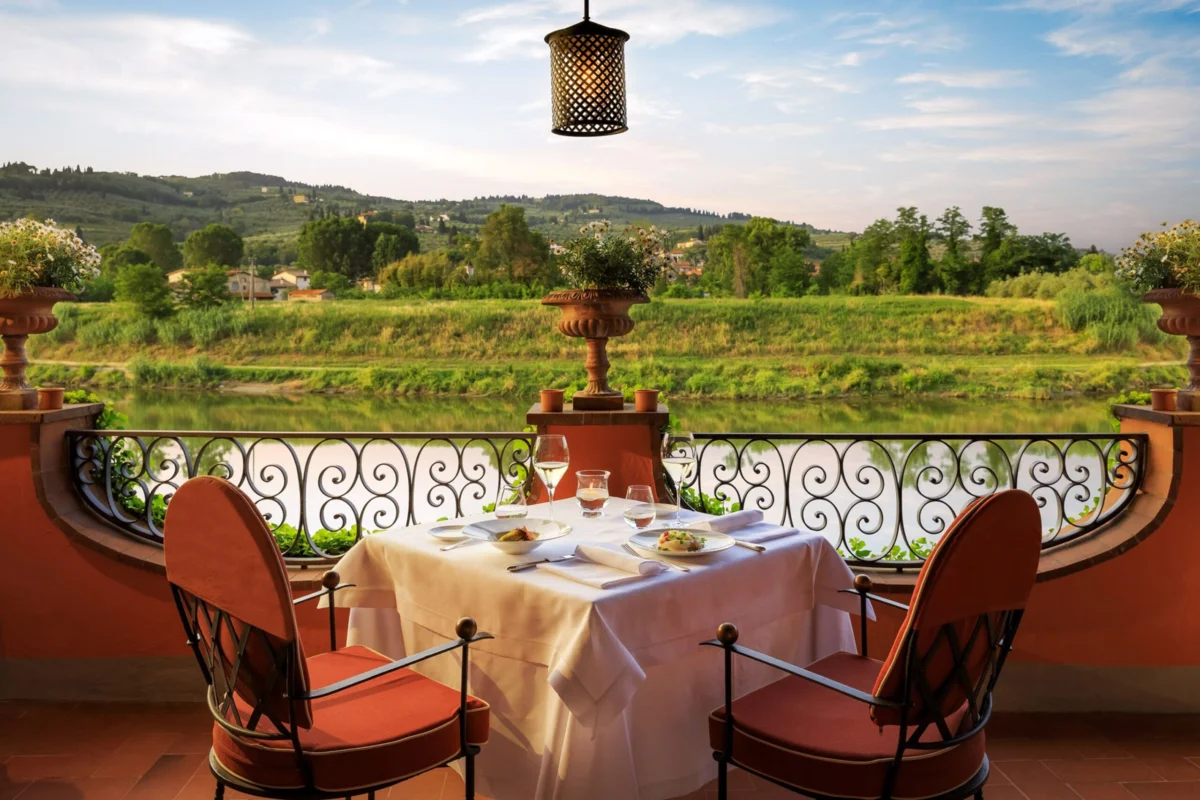
For years, skeptics argued that Florence, a city defined by its dense medieval footprint and strictly protected heritage, had reached a saturation point regarding luxury hospitality. Conventional wisdom suggested there was simply no more room at the inn—or, more accurately, no more palaces to convert. Yet, the Tuscan capital is currently undergoing a radical metamorphosis. Far from being "full," Florence is in the midst of its most significant luxury hotel boom in decades, balancing the delicate dance between historic preservation and the demands of the modern, ultra-high-net-worth traveler.
The New Vanguard: A Chronology of Opulence
The shift in the Florentine landscape began in earnest in 2025, a year that will be remembered as the tipping point for the city’s high-end sector.
Leading the charge was the opening of the Collegio alla Querce. As the first Italian property for the Auberge Resorts Collection, the hotel set a new benchmark for what travelers can expect from a "city" hotel. By blending institutional history with a modern, design-forward sensibility, it quickly cemented its status as a premier destination.
Following this, the sector saw a flurry of diverse openings:
- The Marriott W: Bringing a younger, trend-focused energy to the city’s historic core.
- The Social Hub (Second location): Reflecting the city’s pivot toward hybrid travel.
- The James: A boutique gem that prioritized intimate, personalized service over sheer scale.
The momentum continued into spring 2026 with the highly anticipated unveiling of the revamped Belmond Villa San Michele. Nestled into the wooded hillsides just below Fiesole, the property spent 18 months under the knife, undergoing an exhaustive renovation. The result is a masterclass in restoration, featuring a new, jewel-box Guerlain spa and a pool area that offers what might be the most enviable view in Tuscany—a panoramic vista of the city’s terracotta rooftops that feels like a painting come to life.
Looking ahead, the pipeline remains robust. By the end of 2026, we anticipate the debut of La Réserve in the artisan-heavy Oltrarno district, followed closely by the launch of the five-star Borgo Pignano Florence, slated for September 1, 2027.
Addressing the Elephant in the Room: Over-Tourism
It is impossible to discuss the expansion of Florence’s hotel scene without acknowledging the shadow of over-tourism. The centro storico (historic center) is frequently criticized for being perpetually crowded, a narrative that has garnered significant negative press in recent years.
However, industry experts argue that the new wave of hotels actually provides a solution rather than exacerbating the problem. By expanding the luxury footprint into "off-radar" locations—both in the hills surrounding the city and in the lesser-visited pockets of the Oltrarno—these properties are effectively decompressing the city. They allow the affluent traveler to experience the soul of Florence without being tethered to the congested bottlenecks of the Duomo or the Uffizi.
Strategic Geography: Where to Stay
Choosing the right neighborhood in Florence is no longer just about proximity; it is about the kind of experience one desires.
The Centro Storico: The Heart of the Action
For the first-time visitor, the historic center remains the primary draw. The narrow, cobbled lanes and hidden piazzas provide an unparalleled proximity to the city’s greatest artistic treasures. However, staying here requires a high tolerance for crowds. The primary benefit is convenience, but the trade-off is the perpetual hum of tourism.
The Oltrarno: The Bohemian Pulse
South of the Arno River lies the Oltrarno, a neighborhood that has retained its authentic Florentine spirit. This is the district of the artigiani (artisans), where independent boutiques, hidden workshops, and a vibrant, local nightlife scene thrive. It is the preferred choice for the repeat visitor who wants to move beyond the postcard sights and into the daily life of the city.
The Fiesole Hills: The Sanctuary
For those who prefer a retreat, the hills encircling the city offer the "best of both worlds." These villa hotels, often characterized by expansive gardens and private pools, provide a buffer against the city’s intense heat and humidity. During the peak of summer, a 15-minute commute from the hills into the center provides a necessary psychological and physical separation from the crowds.
Practical Considerations: The Three-Night Rule
A common error among visitors is the "whirlwind" approach to Florence. Industry professionals suggest that to truly understand the city, a minimum of three nights is required, with four being the ideal.
The rationale is simple: Florence is not merely a collection of museums to be checked off a list. It is a sensory experience. A four-night stay allows for a mix of "headline" art—such as the Uffizi or the Accademia—balanced with "under-the-radar" explorations. It provides the time necessary for leisurely, multi-hour dinners, evening strolls in the Oltrarno, and the luxury of simply sitting in a piazza with a Campari spritz, observing the rhythm of the city.
Catering to the Multi-Generational Traveler
One of the most significant shifts in hotel development is the move toward family-friendly luxury. The historic center, with its tight corridors and limited space, has historically been a difficult place to travel with children.
Newer properties, and established ones like Villa La Massa, have addressed this by leaning into their footprint. By offering complimentary shuttle services to the Ponte Vecchio, these hotels provide the convenience of the center with the necessary space—playgrounds, gardens, and large suites—that allow families to recharge. For families, a large pool or an expansive lawn is not a luxury; it is the difference between a high-stress vacation and a successful one.
The Editorial Methodology
At Condé Nast Traveler, our commitment to the reader is rooted in on-the-ground, firsthand experience. Every hotel mentioned in our reporting has been visited by our journalists. We do not rely on press releases or corporate photography. Instead, we evaluate properties based on a rigorous set of criteria:
- Authenticity: Does the hotel offer an insider’s perspective on the destination, or is it a generic luxury experience?
- Design and Sustainability: How does the architecture respect the historic environment, and what is the property doing to minimize its ecological footprint?
- Service: In an era of automated check-ins, does the staff provide the human touch that defines true Italian hospitality?
- Value: Regardless of price point, is the guest receiving an experience that honors their investment of time and money?
The Implications of a Growing Market
The rapid expansion of luxury inventory in Florence has broader implications for the city’s economy. It signals a move away from the high-volume, low-duration tourist model toward a higher-value, sustainable tourism sector.
As the city continues to attract international investment, the challenge will be to ensure that these developments do not erode the very cultural fabric that makes Florence desirable. So far, the evidence suggests a positive trajectory. By emphasizing high-end, adaptive reuse projects—such as the conversion of historic villas and colleges—developers are preserving the structural integrity of the city while modernizing its utility.
For the traveler, the result is a broader, more sophisticated range of options. Florence is no longer just a museum city; it is a living, breathing destination that continues to prove that even in one of the oldest cities in the world, there is always room for a new, exquisite chapter.
For those planning their own journey to the Tuscan capital, we recommend utilizing our curated Florence Itinerary Planner, which allows you to synthesize your accommodation choices with local dining and cultural experiences. This report is updated regularly to ensure you have the most current information for your next Italian escape.
 Siti Muinah
