


By Rebecca Corgan
Published September 25, 2026
The most powerful gaming console you own might just be the web browser you are looking at right now.
For many internet users, typing "free browser games" into a search engine yields a repetitive loop of recycled puzzles, tired flash-game ports, and an endless parade of Wordle clones. While the cultural footprint of daily word puzzles is secure, stopping there means missing out on an expansive, highly inventive ecosystem of independent software. Far away from corporate storefronts, heavy launchers, digital wallets, and mandatory account creation forms lies a vibrant digital frontier.

Today, a single developer working from home can publish a complex text-based investigation, a deeply mathematical idle simulator, or an atmospheric dungeon crawler that rivals paid software—all accessible instantly through a URL. Best of all, these experiences share a uniform price tag: absolutely nothing.
Here is a curated guide to 10 of the most compelling browser-based games available today. No downloads, no accounts, and no upfront costs required—just be prepared to lose hours of your productivity.
Main Facts: The Evolution of Modern Web Gaming
The modern browser gaming landscape has evolved far beyond the primitive physics engines of the 2000s. Thanks to advanced web standards like HTML5, WebGL, and modern JavaScript frameworks, developers can pack surprisingly sophisticated mechanics, sprawling asset libraries, and deeply atmospheric audio design into standard web pages.

Rather than competing with multi-gigabyte blockbusters on graphical fidelity, browser games lean into what makes the medium unique: instant accessibility, experimental rule sets, and razor-sharp design focus. Whether you have five minutes during a lunch break or five hours on a lazy Sunday, these ten titles demonstrate that the browser remains one of the most creatively liberating platforms in interactive entertainment.
Chronology: From Flash Relics to HTML5 Marvels
To understand the current state of browser gaming, it helps to look backward.
- The Early Era (Late 1990s–2000s): Platforms like Newgrounds, Kongregate, and Miniclip dominated internet culture, popularized by proprietary technologies like Adobe Flash. Pioneers like Kingdom of Loathing (launched in 2003) and text-based satires like Progress Quest (2002) proved that deep, humorous role-playing experiences could thrive outside traditional retail channels.
- The Indie Expansion (2010s): As Flash phased out due to security vulnerabilities and mobile shifts, developers migrated to open web standards. Idle and incremental games exploded in popularity, culminating in philosophical experiments like Frank Lantz’s Universal Paperclips in 2017.
- The Modern Renaissance (2020s–Present): Today, itch.io and independent developer communities serve as incubators for bite-sized masterpieces, game jam winners, and experimental prototypes. Many modern browser games are so well-received that they eventually graduate to commercial platforms like Steam, while retaining their lightweight browser roots or offering free browser-accessible demos.
Supporting Data: The 10 Essential Browser Games to Play Right Now
1. Die in the Dungeon Classic
- Play this if: You love Slay the Spire, but wish the cards were replaced with rolling dice.
- Where to play: itch.io
Die in the Dungeon Classic reimagines the mechanics of popular rogue-lite deckbuilders by substituting standard cards for physical dice. Players take on the role of a determined frog warrior descending through a perilous subterranean network. Each turn requires players to arrange attack (red), defense (blue), healing (green), and boosting (purple) dice onto a tactical, diamond-shaped grid.
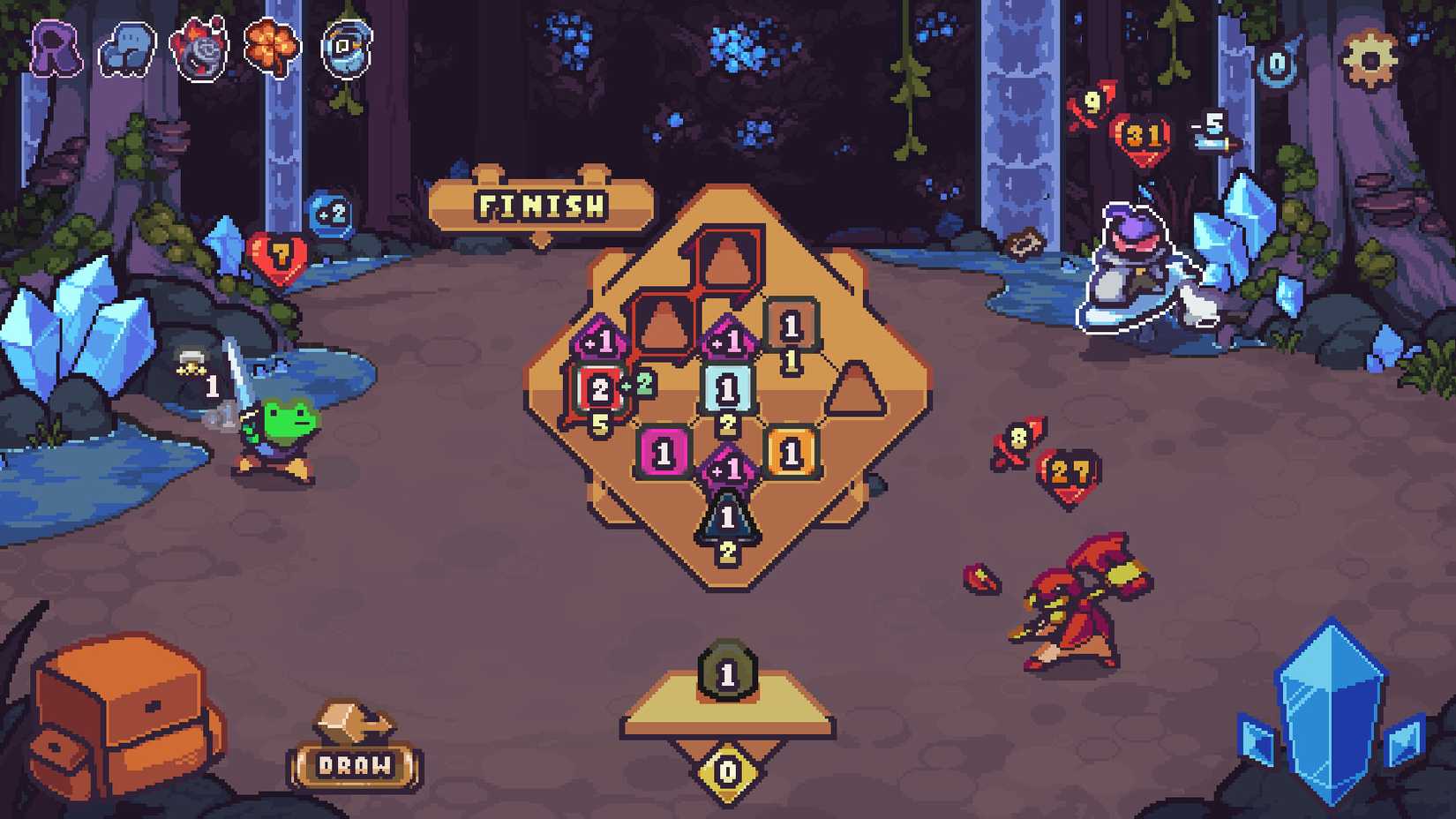
While some dice persist across multiple turns, others shatter permanently after a single roll. Balancing immediate survival with long-term engine building requires careful calculation. The game’s exceptional quality is reflected in its community reception, boasting a 4.7-star rating across nearly 3,000 user reviews on itch.io.
2. Tristram
- Play this if: You appreciate Diablo-style dark fantasy, but prefer to watch an automated party do the heavy lifting.
- Where to play: itch.io
Originally whipped up during a 72-hour game development jam, Tristram pays homage to the gothic atmosphere of the original Diablo. However, it completely subverts genre expectations by transforming an action-RPG into an automated management sim.
Players recruit a roster of heroes, dispatch them into creeping cathedral catacombs, and watch from afar as they loot, fight, and occasionally flee for their lives. The gold your adventurers manage to extract funds the physical rebuilding of the town above. While lacking a save function—meaning sessions must be approached as dedicated single-sitting runs—the unpredictable AI behavior (such as a lone cleric soloing a terrifying boss purely through stubborn self-healing) creates unforgettable emergent moments.
3. The Archives of Trevosa
- Play this if: You enjoyed Chants of Sennaar and want to decode an entirely fictional language to uncover royal secrets.
- Where to play: itch.io
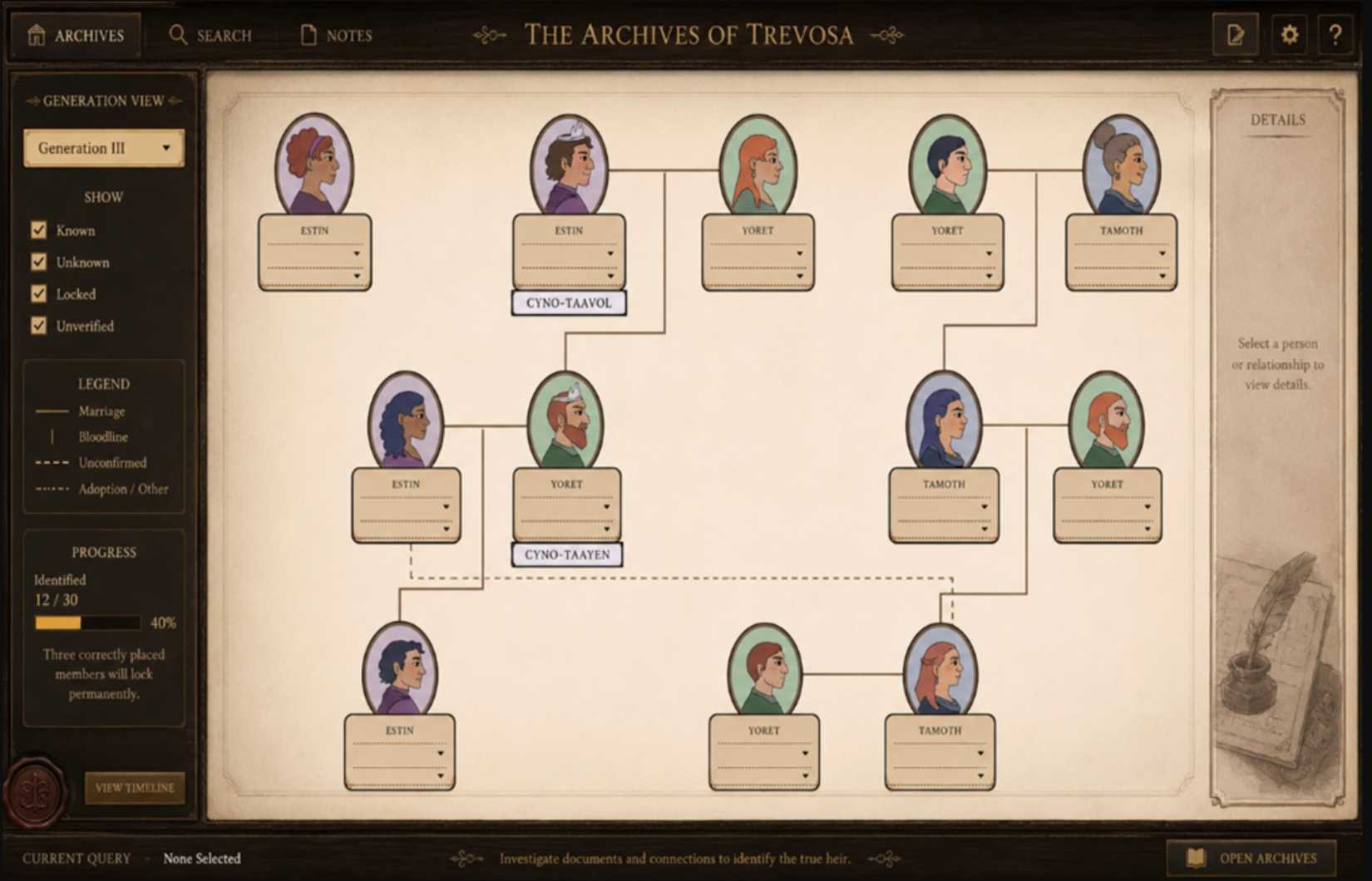
The Archives of Trevosa provides players with only two tools: a functional search bar and a completely invented vocabulary. Your objective is to untangle seven generations of a fractured, politically volatile royal dynasty using nothing more than contextual clues from recovered historical documents.
By querying keywords, opening files, and translating unfamiliar syllables through logical deduction, you slowly piece together the tragic histories of 30 family members caught in cycles of succession crises, exiles, and sibling rivalries. Enhanced by hand-drawn illustrations and a moody, immersive score, the game brilliantly replicates the sensation of an archaeological excavation.
4. Type Help
- Play this if: You are drawn to the deductive mysteries of Return of the Obra Dinn, minus the graphics and plus a deeply unsettling murder case.
- Where to play: itch.io
Type Help strips investigative storytelling down to its rawest text elements. Dropped into the digital files of an archaic computer system, players investigate the grim history of Galley House—a grand estate plagued by a night of supposedly unsolvable murders.
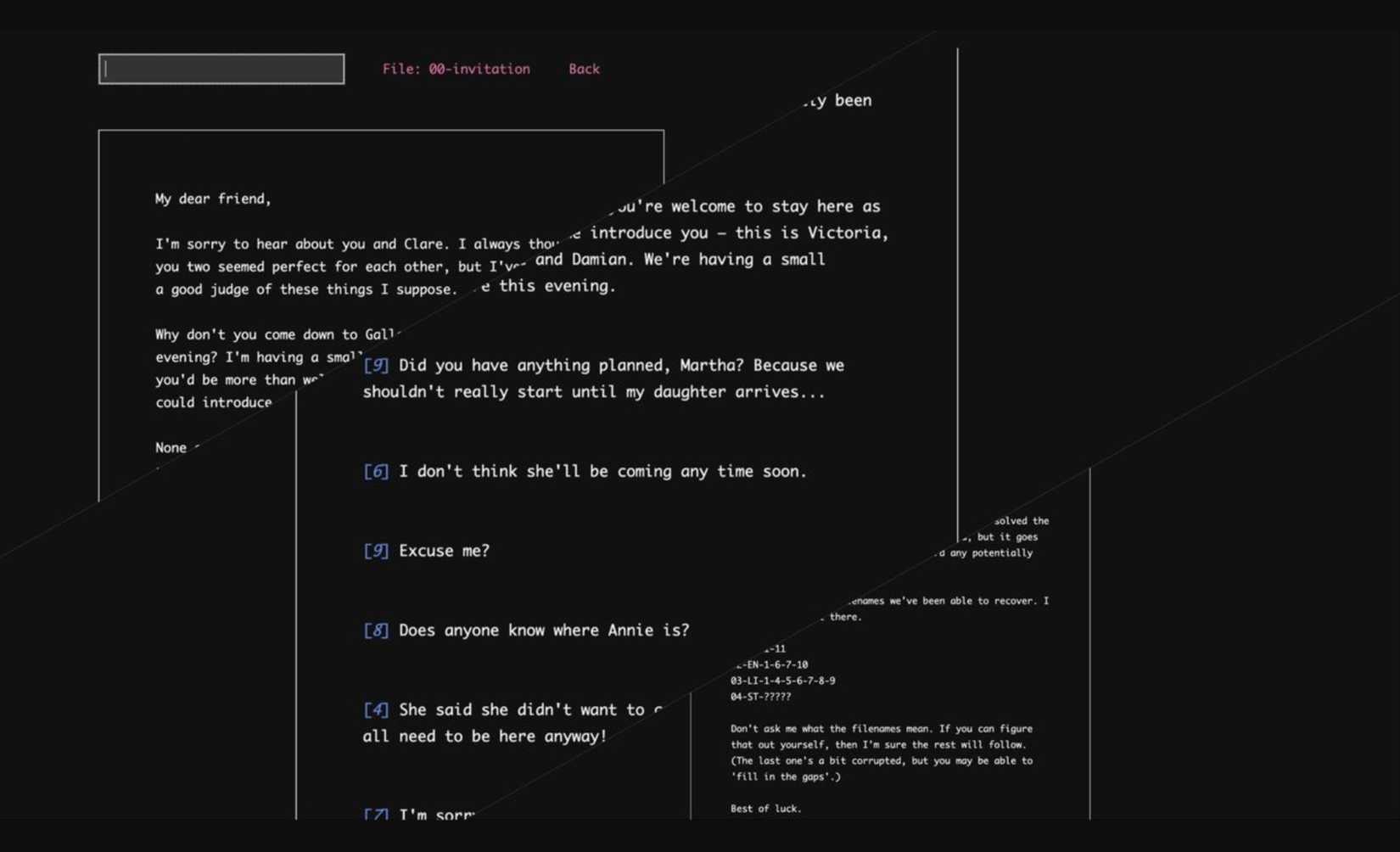
Each discovered file consists of audio-log transcripts stamped with timestamps, room locations, and participant lists. By following conversational breadcrumbs, players deduce who was where, when they died, and who pulled the trigger. The browser prototype proved so culturally resonant that it inspired a full-scale commercial release on Steam (The Incident at Galley House), yet the original bite-sized browser version remains completely free.
5. Ink & Brine (Demo)
- Play this if: You liked the maritime dread of Dredge, but want to swap your fishing rod for a deep-sea dive suit.
- Where to play: itch.io
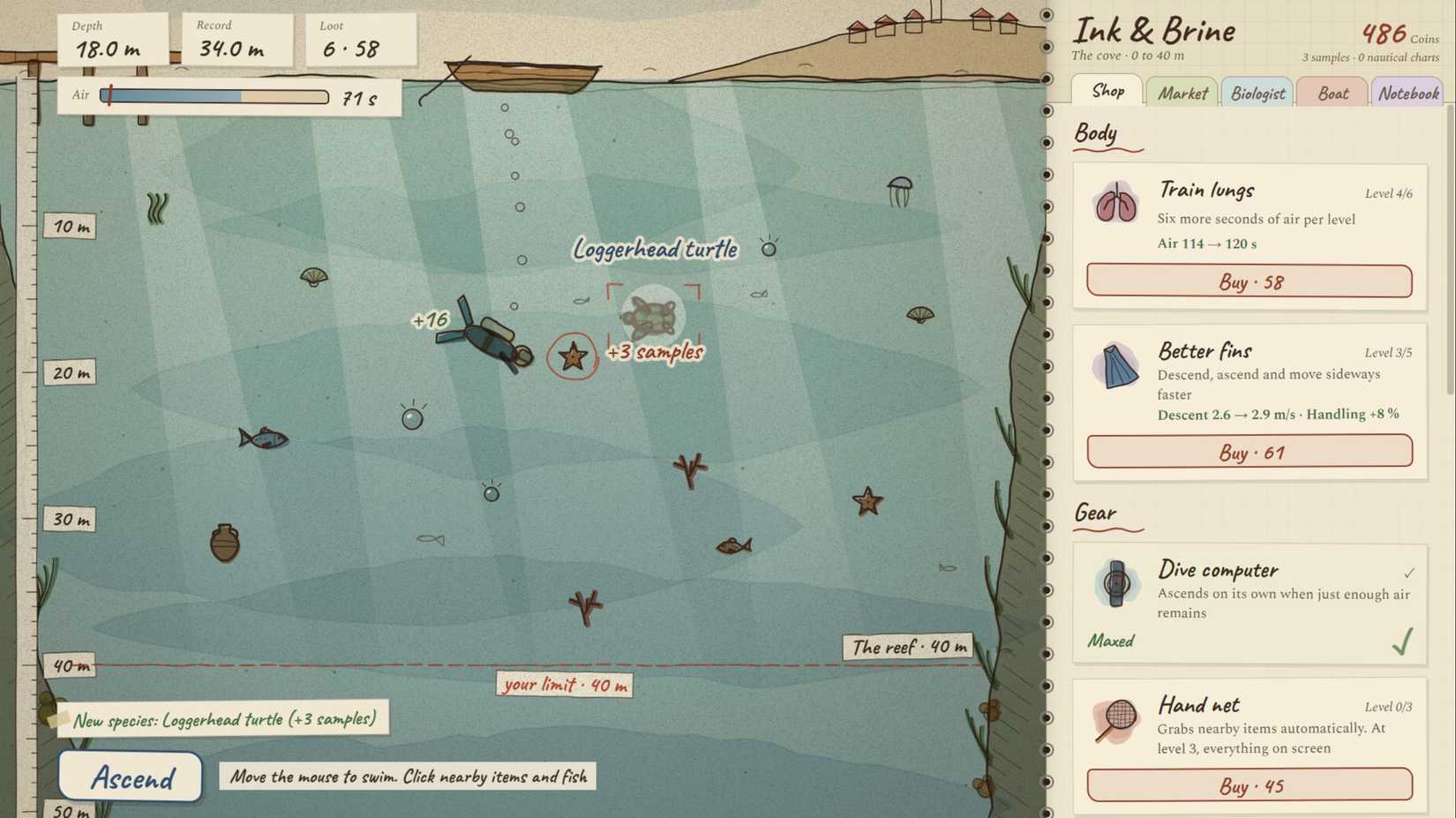
Tasking players with managing an inherited dive shop, Ink & Brine combines coastal management with eerie exploration. You must routinely plunge into a treacherous local reef to salvage artifacts, photograph strange marine life, and uncover the truth behind your grandmother’s mysterious final expedition.
Balancing a ticking-clock oxygen supply with inventory management makes every descent a calculated risk. Surface safely, sell your findings, upgrade your diving gear, and descend deeper into the abyss—though seasoned fans of Lovecraftian horror will quickly realize that the ocean depths hold secrets far stranger than standard marine biology.
6. Hilda’s Familiars
- Play this if: You enjoy the botanical organization of Strange Horticulture, but want to deal with magical creatures holding eccentric demands.
- Where to play: itch.io
In Hilda’s Familiars, you step into the sensible shoes of a practicing witch running a bustling boutique for magical pets. Patrons wander into your shop offering vague, eccentric, or rambling descriptions of the companions they desire.
A customer might demand something "cute and magical" or a creature that "blends in seamlessly with human hands." You cannot ask clarifying questions; instead, you must thoroughly inspect your shelves, cross-reference customer traits, and select the appropriate entity. Exercise caution, however: three incorrect matches will cause a frustrated customer to storm out permanently.
7. Universal Paperclips
- Play this if: You want a deceptively simple clicker game that gradually transforms into a philosophical exploration of artificial intelligence risk.
- Where to play: Decision Problem
Created by veteran game designer Frank Lantz, Universal Paperclips begins life as an unassuming incremental game resembling a basic spreadsheet calculator. You click a button, manufacture a paperclip, sell it for capital, and reinvest in automated production.

Within minutes, however, the scope expands dramatically. Players realize they are steering an unchecked artificial intelligence whose singular, unyielding directive is to maximize global paperclip output at all costs. The minimalist interface gives way to a sprawling, four-hour narrative about technological singularity, resource depletion, and cosmic optimization.
8. Kingdom of Loathing
- Play this if: You appreciate a vintage 2003 MMORPG that remains funnier than almost any contemporary comedy game.
- Where to play: Kingdom of Loathing Official Site
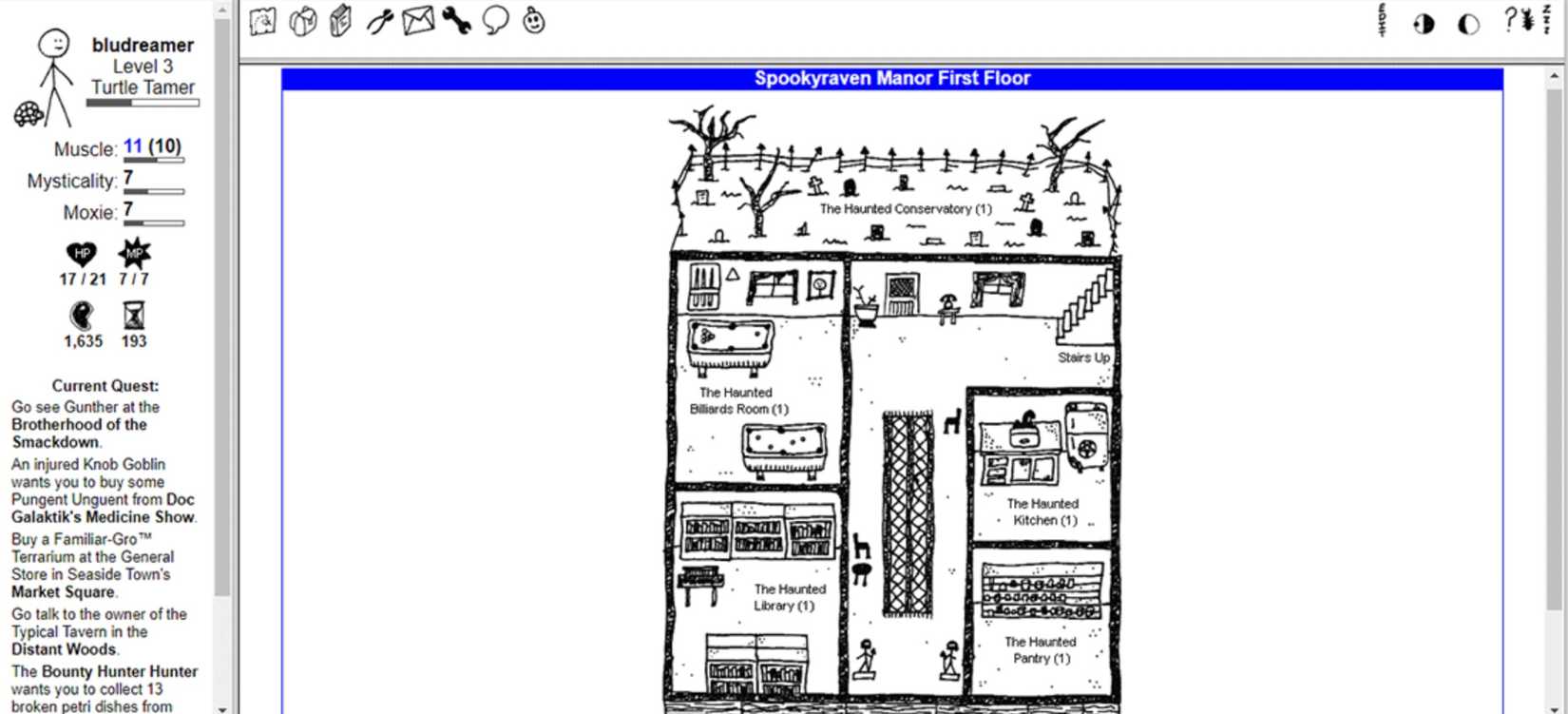
Resisting modern graphical trends entirely, Kingdom of Loathing is a proudly lo-fi, stick-figure massively multiplayer online game that has operated continuously since 2003. Its longevity stems from a relentless commitment to absurdist humor, puns, and self-deprecating wit.
Players choose from specialized classes like the Sauceror (who weaponizes spicy condiments) or the Disco Bandit (who defeats monsters through rhythmic combat maneuvers). Exploring specialized zones—such as the Haiku Dungeon, where every enemy description and player attack must adhere to strict syllable counts—highlights a game that values creative joy over polish. While daily play turns are limited for free-to-play accounts, the community and comedy remain unmatched.

9. Progress Quest
- Play this if: You love grinding through MMORPGs, but wish the computer would do all the tedious leveling for you.
- Where to play: Progress Quest Official Site
Launched in 2002 as a brilliant satire of games like EverQuest, Progress Quest takes the concept of the role-playing grind to its absolute logical conclusion. Once you generate your character—complete with randomly generated, utterly absurd skills like "Slime Finger" and "Animate Nightstand"—the game completely plays itself.
You simply sit back and watch your avatar march into virtual killing fields, vanquish foes, acquire loot, and liquidate inventory autonomously. Remarkably, the project remains active today, even featuring a multiplayer mode introduced in 2021 for groups wishing to passively watch digital progress unfold together.
10. Kittens Game
- Play this if: You love deep, slow-burn grand strategy epics like Civilization, but believe they would be significantly improved by adding thousands of cats.
- Where to play: Kittens Game Web Version
Kittens Game starts humbly: a single feline companion standing beside a small patch of catnip. Soon, however, that modest setup blossoms into a massive, text-driven civilization simulator.

Players manage wood and mineral yields, construct libraries and astronomical observatories to advance scientific research, track esoteric resources like "faith" and "unicorns," and eventually guide their feline empire toward deep-space exploration. Beneath its text-heavy, austere user interface lies a remarkably deep strategy game requiring careful tactical optimization and long-term planning.
Implications: The Enduring Value of Frictionless Play
The existence of these ten titles highlights a vital truth about contemporary digital culture: friction is often the greatest enemy of engagement.
In an era where starting a traditional video game frequently requires updating graphics drivers, launching third-party storefront software, authenticating two-factor login profiles, and downloading dozens of gigabytes of data, browser games offer immediate gratification. They bypass bureaucratic hurdles to deliver pure, unadulterated creative expression directly to the user.
Furthermore, the browser serves as an egalitarian playground for independent developers. Without the revenue pressures of multi-million-dollar publishing budgets or the gatekeeping of console manufacturers, creators can experiment with eccentric premises—whether that means decoding fictional royal languages, managing deep-sea dive shops, or simulating AI-driven paperclip apocalypse scenarios.
As web technologies continue to advance, the gap between traditional software and browser-based experiences will only narrow further. For players willing to look past the endless sea of generic word puzzles, the web browser remains the most accessible, diverse, and creatively fearless gaming platform in the world. Bookmark your favorites, dive in without hesitation, and do not say you weren’t warned when your productivity vanishes for the afternoon.
 Basiran
 Nana Muazin
 Layla Zulfa
