

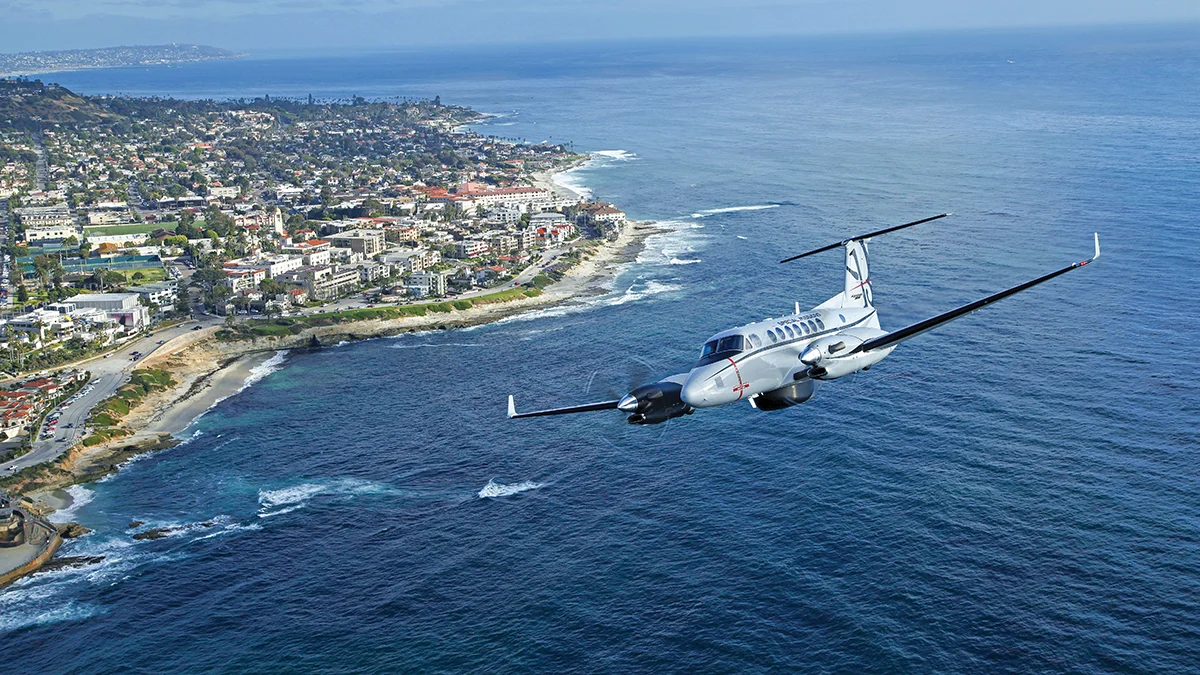
For decades, the turboprop aircraft occupied a specific, utilitarian niche in the global aviation ecosystem. Often characterized by their rugged reliability and ability to access challenging environments, these aircraft were the workhorses of the skies—the aerial equivalent of a heavy-duty S.U.V. However, a seismic shift is currently underway. A new generation of sophisticated, high-performance, and undeniably luxurious turboprops is challenging the status quo, effectively bridging the gap between the rough-and-ready utility of the past and the high-end refinement once reserved exclusively for private jets.
Industry experts and manufacturers are witnessing a transition where turboprops are no longer merely functional tools; they are becoming platforms for prestige, comfort, and advanced technology. From the dual-engine Beechcraft King Air 360ER to sleek single-engine marvels like the Pilatus PC-12 Pro, the Daher TBM 980, and the forthcoming Beechcraft Denali, the category is shedding its “pedestrian” reputation and embracing a new era of elegance.
Main Facts: The New Standard of Aerial Luxury
The fundamental value proposition of the turboprop has always been versatility. As Brian Foley, a prominent industry analyst, aptly notes, “They can take a lot of weight out of a very short field, a high field, and even an unimproved field.” Yet, the modern buyer is no longer willing to sacrifice comfort for that capability.
The current trend in aircraft design is the democratization of executive-level luxury. Manufacturers are no longer content with standard interiors; they are partnering with world-class design houses to redefine the in-flight experience. For example, the latest iteration of the Pilatus PC-12 features an interior conceptualized by BMW’s Designworks consultancy. The result is a cabin that prioritizes ergonomics and aesthetic harmony, incorporating taller, hand-stitched leather executive seats that fully recline, enhanced ambient lighting, and optimized storage solutions that maximize the perception of space.
Furthermore, the connectivity gap—once a significant disadvantage for turboprops compared to mid-size jets—has been closed. These aircraft are now being equipped with high-speed satellite internet, allowing passengers to stream high-definition media, conduct video conferences, and remain tethered to their professional lives with zero latency. This transformation is turning these aircraft into mobile offices and social hubs, appealing to a demographic that values both the ability to land at a remote lodge and the necessity of staying connected.
A Chronology of the Turboprop Evolution
The trajectory of the turboprop from a utilitarian asset to a luxury vessel has been a gradual, multi-decade process, punctuated by key technological milestones.

- The Era of Utility (1960s–1990s): The turboprop market was dominated by designs focused on durability and payload. Aircraft like the original King Air series became legendary for their ability to transport cargo and personnel to rugged, unpaved strips, but their interiors were largely industrial and focused on raw functionality.
- The Rise of the Personal Luxury Turboprop (2000s): The emergence of the Pilatus PC-12 and the Daher TBM series began to change the narrative. These manufacturers realized that the owner-pilot and the private business owner required a more refined environment. Cabin soundproofing improved, and materials became more premium.
- The Digital Integration Phase (2010s): The introduction of glass cockpits, specifically the Garmin G1000 and subsequently the G3000 series, transformed the pilot experience. The focus shifted to situational awareness and reduced pilot workload.
- The Current Renaissance (2020s–Present): We are currently in a period of "total refinement." Cabin luxury now mirrors the aesthetic and material standards of the automotive luxury market, while safety systems like Garmin’s Autoland represent a paradigm shift in human-machine interface. The upcoming launch of the Beechcraft Denali signals the next frontier: the integration of revolutionary engine technology.
Supporting Data: Efficiency Meets Performance
The economic and operational data behind these new-gen turboprops explains their surge in popularity. While private jets offer speed, they often come with exorbitant fuel burn rates and strict requirements regarding runway length and surface quality.
The upcoming Beechcraft Denali, for instance, serves as a case study in efficiency. By utilizing GE Aerospace’s new Catalyst engine, the aircraft promises a 10 percent increase in cruise power while simultaneously achieving nearly 20 percent lower fuel consumption. In an era where carbon footprint reduction and operating costs are increasingly scrutinized, these numbers are staggering. Reduced emissions and greater durability translate into a lower cost of ownership, making these aircraft not only more luxurious but also more financially sound for the sophisticated buyer.
Additionally, the adoption of the Garmin G3000 Prime avionics system has fundamentally changed how these aircraft are operated. The system utilizes larger, more intuitive touch-screen surfaces, effectively reducing the number of menus a pilot must navigate. This "global vision" of situational awareness is not merely a convenience; it is a critical safety advancement that allows for more precise navigation in complex weather patterns.
Official Responses and Strategic Perspectives
Manufacturers are acutely aware that they are selling an experience as much as a machine. Jérome Zbinden, head of marketing at Pilatus, emphasizes that the goal is to provide a "more sophisticated" environment that speaks to the identity of the modern user. By bringing in automotive design experts like those at BMW, manufacturers are signaling that the cabin should be a place of relaxation rather than a space to be endured.
Michel Adam De Villiers, vice president of sales at Daher Aircraft, highlights the importance of the cockpit as the nerve center of this luxury experience. "The new avionics provide a more intuitive way to control the airplane," De Villiers says. "They give you a more global vision and situational awareness, which is vital when you are operating an aircraft that can take you to such a wide variety of global locations."
Industry analyst Brian Foley summarizes the shift by observing that the turboprop has become a "Ferrari" of the skies. He points out that while a wealthy individual might have the resources to operate a private jet, the turboprop offers a specific type of freedom. "When they want to do some mountain-type flying, or remote-type flying, these aircraft fit the bill better than a jet ever could," he says. "It’s a different kind of prestige—the prestige of access."

The Implications: A New Market Demographic
The implications of this shift are profound. As the barrier between "utilitarian" and "luxury" dissolves, the market for turboprops is expanding to include a new class of buyer. These are individuals who previously dismissed turboprops due to their perceived lack of comfort, or those who were intimidated by the complexity of larger, jet-powered aircraft.
The "Autoland" feature, in particular, is a game changer. By providing an automated safety net—where the aircraft can autonomously communicate with air traffic control, identify a suitable airport, and perform a full-stop landing in the event of pilot incapacitation—the industry is lowering the psychological barrier to ownership.
Furthermore, the integration of high-speed satellite internet is attracting a younger, more tech-savvy generation of entrepreneurs. These buyers view their aircraft as an extension of their digital lifestyle, requiring the same level of connectivity in the clouds as they have in their offices.
Conclusion: The Future is Elevated
The transformation of the turboprop is complete. It has successfully moved past its reputation as a simple tool for the rugged professional and has established itself as a refined, technologically advanced, and highly capable luxury asset. As we look toward the entry into service of the Beechcraft Denali and the continued refinement of existing fleets, the message from the aviation industry is clear: the turboprop is no longer settling for second place.
By combining the rugged, go-anywhere capability that has defined the category for half a century with the materials, technology, and comfort of a modern executive jet, these manufacturers have created a new gold standard. The turboprop is finally, and firmly, trading its toolbox for a tuxedo, proving that you do not need to sacrifice the ability to land on a short, mountain runway to enjoy the comforts of a five-star experience. The horizon for this category is wider than ever, and the view from the cabin has never looked better.
 Ali Ikhwan
 Laily UPN
 Raul Delapena Setiawan
