

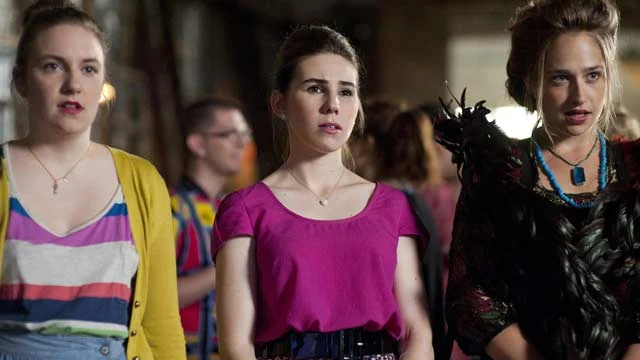
The digital airwaves are buzzing with a familiar, polarizing frequency: HBO has officially confirmed a five-episode limited revival of Girls, the seminal comedy that defined the landscape of mid-2010s television. For fans who spent six seasons tracking the messy, unflinching, and often uncomfortable evolution of Hannah Horvath and her cohorts, the news is a watershed moment. Yet, as the industry begins to speculate on the creative direction of this return, a more clinical question looms over the production: Can a show that once dominated the cultural conversation successfully navigate the modern awards landscape, or will it fall victim to the "revival curse" that has haunted so many of its predecessors?
A Cultural Touchstone: The Legacy of Girls
When Girls first premiered in 2012, it functioned as more than just a television show; it was a lightning rod for discourse. Created by and starring Lena Dunham, the series offered an unfiltered, sometimes brutal look at the lives of four women in their twenties navigating the labyrinth of relationships, artistic ambition, and the harsh realities of adulthood in Brooklyn. Over the course of its six-season run, which concluded in 2017, the show secured its place in the pantheon of television history.
Its initial critical reception was underscored by significant industry recognition. Throughout its original tenure, Girls garnered 19 Emmy nominations and two major wins. In 2013, it was crowned Best Comedy Series at the Golden Globes, with Dunham herself taking home the trophy for Lead Actress in a Comedy Series. It was a rare, high-concept project that felt both deeply personal and globally resonant. Now, a decade after the curtains closed on Hannah, Marnie, Jessa, and Shoshanna, the series prepares for a five-episode encore—a tight, deliberate return that promises to catch up with its characters in the throes of their next life stage.

The Modern Awards Landscape: A New Reality
The television landscape in 2026 bears little resemblance to the one Girls departed in 2017. Today, the awards season is a high-stakes battlefield dominated by massive streaming budgets and a relentless cycle of new, high-concept IP. At the most recent Emmy Awards, we saw the shifting of the guard: Widow’s Bay shattered records with a staggering 14 wins in the comedy category, eclipsing the previous dominance of The Studio.
For a returning legacy show, the challenge is twofold. First, it must compete with a new generation of content that has redefined what "comedy" looks like in a post-pandemic, algorithm-driven world. Second, it must justify its existence to an Academy that is increasingly obsessed with the "new." While nostalgia is a powerful marketing tool, it has proven to be a double-edged sword when it comes to the voters’ ballots.
Chronology of the "Revival Struggle"
History suggests that the road to an Emmy nomination for a returning series is fraught with peril. Analyzing the track records of other high-profile revivals provides a sobering baseline for the team behind Girls.

And Just Like That…
The Sex and the City follow-up is perhaps the most glaring example of a sequel struggling to capture the magic of its precursor. Despite being built on the foundation of one of the most decorated comedies in history—which boasted 54 Emmy nominations and seven wins—the Max revival failed to secure a single Emmy nomination. The absence of key cast members, combined with a tonal shift that felt jarring to longtime fans, alienated the very voters who once championed Sarah Jessica Parker’s Carrie Bradshaw.
Murphy Brown
When CBS brought back the legendary newsroom sitcom in 2018 for a 13-episode run, the expectations were monumental. The original series had been a juggernaut, earning 62 Emmy nominations and 18 wins. However, the revival, while featuring the iconic Candice Bergen, found itself unable to break through the noise of the modern era, resulting in a complete shut-out from the Academy.
Arrested Development
Mitchell Hurwitz’s Arrested Development was a critical darling during its initial run on Fox, winning six Emmys. When Netflix revived the series for its fourth and fifth seasons, it retained the core cast and the unique creative DNA of the show. Yet, the awards success remained elusive. With only three nominations and zero wins across the revival seasons, the project served as a case study in how the "lightning-in-a-bottle" quality of a cult classic is difficult to replicate once the momentum has stalled.

Frasier
Even the most successful spin-offs face uphill battles. Kelsey Grammer’s return as the iconic psychiatrist in the Paramount+ revival of Frasier drew significant viewership, but it failed to resonate with the television academy in the same way the 11-season original run—which holds an astonishing 37 Emmy wins—did.
The Exception: Will & Grace
If there is a glimmer of hope for Girls, it lies in the trajectory of Will & Grace. The sitcom, which originally aired from 1998 to 2006, achieved 16 Emmy wins during its first run. When it returned to NBC in 2017, many expected a lackluster performance. Instead, the revival secured 13 Emmy nominations and two wins over its three-season span. The success of Will & Grace suggests that if a revival can maintain the chemistry of its original cast and find a way to make the characters relevant to a modern political and social climate, the Academy may be willing to welcome them back.
Supporting Data: Why Tone Matters
The primary obstacle for Girls will be the "relevance gap." The original show was lauded for being a raw, unfiltered portrait of white, millennial privilege—a theme that sparked intense cultural debate. In 2026, the cultural conversation has shifted toward broader representation, different socioeconomic anxieties, and a faster, more cynical comedic tempo.

If the five-episode return merely attempts to recapture the "indie-film-on-television" aesthetic of 2012, it risks feeling like a period piece. However, if Dunham and her team lean into the maturity of these characters—the reality of being in their late 30s or early 40s, the failure of artistic dreams, or the quiet desperation of suburban life—they may tap into a vein of "prestige dramedy" that the Emmys currently favor.
Official Responses and Implications
HBO has been characteristically tight-lipped about the plot, with executives focusing on the "event nature" of the return. Industry analysts suggest that the five-episode structure is a calculated move to keep the show in the "Limited Series" or "TV Movie" category, which is often less crowded and more forgiving than the hyper-competitive "Best Comedy Series" field.
"The goal is not to reboot the show," one industry insider noted, "but to provide a necessary coda. It’s an artistic exercise, not a commercial one." This framing is crucial. By positioning the revival as a creative necessity rather than a cash grab, HBO is attempting to insulate the project from the cynical reception that often greets reboots.

The implications for this project extend beyond Girls itself. If this revival performs well—both in terms of critical acclaim and potential nominations—it will set a new template for "prestige limited revivals." Studios are watching closely to see if short-form, high-quality reunions can act as a bridge between a show’s legacy and its long-term viability in an awards-obsessed market.
Conclusion: A Delicate Balancing Act
As the production team moves forward, the pressure to balance nostalgia with innovation will be immense. Girls was never a show that sought to please everyone; it was a show that demanded to be seen, to be argued over, and to be felt. If the revival can summon that same spirit—that willingness to be messy, unflattering, and deeply human—it may find that the Academy is not as fickle as history suggests.
The path to the 2027 Emmy stage is narrow, and the competition is fierce. Yet, in an era where the television landscape is increasingly fragmented, there is a profound hunger for voices that feel singular and authored. Lena Dunham’s Girls has the potential to prove that while you can’t go home again, you can certainly revisit the people you used to be, and in doing so, remind the world why you were worth watching in the first place. Whether this five-episode return becomes a triumph or a footnote, one thing is certain: the conversation surrounding it will be as vibrant, and as complicated, as the characters themselves.
 Laily UPN
 Sagoh
Sagoh
 Asep Darmawan
