

By Olivia Tauber
Published September 11, 2026
There are a few universal expectations when a dense crowd of college students takes over a fraternity house lawn in broad daylight. A sea of red Solo cups, blaring bass, and precarious games of beer pong usually top the list. People calmly unrolling yoga mats to stretch before a collective group run, however, have historically not been part of that imagery. Neither is a row of stainless-steel cold plunge tubs humming beside a makeshift mobile matcha bar.
Welcome to the era of the “wellness darty.”
A portmanteau of a traditional daytime party (“darty”) and health-conscious lifestyle culture, these gatherings are sweeping campuses across the United States. While the foundational elements of a social mixer remain—loud music, networking, crowds of peers, and an excuse to get outside—the core agenda has shifted radically. Instead of drinking games and keg stands, attendees participate in guided mat Pilates sessions, community 5Ks, ice baths, infrared saunas, and post-workout sips of ceremonial-grade matcha.
The trend has captured the attention of students at powerhouse social schools like the University of Miami, the University of Florida, Florida State University, Syracuse University, and the University of Alabama, largely driven by independent regional fitness organizations and campus wellness clubs. But while the participants find these events to be a refreshing, low-pressure alternative to traditional weekend benders, the broader internet is experiencing a collective generational whiplash.
The phenomenon has sparked intense online debates about changing youth culture, the pressure of self-optimization, and what college is "supposed" to look like. Yet, behind the viral TikToks and bewildered reaction videos lies a profound structural shift in how Generation Z approaches socialization, health, and leisure.

The Main Facts: What is a Wellness Darty?
To understand the wellness darty, one must first look at the traditions it is supplementing—and in some cases, replacing. Historically, daytime parties have been synonymous with heavy binge drinking, starting early on Saturday or Sunday afternoons. They are loud, chaotic, and heavily centered around alcohol consumption.
In contrast, a wellness darty repurposes the exact same physical spaces—most notably, Greek life lawns—for fitness and recovery.
Consider a recent gathering organized by Peak Pulse, a Florida-based wellness community founded by Aydan Child. Outside a University of Florida fraternity house, hundreds of students gathered in matching athletic wear. The agenda did not feature a DJ spinning hyper-pop over blown-out speakers to accompany shotgunned beers; instead, it featured synchronized stretching, dynamic warm-ups, and a massive group run down Greek row.
Similar organizations are cropping up nationwide. Sweat & Soak has staged outdoor wellness mixers for University of Alabama students featuring localized fitness circuits, mobile saunas, and cold-water immersion therapy. Meanwhile, The Wellness Society hosted an outdoor mat Pilates session directly on the front lawn of Syracuse University’s Delta Kappa Epsilon (DKE) house.
While these events still incorporate music and social mingling, alcohol is either entirely absent or positioned as a minor, optional afterthought. For the students attending, the premise is simple: combine a workout class with a social hangout, roll it into a Saturday morning, and build a weekend plan that leaves you feeling energized rather than exhausted.
Chronology: From Digital Aesthetics to Campus Lawns
The roots of the wellness darty do not lie in institutional academia, but rather in the algorithmic evolution of Gen Z internet culture.

Over the past half-decade, social media feeds have been saturated with aspirational lifestyle content. Platforms like TikTok and Instagram popularized hyper-curated morning routines, matching athletic sets, the "Pilates princess" aesthetic, and post-fitness-class matcha runs. This digital ecosystem turned wellness from a chore into a core identity marker for young adults.
The transition from digital screens to physical college campuses accelerated rapidly in the mid-2020s. The inflection point arrived when organizers began taking fitness out of sterile, expensive gym studios and dropping it directly into the traditional social hubs of university life: Greek houses.
- Late 2023–2024: Research from firms like McKinsey & Company begins tracking a massive surge in health-consciousness among young consumers. Gen Z outpaces older generations in wellness spending, prioritizing fitness as a fundamental pillar of lifestyle and social identity.
- 2024–2025: Alternative nightlife concepts gain traction. According to Eventbrite data, morning raves, "coffee clubbing," and community sauna/ice bath events surge by triple-digit percentages, signaling an appetite for daytime, substance-free social gatherings.
- Early 2026: Local wellness groups begin formalizing partnerships or coordinating events with campus organizations, utilizing fraternity and sorority properties for large-scale outdoor fitness mixers.
- September 2026: A viral TikTok video posted by Peak Pulse founder Aydan Child captures hundreds of UF students working out on a fraternity lawn. The caption reads, "Imagine explaining a wellness darty to someone who went to college in 2012." The video ignites a massive cross-platform debate, drawing millions of views and cementing the term "wellness darty" in the national lexicon.
Supporting Data: The Fading Bond Between Gen Z and Alcohol
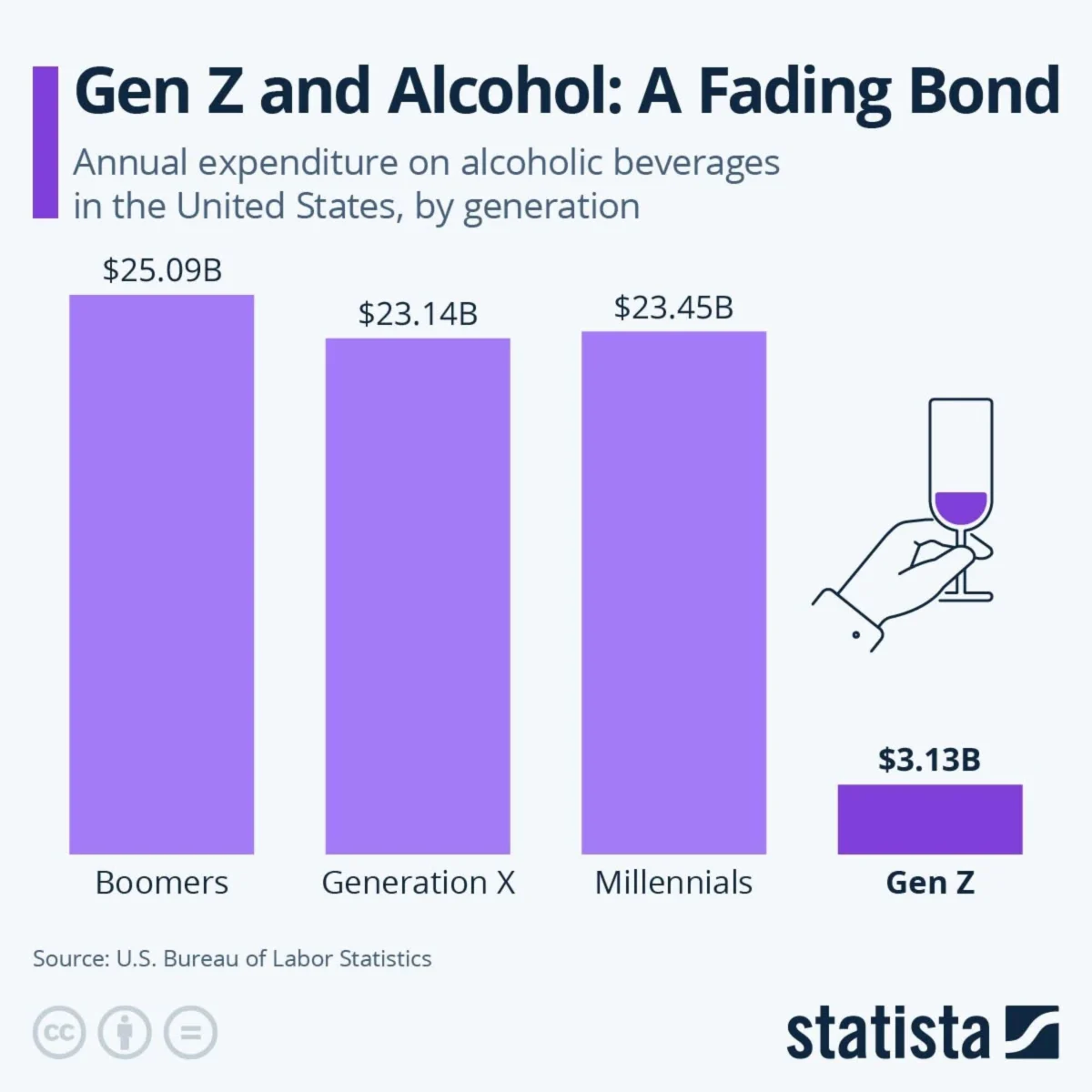
The rise of the wellness darty is not occurring in a vacuum; it is the direct behavioral byproduct of Gen Z’s evolving relationship with alcohol. For years, public health researchers and polling agencies have documented a steady, measurable decline in youth drinking.
According to a landmark Gallup survey, the proportion of adults under 35 who report consuming alcohol fell from 72 percent in the early 2000s to 62 percent in the 2021–2023 polling period. Furthermore, perceptions of alcohol have soured: 52 percent of Gen Z respondents considered moderate drinking to be unhealthy in 2023, a sharp increase from 34 percent just five years prior. This trend is global, with documented declines in youth alcohol consumption spanning the United Kingdom, Sweden, Australia, and Iceland.
Data compiled by consumer research platforms like Knit further clarify the motivations behind this abstinence:
- 51.7% of Gen Z respondents reported that they simply dislike the taste or smell of alcohol.
- 44.8% actively avoid drinking to prevent hangovers and preserve productivity.
- 41.4% cite long-term health concerns as a primary deterrent.
Economics and digital paranoia also play undeniable roles. With the cost of living skyrocketing, young adults are increasingly viewing heavy drinking as an inefficient use of limited disposable income. Additionally, the omnipresence of smartphones creates social liabilities. As Northeastern University historian Malcolm Purinton noted in interviews regarding modern drinking habits, young people are hyper-aware of the risks associated with public intoxication. Simply put: nobody wants to go viral for embarrassing behavior that could jeopardize future employment or social standing.

Simultaneously, financial metrics show that Gen Z is investing heavily elsewhere. McKinsey reports that Gen Z and Millennials account for more than 41 percent of annual U.S. wellness spending, despite comprising only 36 percent of the adult population. For this demographic, a $10 matcha latte or a specialized workout class is viewed as a worthwhile investment in physical and mental health, whereas a $60 bar tab resulting in a debilitating Sunday hangover is increasingly evaluated as a bad ROI.
Official Responses and Perspectives
Reactions to the wellness darty trend are sharply divided between the students living it and older generations watching it unfold online.
The Student Perspective: Balance and Connection
For college students, these events solve a very modern social dilemma: how to build community without relying on liquid courage.
Riley Meyer, a University of Alabama sophomore who helped organize events for Sweat & Soak, points out that socialization without alcohol can feel daunting for her generation. Building an event around a structured activity removes that barrier.
"I think my generation… does have a problem with socialization, especially without the context of alcohol at a party," Meyer explained to USA Today. "When you have an activity built in, it gives you something to do."
Crucially, students emphasize that wellness darties are not puritanical prohibition zones meant to replace all traditional fun. They are additive, not restrictive. Attendees frequently note that they can attend a morning run or Pilates class, decompress, and still choose to go out to a party later that evening if they wish.

Aydan Child of Peak Pulse echoes this sentiment, noting that his organization’s events are entirely inclusive. Some gatherings even transition toward social spaces where coffee, matcha, and alcoholic options coexist, allowing participants to curate their own weekend experiences. Recent industry reports, such as an IWSR market analysis from mid-2026, suggest that total youth sobriety isn’t absolute—about 74 percent of Gen Zers report having had a drink over a six-month period—indicating that students are adopting a fluid, "moderation-first" mindset rather than taking a hardline vow of total abstinence.
The Internet Critique: Confusion, Nostalgia, and "Optimization Fatigue"
Outside of campus bubbles, however, the wellness darty has been met with a mixture of bewilderment, humor, and existential dread.
Social media platforms like X (formerly Twitter) and TikTok have become battlegrounds for generational commentary. Widely circulated footage of fraternity lawn workouts has been labeled "truly bone chilling" by critics, while other viral posts jokingly question why college students are "cosplaying as 30-something matcha/pilates/corporate warriors."
Older generations, particularly Millennials and Gen X, have expressed a sense of mourning for the traditional chaotic college experience. In various online forums, alumni reminisce about the messy, unscripted freedom of the 2010s party scene—heavy laughter, spontaneous late-night adventures, and unoptimized mistakes that helped shape their youth.
Other critics raise concerns about "optimization fatigue." A common sentiment among skeptical commentators is that Gen Z has weaponized wellness, turning every single waking hour—including leisure time—into an obligation for self-improvement and productivity.
"I think it’s generally because our generation is too fixated on optimizing everything," one Reddit user observed. "There is beauty in imperfection. You don’t need to be biohacking your fraternity social calendar."

Implications: The Future of Campus Social Life
Love it or mock it, the wellness darty is more than a fleeting TikTok fad; it is a clear indicator of where youth culture and consumer behavior are heading.
Higher education institutions, Greek life organizations, and consumer brands are all taking notice. For decades, fraternity and sorority houses derived their social capital almost exclusively from hosting high-risk, alcohol-centric parties. As liability concerns rise, university crackdowns on hazing intensify, and student demand shifts toward health-conscious lifestyles, Greek organizations face an existential choice: adapt or become obsolete. Opening lawns to wellness groups allows fraternities to rebrand themselves as community hubs rather than liability risks.
Furthermore, the commercial implications are massive. Beverage companies, fitness apparel brands, and wellness startups are rushing to sponsor campus fitness events, recognizing that winning brand loyalty during formative college years secures lifelong consumers.
Whether the "wellness darty" name remains part of the cultural vernacular or eventually evolves into something new, its underlying philosophy is here to stay. Gen Z is actively carving out space for a different kind of college experience—one where community, physical health, and social connection are prioritized, and where cracking open a can of cold-pressed juice or a ceremonial matcha is just as viable a weekend plan as cracking open a beer.
 Nana Wu
 Neng Nana
 Reynand Wu
