

Introduction: A Creative Shift in the Bay
When Zac Posen, the visionary designer known for his mastery of architectural silhouettes and high-glamour couture, stepped into the role of creative director at Gap Inc. in 2024, the fashion world held its breath. Tasked with revitalizing an American retail institution—which encompasses the namesake Gap brand, Old Navy, and Banana Republic—Posen brought more than just his sketchbooks to the table. He brought an entire relocation from his native New York City to the foggy, chromatic landscape of San Francisco.
For Posen, this transition is not merely a change in zip code; it is a fundamental shift in his creative process. From the deep, saturated hues of Ellsworth Kelly’s masterpieces to the rugged, old-growth majesty of Muir Woods, Posen has found that the spirit of the Bay Area is the missing ingredient in the modern Gap identity.
Main Facts: A New Vision for an American Icon
Zac Posen’s mandate at Gap Inc. is clear: bridge the gap between mass-market utility and high-design sensibilities. Since moving to San Francisco two years ago, the designer has become an evangelist for the city’s unique aesthetic.
The core of his philosophy centers on "Western minimalism"—an understated, elegant approach to dressing that mirrors the city’s own dichotomy of grit and glamour. Under his direction, the brands are undergoing a transformation that emphasizes quality fabrics, intentional color palettes, and a renewed sense of ease. Whether it is the reissuing of iconic archival pieces—such as the beloved 2001 striped chunky turtleneck—or the high-concept collaborations that have defined his tenure, Posen is injecting a level of narrative depth that has been absent from the brand for years.
.jpg)
Chronology: The Evolution of an Aesthetic
The trajectory of Posen’s integration into San Francisco and his subsequent influence on Gap Inc. can be traced through several key milestones:
- Early 2024: Zac Posen assumes the role of creative director at Gap Inc., signaling a new chapter for the company.
- Spring 2024: Posen orchestrates a vibrant collaboration between Christopher John Rogers and Old Navy, introducing a “ROYGBIV” (red, orange, yellow, green, blue, indigo, violet) color philosophy to the brand’s everyday offerings.
- May 2024: At the Met Gala, Posen makes a splash by dressing actor Da’Vine Joy Randolph in a structural denim gown. The gown’s specific shade of deep, oceanic blue serves as a direct homage to the San Francisco Bay, marking his first major public synthesis of his new home and his work.
- Late 2024–2025: Posen deepens his immersion into local culture, from the Ferry Building farmers market to the historic North Beach neighborhood, documenting the "Palermo colors" and textures of the city.
- 2026: Posen continues to refine the "Gap Studio" aesthetic, focusing on premium materials and elevated staples that reflect the casual, yet sophisticated, lifestyle of the West Coast.
Supporting Data: The Art and Environment of Inspiration
Posen’s creative process is heavily reliant on his surroundings, which he treats as a living, breathing mood board.
The Ellsworth Kelly Influence
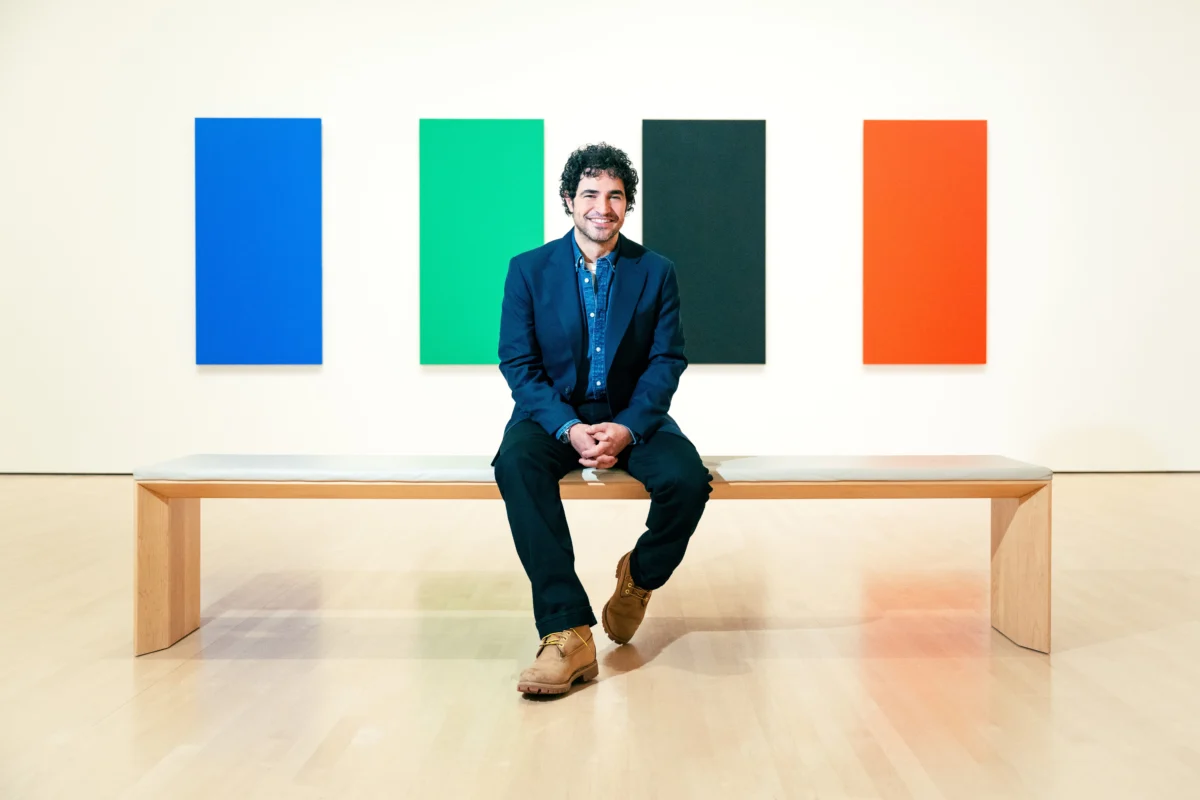
One of the most profound moments in Posen’s tenure occurred at the San Francisco Museum of Modern Art (SFMOMA). While viewing Ellsworth Kelly’s Blue Green Black Red, Posen experienced a breakthrough. "This is the Gap color story of my childhood," he remarked. The connection to the Fisher family—Gap’s founders who were prolific art collectors—deepened his understanding of the brand’s heritage. He notes that these panels once hung in the Gap headquarters, representing a lineage of minimalism and color theory that he is now eager to reclaim.
The Geography of Style
Posen is a keen observer of the San Francisco environment, which he jokingly refers to as "the world’s greatest screen saver." His observations provide empirical data for his designs:
.jpg)
- The Bay’s Light: He translates the changing blues of the San Francisco Bay into his denim collections.
- North Beach Palette: The historic Italian district offers a specific, warm color profile that influences his knitwear.
- The "Western Minimalism" Index: Posen observes that while San Franciscans may appear casual, their choices—double-faced boiled wool, the perfect white T-shirt—are highly curated. He notes, "I would never call it quiet, because San Franciscans are not quiet people."
Official Responses and Creative Philosophy
In interviews, Posen describes his transition from the fast-paced, high-pressure environment of New York City to the more atmospheric, nature-integrated life of San Francisco with palpable enthusiasm.
"I’ve never worn more linen in my life!" he admits, laughing. This shift toward natural, breathable fabrics is a direct response to the city’s multiple subclimates. Posen’s "Gap Studio" line is intended to capture this essence of comfort. He is adamant that "casual" does not mean "lazy." Instead, he advocates for a style that is "tailored yet relaxed and effortless."
His perspective on the city’s eccentricities is equally refreshing. Whether discussing the public displays of self-expression in the city or the legendary history of the Golden Gate Fortune Cookie Factory, Posen views these local idiosyncrasies as vital components of a vibrant society. He champions the "full freak-flag regalia" of San Francisco’s residents, viewing it as the ultimate form of personal style—a concept he tries to weave into the fabric of his brands.
Implications: The Future of Gap Inc.
The implications of Posen’s tenure are significant for the retail industry at large. By grounding a global brand in the specific, tangible culture of a single city, Posen is attempting to move away from the "mall brand" anonymity that plagued many retailers in the early 2000s.
.jpg)
The "Zac-ified" Reissue Strategy
By digging into the archives and pulling out pieces like the 2001 chunky turtleneck, Posen is creating a sense of continuity. He is not just designing new clothes; he is curating a legacy. This strategy suggests that Gap Inc. is moving toward a model of "timelessness over trendiness."
The Met Gala Effect
By utilizing high-profile red carpet moments to tell a story about San Francisco—such as the Kendall Jenner look or the Da’Vine Joy Randolph denim gown—Posen is repositioning Gap as a brand that can hold its own on the world’s most exclusive stages. He is proving that accessibility does not preclude artistry.
A New Retail Paradigm
As the industry watches Posen’s work, the broader lesson seems to be one of "place-based creativity." By allowing the environment to inform the product, Posen is fostering a brand culture that feels authentic rather than manufactured. His move to San Francisco is a testament to the idea that to change a brand’s future, one must often change their own perspective.
In conclusion, Zac Posen’s time in San Francisco has become a defining chapter for both the designer and the company he now leads. By synthesizing the natural beauty of the Bay, the artistic heritage of the Fisher collection, and the unconventional spirit of the city’s inhabitants, Posen is building a new, more vibrant iteration of the American wardrobe—one that is, in his own words, anything but quiet.
 Sagoh
Sagoh
 Asro
Asro
