

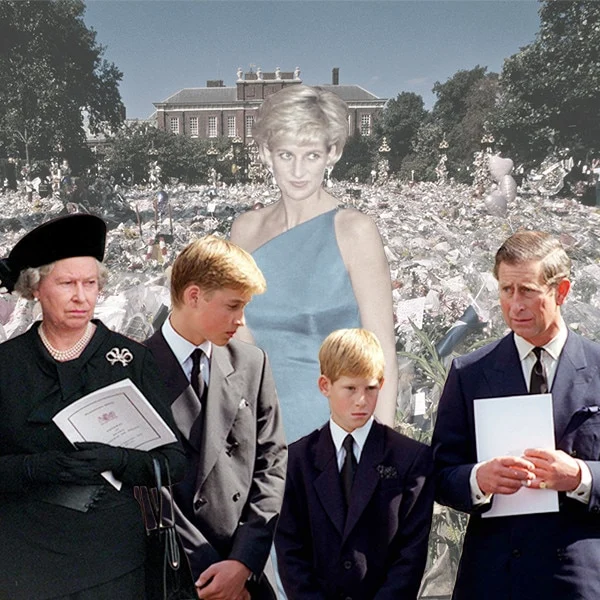
More than four centuries of history permeate the halls of Kensington Palace, a residence that has served as a silent witness to the triumphs and tragedies of the British monarchy. Yet, in recent decades, the estate has become inextricably linked to the spirit of Diana, Princess of Wales. Even twenty-seven years after her untimely death, her narrative remains a cornerstone of the public consciousness, a testament to a woman who transformed the nature of royal engagement. Today, a bronze statue of the late Princess stands sentry in the palace’s Sunken Garden, a permanent tribute commissioned by her sons, Prince William and Prince Harry, to mark what would have been her 60th birthday.
As the world continues to reflect on her life, the events surrounding her final days remain a subject of profound cultural and historical significance. The death of Diana, Princess of Wales, on August 31, 1997, did more than claim a life at the age of 36; it shattered the facade of the British monarchy, forcing an institution rooted in stoicism to confront a rapidly changing, emotionally expressive modern society.
A Tragic Chronology: The Night in Paris
The sequence of events that unfolded in the early hours of August 31, 1997, remains etched in the global memory. Following a dinner at the Hôtel Ritz Paris, Diana and her companion, Dodi Fayed, departed in a Mercedes-Benz chauffeured by Henri Paul. Pursued by paparazzi, the vehicle entered the Pont de l’Alma tunnel, where it crashed at high speed.
The immediate aftermath was chaotic and devastating. Henri Paul and Dodi Fayed were killed instantly. Princess Diana, critically injured, was transported to the Pitié-Salpêtrière Hospital. Despite the desperate efforts of medical staff, she was pronounced dead at 3:00 a.m. British Summer Time. The only survivor of the wreckage was bodyguard Trevor Rees-Jones.
Back in Scotland, at Balmoral Castle, the royal family was asleep when the news broke. The Queen’s private secretary, acting under the gravity of the situation, initiated a series of phone calls that would forever alter the course of the monarchy. Royal biographer Ingrid Seward later reported in The Queen’s Speech that the Queen’s initial reaction to the news of the crash was one of profound disbelief, famously musing, "Someone must have greased the brakes."
The Immediate Royal Response and the Public Backlash
For the first few days following the tragedy, the royal family remained at Balmoral. While they sought to shield Princes William and Harry from the media frenzy, the public—already grieving the loss of the "People’s Princess"—began to view the silence from the Palace as cold indifference.
The disparity between the public’s raw, outward display of emotion and the perceived stoicism of the Queen became a flashpoint. Headlines such as "SHOW US YOU CARE," splashed across the front page of The Express, captured the collective frustration of a nation that felt abandoned by its sovereign. This period is widely regarded as one of the most significant challenges Queen Elizabeth II faced during her seven-decade reign.
Prince Charles, who had recently finalized his divorce from Diana in 1996, found himself in an impossible position. According to author Tina Brown, Charles was "absolutely distraught" upon hearing the news, instinctively recognizing that the tragedy would inevitably lead to public and media scrutiny of the royal institution. He sought permission to fly to Paris to claim Diana’s body—a request the Queen initially resisted but eventually granted.
Official Statements and the "People’s Princess"
In the absence of a swift royal address, it fell to the newly elected Prime Minister Tony Blair to articulate the national mood. In a televised address from his constituency, Blair famously dubbed Diana the "People’s Princess," capturing the essence of her unique connection to the public.
"She was a wonderful, and a warm, human being," Blair said, visibly shaken. "Though her own life was often sadly touched by tragedy, she touched the lives of so many others, in Britain, throughout the world, with joy and with comfort."
Blair’s emotional vulnerability provided a stark contrast to the traditional royal reserve. His words resonated because they acknowledged the complexity of Diana’s life, including her struggles with the press and the difficulties she faced within the royal family.
The Institutional Pivot
Recognizing the widening chasm between the Crown and the public, the Queen eventually departed from tradition. On September 5, 1997, she returned to London and delivered a historic live broadcast. Dressed in black and speaking from the heart, she paid tribute to Diana as an "exceptional and gifted human being."
"We have all been trying in our different ways to cope," the Queen said. "It is not easy to express a sense of loss, since the initial shock is often succeeded by a mixture of other feelings—disbelief, incomprehension, anger and concern for those who remain."
The address was a pivotal moment in modern royal history. By acknowledging the "mixed" emotions of the nation, the Queen bridged the gap, validating the public’s grief while asserting her role as both a monarch and a grandmother.
The Funeral Procession and the Burden of Duty
The funeral on September 6, 1997, remains a defining image of the era. The sight of the young Princes William and Harry walking behind their mother’s casket remains a subject of intense debate. Prince Harry later reflected in the documentary Diana, 7 Days that no child should be asked to do that under any circumstances. However, it was the counsel of their grandfather, Prince Philip, that encouraged them to participate, warning William that he might regret it later if he chose not to walk.
The eulogy delivered by Diana’s brother, Earl Charles Spencer, added another layer of intensity to the service. He famously critiqued the media’s role in her life and pledged that her "blood family" would ensure that William and Harry were protected from the pressures that had driven Diana to "tearful despair."
Long-term Implications for the Monarchy
The legacy of that week continues to shape the royal family today. The tragedy forced the institution to modernize its approach to public communication and emotional expression. For Prince Charles, the period served as a harsh introduction to the public’s expectations of a future king. He admitted in the following year that he felt "an alien in his own country," yet his subsequent efforts to foster a more compassionate public persona were aided by his visibility as a devoted, albeit grieving, single father.
Furthermore, the schism between the royals and the media intensified. The events of 1997 instilled in Prince Harry a deep-seated distrust of the press, a sentiment he has articulated with increasing frequency in recent years.
The cultural impact of Diana’s death was also captured in media, most notably in Peter Morgan’s 2006 film The Queen, where Helen Mirren’s portrayal of the monarch highlighted the clash between traditional duty and the demands of a modern, emotive public. While the real Queen never commented on such portrayals, the film underscored the profound shift in the relationship between the sovereign and her subjects.
A Lasting Resonance
Princess Diana’s death was a catalyst for the monarchy to evolve or risk obsolescence. Today, the "People’s Princess" continues to be a symbol of humanitarianism and personal resilience. Her ability to connect with the sick, the needy, and the marginalized remains the benchmark for modern royal service.
The lessons learned during those seven days in September 1997 have left an indelible mark on the House of Windsor. The monarchy survived, but it did so by acknowledging that its strength lies not merely in tradition, but in its ability to listen to the people it serves. As the world continues to honor Diana’s memory, her life remains a powerful reminder that true influence is found in empathy, warmth, and the courage to remain true to oneself in the face of immense pressure.
 Sagoh
Sagoh
 Siti Muinah
 Nana
Nana
