

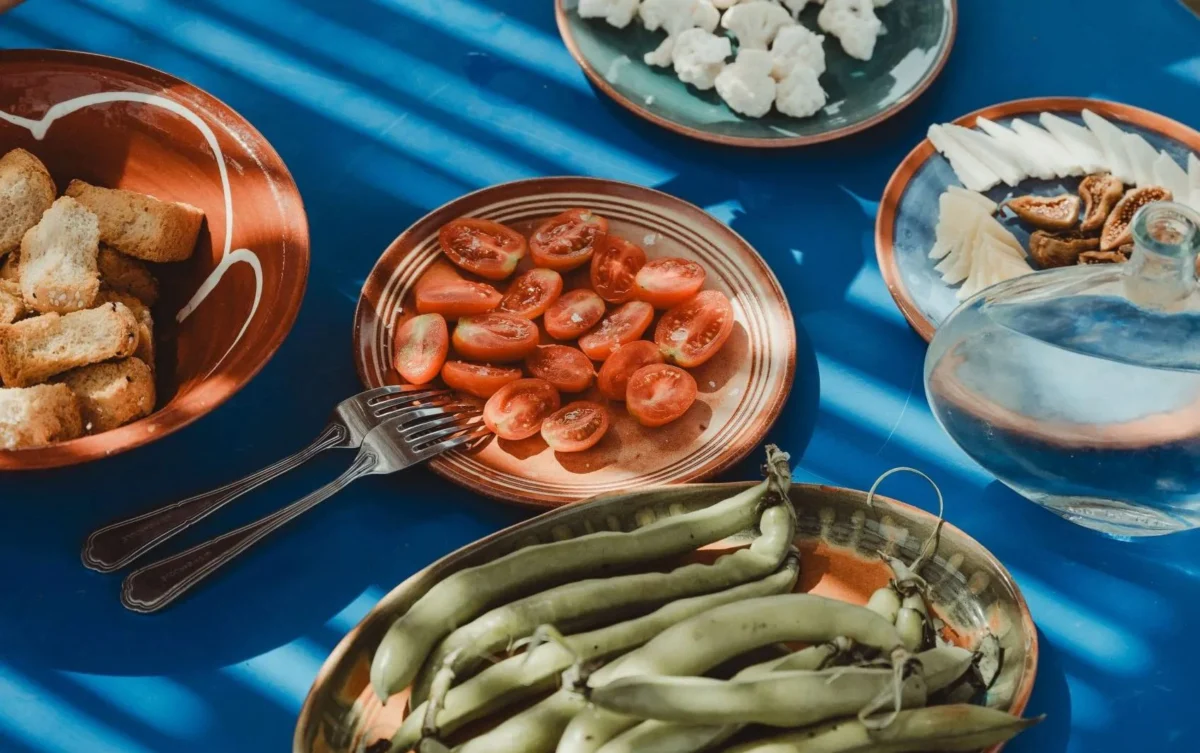
In the sweltering heat of a mid-afternoon in Charaso, a small, stone-hewn village in the central highlands of Crete, the air vibrates with the rhythmic buzzing of cicadas and the distant, territorial calls of roosters. Here, atop a rustic stone patio, Agelos Mpougias—a man who carries the culinary heritage of the island in his calloused hands—is busy at work. Before him, a heavy clay pot sits atop an open fire, slowly coaxing the flavors from dolmadakia (stuffed grape leaves), sun-ripened tomatoes, and delicate squash blossoms.
This is not merely cooking; it is a ritual. For the traveler, it is a sensory immersion into a way of life that has defined this Mediterranean island for millennia. As I sit, consuming carob bread slathered with sharp tirozouli cheese and tender, onion-perfumed pork—sourced from pigs raised just a hundred yards away—it becomes clear that to visit Crete is to enter into a pact: you will be fed, and you will be changed.

The Main Facts: A Culture of Communion
The Cretan diet is widely regarded as the gold standard for the "Blue Zone" lifestyle, a phenomenon where residents experience longer, healthier lives than anywhere else in the world. This is not just about the consumption of olive oil, fish, and seasonal vegetables. It is about the social infrastructure of food.
In Crete, eating is an act of philoxenia—the ancient Greek concept of hospitality to strangers. It is a communal experience that prioritizes the "who" and the "how" just as much as the "what." From the fermented-grain staples like trahanas to the wild mountain tea and raw, enzyme-rich local honey, the Cretan plate is a biological map of the island’s biodiversity. With the island designated as the European Region of Gastronomy for 2026, the world is finally waking up to what the Minoans knew 4,000 years ago: agriculture is the bedrock of civilization.
.jpg)
Chronology of a Culinary Epicenter
The history of Cretan food is as layered as the island’s geology.
- Bronze Age Origins: The Minoan civilization established the island as an agricultural hub, planting the initial olive groves that continue to produce "liquid gold" today.
- The Agrarian Foundation: For 4,000 years, the cycle of planting, pruning, and harvesting has been dictated by the land. Today, modern innovators like Panagiotis Magganas, owner of Peskesi Organic Farm, have returned to these roots through biodynamic farming.
- The Modern Shift: As Greece navigates the complexities of mass tourism, there has been a conscious pivot toward "regenerative tourism." This movement seeks to move beyond the superficial consumption of the island, encouraging travelers to engage with the agricultural reality of the hinterlands.
- The 2026 Milestone: The upcoming designation as a European Region of Gastronomy serves as a catalyst for preserving these traditions while integrating sustainable, low-intervention culinary practices into the island’s future.
Supporting Data: The Science of Sustenance
Crete is home to roughly one-quarter of Greece’s 120 million olive trees. The oil produced here is largely high-phenolic extra virgin olive oil, a substance linked to cardiovascular health and reduced inflammation. However, the nutritional profile of the Cretan diet is bolstered by more than just healthy fats.

The biodynamic methods employed at farms like Peskesi—planting and harvesting according to the lunar cycle—are not merely folklore. By aligning agricultural work with gravitational pull and natural water cycles, farmers maximize the nutrient density of their crops while minimizing water usage, a critical necessity in an increasingly arid climate.
Furthermore, the "natural wine" movement in Crete is gaining momentum. By utilizing indigenous grape varieties like Vidiano and Mavrotagano with minimal intervention, winemakers are creating products that reflect the island’s unique limestone-rich terroir. This shift toward "slow living" is supported by data from the Bank of Greece, which suggests that fostering gastronomy-based tourism is essential to reducing the strain of overtourism on the island’s water supply and public health infrastructure.

Official Responses and Perspectives
The transition toward sustainable tourism is being driven by voices within the local government and the hospitality sector. Martha Papadomichelaki, the tourism development manager for the Municipality of Rethymno, emphasizes that the food is only one part of the equation.
"In Crete, food is never just sustenance; it is an act of communion," says Papadomichelaki. "The social elements—nightly live performances of traditional Cretan music featuring the lyra and laouto, alongside local folk dancing—are designed to replicate a traditional island panigiri (village feast). It transforms a simple tasting into a shared cultural experience, showing visitors that the secret to Cretan longevity lies as much in how and with whom we eat, as it does in the ingredients themselves."
.jpg)
This sentiment is echoed by chefs like Stefanos Lavrenidis of Apiri Greek Eatery, who integrates Scandinavian sustainability principles with the raw, rustic flavors of the Cretan landscape. For these professionals, the goal is to provide a "wellness" experience that is not restrictive or clinical, but rather abundant, joyful, and deeply connected to the earth.
The Implications: Moving Beyond "Health Food"
There is a dangerous misconception that the Cretan diet is a list of restrictions. On the contrary, it is a diet of inclusion. The real secret, as I learned over a glass of raki and a piece of custard-soaked galaktoboureko, is the rejection of moderation as a form of deprivation.

The implications for the future of travel are significant. By shifting focus toward rural tourism and nature-focused activities, Crete is creating a model for how a destination can protect its culture while welcoming the world. When you visit a place like the Momi Slow Living Hotel or the Tierras Villas at Acro Suites, you aren’t just a guest; you are a participant in a cycle of production and consumption that respects the environment.
A Note on the "Fourth Trimester" and Recovery
My own journey to these hills was personal. After eight months of navigating the exhaustion of postpartum life and the physical depletion of recovering from a health crisis, the food of Crete was not just a meal—it was medicine. The bright acidity of avgolemono and the grounding, earthy weight of a lamb braise provided a form of nourishment that transcends calories. It is a reminder that food, when produced with integrity and shared with warmth, is the ultimate restorative.

How to Plan Your Culinary Pilgrimage
If you seek to experience this intersection of wellness and gastronomy, planning is essential.
Getting There:
The International Airport of Heraklion is your primary gateway. To explore the hinterlands, hire a private driver. The switchbacking, dusty roads of central Crete are challenging, and a local driver—often available through your hotel—will provide context that a rental car cannot.
.jpg)
Where to Stay:
- Tierras Villas (Agia Pelagia): A cluster of biophilic villas that offer a masterclass in modern sustainability. Access to the spa and organic dining at Acro Suites is included.
- Momi Slow Living Hotel (Hersonissos): Ideal for those who want the village feel with the benefits of a modern, wellness-focused property.
Where to Eat:

- Peskesi (Heraklion & Farm): Essential for understanding the farm-to-table cycle.
- Apiri Greek Eatery (Heraklion): A masterclass in modernizing traditional ingredients without losing their soul.
- Calea (Agia Pelagia): High-end dining that perfectly balances Italian technique with the raw power of Cretan terroir.
As we look toward 2026, Crete stands as a testament to the fact that the future of travel is not in the exotic or the extreme, but in the return to the local, the seasonal, and the communal. To eat in Crete is to realize that we are not separate from the land, but an extension of it. And that, perhaps, is the only secret to living a long and beautiful life.
 Evan Lee Salim
 Sagoh
Sagoh
