

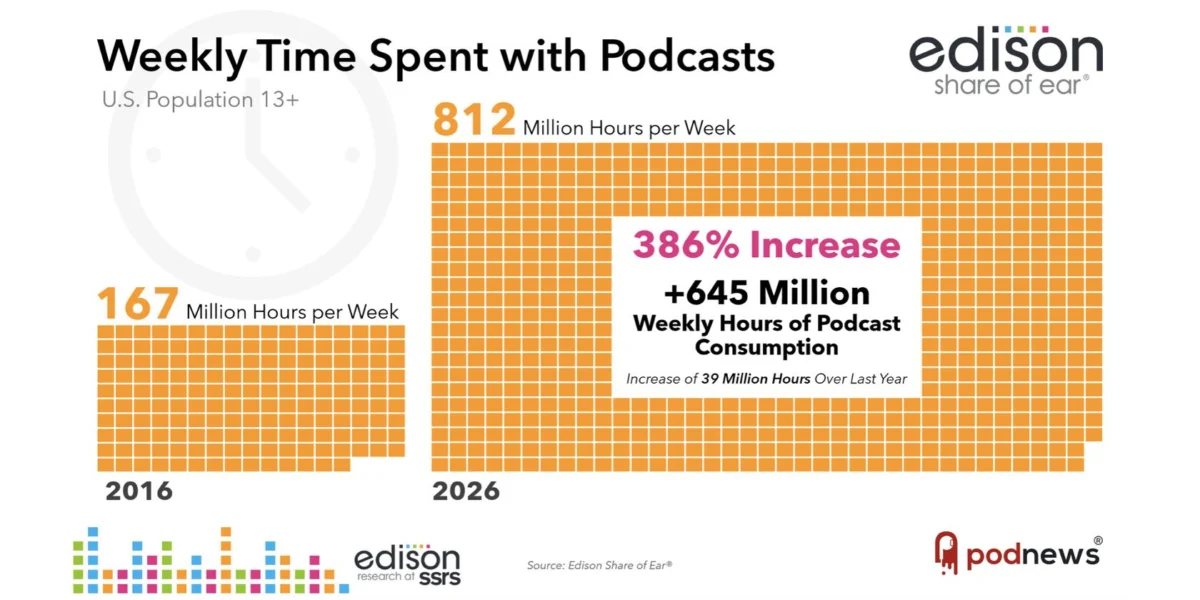
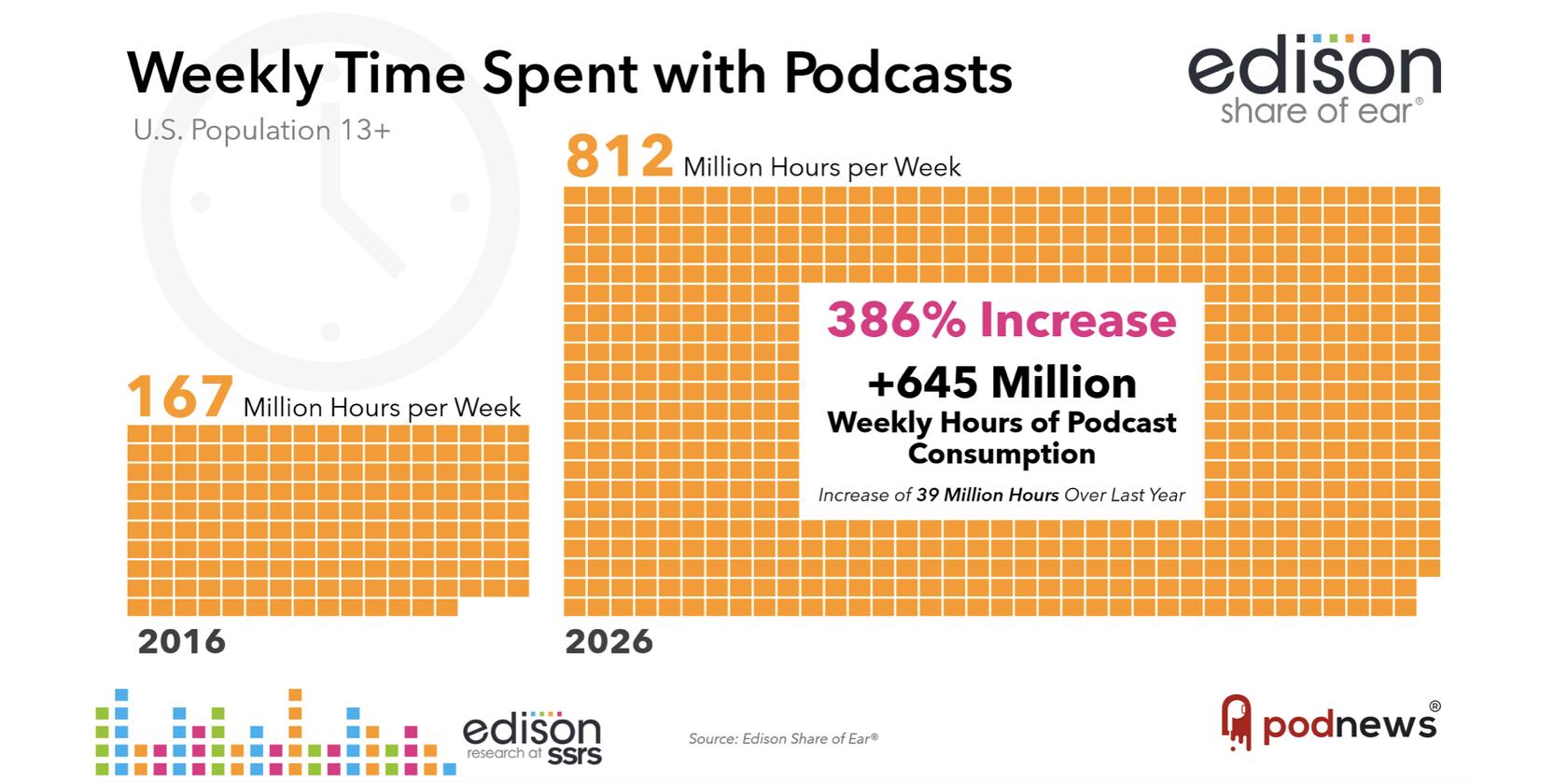
As the audio industry continues its rapid maturation, the lines between hobbyist creation and professional enterprise are blurring. New data from Edison Research reveals that Americans are now dedicating a staggering 812 million hours per week to podcasts, underscoring the medium’s deepening entrenchment in the daily lives of consumers. This explosive growth brings with it a new set of challenges—ranging from the necessity of specialized business insurance for home-based creators to the sophisticated expansion of corporate-backed original content.
Main Facts: The 812-Million-Hour Milestone
The most recent figures from Edison Research highlight a tectonic shift in media consumption. The 812 million hours spent weekly by American audiences is not merely a number; it represents a fundamental change in how information, entertainment, and storytelling are processed. This growth is driven by increased accessibility, a broader diversity of niche content, and the high level of intimacy that podcasting provides compared to traditional broadcast media.
However, as the audience grows, the economic stakes for creators are rising. The "garage-studio" era is increasingly giving way to professional-grade home setups. As creators shift from casual hobbyists to income-generating professionals, they often encounter a significant oversight: the assumption that standard homeowner’s insurance covers their professional equipment.
The "No Gear, No Gig" Reality: Protecting Your Business
A critical friction point for independent podcasters is the misconception regarding equipment protection. Many creators operate under the false belief that their studio gear—microphones, interfaces, mixers, and computer setups—is automatically covered by their standard residential insurance policy.

The Insurance Gap
In the eyes of most insurance providers, equipment used to generate income is classified as "business property." Consequently, if a disaster strikes—be it a fire, flood, or theft—a homeowner’s policy will frequently exclude these items from a claim. This leaves the creator in a precarious position where they have lost their ability to work, with no financial recourse to replace the "tools of the trade."
Industry specialists, such as Laura Donelan at MusicPro Insurance, emphasize that this is a common but dangerous oversight. With over two decades of experience in the sector, MusicPro—a company owned by ASCAP and Sterling Risk—has carved out a niche in protecting music and AV equipment. For professional podcasters, the "white glove" approach to insurance is no longer a luxury; it is a vital component of business continuity. Ignoring the distinction between personal and business property is a risk that many emerging creators cannot afford.

Chronology of Content Evolution
The landscape of podcasting in mid-2026 demonstrates a clear shift toward high-production value and specialized narrative storytelling. The current week has seen a flurry of activity, signaling a robust pipeline of new content.
- Early Week: The launch of A Different Take by Forbes, hosted by Linda Boff, marked a significant entry for corporate-branded content. By focusing on the intersection of legacy brands and modern AI, the show aims to capture a professional audience looking for actionable business insights.
- Mid-Week: gay-i, a collaboration between Bubbler Media and iHeartPodcasts, launched with a mission to decode the nuances of LGBTQ+ representation in marketing. Its focus on "Heated Rivalry" suggests a move toward more analytical, culturally conscious media criticism.
- Ongoing: Tales From The Æther entered its third season, showcasing the enduring power of scripted fiction. The series, written by Jackie Jorgenson, highlights the trend of high-concept narrative podcasts that utilize immersive sound design to compete with prestige television.
Supporting Data: The Charts and Audience Behavior
Data from industry leaders confirms that while the total time spent listening is rising, the "winner-take-all" nature of the top-tier charts remains a dominant force.

- Apple Podcasts (US): The Daily continues to hold the top spot, maintaining its position as the definitive news-daily podcast.
- Spotify (US): The Joe Rogan Experience remains the anchor for the platform, demonstrating the massive draw of long-form, personality-driven content.
- International Trends: The market is showing surprising volatility in regions like Ireland and Australia. Haunted City (a Blades in the Dark actual-play podcast) and What’s on Your Riste? have seen significant traction, proving that niche, hobbyist-led genres like tabletop gaming and review shows have a global, highly engaged audience. Similarly, The Great Simplification with Nate Hagens continues to lead in Earth Sciences in Australia, indicating a high demand for long-form intellectual discourse.
Official Perspectives and Industry Implications
The implications of these trends are twofold: first, the professionalization of the creator economy is forcing a reckoning with business infrastructure; second, the content landscape is becoming increasingly segmented.
The Professionalization Mandate
As platforms and advertisers push for higher quality, the barrier to entry is rising. This isn’t just about microphone quality; it’s about business literacy. Creators must treat their podcasts as small businesses. This means addressing legal liabilities, insurance coverage, and professional distribution workflows. The "No Gear, No Gig" warning from insurers serves as a microcosm for the broader industry: you cannot scale if your foundational assets are unprotected.

Content Fragmentation vs. Consolidation
While the top 1% of podcasts (like The Daily and The Joe Rogan Experience) capture a massive share of the audience, there is a vibrant, expanding "long tail" of content. Shows like abandoned: The All-American Ruins Podcast highlight the appetite for immersive, sound-rich storytelling that addresses complex topics like history, mental health, and community.
This suggests a two-speed market. In one lane, we have the media conglomerates and high-budget corporate shows (Forbes, iHeart) that are optimizing for reach and authority. In the other lane, we have the independent, award-winning storytellers who are optimizing for depth and community connection.

Looking Forward: The Path Ahead
The 812 million hours of weekly listening time represent a massive, untapped opportunity for advertisers, but only for those who understand the context of the medium. Advertisers are moving away from simple "read-and-forget" spots toward deeper integrations that respect the intimacy of the host-listener relationship.
For the creator, the lesson for the second half of 2026 is clear:

- Protect your assets: Don’t rely on general insurance. If your equipment is your livelihood, insure it through specialized channels like MusicPro.
- Focus on the niche: The data shows that listeners are increasingly seeking specific, high-quality content that speaks to their unique interests—whether that be the history of a Mojave shoe station or the intricacies of AI marketing.
- Understand the ecosystem: Whether you are an independent creator or a corporate entity, the success of your podcast is now inextricably linked to the data—chart positions, listener retention, and industry partnerships.
The podcasting industry has survived its "wild west" phase and is now entering an era of sophisticated professional management. As the number of hours spent listening grows, the pressure to maintain that growth through professionalism, risk management, and narrative innovation will only intensify. Creators who recognize these shifts—and take the necessary steps to secure their business operations—will be the ones who define the next chapter of the audio renaissance.
As we look toward the remainder of the year, the combination of high-value narrative content and the increasing focus on the "business of podcasting" suggests that the medium will continue to be a primary driver of cultural and economic engagement for the foreseeable future. With millions of hours being consumed every week, the responsibility falls on both creators and the companies that support them to ensure that this vast digital library remains a stable, protected, and thriving space for all.
 Jia Lissa
 Neng Nana
