

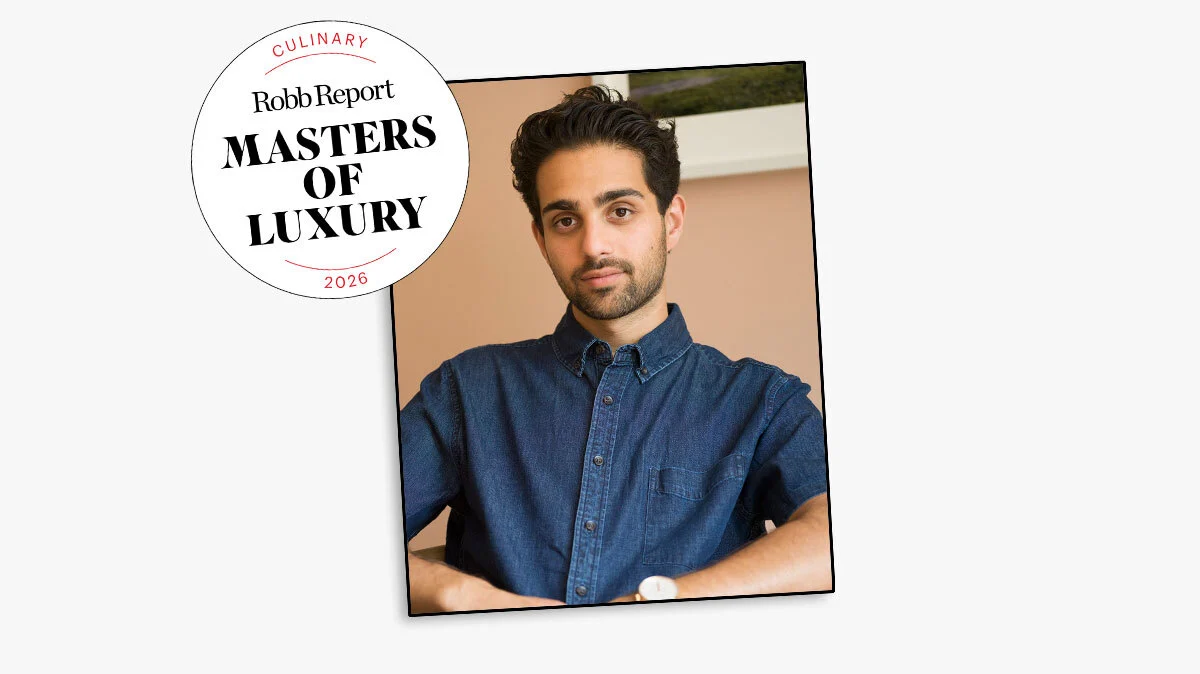
In the high-stakes world of fine dining, where the difference between a memorable meal and a transcendental one often lies in the quality of a single ingredient, the most successful chefs rarely rely on standard suppliers. Instead, they turn to the "insider’s insider"—the rarefied expert who sits at the nexus of luxury and logistics. For the industry’s top culinary architects, that person is Ian Purkayastha.
As the founder of Regalis Foods, Purkayastha has spent over a decade curating an inventory of the world’s most elusive delicacies. From the subterranean treasures of France and the pristine waters of the Netherlands to the heritage farms of Pennsylvania, he has become the bridge between the earth’s most complex ingredients and the plates of America’s most demanding kitchens. As part of Robb Report’s "Masters of Luxury" series, we go behind the scenes with the man who turned a teenage obsession into a global empire.

The Chronology of a Culinary Pioneer
Ian Purkayastha’s journey into the "exotic food underground" is as unconventional as his inventory. Growing up in Arkansas, his culinary awakening didn’t occur in a Michelin-starred dining room, but through a singular, transformative encounter with black truffles.
Captivated by the depth and mystery of the delicacy, a teenage Purkayastha did something few his age would consider: he pooled his life savings to import a kilo of black truffles directly from France. That initial gamble was not merely a purchase; it was the seed of a career. Recognizing that his passion required a larger stage, he made the bold decision to defer college and relocate to the New York tri-state area.

In the city, he found the critical mass of high-end chefs and restaurateurs necessary to sustain a business based on highly perishable, high-cost items. This formative period, characterized by the grit and relentless pursuit of excellence, is documented in his memoir, Truffle Boy: My Unexpected Journey Through the Exotic Food Underground. Over the last decade, Purkayastha evolved from a niche truffle importer into a multifaceted purveyor of rare ingredients, cementing his status as the "speed dial" contact for the country’s culinary elite.
Supporting Data: The Science of Selection
For the home enthusiast, the allure of truffles and caviar is often met with the frustration of rapid degradation. Purkayastha offers a masterclass in stewardship, emphasizing that the "smart" way to handle luxury ingredients is often the polar opposite of conventional kitchen wisdom.

The Truffle Protocol
"If you want your chef to add truffle to the menu when it’s in season, remind them to squeeze any tuber, gently, before buying it," Purkayastha advises. He notes that a prime specimen should possess the firmness of a ripe avocado. Any sign of sponginess is a red flag, indicating that the truffle has begun to soften and lose its integrity.
Furthermore, he dispels the widely held myth regarding storage. "Don’t store truffles in rice," he warns. "It sucks all the life, moisture, and flavor out of them and turns them into truffle jerky." Instead, the professional method involves wrapping the tubers in a dry paper towel and placing them in a sealed glass jar in the refrigerator. Even with meticulous care, the clock is ticking: white truffles are strictly a garnish and must be consumed within five days, while black truffles offer a slightly longer window of up to 10 days.

The Caviar Standard
Caviar, a product defined by its delicate texture, is frequently ruined by improper temperature control. Regalis Foods maintains its caviar at a precise 28 degrees Fahrenheit. "When they’re out of temp, they can develop an undesirable, cheesy flavor profile," Purkayastha explains. He cautions against heating caviar entirely, noting that it should only be incorporated into a sauce à la minute to prevent the eggs from bursting and destroying the textural contrast.
Beyond storage, Purkayastha is a vocal critic of the industrialization of the market. He points to the rise of large-scale Chinese farming, which dominates global volume but often sacrifices quality for yield. "It has a firm texture, but it’s a little one-dimensional from a flavor perspective," he says. He advocates for European producers—specifically those in the Netherlands—who prioritize natural, shrimp-based diets for their fish, resulting in a significantly more complex, nuanced flavor profile.

The Expert’s Perspective: Industry Implications
Purkayastha’s role extends beyond merely supplying goods; he acts as a curator of the culinary zeitgeist. His insights into industry standards reveal a man who is deeply skeptical of current trends that prioritize aesthetics or "deep-pocket" marketing over genuine quality.
Challenging the Ranking Systems
When asked about the validity of modern restaurant rankings, Purkayastha is characteristically candid. "I don’t think there’s a fair ranking system in today’s environment," he asserts. He cites systems like The World’s 50 Best Restaurants as problematic, noting that the requirement for fully comped meals for inspectors inherently favors institutions with the capital to absorb those costs, rather than smaller, potentially more innovative establishments.

The Future of Sourcing
The globalization of the truffle market has led to successful cultivation in regions outside the traditional European corridors. Purkayastha points to Chile as a prime example. "The Chilean truffles are amazing, as they’re the same winter black-truffle variety found wild in Spain and France," he notes. Because of the geographic proximity and logistical efficiency, these truffles can reach the U.S. market in a fraction of the time, often arriving fresher than their European counterparts.
Speed Round: The Purkayastha Philosophy
To understand the man behind the brand, one must look at his preferences and pet peeves, which reveal a deep appreciation for "old-world" traditions and a distaste for the performative nature of modern dining.

- The Ultimate Dining Experience: While he has access to the world’s most exclusive tables, his current "hit list" includes Les Grands Buffets in Narbonne, France. He admires the theatricality and the sheer ambition of the concept.
- The Perfect Truffle Dish: Complexity is not always required. Purkayastha keeps it minimalist: a soft-poached egg, a touch of salt, and freshly shaved truffles.
- The Next Big Thing: He is championing the "Golden Chicken," a heritage breed from Lancaster, Pennsylvania, that is 100% corn-fed, resulting in a yellow fat and a level of flavor complexity that puts chlorine-washed, industrial poultry to shame.
- The Unsung Hero: He insists that every serious cook should own a handheld truffle slicer, specifically recommending a Microplane model.
- Etiquette: On the subject of complaining in restaurants, Purkayastha maintains a firm policy: "I typically never complain. It’s bad form unless it’s totally inedible." He views the role of service staff as "deft but silent," believing that the true purpose of dining out is to focus on one’s companions, not the mechanics of the service.
Conclusion
Ian Purkayastha is more than a merchant of rare goods; he is an arbiter of taste who understands that luxury is not just about the price point—it is about the integrity of the product and the story behind it. Whether he is advising a chef on the structural integrity of a black truffle or sourcing heritage chicken from the hills of Pennsylvania, his focus remains singular: the pursuit of the best possible iteration of an ingredient.
In an era where digital noise often drowns out true quality, Purkayastha’s career serves as a reminder that the most essential components of a great meal are the ones we often overlook. For those looking to elevate their home kitchens, his advice is clear: prioritize the source, respect the temperature, and never, under any circumstances, store your truffles in a bag of rice.

Do you have a culinary conundrum you’d like to see solved? Reach out to the experts at [email protected].
 Evan Lee Salim
 Asep Darmawan
