

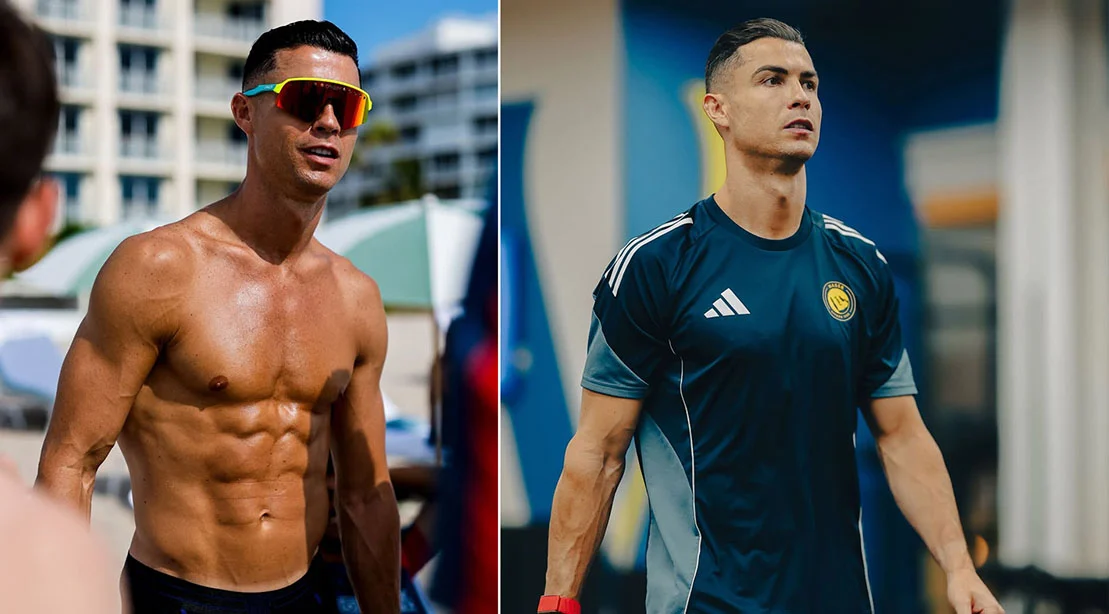
At 41 years old, Cristiano Ronaldo stands at the precipice of a final, defining chapter in an illustrious career that has already transcended the sport of football. As the 2026 World Cup progresses, the global icon finds himself under a microscope of unprecedented intensity. Following a frustrating, stagnant start to Portugal’s campaign, the debate surrounding his role in the national squad has shifted from reverent admiration to tactical scrutiny. For Ronaldo, the upcoming clash against Uzbekistan is not merely a group-stage fixture; it is a referendum on his longevity and his enduring capability to decide the outcome of matches on the world’s grandest stage.
The Weight of Expectation: A Stalled Beginning
Entering the 2026 tournament, Portugal was widely heralded as a tournament favorite, boasting a roster of immense talent and tactical depth. However, the optimism surrounding the squad was significantly dampened by a lackluster 1-1 draw against a resilient DR Congo side.
For 90 minutes, the Portuguese attack—frequently funneled through their legendary captain—struggled to find fluidity. Ronaldo, who has built a career on clinical precision and sheer athleticism, appeared uncharacteristically isolated. Despite his relentless movement and constant positioning in the final third, he failed to trouble the scoreboard. The match served as a sobering reality check for a team that had arrived in North America with championship aspirations. The result not only exposed a lack of cohesion in the final third but also placed the spotlight directly on the man wearing the number seven shirt.
A Legacy Under Review: By the Numbers
To understand the magnitude of the current pressure, one must look at the cold, hard statistics. Across his opening performance, Ronaldo logged a high volume of attempts—33 shots in total—yet the conversion rate has been non-existent. Of those efforts, 11 found the target, but none breached the goal line.
In the realm of elite sports, such figures are often anomalies for a player of Ronaldo’s caliber, yet they provide ammunition for those who argue that the game’s physical demands have finally outpaced his current output. Historically, Ronaldo’s conversion rate has been the hallmark of his dominance. With five Ballon d’Or trophies, three UEFA Men’s Player of the Year awards, and four European Golden Shoes in his cabinet, he has set a standard that arguably no other player in history can match. However, the current "dry spell" is not just about missed opportunities; it is about the shifting dynamics of a sport that continues to evolve at a blistering pace.
The Perspective from the Pitch: Respect Amidst Realism
The discourse surrounding Ronaldo is not exclusively driven by hostile critics. Even his opponents acknowledge the aura he carries, even if they see the signs of time taking its toll.
Following the draw with DR Congo, midfielder Ngal Ayel Mukau offered a measured assessment of the Portuguese star. "We know that he isn’t the same as before; he’s a bit older now," Mukau remarked in a post-match interview. "But still, he’s one of the greatest. Much respect to him."
This sentiment captures the unique predicament of the 2026 version of Cristiano Ronaldo. He remains a figure of immense respect—an elder statesman of the game whose mere presence commands defensive attention. Yet, the tactical reality remains: can a team build its offensive structure around a 41-year-old striker, or does the team’s reliance on him stifle the development of younger, more dynamic attacking threats?
The Mental Fortitude of an Icon
Despite the mounting noise, Ronaldo’s response has been consistent with his long-established persona: stoic, focused, and unyielding. Taking to social media immediately after the draw, he addressed both his legion of supporters and his detractors with characteristic directness.
"Not the start we wanted, but this is far from over," Ronaldo posted on Instagram. "Head up and focus on the next game."
This mental resilience has been the cornerstone of his success. Throughout his career, Ronaldo has thrived on the "us against the world" mentality. Whether it was the transition from Sporting CP to Manchester United, or the move to Real Madrid where he cemented his status as the greatest goalscorer in Champions League history, he has consistently channeled criticism into on-field performance. His physical condition, often cited as the gold standard for professional athletes, remains elite, yet the psychological pressure of the 2026 World Cup presents a challenge entirely unique to his storied history.
Tactical Implications: The Path to Uzbekistan
The path to redemption leads directly to Houston, Texas, where Portugal faces Uzbekistan on Tuesday, June 23. On paper, this is a match Portugal should win comfortably. However, the 2026 World Cup has been defined by parity and the rising quality of non-traditional footballing nations.
Tactically, Portugal’s manager faces a conundrum. Does he stick with the veteran, trusting that the law of averages dictates a goal is imminent, or does he adjust the formation to provide more support—or perhaps a different profile of striker—to open up the pitch?
If Portugal intends to make a deep run in this tournament, they need the version of Ronaldo that can occupy two central defenders while still finding space in the box. If he remains static, or if his finishing continues to falter, the calls for him to be relegated to a super-sub role will grow from whispers to a roar. The match against Uzbekistan is therefore the most important game of his international career in recent years. It is an opportunity to silence the skeptics and prove that the "old guard" still has the fire to lead the charge.
The Broader Context: Longevity in Modern Sport
Ronaldo’s situation is a microcosm of a larger trend in high-performance athletics. With advancements in sports science, nutrition, and recovery, elite athletes are extending their careers well into their late 30s and early 40s. We see this across all disciplines, from basketball to mixed martial arts.
Yet, football remains a game of intense, repeated high-intensity sprints, quick turns, and explosive power—attributes that naturally diminish with age. Ronaldo has clearly modified his game to compensate for the loss of his blistering early-career pace, relying more on positional intelligence and aerial dominance. However, the frustration of the current World Cup suggests that the margin for error at the highest level is shrinking.
Looking Ahead: The Legacy on the Line
As the world turns its eyes to Houston, the narrative is clear: this is not just about Portugal vs. Uzbekistan. It is about a singular athlete fighting against the inevitable march of time. Regardless of the outcome on Tuesday, Cristiano Ronaldo’s place in the pantheon of football greats is secure. Nothing that happens in this tournament can diminish his five Ballon d’Or titles or his countless records.
However, for a competitor of his stature, the past is never enough. The motivation is always the next goal, the next trophy, and the next validation of his greatness. If he finds the back of the net on Tuesday, the narrative will flip instantaneously, hailing his resilience and "the return of the king." If he remains scoreless, the pressure on both him and the Portuguese national team will reach a breaking point.
One thing is certain: the world will be watching. Whether motivated by admiration for his past achievements or curiosity about his present state, the global audience is captivated by the drama unfolding on the pitch. Cristiano Ronaldo has spent two decades defying expectations, and as he laces up his boots for the match against Uzbekistan, he prepares for perhaps the most critical 90 minutes of his final World Cup odyssey.
The stage is set in Houston. The world awaits the answer to the only question that matters: Can the icon conjure one last moment of brilliance to rewrite the narrative of his own decline? The game begins, and the history books are open, waiting for the final entries to be written.
 Lina Hope
 rifanmuazin
 Laily UPN
