

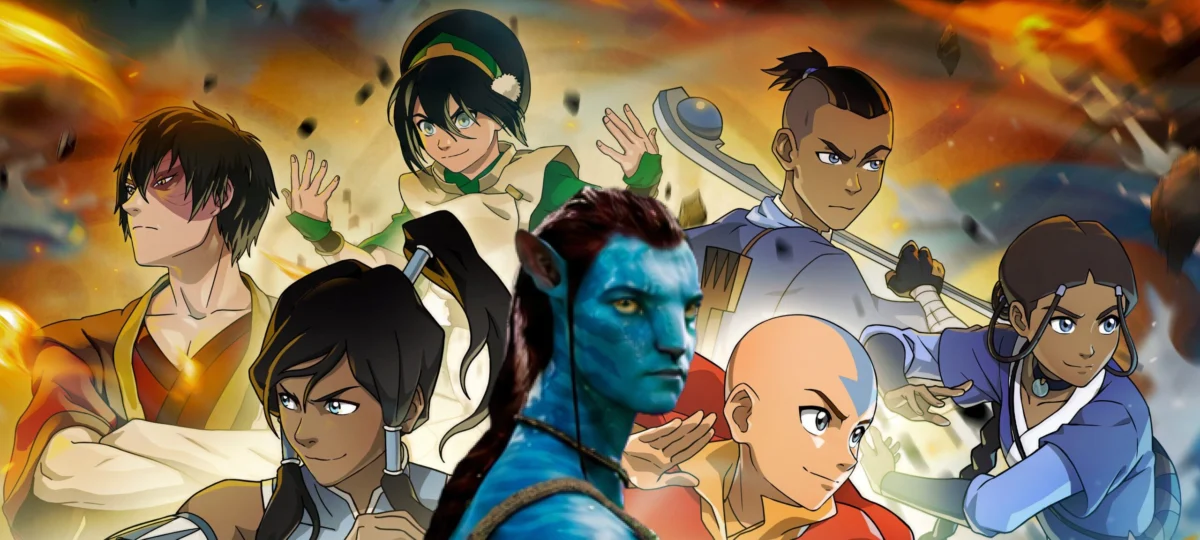
For over fifteen years, entertainment journalists and pop-culture enthusiasts have been plagued by a persistent, high-frequency annoyance: the linguistic collision of two cultural behemoths. To utter the word "Avatar" in a professional setting is to invite a flurry of follow-up questions. Are we discussing the elemental, spiritual journey of a bald boy from the Southern Air Temple, or the bioluminescent, colonial struggles of nine-foot-tall blue extraterrestrials on a moon called Pandora?
The confusion has become a staple of the industry. James Cameron’s Avatar franchise—often jokingly referred to as "Papyrus Avatar"—and Nickelodeon’s Avatar: The Last Airbender (ATLA) have both achieved monumental, albeit distinct, levels of success. With the recent release of the high-octane fighting game Avatar: Legends, the time has come to stop asking "which one?" and start asking "who would win?" It is time to embrace the chaos and propose the only logical, albeit absurd, evolution of these two disparate universes: a definitive crossover fighting game.
A Chronological Clash of Titans
To understand why this crossover is inevitable, one must look at the staying power of both franchises.
Avatar: The Last Airbender debuted on Nickelodeon in 2005. Its narrative of Aang, the last surviving Airbender tasked with restoring balance to a war-torn world, became an instant classic, evolving into a multi-generational phenomenon that includes the sequel series The Legend of Korra, various graphic novels, and a recent live-action adaptation on Netflix.
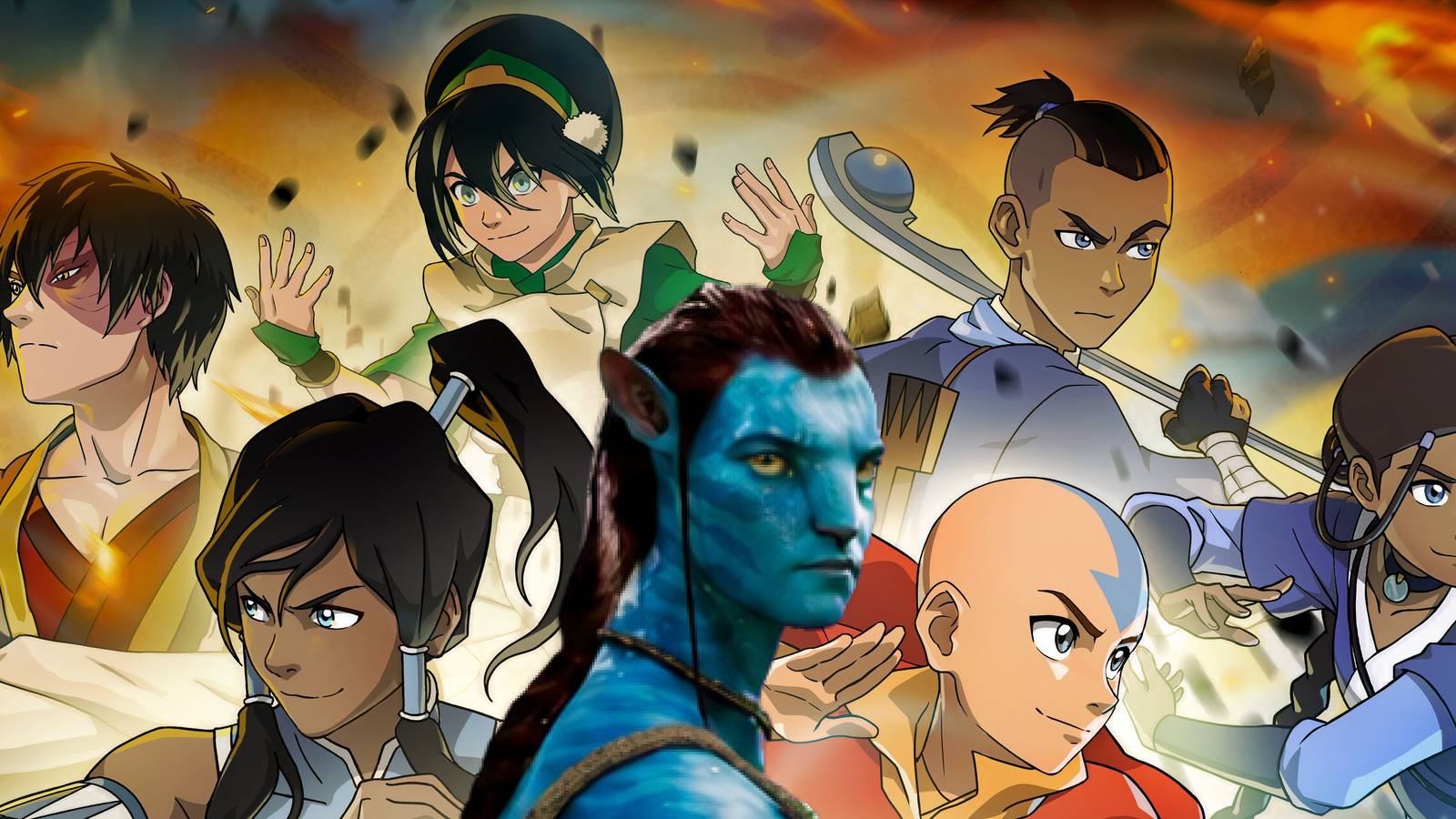
Conversely, James Cameron’s Avatar hit theaters in 2009. It shattered box-office records, currently holding the title of the highest-grossing film of all time with a staggering $2.9 billion in global earnings. Despite the long gaps between film installments, Cameron’s vision of Pandora has remained a dominant force in modern cinema, with a roadmap of sequels planned well into the next decade.
Both franchises have refused to fade into the background. Instead, they have doubled down on expansion. From massive video game tie-ins to persistent streaming success, these two properties have occupied the same cultural headspace for nearly two decades. The fact that both continue to release new content—Avatar: Fire and Ash on the film side and the new Avatar: Legends fighting game on the gaming side—means the overlap in our collective consciousness is only deepening.
The Mechanics of the Crossover: Why it Works
Critics might argue that the worlds of bending and Na’vi biology are too disparate to coexist. However, the fighting game genre is historically built on the concept of "anything goes." Avatar: Legends has already established a complex, "crunchy" combat system. With its light, medium, and heavy inputs, combined with distinct Flow, Chi, and Chakra meters, the game provides a robust framework that mimics the high-stakes, assist-driven chaos of Marvel vs. Capcom.
The "Chi" and "Chakra" systems in Avatar: Legends serve as proxies for internal energy. While the Na’vi connect to Eywa via the neural network known as "vitra," this can easily be adapted into the game’s mechanics. In a fighting game setting, these do not need to be philosophically identical; they simply need to be mechanically analogous. Whether you are calling upon the spirits of past Avatars or tapping into the biological energy of Pandora, the flow of combat remains the same.

Overcoming the Scale Problem
The most common rebuttal to a crossover of this nature is the physical disparity between characters. Toph Beifong, the iconic earthbender, stands at roughly 3’8”. In contrast, Jake Sully’s Na’vi avatar stands at a towering 8’11”.
However, fighting games have never been constrained by realism. Tekken features bears and kangaroos fighting human martial artists. Mortal Kombat pits normal-sized humans against four-armed giants like Goro. Super Smash Bros. Ultimate successfully manages to balance the diminutive Pikachu against the towering Sephiroth or Bowser.
Designers can utilize the "Guilty Gear" approach to character scale. Characters like Faust or Potemkin demonstrate that extreme size differences can actually enhance the gameplay experience, creating unique movement archetypes and hitboxes. A Na’vi warrior like Neytiri would excel at range and reach, utilizing the bow and agile parkour, while an earthbender would rely on area-of-effect control to keep the mobile, long-limbed opponents at bay.
Potential Roster Dynamics and Movesets
A crossover would not just be a novelty; it would be a playground for developers to experiment with archetypes:

- The All-Rounder: Jake Sully serves as the perfect entry point. His moveset could alternate between his human-piloted AMP suit for heavy, slow-moving grappling, and his agile Na’vi form for high-speed combos.
- Nature Benders: Kiri, with her unique bond to Eywa, could be designed similarly to a "nature bender," using the environment to create traps or whip-like vines to control the screen.
- The Heavyweight: Colonel Miles Quaritch, particularly in his AMP suit, would function as the roster’s premier "grappler," using the sheer physical dominance of the suit to pin down more nimble opponents.
- The Specialist: Varang, introduced in Avatar: Fire and Ash, utilizes fire and poison clouds. Her playstyle could be designed to mirror the tactical, aggressive nature of firebenders like Azula, forcing players to navigate dangerous zones of damage on the stage.
Implications for the Future of the IP
The sheer marketing potential of a game titled Avatar vs. Avatar (or perhaps Avatar: All-Star Brawl) is unparalleled. By leveraging the release schedules of upcoming films, new seasons of the Netflix series, and the Seven Havens series, developers could create a "live service" fighting game that remains relevant for years.
Imagine a seasonal update: a new Na’vi warrior drops the same month as a new James Cameron blockbuster; the next month, a new character from the animated universe joins the fray. It creates a feedback loop that rewards fans of both franchises and creates a competitive environment that turns the "which Avatar?" question into a legitimate, interactive competition.
Conclusion: Turning Confusion into Competition
For nearly twenty years, audiences have been subjected to the linguistic burden of having two major franchises share a name. It is a source of frustration, a source of confusion, and, ultimately, a massive missed opportunity.
We have spent decades trying to clarify which "Avatar" we are talking about. It is time to stop the pedantry and start the spectacle. By bringing the Benders and the Na’vi together, we can resolve this identity crisis the only way that makes sense in the 21st century: through the digital, high-intensity, and undeniably cathartic medium of a competitive fighting game. It is time to stop asking the question and start letting the combatants answer it for us.
 Nana Muazin
 Layla Zulfa
 Basiran
