

In a moment of profound national solemnity, President Donald Trump traveled to Dover Air Force Base in Delaware this week to oversee the "dignified transfer" of fallen United States service members killed in the ongoing conflict with Iran. The event, long considered the most somber duty of any American commander-in-chief, was marked by the weight of loss and the visceral grief of families tasked with saying goodbye to their loved ones. However, the President’s visit sparked immediate controversy after he used the occasion to make unsubstantiated claims regarding the political views of the deceased, further intensifying the domestic debate surrounding the current war.
The Chronology of a Somber Day
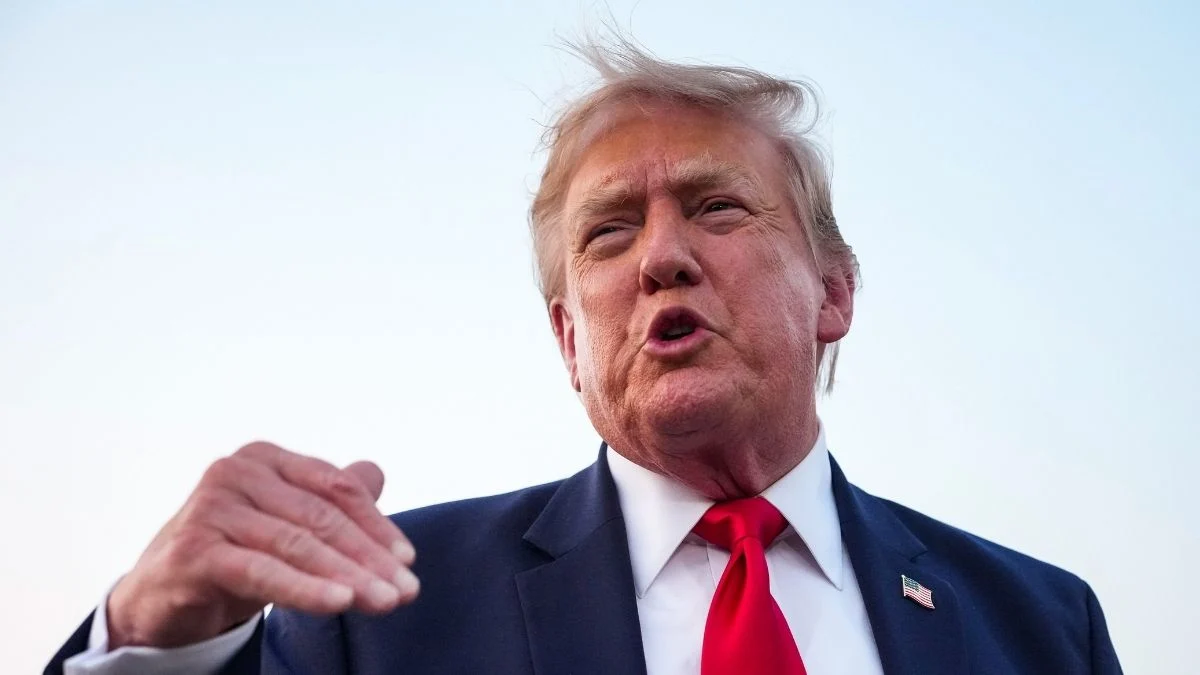
The events of Wednesday unfolded under a heavy shroud of national mourning. Before boarding Air Force One, President Trump addressed a group of reporters on the tarmac. His tone was initially focused on the gravity of the proceedings.
“We’re going to Dover, some of you are going with us, to honor our heroes. And they are indeed great heroes, actually,” Trump stated, acknowledging the emotional toll of the mission. He described the dignified transfer—the process by which the remains of fallen troops are returned to the United States—as “one of the hardest things to do as a president, but it has to be done.”
However, the tone of the interaction shifted abruptly when the conversation turned to the strategic objectives of the current conflict. Without providing evidence or citing specific communications, the President asserted that every fallen service member had been a staunch proponent of his administration’s nuclear stance regarding Tehran. “All of them said very strongly, ‘We cannot let Iran have a nuclear weapon,’” the President claimed.
Following his departure from the tarmac, the President arrived at Dover to meet with the bereaved families. When pressed by the press pool on what he intended to convey to those mourning their children, Trump adopted a more personal approach. “All I’m going to say is, we love you. We love your child, and that’s what they are to them. They’re their children. There’s no games, no nothing. That’s their child. And all you can do is throw out your heart,” he said.
A Pattern of Invoking the Fallen
The remarks made on Wednesday are not an isolated occurrence. Observers have noted an emerging pattern in how President Trump utilizes the narratives of fallen soldiers to validate his foreign policy initiatives.
During a primetime address on April 1, the President similarly invoked the memories of service members killed in previous engagements, citing conversations he claimed to have had with their grieving relatives. At that time, he stated, “Every single one of the people, their loved ones, said, ‘Please, sir, please, finish the job.’ Every one of them. And we are going to finish the job, and we’re going to finish it very fast.”
By consistently attributing specific, high-level strategic support to both the deceased and their families, the President has created a rhetorical environment where dissent against his war policy is framed as a betrayal of the sacrifice made by those in uniform. This tactic has drawn sharp criticism from veterans’ advocacy groups and political analysts, who argue that the sanctity of a dignified transfer should remain free from political posturing.
Contextualizing the Human Toll
Parallel to his remarks at Dover, the President took to his Truth Social platform earlier on Wednesday to offer a comparative analysis of casualties in the Iran war. By contrasting the current fatality counts against those of historical conflicts, critics argue the President was attempting to contextualize—or perhaps minimize—the human cost of the current escalation.
For the families gathered at Dover, however, the statistics are not abstract. The "dignified transfer" process is a ritualized, silent ceremony designed to honor the individual life lost, rather than the strategic objective of the mission. When a President shifts the focus from the individual tragedy to the broader political agenda, the resulting friction often leaves military families feeling that their personal grief is being utilized for political gain.
Official Responses and Public Sentiment
The White House has maintained that the President’s comments were intended to provide comfort and show solidarity with the troops. A spokesperson suggested that the President’s words were a reflection of his belief that every service member understands the "existential threat" posed by a nuclear-armed Iran.
Conversely, critics, including several retired military officials, have expressed discomfort with the President’s claims. The primary concern among military observers is the unverifiable nature of the President’s assertions. It is inherently difficult for a service member, particularly those who died in combat, to have expressed a specific, uniform political position that aligns perfectly with a current administration’s policy. To claim otherwise, critics argue, is to project one’s own agenda onto those who can no longer speak for themselves.
Furthermore, the families of the fallen have yet to provide a collective statement regarding the President’s comments. In the past, families of fallen soldiers have frequently been divided by politics, and there is no reason to assume the families at Dover hold a monolithic view on the Iran conflict.
The Implications of Politicized Mourning
The implications of this rhetoric are profound. In a democracy, the military is meant to be an apolitical institution, and the role of the Commander-in-Chief during a time of loss is traditionally one of "Consoler-in-Chief." By blurring the line between the individual sacrifice of a soldier and the policy goals of the state, the President risks alienating a significant portion of the military community.
1. Erosion of Non-Partisan Military Traditions
The tradition of the dignified transfer is designed to be a non-partisan moment of national unity. When a President uses this platform to argue for a specific nuclear policy, it can undermine the perception of the military as an institution that serves the Constitution rather than a specific political ideology.
2. The Impact on Military Families
For those who have lost a loved one, the grief process is deeply personal. When a political leader claims their child held a specific political belief, it can create unnecessary friction for families who may not know—or may disagree with—those beliefs. It risks turning a private moment of mourning into a public debate.
3. The Future of the Conflict
The President’s insistence that the country must "finish the job" suggests that the administration is preparing for a long-term engagement in the region. By tying this objective to the legacy of those who have already died, the administration is effectively raising the stakes for any future policy change. If the war effort faces further setbacks, the President has effectively anchored his legitimacy in the "finish the job" narrative he attributes to the fallen.
Conclusion
As the United States continues to navigate the complexities of the war with Iran, the intersection of military sacrifice and political rhetoric will likely remain a point of contention. While President Trump’s supporters may see his remarks as a show of strength and a commitment to the mission, his detractors view them as a dangerous exploitation of tragedy.
Ultimately, the dignified transfer at Dover Air Force Base remains a reminder of the human cost of policy decisions made in Washington. Whether that cost is being properly honored or effectively leveraged remains a question that will continue to resonate throughout the halls of power and the households of the families left behind. As the nation watches the progression of this conflict, the words spoken on the tarmac at Dover will serve as a permanent record of a moment where the lines between the personal and the political were, for better or worse, irrevocably blurred.
 Neng Nana
 Azzam Bilal Chamdy
