

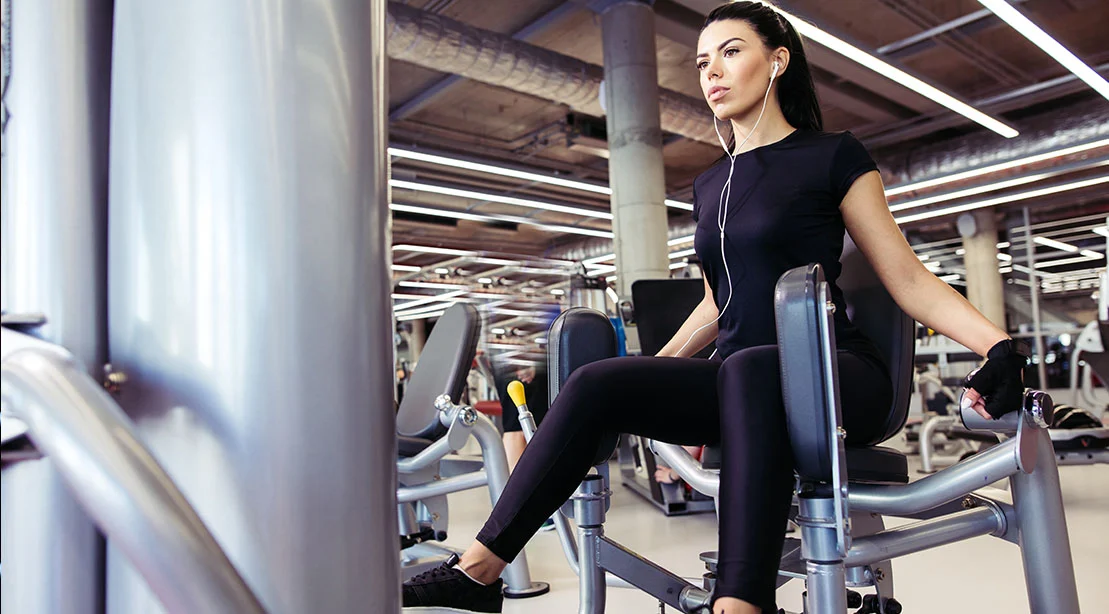
In the hierarchy of gym equipment, few pieces are as maligned as the hip adduction machine. Often relegated to the farthest, darkest corner of the weight room—or worse, treated as a relic of 1980s aerobics—it suffers from a persistent reputation problem. It is the "Yes/No" machine, the "thigh-squeezer," and the object of ridicule for those who pride themselves on the "hardcore" nature of barbell culture.
Critics offer a trifecta of grievances: it is a fixed-path machine, it is perceived as a niche rehab tool, and, perhaps most embarrassingly, it requires an awkward, wide-legged posture that makes the user feel inherently exposed. But as sports science evolves and our understanding of human biomechanics deepens, it is time to reassess this much-maligned piece of equipment. Is the adductor machine a waste of time, or is it an untapped resource for athletic performance and hypertrophy?
The Anatomy of the Adductors: More Than Just "Inner Thighs"
To understand why the adduction machine is currently undergoing a "rebranding" among strength coaches and physical therapists, we must first look at the anatomy. The adductor group—comprising the adductor longus, brevis, and the massive adductor magnus—is one of the most critical muscle groups in the lower body.
The "inner-thigh" moniker is a drastic undersell. The adductor magnus, in particular, is a powerhouse of hip extension. Recent research has shed new light on its mechanical utility, revealing that its torque-producing capacity for hip extension is more than twice that of its capacity for adduction. When you squat, deadlift, or lunge, your adductors are firing in tandem with your glutes and hamstrings. By dismissing them as mere "toning" muscles, athletes miss out on a massive opportunity to enhance their overall lower-body force output.
The Controversy: Why the Machine Catches Flak
The criticism directed at the hip adduction machine is rooted in the current "functional fitness" zeitgeist. In a culture that equates sweat, complexity, and barbell-bending weight with effectiveness, a machine that locks the user into a seated position seems almost counter-intuitive.
The "Non-Functional" Argument
The most common critique is that the exercise lacks real-world carryover. Critics argue that we never find ourselves in a seated, stabilized position squeezing our knees together against resistance in daily life or during sport. They argue that if you are already performing heavy compound movements like back squats or wide-stance deadlifts, your adductors are already being taxed. Therefore, adding direct adduction work is viewed as redundant "fluff."
The Historical Stigma
For decades, this machine was marketed primarily to women looking to "tone" their inner thighs—a pseudo-scientific term that has historically alienated the bodybuilding and powerlifting demographics. Because it lacks the balance challenge of a split-squat or the raw intensity of a heavy deadlift, it is often viewed as a "recovery" or "rehab" exercise rather than a primary strength-building tool.
Supporting Data: What the Research Says
While the gym-floor chatter remains skeptical, the clinical data suggests a different story.
Groin Resilience and Injury Prevention
The most compelling evidence for direct adductor training comes from injury prevention research. A landmark study regarding soccer players found that an adductor-strengthening program—utilizing exercises like the Copenhagen side plank—reduced the incidence of groin-related injuries by 41% over a single season.
While proponents of the machine argue it isn’t a direct replacement for dynamic, athletic movements, the research confirms one absolute truth: stronger adductors are a prerequisite for a resilient hip complex. If a machine can isolate these muscles to facilitate strength gains that prevent chronic groin issues, its value becomes immediately apparent.
Torque and Biomechanical Capacity
A 2025 study published in the Journal of Applied Physiology provided critical data on the adductor magnus, highlighting its role as a primary mover in hip extension. By isolating these muscles, athletes can potentially address imbalances that might be hindering their heavy lifts. If your squat stalls, it might not be a weak glute or a weak quad; it could be an under-developed adductor magnus failing to assist in the extension phase of the movement.
Expert Perspectives: Can Isolation Still Be Functional?
Professional coaches and physical therapists are increasingly warming up to the idea of using the adduction machine as a targeted accessory.
"The hip adductors are a huge muscle mass," says physical therapist Dan Swinscoe. "Training them is objectively good for you. Once you understand how large and functionally important the adductors are, it becomes much harder to argue that directly training them is pointless."
Strength coach Gareth Sapstead echoes this sentiment, focusing on the machine’s utility in modern programming. "It’s hard to sell the average gym-goer on the value of hip adduction strength," Sapstead notes. "But for those people, the hip adduction machine has real value because it is easy to set up and has very few points of failure. It removes the technical complexity of a movement, allowing the user to focus entirely on the muscle contraction."
Physical therapist Justin Farnsworth adds a nuanced take: "Stronger muscle isolation is still a stronger muscle. However, we must remember that adductors do more to stabilize the hip than just squeeze the knees together. The machine isolates, but it doesn’t train the full range of what these muscles can do. It should be a piece of the puzzle, not the whole picture."
Implications: How to Program the Machine
If you have decided to add the "Yes/No" machine to your routine, it is essential to treat it as a deliberate accessory rather than a main event.
The "Accessory First" Strategy
The machine should be placed at the end of a workout, following your primary compound lifts. Because it is a stable, low-systemic-fatigue movement, it is the perfect tool for accumulating "volume" without placing excessive stress on your central nervous system or your lower back.
- Volume: 2 to 4 sets of 12 to 25 repetitions.
- Rest Periods: 90 seconds. This allows for enough recovery to maintain intensity without turning the session into a marathon.
- Progression: Progressive overload is the key to muscle growth. Start by mastering the movement pattern, then focus on increasing the weight incrementally. Once the weight feels manageable, focus on higher rep ranges to maximize metabolic stress.
Who Should Prioritize This Machine?
- Hypertrophy Athletes: If your goal is leg growth, you need volume. This machine provides that volume safely.
- Athletes with History of Groin Pain: As part of a broader rehabilitation or prehabilitation program.
- Beginners: Those who lack the technical proficiency for advanced movements like Copenhagen planks or Cossack squats can benefit from the safety of the machine’s fixed range of motion.
Who Should Skip It?
- Time-Crunched Trainees: If you only have 30 minutes in the gym, prioritize compound lifts like squats and lunges.
- Advanced Athletes focusing solely on sport-specific movement: If your program is already heavy on high-level unilateral work (like Bulgarian split squats or lateral step-ups), the marginal benefit of this machine may be low.
Conclusion: Reclaiming the "Yes/No" Machine
The hip adduction machine is neither a miracle cure for leg strength nor a useless piece of junk. It is a tool. Like any tool, its value depends on the intent of the user.
By stripping away the stigma and looking at the biomechanical reality, we find that the adductors are a critical, often neglected component of lower-body power. While you should never replace your squats and deadlifts with a seated thigh-squeezer, there is no denying that direct isolation work can help build a more robust, injury-resistant, and aesthetically balanced physique.
So, the next time you see the machine, don’t walk past it with a scoff. Step on, load the weight, and perform your sets with intention. Just, as the veterans suggest, perhaps try to focus on your internal focus rather than making eye contact with the person on the treadmill across from you. Your adductors—and your future squat personal records—will thank you.
 rifanmuazin
 Laily UPN
