

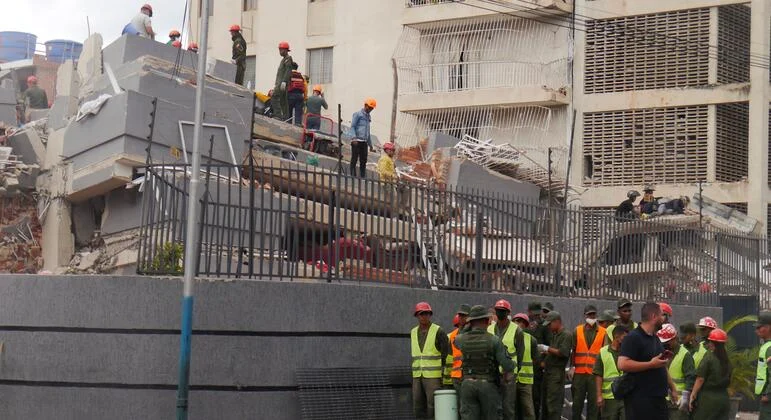
The northern coast of Venezuela remains in a state of shock following the most devastating seismic event the country has witnessed in over a century. A pair of high-magnitude earthquakes—measuring 7.2 and 7.5 on the Richter scale—struck the region on June 24, occurring less than a minute apart and reducing critical infrastructure to rubble. As rescue teams continue to navigate the precarious landscape, the United Nations and various international relief agencies have issued an urgent, high-level appeal for assistance, warning that as the death toll climbs, the humanitarian requirements of the survivors are "skyrocketing."
While stories of survival—most notably the miraculous rescue of a three-year-old child from the ruins of La Guaira—provide brief glimmers of hope, the broader reality is one of profound suffering. Tens of thousands of citizens remain without adequate shelter, clean water, or medical care, living in constant fear as a relentless series of aftershocks continues to rattle the region.
The Chronology of the Disaster
The catastrophe began in the early hours of June 24, a date that will now be etched into the national psyche of Venezuela. The dual-shock seismic event, characterized by its sheer power and close succession, decimated residential blocks, hospitals, and schools.
- June 24: The twin quakes (7.2 and 7.5 magnitude) strike northern Venezuela, causing immediate widespread structural failure.
- June 25–27: Search and rescue (SAR) teams, both domestic and international, deploy to the hardest-hit areas, including La Guaira. The focus shifts from emergency extraction to stabilizing the living conditions of those displaced.
- June 28: A critical regional shipment of humanitarian aid arrives from Panama, providing a temporary buffer for the most vulnerable populations.
- June 29 (Tuesday): A 47-tonne shipment of life-saving supplies, facilitated by the European Union and UNICEF, touches down in Venezuela, signaling the commencement of a sustained international relief effort.
- Present: Over 600 aftershocks have been recorded since the initial impact, keeping the population in a state of high alert and complicating the delivery of aid.
A Landscape of Destruction: Supporting Data
The scale of the devastation is difficult to quantify, but the figures provided by the UN Office for the Coordination of Humanitarian Affairs (OCHA) and local authorities paint a grim picture.
The human cost has been significant: as of the latest reports, nearly 2,000 deaths have been confirmed. While more than 6,400 people have been pulled alive from the rubble, thousands more remain unaccounted for, and the window for finding survivors is rapidly closing.
The structural damage is equally catastrophic. Preliminary assessments suggest that approximately 1,000 buildings have been either severely damaged or completely flattened. This destruction includes a significant portion of the region’s healthcare capacity, with multiple hospitals destroyed, leaving the injured with nowhere to turn for professional medical intervention. Furthermore, the loss of over 400 schools has effectively halted the education of an entire generation in the affected states, while the destruction of water systems has created an immediate, life-threatening risk of waterborne disease.
The impact on the youth is disproportionately high. UNICEF estimates that approximately 680,000 children are currently in need of urgent humanitarian assistance. These children, many of whom have been traumatized by the violence of the quakes and the subsequent aftershocks, represent the most vulnerable demographic in a crisis where the state’s capacity to provide is already stretched to its absolute limit.
Official Responses and the Mechanics of Aid
The international community has mobilized with urgency to address the mounting crisis. The United Nations has integrated its various agencies—including UNHCR, OCHA, and UNICEF—to form a cohesive response structure.
Coordination and Search Efforts
The UN Disaster Assessment Coordination (UNDAC) teams are currently the "eyes and ears" on the ground. Veronique Durroux, the UNDAC public information officer, noted that their primary objective is to map the specific needs of communities to ensure that aid is not wasted. "We need to know exactly where and for whom humanitarian assistance is needed," she stated, emphasizing the logistical complexity of operating in a disaster zone where road networks have been compromised.
The Role of UNICEF
UNICEF has emerged as a central pillar in the relief effort. Gabriel Vockel, speaking from the heart of the crisis in La Guaira, highlighted the intensity of their operations. "UNICEF is working around the clock," Vockel reported. The arrival of the 47-tonne shipment from the UNICEF logistics hub in Copenhagen was a major success, involving the coordination of the European Union to transport essential medical kits, supplies for safe births, and equipment for newborn care.
Beyond medical supplies, the focus has expanded to the psychological and developmental needs of children. The deployment of tents to create "child-friendly spaces" is a strategic move designed to provide a sense of normalcy in a landscape of ruins. These areas allow children to engage in early childhood development activities, providing a necessary reprieve from the trauma of the disaster.
The Regional Dimension
Roberto Benes, UNICEF Regional Director for Latin America and the Caribbean, underscored the disparity between the aid received and the aid required. While the arrival of the Panama-based regional shipment and the EU-facilitated supplies are welcome, Benes cautioned that the "needs on the ground are far greater than what’s arrived." Many families are currently sleeping in the open, terrified of returning to structures that may collapse under the pressure of ongoing aftershocks.
The Economic and Social Implications
The implications of this disaster extend far beyond the immediate need for tents and water. Venezuela was already navigating a complex socio-economic landscape prior to the earthquake. The addition of a multi-billion-dollar disaster recovery effort poses a severe challenge to national stability.
The Funding Gap
The financial burden of the recovery is staggering. UNICEF has estimated that it requires $52 million specifically for the earthquake response. This figure is to be integrated into the broader 2026 Humanitarian Action for Children appeal for Venezuela, which currently sits at $137.6 million. Significantly, this broader appeal was only 35% funded before the earthquakes occurred, leaving a massive financial deficit that must now be filled by international donors if the humanitarian response is to succeed.
Long-term Recovery
The destruction of 400 schools and critical water systems will have long-term consequences for public health and literacy in the region. Without significant international investment, the recovery process could take years, if not decades. The risk of disease outbreaks, particularly in areas where water infrastructure has been compromised, remains a primary concern for the World Health Organization (WHO) and local health authorities.
A Call for Solidarity
The narrative emanating from Venezuela is one of resilience in the face of insurmountable odds. However, resilience alone cannot rebuild schools or provide clean water to 680,000 children. The UN’s messaging remains clear: "Every life matters."
The international community is currently being urged to look past political considerations and focus on the humanitarian imperatives. As the aftershocks continue to tremble—a reminder of the fragility of the earth beneath the feet of the survivors—the urgency of the situation cannot be overstated.
Donations and continued logistical support are not merely acts of charity; they are the primary mechanism by which the international community can help prevent a secondary humanitarian disaster. As Gabriel Vockel succinctly put it: "With more funds, we can save more lives."
In the coming weeks, the world will be watching to see if the global response matches the scale of the tragedy. For the people of La Guaira and the surrounding states, the clock is ticking, and the necessity for a sustained, well-funded, and coordinated international intervention has never been more critical. The 600+ aftershocks serve as a constant, rhythmic reminder that the earth is not yet still, and for the families in Venezuela, the path to recovery remains a daunting, yet essential, journey.
 Lina Hope
 Asro
Asro
 Layla Zulfa
