

By Martha Wilson
As an artist who lived on the front lines of the Reagan-era Culture Wars, watching the steady creep of state-level censorship, moral panic, and targeted harassment return to American public life has been both exhausting and grimly predictable. We have walked this path before.
Today, as contemporary creators face renewed political attacks, book bans, and the chilling of institutional courage, critic and theater director Isaac Butler has offered an essential historical compass. His 2026 book, The Perfect Moment: God, Sex, Art, and the Birth of America’s Culture Wars (published by Bloomsbury), meticulously unpacks the genesis of the ideological battles that continue to shape the American landscape.
Though Butler is younger than I am and did not experience the 1980s culture wars firsthand as a working practitioner, his perspective as an astute cultural observer was crystallized in 2020. That year, major institutions—including the Tate Modern; the Museum of Fine Arts, Boston; the Museum of Fine Arts, Houston; and the National Gallery of Art—postponed a major retrospective of Philip Guston’s work out of fear that his visceral, satirical paintings referencing the Ku Klux Klan would be misinterpreted by a volatile public.
That moment of institutional panic served as a red flag: the dynamics of moral policing, panic over imagery, and preemptive self-censorship were returning with a vengeance. In light of the current wave of right-wing politicians, conservative advocacy groups, and legislative bodies targeting arts, LGBTQ+ history, and culture in the United States, Butler’s deep dive into the playbook of the 1980s and ’90s is not merely a work of history; it is an urgent manual for survival.
Main Facts: The Anatomy of Modern Censorship
At its core, The Perfect Moment investigates how religious fervor, partisan politics, and mass media converged in the late 20th century to transform artistic expression into a primary battleground for the American soul. Butler examines how grassroots moral campaigns transitioned from localized complaints into coordinated, national political assaults that weaponized federal funding against progressive and provocative artists.
The book captures a period when art was framed by conservative demagogues not as a reflection of the human condition, but as a dangerous corrupting force. By examining high-profile flashpoints—such as the fierce opposition to Martin Scorsese’s cinematic exploration of faith, The Last Temptation of Christ, and the nationwide fury sparked by Andres Serrano’s photograph Piss Christ—Butler maps out the precise mechanics of manufactured outrage.
Crucially, the book highlights how these campaigns were rarely organic expressions of public sentiment. Instead, they were industrialized operations driven by conservative innovators who understood how to manipulate mass mailing lists, galvanize religious constituencies, and pressure lawmakers into performing theatrical acts of cultural purification. The parallels to today’s algorithmic outrage machines and legislative attacks on diversity, equity, and inclusion (DEI) in cultural institutions are stark, direct, and deeply alarming.
Chronology: A History of Manufactured Outrage
To understand how we arrived at our current cultural stalemate, Butler traces a precise historical arc through the late 20th century, identifying key milestones where art collided with political opportunism.
The Weaponization of the Mailbox (1988)
Long before social media algorithms polarized the public, religious broadcasters and conservative organizers pioneered mass-communication networks to mobilize outrage. Butler details the immense difficulties Martin Scorsese faced while producing The Last Temptation of Christ (1988). Much of this friction was engineered by Reverend Donald Wildmon, founder of the National Federation for Decency. Wildmon pioneered the use of mass direct-mail campaigns targeting millions of Christians across the United States. By inundating believers with hyperbolic warnings about sacrilegious media, Wildmon transformed a nuanced theological film into an existential threat, forcing studios, theater owners, and distributors onto the defensive.
The Senate Floor Theater and "Piss Christ" (1987–1989)
The battle lines shifted dramatically from box offices to galleries with Andres Serrano’s 1987 photograph Piss Christ, which depicted a plastic crucifix submerged in a glass of the artist’s own urine. Though conceived as a profound meditation on the commercialization and degradation of sacred imagery, the work became a lightning rod for religious right organizations.
The controversy reached the halls of federal power in 1989, when then-Senator Alfonse D’Amato famously ripped a reproduction catalog image of Serrano’s artwork in half on the floor of the United States Senate. This theatrical display set a dangerous precedent: elected officials discovered that performing public disgust for contemporary art was a remarkably effective fundraising and political tool.
The Corcoran Cancellation and the Battle for the NEA (1989)
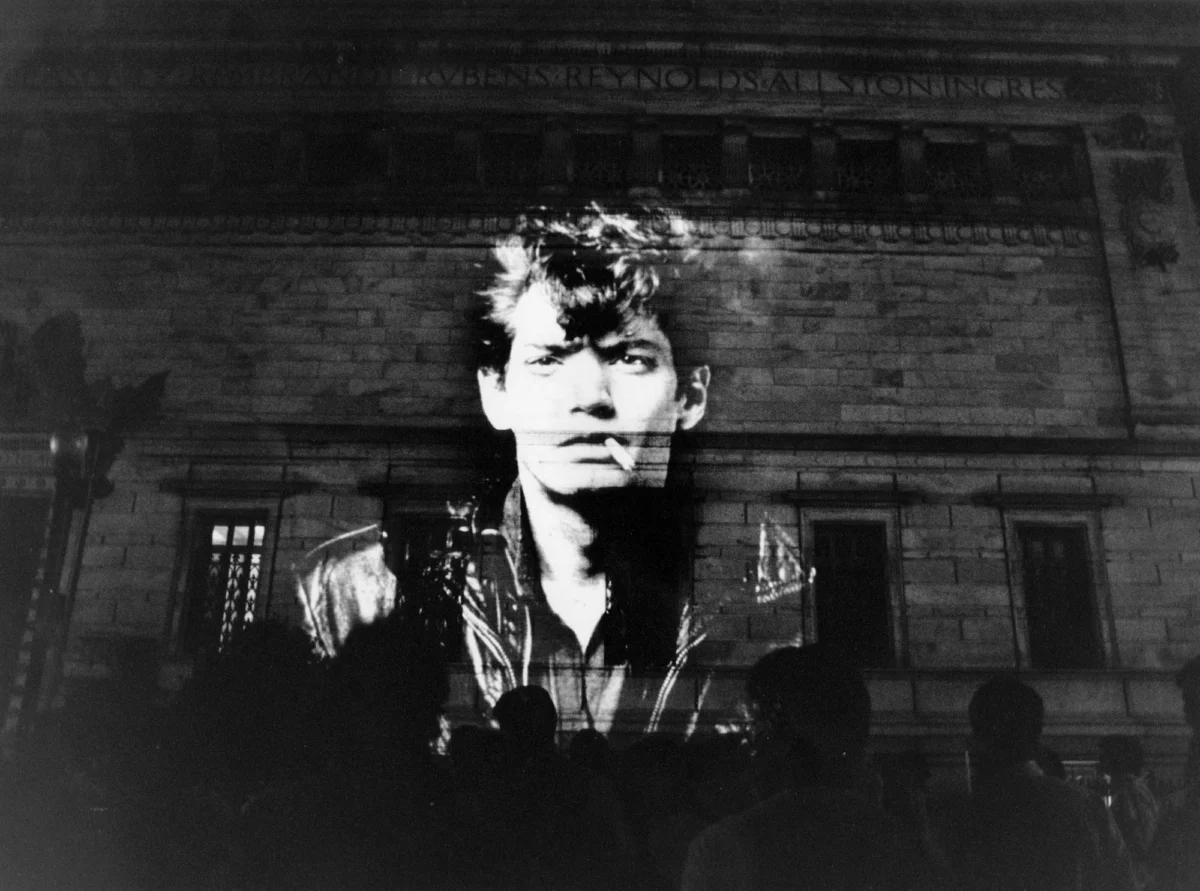
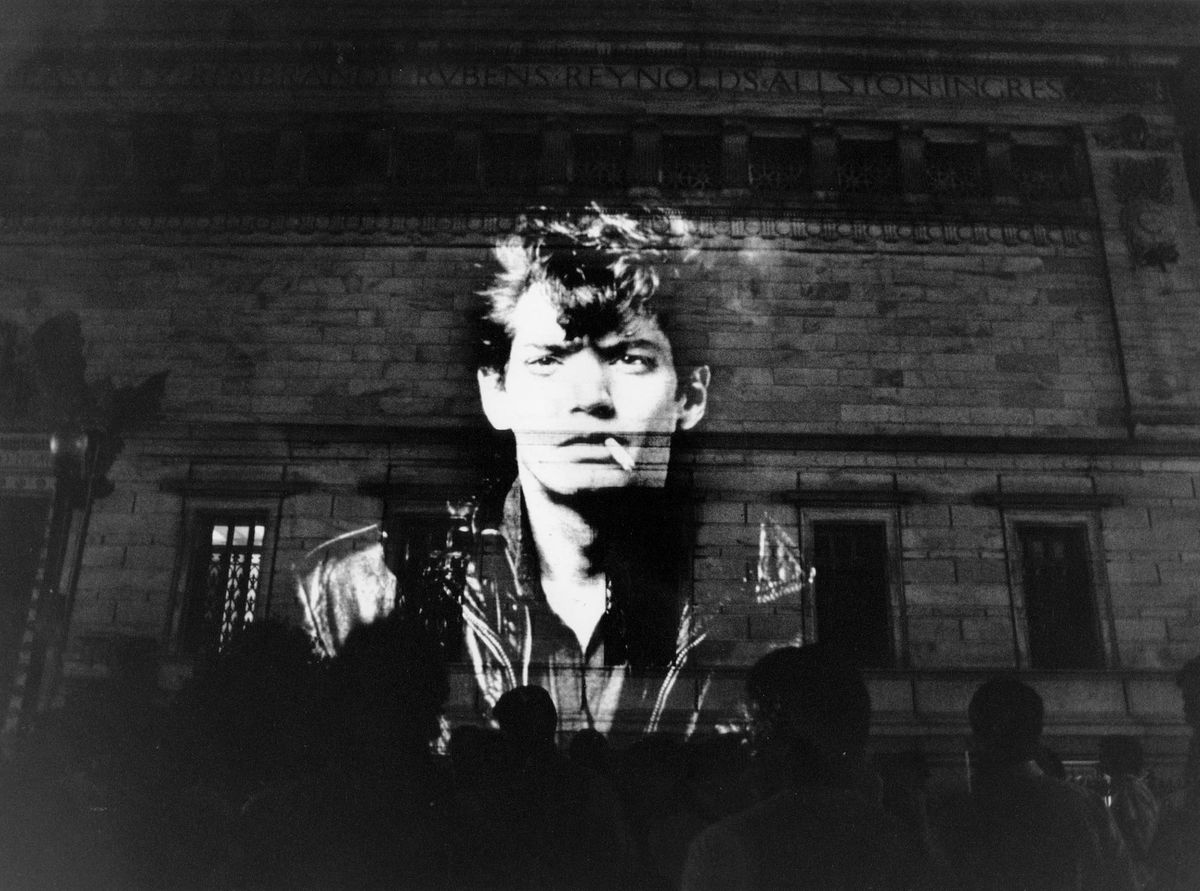
The book takes its title from the defining censorship battle of the era: the sudden cancellation of The Perfect Moment, a retrospective of photographer Robert Mapplethorpe, by the Corcoran Gallery of Art in Washington, DC.
By the mid-1980s, Mapplethorpe’s battle with AIDS was well-known within art circles, lending his final works an urgent, mortal gravity. While The Perfect Moment had already traveled to other cities without catastrophic incident, its frank depiction of sadomasochism, Black male nudes, and sensitive explorations of childhood sexuality posed a unique political hazard in the nation’s capital, where the institution’s survival depended heavily on federal goodwill.
On June 12, 1989, buckling under political pressure from conservative lawmakers, the leadership of the Corcoran Gallery of Art made the cowardly decision to cancel the exhibition before it could open. This act of preemptive capitulation did not appease critics; instead, it threw open the floodgates. The cancellation triggered an intense legislative war on Capitol Hill, where Senator Jesse Helms and Representative Sidney Yates (a Democrat from Illinois) engaged in a bitter, high-stakes battle over the future and funding of the National Endowment for the Arts (NEA).
Supporting Data: The Machinery of the Culture Wars
Butler’s narrative is enriched by examining the quantitative and logistical realities that allowed a vocal minority to dictate the terms of American cultural life.

- The Scale of Direct Action: Through organizations like the National Federation for Decency and the Morality Action Committee, conservative leaders mobilized hundreds of thousands of supporters. For context, during the height of our exhibitions at Franklin Furnace—the alternative arts organization I founded 50 years ago—the Morality Action Committee mailed postcards to legislators nationwide alleging that our Carnival Knowledge exhibition (featuring women artists exploring sexuality) had exposed "500 children per day" to pornography. This fabricated statistic was repeated uncritically in legislative chambers, demonstrating how easily misinformation could be scaled before the internet age.
- Federal Funding Under Fire: The NEA budget, which had long enjoyed bipartisan consensus, became the primary collateral damage of the late-1980s culture wars. Congressional oversight hearings transformed grant-making panels into political inquisitions. Grants awarded to Mapplethorpe, Serrano, and later the "NEA Four" (Karen Finley, John Fleck, Holly Hughes, and Tim Miller) were dissected on the congressional record, leading to strict legislative content restrictions ("decency clauses") that permanently altered public arts funding.
- Institutional Chill: Studies of museum governance from the late 1980s onward show a measurable spike in self-censorship. Curators and directors began to avoid challenging themes—particularly those involving LGBTQ+ identity, racial justice, and religious critique—fearing congressional inquiries, donor flight, and negative media cycles.
Official Responses and Institutional Reactions
The fallout from the 1980s and ’90s culture wars exposed deep fissures in how cultural institutions respond to external political pressure. Broadly speaking, responses fell into three distinct categories:
1. Capitulation and Preemptive Censure
As demonstrated by the Corcoran Gallery’s cancellation of Mapplethorpe’s retrospective, risk-averse institutional leadership often chooses self-preservation over artistic freedom. When faced with threats of funding cuts or coordinated public protests, boards of trustees frequently retreat. In The Perfect Moment, Butler provides a remarkably balanced account of how museum administrators navigated these impossible pressures, illustrating that institutional cowardice is rarely born of malice, but rather of institutional terror—a dynamic that remains terrifyingly relevant today as modern museums quietly de-install or postpone politically sensitive exhibitions.
2. Defiance and Grassroots Mobilization
Conversely, the arts community did not take these attacks lying down. Grassroots coalitions formed rapidly to defend freedom of expression. When the Corcoran canceled The Perfect Moment, local activists and artists projected Mapplethorpe’s self-portraits onto the exterior facade of the gallery building during mass protests, turning the building’s own architecture into a screen for resistance. Alternative spaces, including Franklin Furnace, became sanctuaries for marginalized voices, proving that censorship often backfires by driving audiences toward controversial works.
3. Legislative Posturing
For politicians like Jesse Helms and Alfonse D’Amato, the culture wars offered a reliable script. Official responses from Capitol Hill transformed from policy debates into moral crusades. Lawmakers discovered that framing cultural grants as an insult to tax-paying families yielded immediate electoral dividends, institutionalizing a cycle of political interference in artistic grants that continues to haunt federal and state-level arts funding today.
Implications: Why The Perfect Moment Matters Now
Isaac Butler has achieved something remarkable in The Perfect Moment. By treating the cultural skirmishes of the Reagan and Bush eras with historical rigor, novelistic pacing, and psychological depth, he holds up a mirror to our current moment.
We are currently living through a recycled version of the very same playbook. Today’s moral panics—whether manifested in state-level bans on books touching on race and gender, legislative restrictions on drag performances, or the systemic defunding of public libraries and university diversity programs—are the direct descendants of the battles fought over Mapplethorpe and Serrano three decades ago.
The conservative strategies pioneered by figures like Donald Wildmon and Jesse Helms have been supercharged by digital media, algorithmic amplification, and contemporary partisan polarization. Yet, the underlying objectives remain identical: to police the boundaries of imagination, to enforce ideological conformity, and to make the creation of challenging, exploratory art professionally and personally perilous.
As artists, curators, citizens, and defenders of democracy, reading Butler’s book is not merely an exercise in historical nostalgia. It is an urgent reminder that the fight for creative expression is perpetual. The forces that sought to sanitize American culture in 1989 have returned with new tools, but the stakes remain unchanged. The Perfect Moment teaches us that when institutions panic, it is up to artists, audiences, and independent organizations to hold the line—because freedom of expression, once surrendered, is extraordinarily difficult to reclaim.
 Evan Lee Salim
 Jia Lissa
