

The most compelling documentaries are rarely the ones the filmmaker initially set out to create. True non-fiction filmmaking is an act of radical surrender—a willingness to allow the volatility of real life to dismantle the structural blueprints of a project. For filmmaker Julia Loktev, the process of chronicling the final days of Russia’s last independent news channel, TV Rain (Dozhd), became a masterclass in this form of cinematic pivot. Her two-part documentary, My Undesirable Friends, stands as a harrowing, visceral testament to the moment when political reality irrevocably shattered the professional and personal lives of her subjects.
The Genesis of an Unintended Chronicle
When Loktev began her work, the premise was grounded in the precarious reality of modern Russian journalism. She set out to document the lives of young reporters operating under the tightening grip of the Kremlin, navigating a landscape where the label "foreign agent" was being weaponized to stifle dissent and delegitimize objective reporting. At that stage, the project was intended to be a localized study of defiance—a film about the grit required to hold power to account in an increasingly hostile, authoritarian climate.
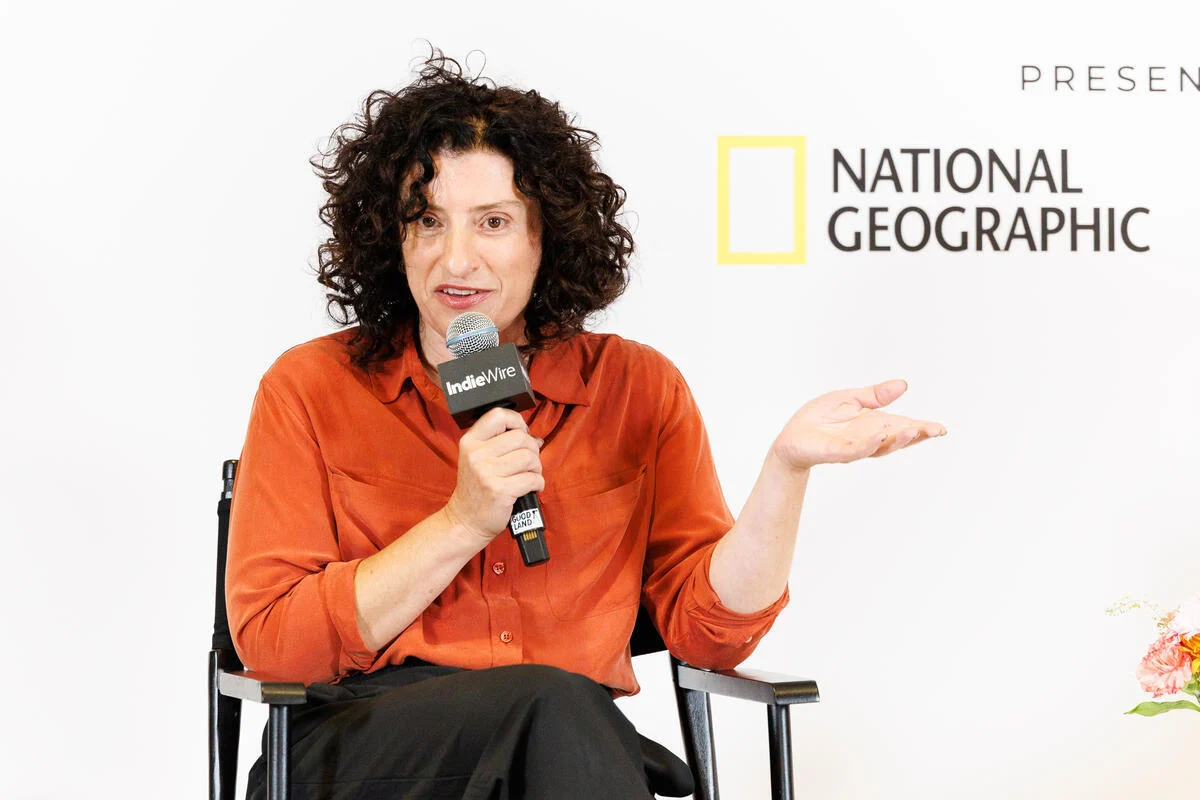
However, the trajectory of the film shifted violently in early 2022. As Loktev revealed during an IndieWire "Art of the Doc" conversation, the project was never designed to be the sweeping epic of exile it eventually became. "Neither of these two films were supposed to happen," Loktev admitted. "I just started making a film that I thought was going to be called The Lives of Foreign Agents… what we didn’t know was that four and a half months later, Russia would start a full-scale war with Ukraine and shut down all independent media within that first week."
The resulting films, Part I: Last Air in Moscow and Part II: Exile, serve as a diptych of a world collapsing. The former captures the tense, claustrophobic final days of TV Rain, while the latter follows the subsequent diaspora of its staff as they were forced to flee, scattering across Europe to rebuild their lives and their profession from the margins of foreign soil.
A Chronology of a Media Blackout
To understand the gravity of My Undesirable Friends, one must look at the rapid-fire erosion of civil liberties in Russia leading up to the invasion of Ukraine.
The Precarious Equilibrium (2021)
Throughout 2021, the subjects of Loktev’s film were already living in a state of suspended animation. They were operating in a "gray zone"—performing essential journalism while simultaneously being targeted by state-mandated branding. The "foreign agent" designation was more than a bureaucratic nuisance; it was a scarlet letter designed to shrink their audience, alienate advertisers, and foster an environment of public paranoia. Yet, as Loktev noted, there was still a semblance of normalcy. Journalists could still go to the office; they could still publish. The looming threat of arrest was a constant shadow, but it had not yet eclipsed the daylight.

The Catalyst: February 2022
The invasion of Ukraine served as the ultimate threshold. Within the first week of the war, the Kremlin effectively criminalized the act of calling the "special military operation" a war. Independent media outlets, including TV Rain, were faced with a binary choice: capitulate to state censorship and become a mouthpiece for the Kremlin, or cease operations entirely. The closure of TV Rain was not merely a business decision; it was a symbolic silencing of the last major platform for dissent.
The Great Scattering (Post-March 2022)
Part II picks up in the immediate aftermath of the shutdown. The journalists, once the eyes and ears of a nation, were suddenly transformed into refugees. The film tracks their transition from being "the flies that Russia spits out of its mouth"—to borrow Vladimir Putin’s chilling rhetoric—to becoming a mobile, exiled press corps. This period marks the transformation of the documentary from a study of institutional pressure to a study of human endurance, loss, and the struggle to maintain identity when one’s country has effectively disowned them.
The Human Cost: Data and Dissent
The impact of this crackdown extends far beyond the closure of a single studio. The collapse of independent media in Russia has had measurable consequences on the information landscape.
According to reports from media watchdogs and international press freedom organizations, the exodus of journalists from Russia has created a "truth vacuum." Since the spring of 2022, hundreds of independent reporters have fled the country, fearing lengthy prison sentences under draconian new laws. This migration has forced a paradigm shift: Russian independent journalism is now largely a remote operation, relying on encrypted messaging apps, VPNs, and satellite broadcasting to reach audiences back home.
However, the cost of this digital survival is high. The physical distance between the journalist and the subject—the Russian people—creates a barrier of empathy and context. Loktev’s documentary captures this struggle with startling intimacy. The subjects are not just reporting on a war; they are processing their own trauma while trying to justify their continued existence as journalists in a world that often views them with suspicion.
Official Rhetoric vs. The Reality on the Ground
The Kremlin’s characterization of these journalists as "undesirable" or "foreign agents" serves a dual purpose: it marginalizes the journalists within Russia while providing a narrative of "cleansing" to the nationalist base.

In her interviews, Loktev highlights the disconnect between the high-level geopolitical rhetoric and the lived reality of her subjects. She points out that for years, the world engaged in a form of willful ignorance regarding Russia’s trajectory, citing the 2018 World Cup as a peak example of international cooperation despite the ongoing conflict in the Donbas. "The war had been going for eight years," she notes, "but it was the kind of year where the world allowed Russia to host a World Cup."
This observation underscores the central tragedy of My Undesirable Friends: the realization that the international community—and the Russian public itself—had become desensitized to the slow-motion erosion of democracy, only to be jolted into awareness when the "special operation" reached its inevitable, explosive conclusion.
Implications for Global Press Freedom
The story of TV Rain is not unique, but it is representative of a broader, global trend: the weaponization of legislation to silence investigative journalism. The implications are profound.
- The Fragility of Independent Platforms: My Undesirable Friends demonstrates that no matter how established or professional an organization is, it can be dismantled in days when it refuses to align with an authoritarian agenda.
- The Exile Model: The film invites viewers to consider the future of journalism in exile. As more countries trend toward authoritarianism, the "journalist-as-refugee" may become the new standard for independent reporting.
- Digital Surveillance and Security: The documentary highlights the extreme measures journalists must take to protect their sources and their own physical safety. The "cat-and-mouse" game of digital security is now a permanent feature of their professional lives.
Conclusion: A Mirror to Our Times
Julia Loktev’s My Undesirable Friends is more than a historical record of a defunct newsroom; it is a profound exploration of the cost of integrity. By choosing to follow her subjects through the chaos of their displacement, Loktev provides a roadmap of the human spirit under siege.
The documentary serves as a grim reminder that independent journalism is not a given; it is a hard-won right that must be constantly defended. As the subjects of her film navigate their new, uncertain lives in exile, they remain tethered to the belief that the truth, no matter how inconvenient to the state, must be told. Through her lens, Loktev ensures that while the broadcast signals in Moscow may have been silenced, the voices of those who dared to report the truth continue to resonate, echoing far beyond the borders of the country they were forced to leave behind.
In an era where "post-truth" politics threaten to obscure the reality of global conflicts, the work of filmmakers like Loktev becomes essential. My Undesirable Friends is a vital addition to the canon of political documentary, a film that forces us to reckon with the heavy price of conscience in a world where the lines between the personal and the political are being erased by force.
 Lina Hope
 Nana
 Nana Wu
