

By [Your Name/Journalistic Staff]
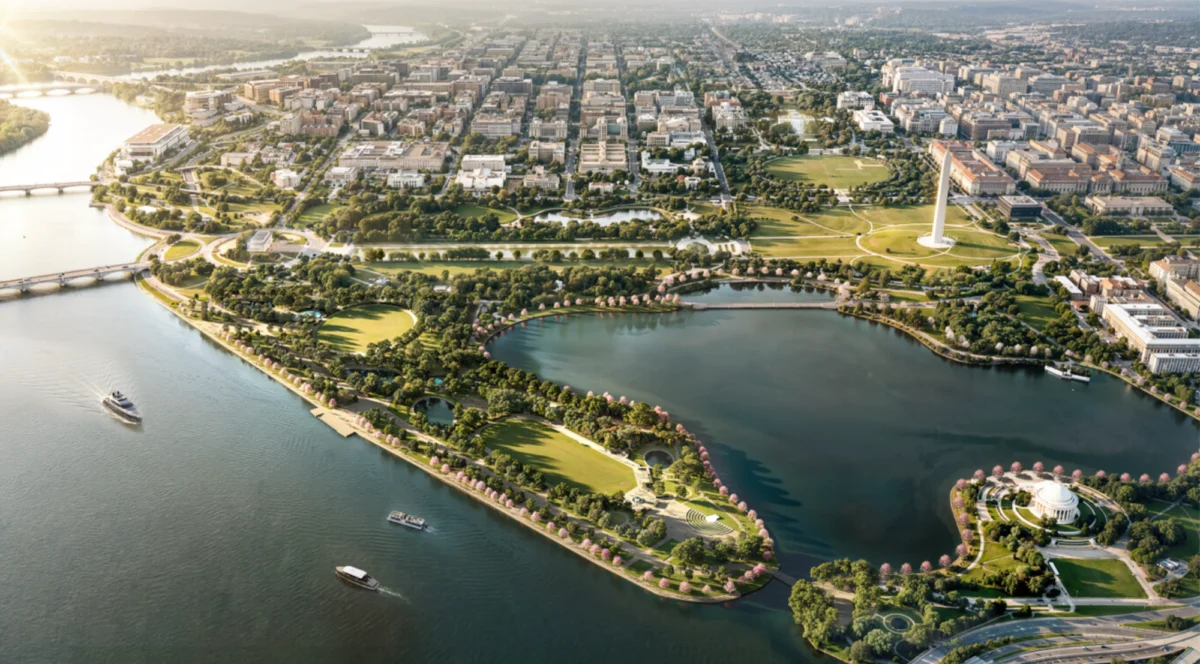
A coalition of six prominent heritage and preservation organizations has initiated a high-stakes legal battle against the Trump administration, aiming to halt the construction of the "National Garden of American Heroes." The proposed monument, a massive installation featuring 250 statues of figures from American history, is slated for development on federally protected land along the Potomac River.
The lawsuit, filed on Monday, June 15, in federal court, marks a significant escalation in the ongoing tension between federal executive authority and the established protocols for managing Washington, D.C.’s historic landscape. At the heart of the dispute is a fundamental question of governance: Does the President possess the unilateral authority to alter the National Mall, or is such a space a protected, completed work of civic art that remains beyond the reach of individual political agendas?
The Core Conflict: Preservation vs. Executive Fiat
The plaintiffs—a group that includes the National Parks Conservation Association and The Cultural Landscape Foundation—argue that the administration’s plans violate long-standing congressional restrictions on new development. By circumventing the rigorous, multi-step review processes required for projects on public land, the plaintiffs contend that the administration is acting in bad faith.
"Congress has made clear that the National Mall is a ‘substantially completed work of civic art,’ not a personal sandbox for each President to renovate however he likes," the lawsuit declares.
The proposed site, West Potomac Park, falls under the jurisdiction of the National Park Service. It is a critical component of the National Mall and Memorial Parks, home to iconic landmarks like the Jefferson Memorial. Preservationists are particularly alarmed by architectural renderings that suggest the monument would displace open green spaces and eliminate existing recreational sports fields, effectively stripping the public of usable parkland to make way for a curated, ideological display.
Chronology of the Controversy
The saga of the "National Garden of American Heroes" is not a new development, but rather a resurrected project from a previous era of the Trump presidency.
- July 2020: During his first term, then-President Trump first proposed the creation of a vast sculpture garden during a speech at Mount Rushmore. The announcement was met with immediate criticism from historians and urban planners, who questioned the haphazard selection of figures.
- January 2021: Shortly before leaving office, an executive order was signed to formalize the project.
- January 2021 (Post-Inauguration): Upon taking office, the Biden administration moved to scrap the project, citing concerns regarding the costs, the arbitrary selection of historical figures, and the environmental impact on the National Mall.
- May 2026: Following his return to the White House for a second term, President Trump announced the revival of the project, confirming his intention to move forward with the installation despite previous objections.
- June 15, 2026: Six heritage organizations formally file a lawsuit against the Department of the Interior to stop the construction, alleging violations of federal monument and land-use regulations.
The "Hodgepodge" of Heroes: A Contentious Curatorial Vision
The selection of figures to be immortalized in the garden has been a primary point of contention. The list is remarkably eclectic, blending universally recognized civil rights leaders such as Martin Luther King Jr. and Frederick Douglass with intellectual figures like Hannah Arendt. However, the inclusion of more divisive historical figures has sparked intense debate.
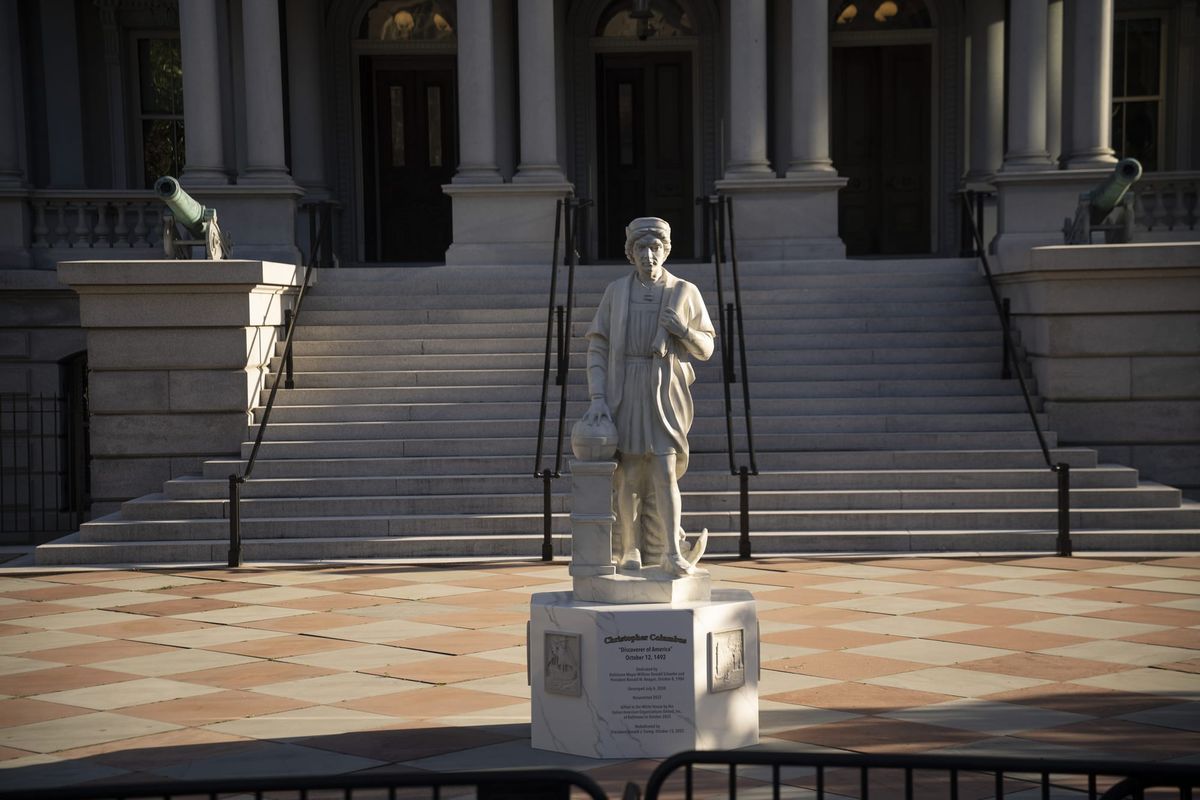
Christopher Columbus, whose statue was re-erected by the administration outside the White House earlier this year, remains a centerpiece of the project. Also included is Junípero Serra, the 18th-century Spanish missionary whose role in the colonial mission system in California has been a flashpoint for modern debates regarding the treatment of Indigenous peoples.
Historians and scholars have frequently described the list as "odd" and "random." The lack of a cohesive historical narrative has led many critics to argue that the garden is not a tribute to American history, but rather a performative tool intended to elevate a specific, nationalistic vision of "American exceptionalism."
Financial Implications and Funding Shifts
One of the most controversial aspects of the project is its funding mechanism. Reports indicate that the Trump administration has diverted substantial capital from the National Endowment for the Humanities (NEH) and the National Endowment for the Arts (NEA) to finance the sculpture garden.
These agencies, which provide vital support for arts and humanities programming across the United States, saw significant budget cuts in 2025. By redirecting these resources, the administration has effectively gutted funding for local arts initiatives to subsidize a federal monument project. The NEH has gone so far as to solicit sculpture designs from artists, offering grants of up to $600,000 to the winners—a move that has further infuriated the arts community, who argue that such funds should support broader creative endeavors rather than state-commissioned portraiture.
Official Responses and Political Polarization
The Department of the Interior has defended the project with characteristic vigor, framing the lawsuit as a politically motivated obstruction. A spokesperson for the agency dismissed the plaintiffs, suggesting that their organizations have deep ties to Democratic political campaigns.
"It is beyond comprehension why anyone would sue over an exhibition that celebrates American greatness by highlighting some of the most pivotal figures in our nation’s history," the spokesperson stated in an interview with Hyperallergic.

This defense highlights the deep political divide surrounding the monument. Supporters view the garden as a necessary corrective to what they perceive as a decline in national pride and historical appreciation. Critics, conversely, see it as an act of "monumental overreach" that threatens the integrity of D.C.’s urban design and imposes a specific, contentious ideology upon a space that belongs to the American public at large.
Broader Implications for Historic Preservation
The legal battle over the National Garden of American Heroes carries significant implications for the future of urban planning in Washington. If the administration successfully proceeds without the standard congressional review, it could set a dangerous precedent for future presidents to bypass established environmental and architectural oversight.
The National Mall is governed by a series of complex laws, including the Commemorative Works Act, which ensures that new monuments are vetted for their cultural significance, site suitability, and long-term maintenance needs. By attempting to circumvent these laws, the current administration is effectively challenging the authority of the very agencies tasked with preserving the capital’s heritage.
Furthermore, the case raises questions about the definition of public space. In a city where the landscape is designed to reflect the collective memory of the nation, the imposition of a singular, executive-driven vision of "greatness" threatens to alienate the public. As the lawsuit winds through the federal courts, it will likely become a landmark case in the struggle to protect the National Mall from becoming a partisan theater.
Conclusion
As the legal proceedings commence, the nation watches to see whether the judiciary will uphold the protective statutes that have kept the National Mall as a neutral, civic space for over a century. For the preservationists, this is more than just a fight over 250 statues; it is a fight for the integrity of the American landscape. For the Trump administration, the project represents a tangible legacy—a permanent assertion of their vision of history, etched in stone and situated in the shadow of the nation’s most sacred monuments. The outcome of this case will undoubtedly shape the aesthetic and political future of Washington, D.C. for years to come.
 Muslim
 Evan Lee Salim
 Jia Lissa
