

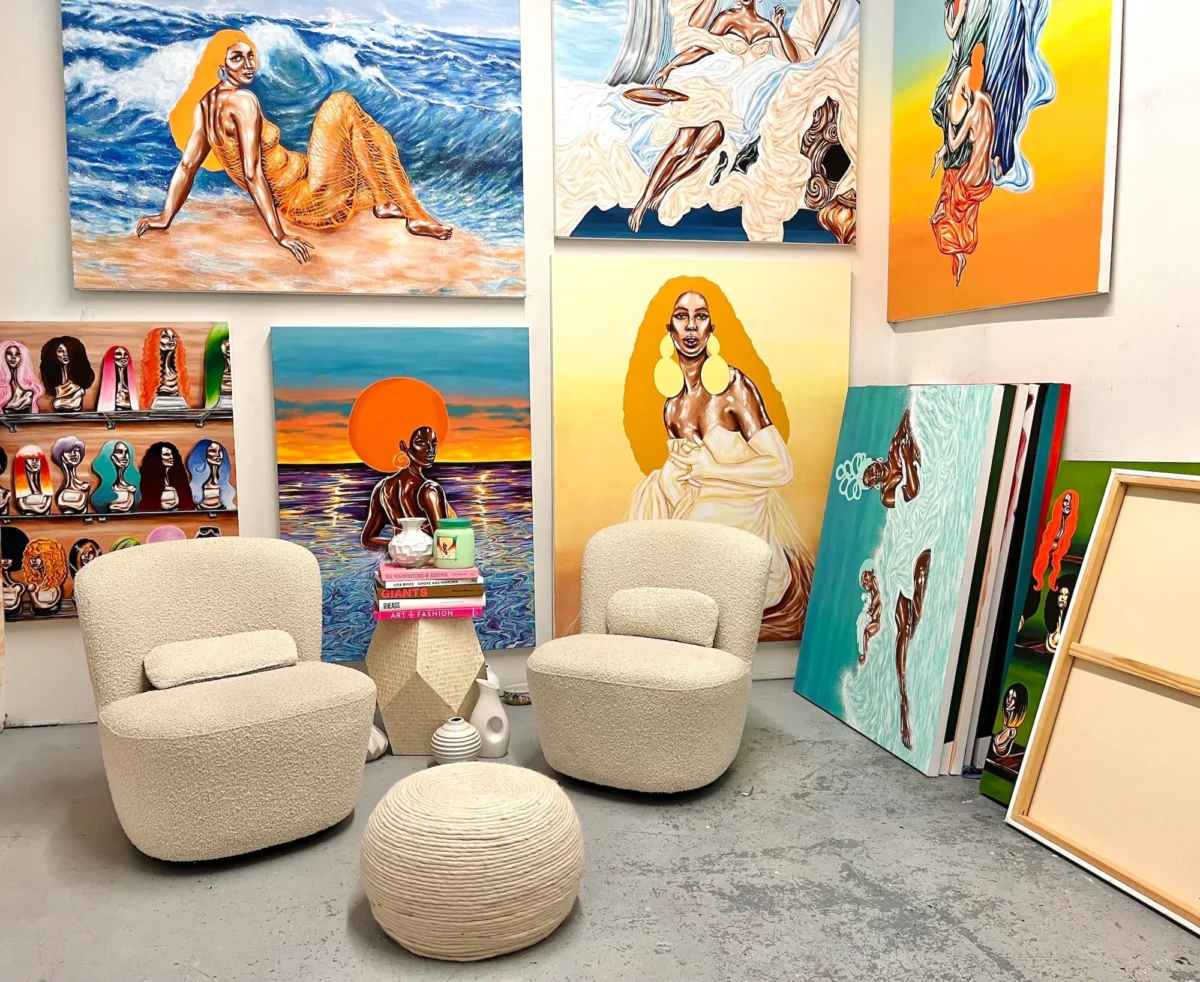
In the often-impenetrable landscape of the contemporary art world, the artist’s studio is frequently mythologized as a site of solitary genius—a cloistered sanctum where the individual ego grapples with the blank canvas. However, for New York-based artist and illustrator Ashley Chew, the studio functions in direct opposition to this tradition. It is not a fortress of isolation, but a deliberate, porous hub of community, connection, and inclusivity.
As the featured subject of the 342nd installment of A View From the Easel, a series dedicated to exploring the intimate relationship between artists and their workspaces, Chew offers a compelling blueprint for how a creative environment can act as an antidote to the exclusionary gatekeeping that defines many of the art world’s most prestigious institutions.
Main Facts: The Intersection of Discipline and Play
For the past four years, Chew has occupied a studio space in New York City that serves as the command center for a prolific, multidisciplinary practice. Her work is not confined to the traditional easel; it spills across textiles, leather goods, and commercial product design. Her professional identity is a hybrid one—balancing the rigorous demands of corporate illustration contracts with the fluid, experimental nature of her personal fine art.
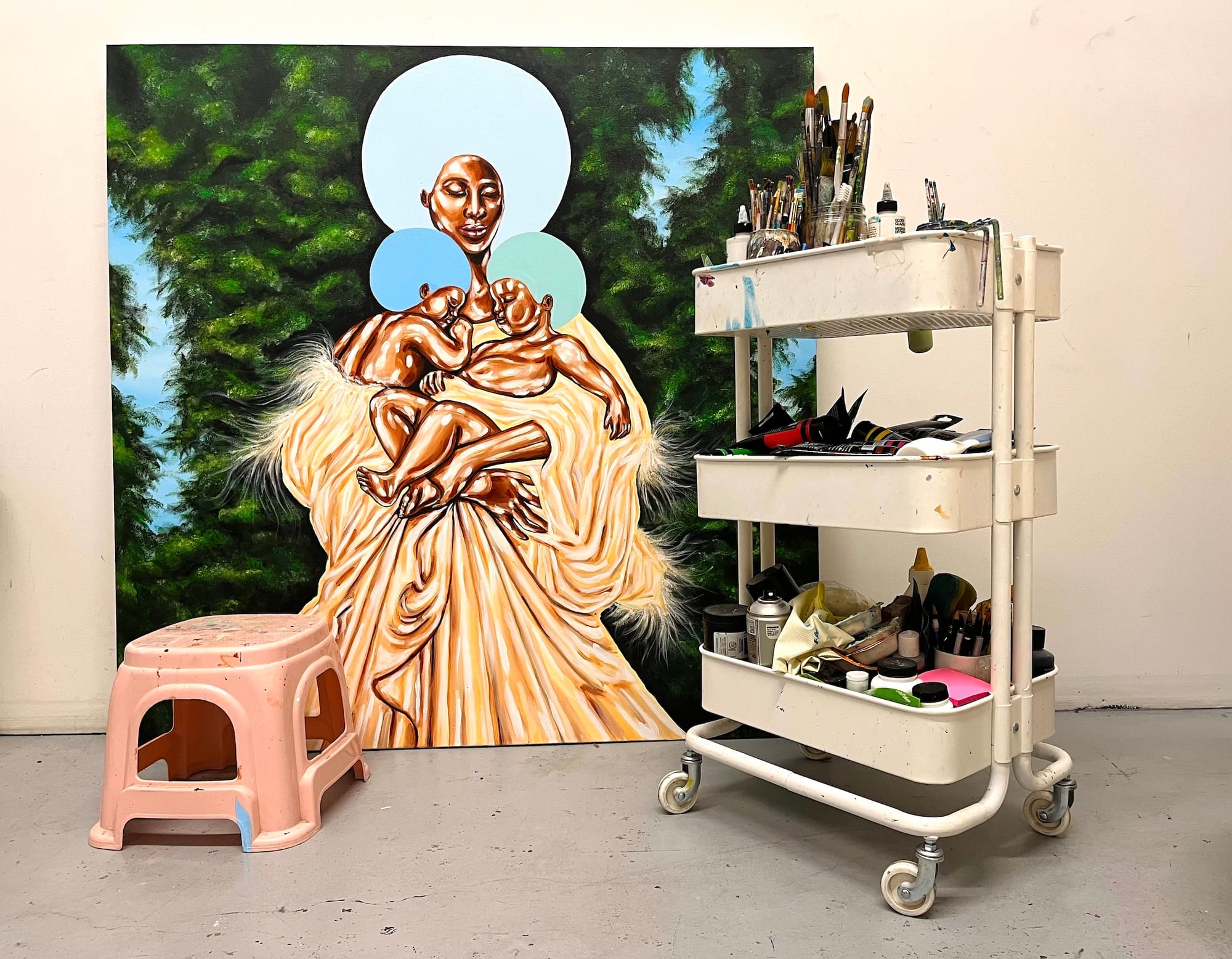
Chew’s daily rhythm is characterized by a high degree of intentionality. She maintains an exceptionally organized workspace, viewing visual order as a prerequisite for mental clarity. "I clean everything before I leave," she explains, noting that the act of resetting her environment prevents the frustration of disorder, allowing her to dive directly into her work the following day. This discipline is fueled by an indefatigable work ethic that rivals the most dedicated performers in music and entertainment. She is a near-permanent fixture in her studio, working five to seven days a week, driven by a creative hunger she likens to the legendary nocturnal work habits of Michael Jackson and Beyoncé.
Yet, despite this professional rigor, Chew’s personal practice is rooted in "play." She eschews the pressure of linear completion, often working on multiple projects simultaneously. When a painting reaches a stalemate, she does not force a resolution; instead, she pivots. A bike ride, a moment of reading by the water, or a quiet hour in a local park serves as a necessary psychological reset. She returns to her work not with exhaustion, but with renewed perspective.
Chronology: Four Years of Building a Sanctuary
To understand the current state of Chew’s practice, one must look at the four-year evolution of her studio space.

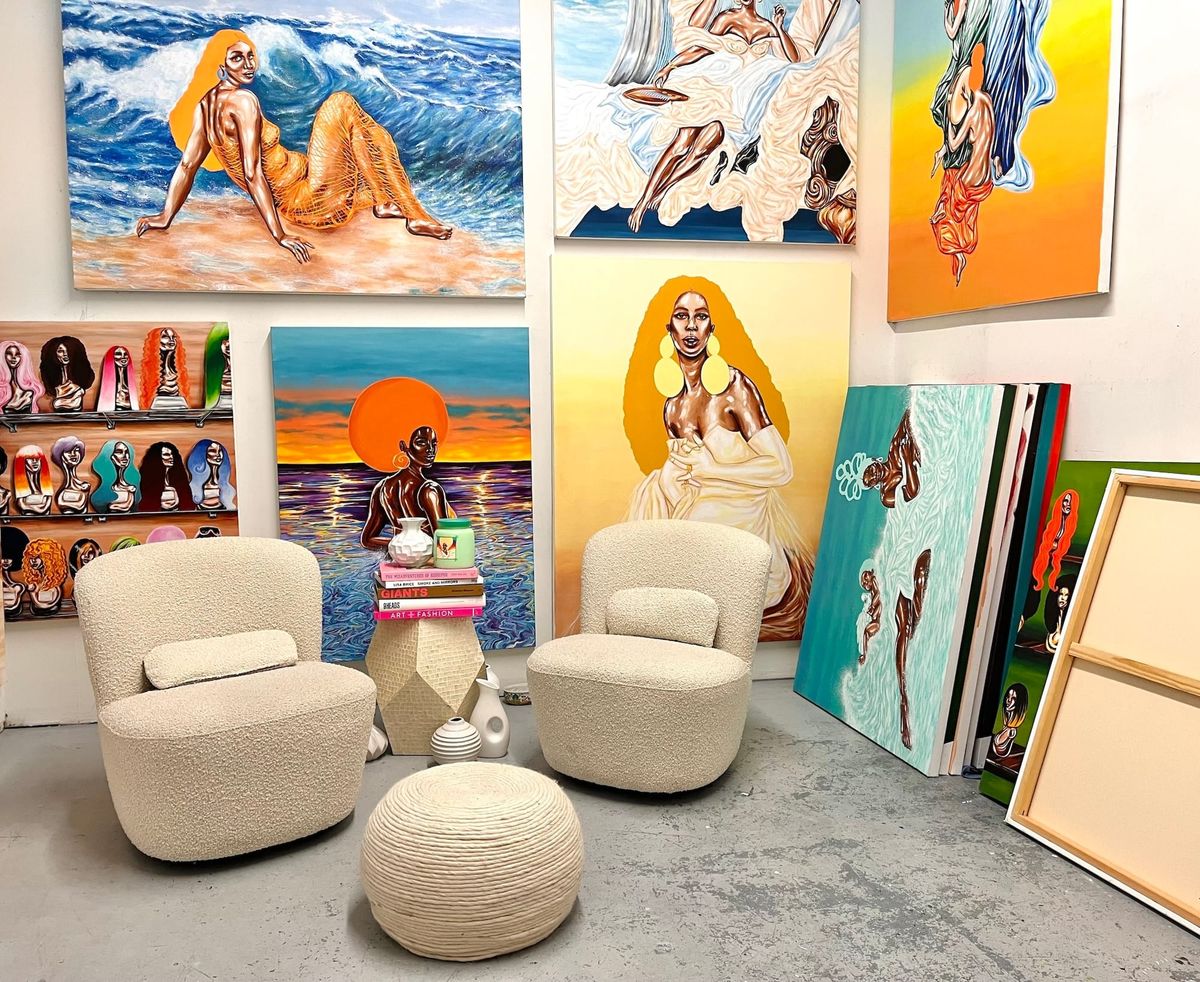
- The Inception (Year One): Upon securing her current space, Chew’s primary objective was not merely to find a location for storage or production, but to establish a physical environment that projected the warmth and accessibility of a lobby or a lounge.
- The Year of Inward Focus: At a pivotal point in her career, Chew made the conscious decision to halt public exhibitions. During this period, she transformed her studio into a private gallery, hosting visitors to engage directly with her work. This allowed her to bypass the traditional white-cube gallery system and engage with her audience on her own terms.
- The Cultivation of Community: Over the subsequent years, the studio evolved into a social nexus. Recognizing that many artists and creative workers feel marginalized by institutional spaces, Chew began using her studio to facilitate connections, hosting gatherings that ranged from casual conversation to organized craft workshops.
- The Present Day: Today, her studio stands as a mature manifestation of her childhood curiosities—a living, breathing "coloring book" at eight years old, now realized on a professional scale.
Supporting Data: The Geography of Creativity
Chew’s studio is strategically situated within an ecosystem that supports her multidisciplinary approach. The building itself is an "abundant arts community," housing numerous other practitioners and frequently hosting open-studio events.
Her proximity to four major museums—most notably the Noguchi Museum, which she cites as her favorite local institution—provides a constant influx of inspiration and cultural dialogue. Her routine is deeply embedded in the local arts calendar; she is a frequent participant in local arts festivals and makes it a point to attend one to five gallery openings every Thursday. This active engagement with the external environment ensures that her studio is not a hermetically sealed box, but a vibrant conduit for the broader New York City creative scene.
Official Perspectives: The Philosophy of Inclusion
The most striking aspect of Chew’s philosophy is her explicit critique of the "highly regarded environments" of the art world. For Chew, the studio is a political act. By creating a space that is intentionally welcoming, she is actively dismantling the barriers that have historically kept marginalized communities from feeling a sense of belonging in artistic institutions.
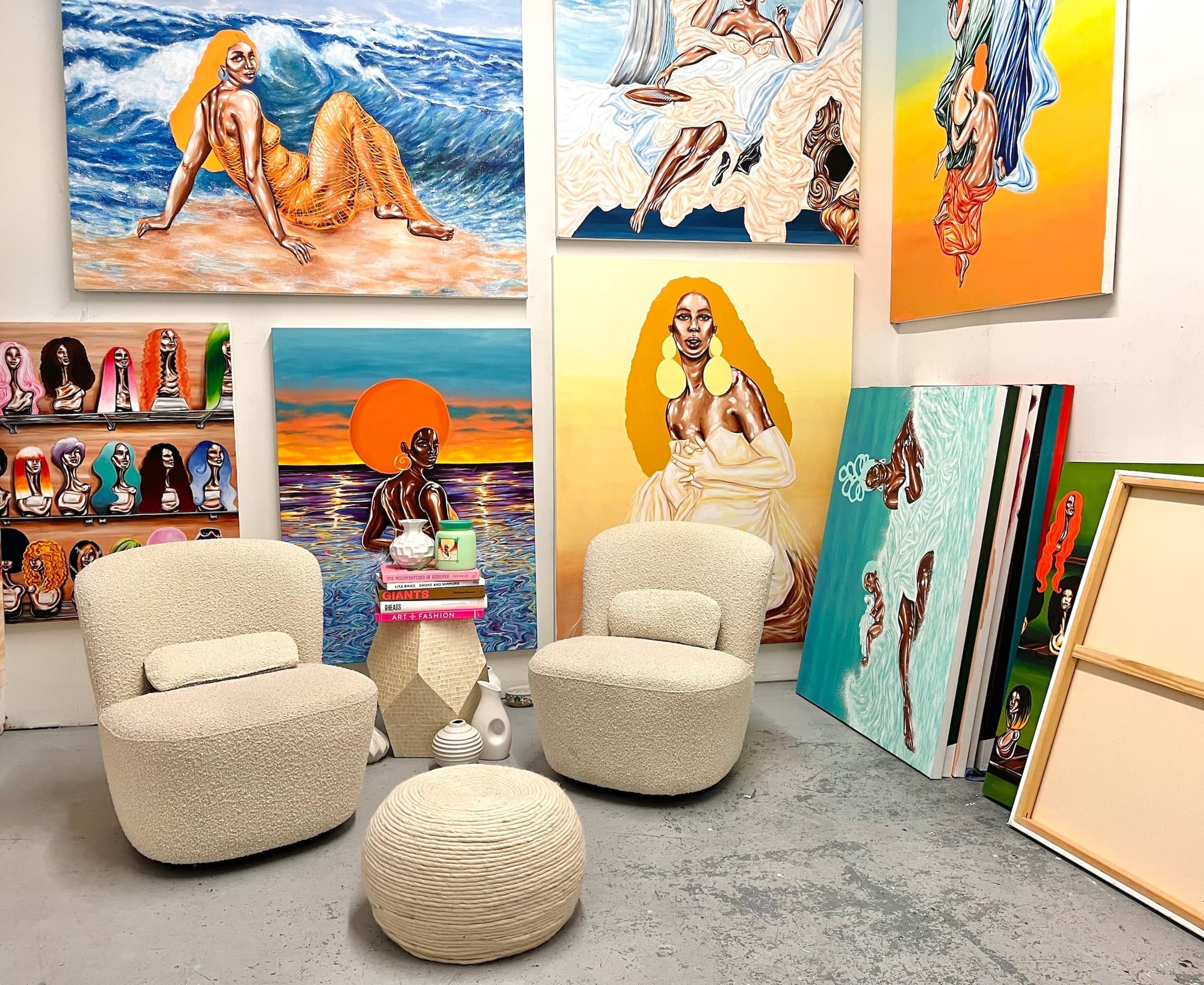
"Myself and my work have often not felt welcomed within certain spaces and institutions," Chew notes. Her response to this exclusion was to create an environment where artists, friends, and casual spectators could see themselves reflected. By inviting the public into her process, she demystifies the creation of art and fosters a sense of collective ownership. When she says, "I hope this love comes across in my work," she is referring to the reciprocal energy between the artist and her community—a bond that is strengthened by the physical presence of others in her workspace.
Implications: A New Model for the Artist’s Studio
The implications of Chew’s approach are significant for the broader discourse on professional artistic development.
- Redefining Professionalism: By treating her studio as a lounge rather than an ivory tower, Chew challenges the antiquated notion that "serious" art requires a somber, isolated environment. Her success demonstrates that community engagement can be a catalyst for, rather than a distraction from, high-level production.
- The Studio as Social Infrastructure: In an era where many independent art spaces are being shuttered by rising real estate costs and the professionalization of the art market, Chew’s model suggests that individual artists can serve as their own infrastructure. By opening her doors, she provides the "third space" that many creative communities currently lack.
- The Sustainability of Play: Chew’s emphasis on "play" and the ability to step away from the work serves as a vital critique of the "grind culture" that permeates the modern gig economy. Her willingness to move away from the canvas and into the world allows her to sustain her practice over the long term without burning out.
- Beyond the Canvas: As Chew continues to explore textiles and other mediums, her move "off the canvas" signals an interest in physical, tactile, and functional art. This shift suggests a desire for her work to exist not just on gallery walls, but in the everyday lives of the people who interact with her studio.
Conclusion
Ashley Chew’s studio is a testament to the idea that the most profound artistic breakthroughs often occur in the spaces between intention and community. Her commitment to maintaining a space that is as welcoming as it is productive offers a refreshing alternative to the often-cold, exclusionary nature of the contemporary art world. By centering her practice on accessibility, she has created more than just a place to paint; she has created a sanctuary for the creative spirit.
For those looking to follow in her footsteps, the path is clear: define your space not by its proximity to power, but by its capacity for connection. As Chew herself reflects, the ultimate goal of her practice is to remain as curious and energized as she was at eight years old, staring at her first coloring book—a goal she achieves by ensuring that her door, and her process, remain wide open.
 Basiran
 Muslim
 Evan Lee Salim
