

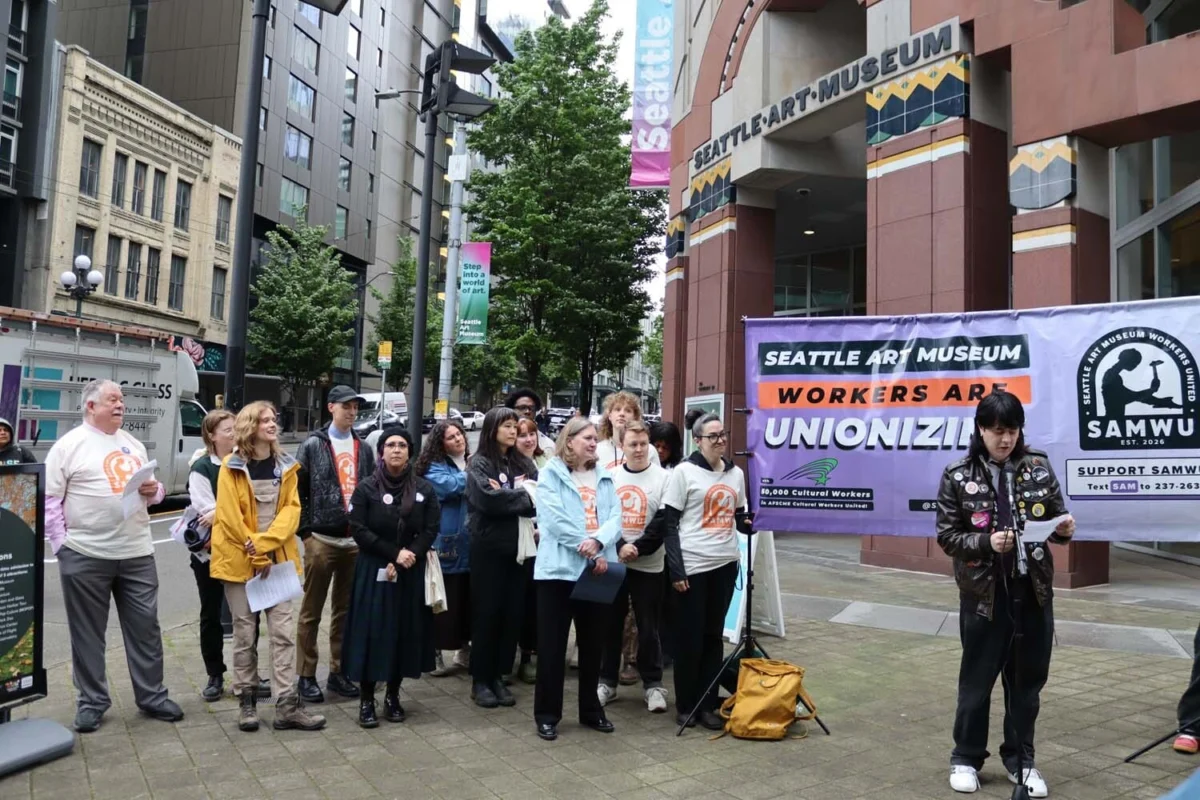
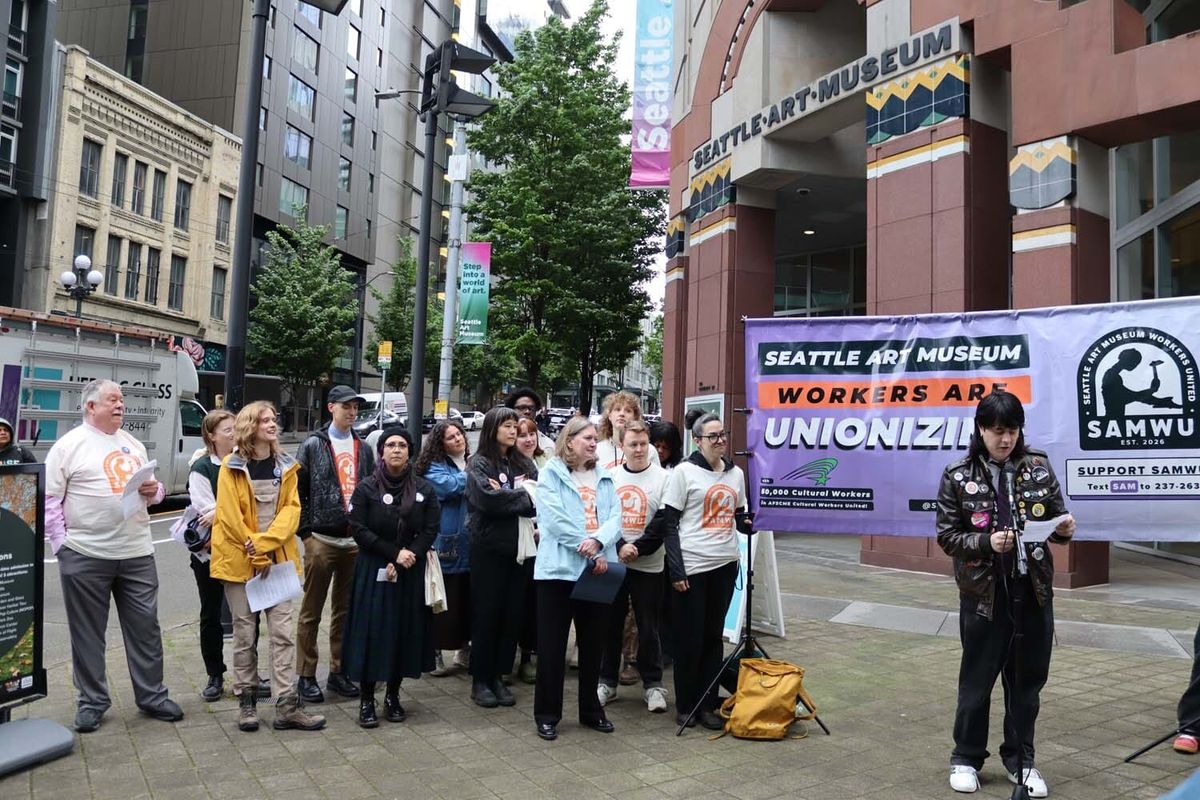
In a watershed moment for the Pacific Northwest’s cultural sector, staff at the Seattle Art Museum (SAM) have officially voted to unionize. The landslide victory, confirmed by a National Labor Relations Board (NLRB) election this week, marks a significant shift in the power dynamics of one of the region’s most prestigious institutions. Representing over 130 full- and part-time employees across three distinct sites—the main downtown museum, the Seattle Asian Art Museum, and the Olympic Sculpture Park—the newly formed Seattle Art Museum Workers United (SAMWU) is poised to fundamentally alter the institution’s labor landscape.
The vote, which saw 94% of eligible employees cast their ballots in favor of the union, serves as a ringing endorsement of the workers’ collective demand for improved wages, increased transparency, and enhanced job security. As the cultural sector continues to grapple with the pressures of post-pandemic recovery and rising living costs, the SAMWU victory is expected to serve as a bellwether for other arts institutions across the United States.
The Chronology of a Grassroots Movement
The path to formal recognition was neither short nor simple. While the unionization effort reached its public crescendo this week, the foundation for SAMWU was laid over several months of internal organizing and growing disillusionment among the staff.
The Initial Call to Action
The movement publicly surfaced in May, when employees delivered a formal letter to SAM Director and CEO Scott Stulen. The document articulated a clear set of grievances that had been brewing for years. Workers highlighted the precarity of their "at-will" employment status, a lack of competitive wages, and healthcare benefits that many described as insufficient to keep pace with the soaring cost of living in the Seattle metropolitan area.
In that initial letter, 59 staff members requested that the museum’s leadership voluntarily recognize the union. Such a move would have bypassed the lengthy and often adversarial process of an NLRB-supervised election. However, the museum’s administration declined the request, maintaining that a formal, neutral process was the most appropriate way to gauge the workforce’s true sentiment.
The Escalation and the Election
Following the rejection of voluntary recognition, the campaign intensified. The union, which is affiliated with the Washington Federation of State Employees (AFSCME Council 28), mobilized its members across 21 departments—a broad coalition spanning from curators and conservators to facilities teams and educational staff.
The election process itself was marked by high tensions. In a press release issued on June 17, SAMWU leadership publicly criticized the museum for its decision to decline voluntary recognition. The union alleged that the museum had engaged an anti-union law firm to manage the pre-election period—a tactic often perceived as a "union-busting" strategy by labor organizers.
Despite these obstacles, the result was a decisive mandate. With 97 votes cast in favor of unionization, the staff demonstrated an overwhelming consensus that the status quo was no longer sustainable.
Supporting Data: Why Now?
To understand the momentum behind SAMWU, one must look at the broader context of labor relations within the Seattle Art Museum. This is not an isolated incident, but rather the latest chapter in a long-running narrative of worker activism.
A Legacy of Labor Tension
The current victory comes roughly 18 months after the museum’s security guards engaged in a high-profile 12-day strike. That previous labor action, which followed months of stalled negotiations, was ultimately successful, resulting in a nearly $3-per-hour pay increase for the guards. The success of that strike provided a blueprint for the wider museum staff, proving that collective action could force management to the table and produce tangible, material gains.
Structural Discontent
The primary drivers of this movement remain consistent with national trends in the museum sector:
- Wage Stagnation: Despite the museum’s cultural importance, staff members have long reported that their compensation does not align with the specialized expertise required for their roles or the high cost of living in Seattle.
- The "At-Will" Problem: The desire to move away from "at-will" employment is a key pillar of the union’s platform. By seeking "just-cause" protections, workers aim to ensure that employment termination is based on a fair, objective process rather than arbitrary management decisions.
- Benefits and Wellness: Beyond base pay, the union is advocating for more robust health and wellness benefits, a need that has become increasingly critical as burnout rates continue to rise among museum professionals tasked with maintaining high-level programming on lean budgets.
Official Responses: Navigating the New Normal
The immediate aftermath of the election has been characterized by a move toward reconciliation and the promise of formal negotiation. Both the museum administration and the union leadership have signaled a desire to transition from the friction of the election to the productivity of the bargaining table.
The Museum’s Position
In a statement provided to Hyperallergic, a spokesperson for the Seattle Art Museum expressed a commitment to honoring the democratic process. "We fully accept this democratic outcome," the spokesperson stated, acknowledging the staff’s right to organize. CEO Scott Stulen, responding to criticisms regarding the decision to avoid voluntary recognition, maintained that the choice was based on a desire for procedural fairness. "We believed a decision of this magnitude warranted a formal election that aligns with the NLRB’s processes," Stulen explained.
The Union’s Vision
For the staff, the focus has shifted to the upcoming negotiations. Gillian Fulford, a spokesperson for SAMWU, expressed optimism about the future. "We look forward to SAM respectfully negotiating a progressive collective bargaining agreement," she said, noting that the goal is not merely to address local grievances but to "set a new standard for museum workers."
Jenny Woods, an installation design and registration specialist who has served at the museum for 25 years, provided a poignant perspective on the win. "For a literal quarter of a century, I have been waiting for museums to do right by their staff," Woods remarked. Her statement highlights the generational shift occurring within the sector, where long-term employees and new hires are finding common ground in the belief that the museum’s public-facing values must reflect its internal labor practices.
Implications: A New Era for Cultural Institutions
The successful unionization of SAM employees is likely to have significant implications far beyond the walls of the Seattle Art Museum.
The "Museum Unionization Wave"
The past five years have seen a surge in unionization efforts across major American museums, including the Philadelphia Museum of Art, the Brooklyn Museum, and the Whitney Museum of American Art. The SAMWU victory adds a prominent Pacific Northwest anchor to this growing trend. It signals that the "museum unionization wave" is not a fleeting phenomenon but a structural shift in how cultural workers view their role and rights.
Setting a New Industry Standard
By including 21 diverse departments—from the highly academic curatorial roles to the essential facilities and education teams—SAMWU has created a "wall-to-wall" bargaining unit. This strategy is increasingly favored by labor organizers because it prevents management from playing different departments against one another. If the resulting collective bargaining agreement includes strong "just-cause" protections and significant wage increases, it will likely be used as a template by staff at other mid-to-large-sized arts organizations.
The Challenge of Sustainability
While the victory is a cause for celebration among the staff, the road ahead is complex. Negotiating a "fair and sustainable" contract will require the museum to find ways to increase revenue or reallocate existing funds. The museum, like many cultural institutions, relies on a mix of ticket sales, endowment income, and donor support—all of which can be volatile.
The success of this union will ultimately be judged by whether the administration and the union can reach an agreement that protects the livelihoods of the staff without compromising the institution’s ability to fulfill its mission to the public. As both sides prepare for the first round of bargaining, the arts community will be watching closely, recognizing that the outcome in Seattle could redefine the relationship between art and labor for years to come.
In the words of the workers themselves, the museum’s mission is to "do wonderful things for our community." The new union’s fundamental argument is simple: that mission cannot be fully realized if it does not include doing wonderful things for the people who make that mission possible.
 Muslim
 Evan Lee Salim
 Jia Lissa
