

In a week marked by the intersection of high-stakes political pageantry and the quiet endurance of marginalized voices, the cultural landscape feels increasingly polarized. From the grand opening of the Barack Obama Presidential Center in Chicago to the surrealist protest of a giant, ketamine-themed Elon Musk balloon in Times Square, this week’s news cycle underscores a singular theme: the battle for the public imagination. As we navigate the complex interplay of art, activism, and history, these stories serve as a vital register of our current moment.
The Obama Presidential Center: A New Landmark for History and Community
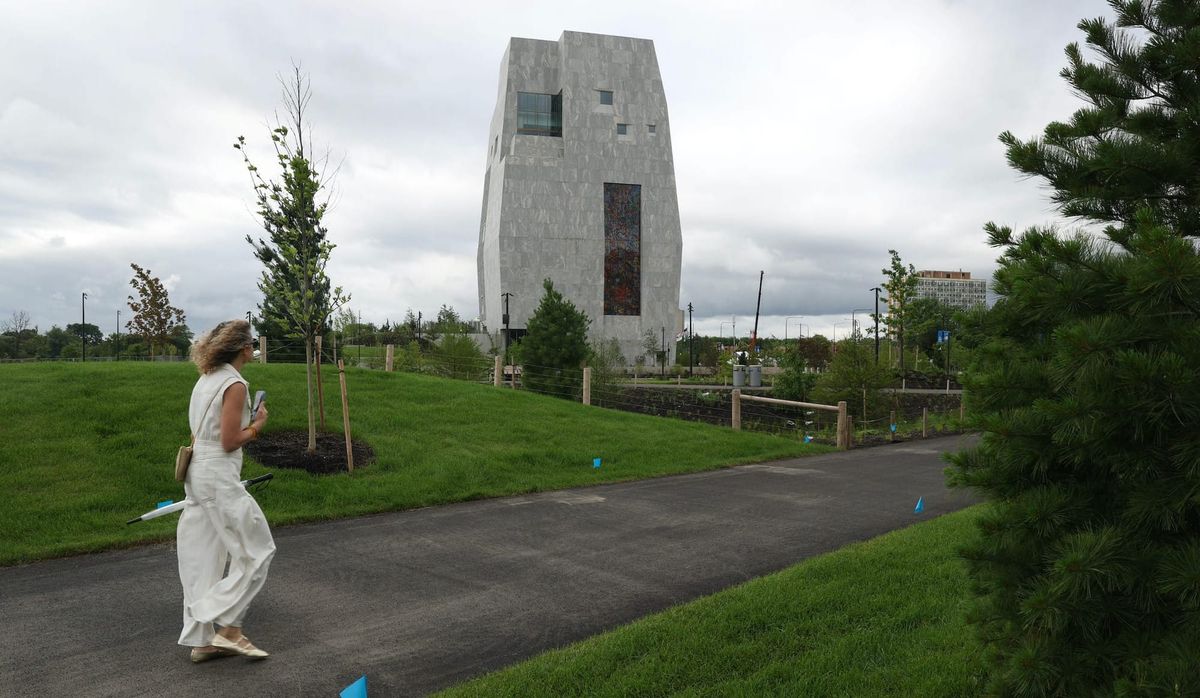
The most significant cultural event of the week occurred in Chicago, where the Barack Obama Presidential Center officially opened its doors. This $850 million campus, situated in the heart of Jackson Park, represents more than just a monument to a former presidency; it is a deliberate effort to anchor American history within a space of community utility.
The centerpiece tower houses a rotating collection of contemporary art, featuring heavyweights such as Nick Cave, Marie Watt, Aliza Nisenbaum, Carrie Mae Weems, and María Magdalena Campos-Pons. These works aim to weave the personal narratives of the South Side into the broader tapestry of the American story. However, the inauguration was not without its friction. The presence of former President George W. Bush sparked significant debate, reminding observers that the architectural "neutrality" of such centers often clashes with the visceral, often painful, memory of political history. Beyond the political symbolism, the center offers expansive public gardens, community resources, and gathering spaces designed to outlive the political cycles that birthed them.
Chronology of Resistance: From the Red Carpet to the Digital Sky
The week has been characterized by a series of unconventional protests that highlight the tension between status and social reality.
- Monday: The conversation surrounding "glamour as protest" was reignited by critic Eileen G’Sell. Revisiting the Amazon workers’ anti-red carpet protest at the Met Gala, G’Sell argued that glamour is not merely a tool of capital, but a site of potential resistance. By subverting the "commodity fetishism" decried by Karl Marx, these workers forced a dialogue about the labor exploitation hidden behind the sheen of luxury.
- Tuesday: The focus shifted to the intersection of technology and dissent in New York. Activists deployed a 40-foot-tall, grotesque effigy of Elon Musk over Times Square to protest the release of "Grok." The balloon, which featured imagery alluding to controversies surrounding the billionaire’s public persona, served as a stark critique of the normalization of toxic AI platforms.
- Wednesday: Discussions turned toward legislative futures. The Nation highlighted the campaign of Claire Valdez, a union organizer and artist running for Congress. Valdez’s platform, which champions democratic socialism, has become a lightning rod for GOP criticism, further signaling the widening chasm in American political discourse.
- Thursday: The week concluded with a look at the history of astrology, specifically the legacy of Linda Goodman. A new biography explored how Goodman transitioned from a recluse in Colorado to the woman who brought the zodiac into the mainstream, proving that even "fringe" cultural movements can fundamentally alter the American zeitgeist.
Supporting Data: Art as an Archive of Survival
Across the globe, art is functioning as a crucial tool for documentation and survival in the face of systemic erasure.
In India, painters are increasingly incorporating Urdu script into their work. As Shweta Upadhyay reports for Scroll, artists like Faiza Hasan are using the script not just for aesthetic purposes, but as a "lover’s eye"—a conceptual frame for personal and family history. In a climate where Islamophobia threatens the historical presence of Urdu, these works serve as an archival act of preservation.
Similarly, in Sudan, a new generation of female filmmakers is using smartphones to document the ongoing violence in their homeland. Dr. Eithar Khairy and Ikram Mohammed represent a movement where the act of filming is an assertion of existence. As Dr. Khairy noted, "sometimes just existing, just being present and refusing to disappear, is its own form of resistance."
Official Responses and Political Implications
The intersection of politics and the arts has left the establishment reeling. The Republican National Committee’s aggressive targeting of candidates like Claire Valdez—using fearmongering tactics regarding "democratic socialism"—has ironically served to bolster the visibility of these progressive movements. By attacking the platform of a grassroots organizer, the RNC has inadvertently validated the appeal of policies centered on universal healthcare, housing, and labor rights.
Furthermore, the environmental justice discourse has gained a new dimension. Landscape architect Diane Jones Allen’s recent interview with the Texas Observer sheds light on "Black marronage"—the history of sovereign communities formed by enslaved people who escaped to freedom. This history, long submerged in the American narrative, is being unearthed by scholars and architects like Allen and Andrea Roberts, forcing a re-evaluation of the American landscape and its relationship to Black sovereignty.
The Intersection of Queer Joy and Global Visibility
Amidst the heavy political news, there remain spaces for unadulterated joy. Dr. Nasser Mohamed, the first Qatari man to publicly come out as gay, hosted a landmark "night of queer joy" in San Francisco. The event, Love Is You, held at the San Francisco Mint, served as a defiant counter-narrative to the exclusionary policies of certain global powers during international sporting events. By emblazoning the steps of the Mint with the phrase "Love Is You" in various languages, the event underscored the universal nature of queer identity and the ongoing fight for global acceptance.

Reflections: Why the Pigeon Matters
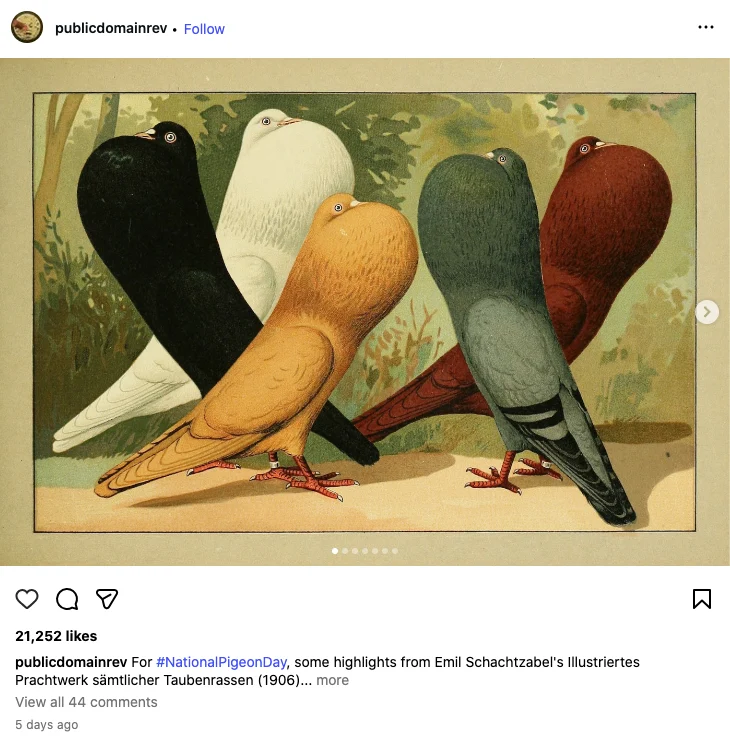
In the spirit of "Required Reading," it is worth noting that even the smallest cultural markers matter. The Public Domain Review recently highlighted the work of Emil Schachtzabel, whose paintings of pigeons remind us of the value of observing the overlooked. In a world saturated with high-tech controversies and grand presidential monuments, the humble pigeon serves as a grounded reminder of the natural world that persists regardless of the political noise.
As we look toward the next week, the trends are clear: the arts are becoming increasingly inseparable from the struggle for civil rights, economic justice, and historical truth. Whether through the lens of a smartphone in a war-torn region or the brush of an artist in Hyderabad, the act of "seeing" has become the most radical tool at our disposal.
The stories covered this week—from the massive balloon of a tech billionaire to the quiet dignity of a grandmother’s terrazzo floor—collectively argue that history is not just written by the victors; it is painted, filmed, and lived by those who refuse to be silenced. As the Obama Presidential Center begins its tenure in Chicago, one hopes that the spaces it provides for community, gardening, and creative expression will be the ones that truly define our era, rather than the fleeting, performative outrage of the current political cycle.
 Neng Nana
 Ali Ikhwan
 Basiran
