

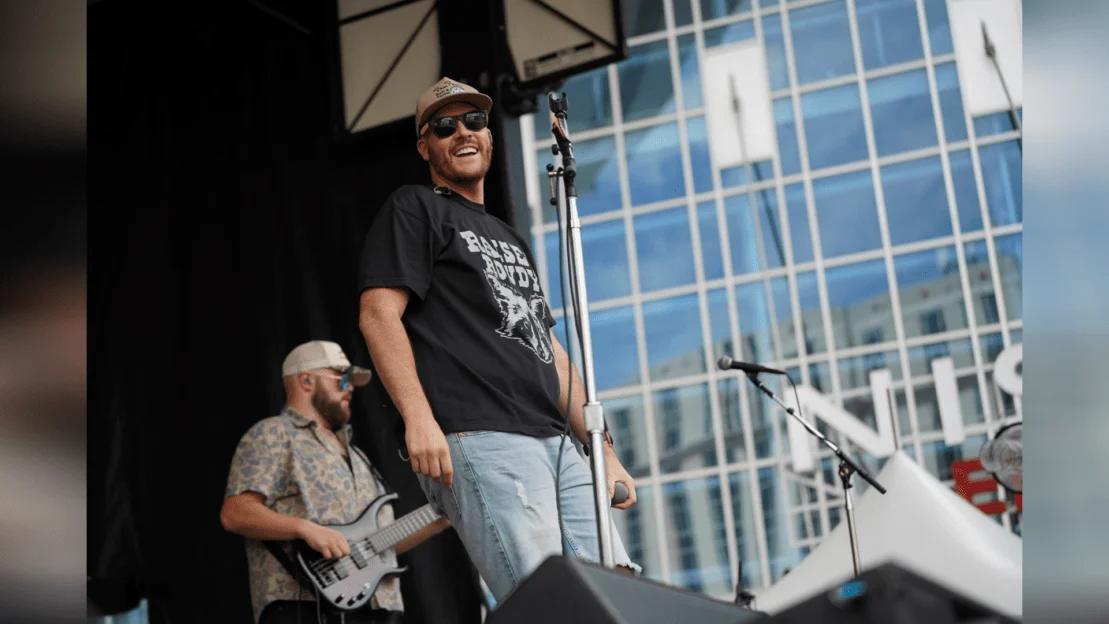
The life of a touring country musician is often romanticized as a blur of late nights, highway miles, and the neon glow of dive bars. For Alabama-born singer-songwriter Trey Lewis, that lifestyle once represented a dangerous cocktail of substance abuse and unchecked dietary habits. Today, however, the man behind the double-platinum viral hit “Dicked Down in Dallas” is redefining what it means to be a modern country artist. Lewis has transitioned from a self-described “high school fat kid” who struggled to finish a single lap on the track, to a dedicated fitness enthusiast whose performance on stage is now matched by his performance in the weight room.
At 38, Lewis is not just navigating a flourishing career; he is sustaining it through a radical, holistic transformation that centers on sobriety, mental fortitude, and a disciplined approach to physical conditioning.
The Foundation of Change: A Chronology of Recovery
To understand the man standing on stage today, one must look back at the milestones that define his journey. Lewis’s path to the spotlight was not linear. In June, the artist celebrated his 19th year of sobriety—a monumental achievement that served as the bedrock for his professional life.
Interestingly, Lewis’s musical journey began only after he chose to put the bottle down. Growing up in Alabama, surrounded by the classic sounds of Hank Williams Jr. and Lynyrd Skynyrd, Lewis was a consumer of music long before he was a creator. It wasn’t until he sought help through Alcoholics Anonymous that he picked up a guitar.
“I didn’t write songs when I was out there drinking and doing all that stuff,” Lewis reflects. “I didn’t get a guitar until I got sober. So music, in a way, became my new addiction and kind of my drug of choice.”
However, while his alcohol addiction was effectively managed, a second, more persistent struggle remained: an unhealthy relationship with food. Lewis’s weight fluctuated wildly over the years, characterized by a cycle of extreme restriction followed by intense periods of binge eating. Twice in his adult life, he managed to shed over 100 pounds, only to find the weight creeping back as the pressures of the road and life’s stresses mounted.
The turning point came in 2020. As his career skyrocketed with the massive success of “Dicked Down in Dallas,” the physical demands of touring became apparent. He found himself hitting the road and reverting to “teenage” eating habits—pizza, chicken fingers, and erratic sleep cycles—which saw his weight climb back up to 320 pounds. He realized that without a sustainable lifestyle, his career trajectory would eventually hit a physical ceiling.
The Catalyst: Cold Plunges and Professional Guidance
The catalyst for his most recent and successful transformation was born out of irony. While hosting a podcast focused on substance abuse and mental health, Lewis found himself sitting in a cold plunge tub, discussing the virtues of wellness while simultaneously realizing his own physical neglect.
He connected with Justin Todd, a renowned Nashville-based performance specialist who had worked with artists like Kameron Marlowe. The two bonded over their shared sobriety, creating a unique synergy where the gym became more than just a place to lift weights—it became a sanctuary for mental and physical growth.
“I had to make sure he didn’t hate it,” Todd says of his early strategy. The initial phase of training wasn’t about ego lifting or hitting personal records. It was about building a foundation. Todd conducted a full-body movement assessment to address the physical toll of being a touring musician—specifically the postural issues caused by hours of hunching over a guitar on a bus.
They used play as a hook. Using the gym’s basketball and pickleball courts, Todd incentivized movement. Missed shots meant extra reps; made shots reduced the volume. This gamification kept Lewis engaged, ensuring he showed up even when his motivation waned.
Supporting Data: By the Numbers
The results of this consistent, evidence-based approach are clear:
- Weight Management: Lewis has stabilized his weight around 225 pounds, a significant drop from his 320-pound peak. He emphasizes that the number on the scale is no longer his primary motivator; rather, it is his functional capacity.
- Strength Gains: A man who once couldn’t perform a single pushup can now knock out sets of 20 with ease. His bench press has moved from struggling with an empty bar to repping 165 pounds.
- Cardiovascular Health: What began as 30-second jogging intervals has evolved into three-to-four-mile runs that Lewis completes with ease, providing him the stamina required to maintain high-energy performances for an entire tour.
- Consistency: Over the course of his training with Todd, Lewis developed an “athlete’s mentality,” rarely missing a scheduled session, even when traveling or feeling under the weather.
Official Perspectives: The Mindset Shift
According to Justin Todd, the secret to this long-term success is the shift in Lewis’s perspective. “A lot of weight loss is about proper goal setting and taking the focus off the number on the scale and placing it on how well we feel, how our clothes fit, what’s our body fat percentage,” Todd explains.
For Lewis, the gym is now a non-negotiable part of his day. His morning routine is as disciplined as any professional athlete’s: a 6 a.m. wake-up, a rigorous workout, 20 minutes in a 200-degree sauna, prayer, meditation, and a healthy breakfast before he ever sits down to write a song.
“I’m 38, so it’s about feeling good,” Lewis says. “It’s not about how much weight can I lift, or how many miles can I run? It’s about feeling good and just waking up every day and getting some movement in.”
Implications for the Music Industry
The implications of Lewis’s transformation extend beyond his own personal health. He is part of a growing movement of country artists who are prioritizing longevity over the traditional, often destructive, tropes of the “outlaw” lifestyle. By demonstrating that one can maintain a thriving, gritty, and authentic country music career while being sober and physically fit, Lewis is setting a new standard for the next generation of performers.
His commitment to his health has directly influenced his creative output. With his most recent single, “2 Inches,” and a busy schedule of tour dates ahead, Lewis is more focused than ever. He views his health as a tool for his art, noting that the stamina he built in the gym translates to better note control and stage presence.
Furthermore, his influence is felt by those around him. When Lewis performs, fans are beginning to notice the new "wrinkle" in his set—an occasional impromptu pushup or squat mid-performance—not as a gimmick, but as a genuine expression of his newfound vitality.
Conclusion: The Path Forward
Trey Lewis’s story is one of incremental progress. Whether he is writing a hit song or running three miles, he attributes his success to one simple philosophy: “You just have to show up. That’s more than half the battle.”
As he continues to stack small victories into massive waves, Lewis is proving that redemption isn’t just about recovering from the past—it’s about actively building a stronger, more capable future. He isn’t outrunning his history; he’s simply moving faster toward a career defined by longevity, health, and authentic connection with his audience.
For a man who spent years feeling as though he was being lapped by his peers, Trey Lewis has officially moved to the front of the pack. And with a new, healthier outlook on life, he has no intention of looking back.
 Lina Hope
 rifanmuazin
 Laily UPN
