

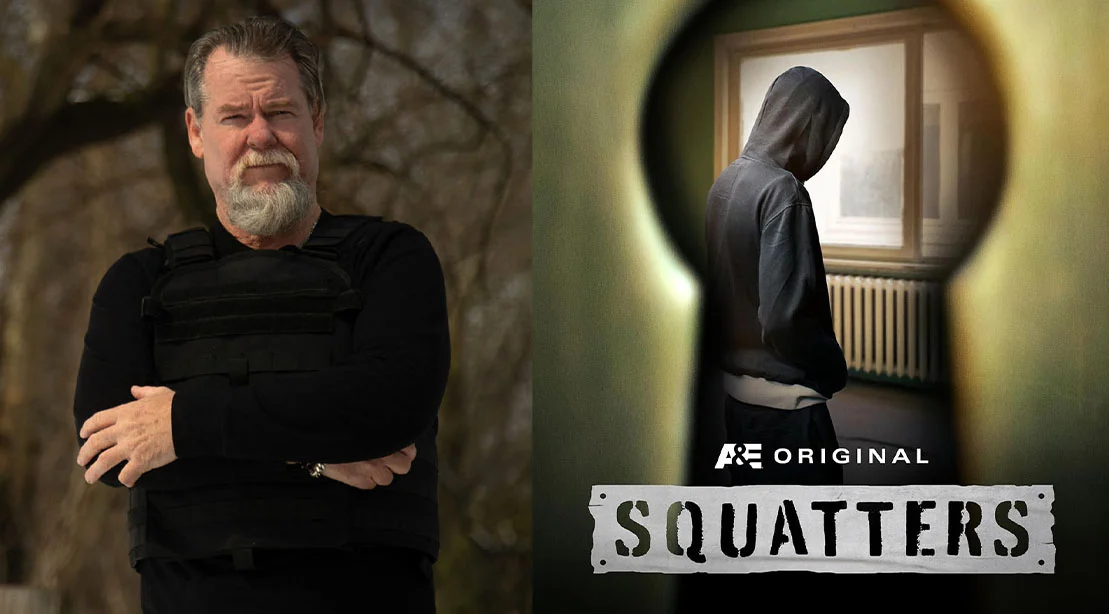
In the landscape of modern American property rights, a new and unconventional archetype has emerged. He is not a law enforcement officer, nor is he a private investigator in the traditional sense. He is Flash Shelton, a man who has transformed a personal trauma into a national crusade against a phenomenon that leaves homeowners paralyzed: squatting. As the star of A&E’s hit reality-docuseries Squatters, Shelton has become a household name, hailed by desperate property owners as a "superhero" who operates in the murky legal gray areas where police often find their hands tied.
However, beneath the narrative of a physical powerhouse reclaiming territory lies a complex story of legal navigation, psychological warfare, and an unwavering commitment to conflict de-escalation.
The Origin Story: A Crisis Turned Career
The story of the "Squatter Hunter" did not begin in a courtroom or a martial arts studio; it began in the wake of grief. In 2019, following the passing of his father, Shelton was assisting his mother in preparing their family home for sale. The property, meant to be a transition point for his mother’s future, was suddenly occupied by a group of more than half-a-dozen squatters.
When Shelton approached local law enforcement, he was met with the reality that haunts thousands of Americans: the police often view squatting as a "civil matter." Because the occupants had established a presence and asserted some semblance of tenancy, officers were hesitant to intervene without a court order—a process that can take months or even years.
Recognizing that the legal system was failing his family, Shelton pivoted. He studied the nuances of local property and rental laws. He realized that if the police couldn’t act, he had to change the status of the "tenancy." After staking out the property, he waited for the group to vacate temporarily. Upon their departure, he entered the home with a valid rental agreement signed by his mother, effectively reclaiming the property. When the group returned, they were confronted not by a landlord in distress, but by a man who had reclaimed his legal footing. He offered them an ultimatum: leave or face criminal prosecution for trespassing. They chose the former. This moment of personal victory evolved into a mission to aid others trapped in similar limbo.
A Background in Conflict: Boxing, Security, and Discipline
While Shelton’s methods today prioritize intelligence over brute force, his background is built on a foundation of physical capability. His career trajectory reads like the screenplay of a classic action film.
"I started out as a bouncer at 21 years old," Shelton reflects. "Then I won a boxing competition. I always say that I’m the original Roadhouse—that’s what I did. I traveled and cleaned up bars and trained bouncers."
Beyond the squared circle of the ring, Shelton is a practitioner of Wing Chun Kung Fu, a Southern Chinese martial art that emphasizes close-range combat and efficiency. However, Shelton is quick to dispel the myth that he is looking for a fight. In his line of work, violence is a failure of strategy.
The Philosophy of De-escalation
"Squatters have this entitled personality," Shelton explains. To navigate these high-tension encounters, he employs a technique that is surprisingly internal. Before stepping onto a property, he practices meditation to lower his heart rate and clear his mind. He argues that if his body is already "escalated" by adrenaline, he will be unable to think clearly during the first, most critical moments of a confrontation.
When he does engage physically, it is purely for the safety of his team—which includes his son, Michael, and his colleague, Cameron—or, in rare instances, to protect the occupants from themselves. "In one episode, I actually restrained a gentleman so that Cam could grab a pole-like weapon that he had in his hand," he recalls. The goal is always to slow the situation down, not to ignite it.
The Tactics of the Hunter: Psychological Warfare
Shelton’s effectiveness stems from his willingness to think outside the box. When legal maneuvers are not enough, he turns to what he calls "psychological flushing."
In one memorable instance on his series, Shelton utilized a squatter’s phobia of snakes to make the property an untenable living environment. By strategically placing reptiles in areas frequented by the trespassers, he created an atmosphere of unease that effectively accelerated their departure. Another common tactic is becoming the "nightmare roommate." By moving in and asserting his own residency rights, he disrupts the squatter’s sense of control, often turning the table until the uninvited guest decides the property is no longer worth the hassle.
The Broader Implications: A Systemic Failure
The rise of Flash Shelton highlights a gaping hole in the American legal infrastructure. As property laws have evolved to protect legitimate tenants, they have inadvertently created loopholes that bad-faith actors exploit.
The Need for Legal Reform
Shelton is vocal about his desire to see these laws changed. "There was a problem, and it’s a worldwide problem," he says. "I felt like I needed to work to change laws. I was getting a lot of attention, and I wanted to put that toward something good."
The "Squatter Hunter" argues that current statutes are often outdated, failing to account for the digital and social complexities of the 21st century. His work has drawn attention to the necessity of clarifying the distinction between a "guest" who has overstayed their welcome and a "tenant" with legal rights.
Prevention: The First Line of Defense
For those fearing a "squatter nightmare," Shelton offers straightforward, actionable advice. His primary recommendation? Surveillance.
"If I had a camera on my mom’s house originally, I wouldn’t be the Squatter Hunter today," he notes. Modern security cameras serve as the ultimate impartial witness. They provide time-stamped proof of exactly who entered a property, when they entered, and under what circumstances. This data is the difference between a police officer citing a "civil matter" and making an immediate arrest for breaking and entering.
Official Responses and Public Sentiment
Public response to Shelton’s methods has been largely supportive, reflecting a broader societal frustration with property crime and the perceived inefficiency of local government. However, his work also sparks debate among legal scholars and civil rights advocates. While property owners celebrate his results, legal experts often warn against the dangers of "self-help" evictions, noting that in many jurisdictions, attempting to reclaim property without a court order can lead to significant legal liability for the owner.
Shelton acknowledges these risks, emphasizing that his team operates with a deep understanding of the law and a commitment to staying within its bounds. His transition from a private citizen to a reality star has provided a platform to push for legislative reform, moving the conversation from individual skirmishes to systemic change.
Conclusion: A Temporary Necessity
Flash Shelton is the first to admit that his career exists only because the system is broken. In an ideal world, property owners would not need to hire a "Squatter Hunter" to reclaim their own homes. They would rely on swift, clear legal processes and the protection of law enforcement.
Until that day arrives, Shelton continues his work, balancing the persona of a tough-as-nails enforcer with the disciplined, meditative approach of a man who understands that true power lies in control, not conflict. Whether he is moving a squatter out through legal maneuvering or psychological pressure, his goal remains the same: restoring the sanctity of the home for those who have lost it.
Squatters airs Tuesdays at 10 pm and 10:30 pm ET/PT on A&E. Episodes are available on-demand and for streaming via the A&E App. You can follow Flash Shelton’s ongoing missions on Instagram @flashshelton.
 Lina Hope
 rifanmuazin
 Laily UPN
