

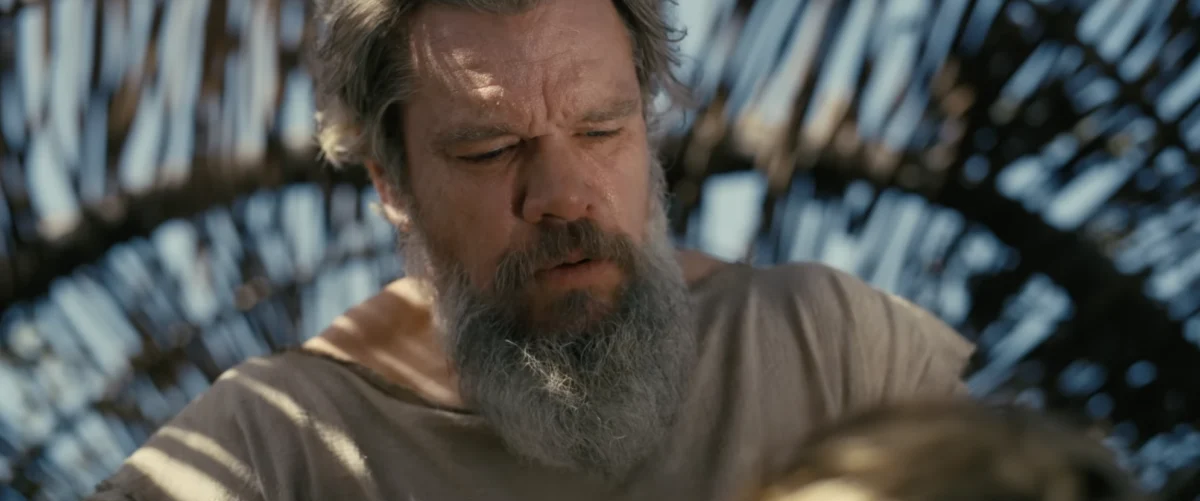
In the contemporary landscape of Hollywood marketing, the "word-of-mouth" screening has become a cornerstone of the blockbuster machine. These events, populated by social media influencers, YouTubers, and TikTok personalities, are designed to manufacture an early wave of hyperbolic enthusiasm—often weeks before traditional critics are permitted to publish their reviews. However, for Christopher Nolan’s upcoming epic, The Odyssey, Universal Pictures is reportedly making a bold counter-move: they are skipping the influencer circuit entirely.
This decision marks a significant pivot in how "prestige blockbusters" are handled in the digital age. Coming off the historic, Oscar-sweeping success of Oppenheimer, Nolan’s status as a brand unto himself has reached a zenith where traditional marketing gimmicks may not only be unnecessary but potentially detrimental to the film’s mystique.
Main Facts: A Departure from Industry Norms
The core of the recent reporting, first brought to light by The Hollywood Reporter, centers on Universal’s strategy to forego early "fan" or "influencer" screenings for The Odyssey. Typically, these screenings serve a dual purpose: they generate "social media reactions"—short-form, often glowing blurbs that studios use in TV spots—and they help build a sense of populist momentum. By removing this layer of the promotional cycle, Universal is signaling a return to a more traditional, critic-first approach.
The London premiere of The Odyssey is currently scheduled for July 6, with a global theatrical rollout set for July 17. The film, written and directed by Nolan, is an adaptation of Homer’s ancient Greek epic, though true to Nolan’s form, specific plot details remain under a strict embargo. The production reunites Nolan with his Oppenheimer studio, Universal, following his highly publicized departure from Warner Bros.
The cast for The Odyssey is perhaps the most star-studded ensemble of the decade, featuring Matt Damon, Anne Hathaway, Tom Holland, Zendaya, Charlize Theron, Lupita Nyong’o, Mia Goth, Benny Safdie, Jovan Adepo, Jon Bernthal, John Leguizamo, Travis Scott, and Elliot Page. Behind the scenes, Nolan continues his collaboration with cinematographer Hoyte van Hoytema and composer Ludwig Göransson, both of whom were instrumental in the technical triumphs of his previous works.
Chronology: From Nuclear Fire to the Wine-Dark Sea
To understand the weight of The Odyssey, one must look at the timeline of Nolan’s recent career trajectory, which has seen him transition from a director of "smart blockbusters" to a savior of the theatrical experience.
The Post-Oppenheimer Era (2023–2024)
Following the July 2023 release of Oppenheimer, which grossed over $975 million worldwide and won seven Academy Awards including Best Picture and Best Director, Nolan found himself with unprecedented leverage. While most directors might take a sabbatical, rumors began circulating in late 2023 that Nolan was looking toward "The Odyssey" as his next project—a story of grand scale, psychological depth, and non-linear potential.
The Casting Blitz (Late 2024 – Early 2025)
Throughout late 2024, the industry was rocked by a series of high-profile casting announcements. The addition of Tom Holland and Zendaya—two of the most bankable stars for the younger demographic—suggested a film with massive commercial appeal. However, the inclusion of indie darlings like Mia Goth and veteran heavyweights like Charlize Theron indicated that Nolan was aiming for the same "prestige-populist" hybrid that defined Inception and Interstellar.

The Marketing Pivot (June 2025)
As the July 17 release date approached, industry analysts noticed a lack of the usual "early access" screenings that typically populate the calendar in June. While films like Deadpool & Wolverine or various Marvel entries rely heavily on influencer reactions to build hype, Universal’s silence regarding influencer screenings for The Odyssey became a talking point in mid-June, culminating in the recent confirmation that they would be skipped entirely.
Supporting Data: The Power of the Nolan Brand
The decision to skip influencer screenings is not merely a creative whim; it is supported by the data of Nolan’s historical box office performance and the current state of audience sentiment.
The "Oppenheimer" Precedent
Oppenheimer proved that a three-hour, R-rated historical drama could behave like a superhero movie at the box office. Crucially, that film relied on "long-tail" word-of-mouth from general audiences and critics rather than an initial burst of social media hype. According to Comscore data, Nolan’s films have a unique "multiplier" effect; they often open strong but continue to draw audiences for months, driven by the perceived "requirement" to see them on the largest possible screen.
Premium Format Demand
Early data for The Odyssey ticket sales suggests that Universal’s confidence is well-founded. Reports from AMC and IMAX indicate that advanced tickets for 70mm and IMAX screenings are selling at a pace comparable to Oppenheimer and The Dark Knight Rises. For a Nolan film, the "event" status is built into the technology (the IMAX 15/70mm format) rather than the social media chatter. When audiences know a film was shot on large-format film, the technical pedigree acts as its own marketing department.
The Declining Value of Influencer "First Reactions"
Market research suggests a growing "fatigue" regarding influencer reviews. A 2024 study on consumer trust in film criticism noted that audiences are increasingly skeptical of "social media reactions" which are often viewed as transactional—influencers are given access in exchange for positive coverage. By bypassing this, Universal avoids the "hype-deflation" that occurs when a film is over-praised by influencers only to be met with more measured critical reviews later.
Official Responses: Strategic Silence
In keeping with the secretive nature of a Christopher Nolan production, official comments have been sparse. When reached for comment regarding the decision to skip word-of-mouth screenings, a representative for Universal Pictures did not immediately respond to inquiries.
This silence is, in itself, a strategic choice. Nolan has long been a proponent of the "theatrical surprise." In previous interviews, he has expressed a distaste for the modern "spoiler culture" and the way marketing materials often reveal too much of a film’s third act. By limiting screenings to the London premiere and subsequent press-only events, Universal is maintaining a tight grip on the narrative.
Sources close to the production suggest that Nolan himself is a driving force behind this strategy. The director famously prefers that his films be "discovered" by the audience in a dark theater, free from the influence of pre-filtered social media takes. For Nolan, the film is a complete experience that should not be distilled into 280-character "X" posts before the general public has a chance to buy a ticket.

Implications: A New Standard for Auteur Blockbusters?
The decision to skip influencer screenings for a film of this magnitude has several far-reaching implications for the film industry.
1. The Protection of the "Spoilers"
The Odyssey is a story known to almost everyone with a basic education, but in Nolan’s hands, the structure is likely to be anything but linear. Whether he utilizes his trademark time-dilation techniques or reimagines the "monsters" of Homer’s epic as psychological manifestations, there are undoubtedly "surprises" in store. By skipping influencer screenings, Universal prevents the inevitable "leakage" of these creative choices, ensuring that the first time the public hears about a plot twist, it is through the lens of a professional critic or their own eyes.
2. Challenging the Influencer Economy
For years, the "influencer" has been the darling of the studio marketing executive. They are cheaper to fly to premieres than journalists and often provide more enthusiastic (if less nuanced) coverage. If The Odyssey becomes a massive hit without this support, it may prompt other studios to reconsider the value of the influencer circuit for "prestige" titles. It suggests that for a certain tier of filmmaker—Nolan, Villeneuve, Tarantino—the brand is the director, not the social media buzz.
3. Re-Elevating the Critical Consensus
By making the London premiere on July 6 the first time the film is seen, Universal is putting the power back into the hands of traditional film critics. This move suggests a belief that The Odyssey is a high-quality piece of cinema that can withstand—and indeed thrives under—rigorous critical analysis. It treats the film as "art" rather than "content," a distinction that Nolan has fought to maintain throughout his career.
4. The "Event" of the Theatrical Experience
Finally, this strategy reinforces the idea of the "theatrical event." By creating a vacuum of information, Universal is heightening the "FOMO" (fear of missing out) for the general public. When the film finally opens on July 17, the lack of pre-packaged social media takes will make the opening weekend feel like a communal discovery. In an era of streaming and instant gratification, Nolan is forcing the audience to wait, to wonder, and ultimately, to show up at the cinema.
As the industry watches the July 17 release date approach, The Odyssey stands as a litmus test. Can a film succeed in 2025 by looking backward to a time of mystery and prestige? If Christopher Nolan’s track record is any indication, the answer is likely to be a resounding yes. Universal isn’t just selling a movie; they are selling the return of the cinematic enigma.
 Lina Irawan
 Iffa Jayyana
