

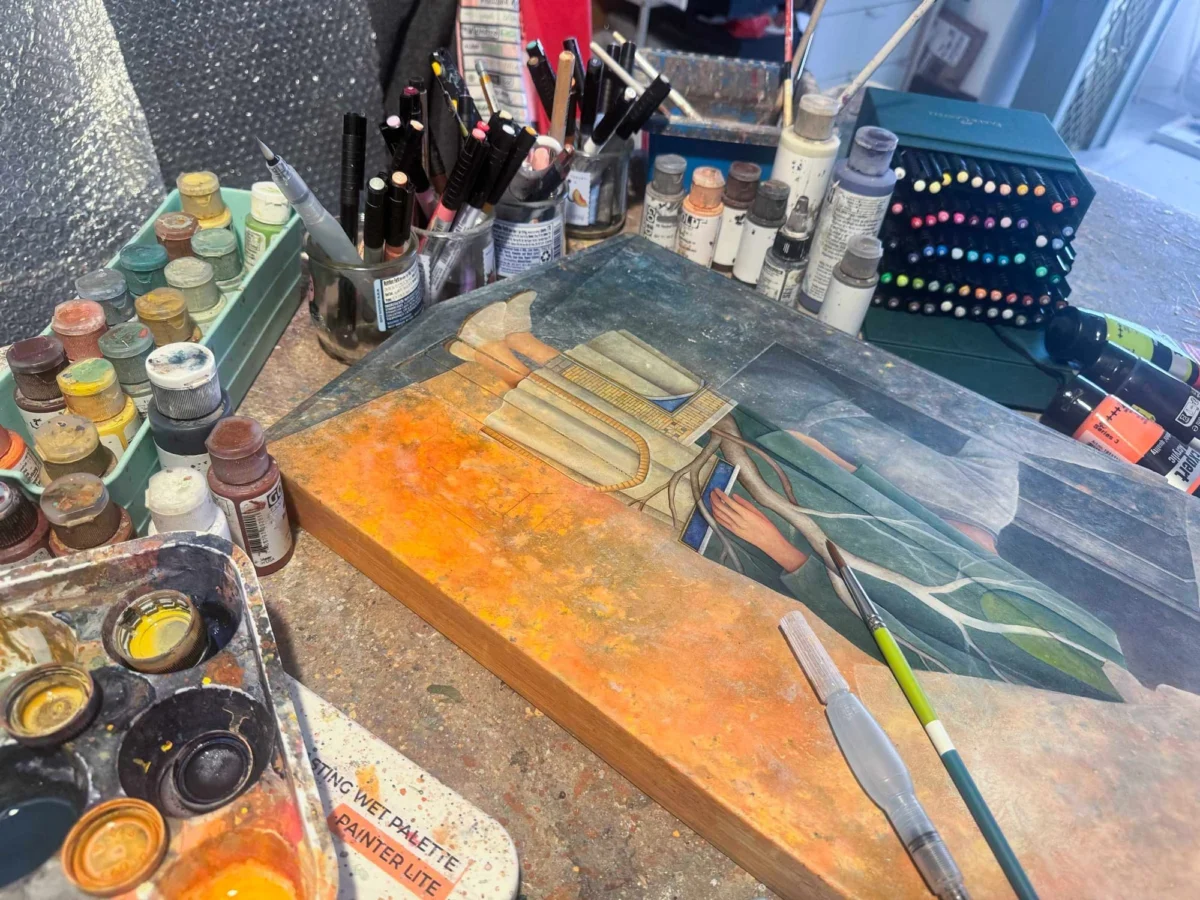
Welcome to the 344th installment of A View From the Easel, our ongoing series documenting the private sanctuaries where art is born. This week, we step into the Stamford, Connecticut, studio of Arghavan Khosravi, an artist whose practice bridges the delicate, intricate traditions of Persian miniature painting with the bold, structural realities of modern assemblage. By merging canvas, wood, and acrylic, Khosravi creates surreal, three-dimensional narratives that challenge the viewer’s perception of space and cultural identity.
The Synthesis of Form and Narrative: Main Facts
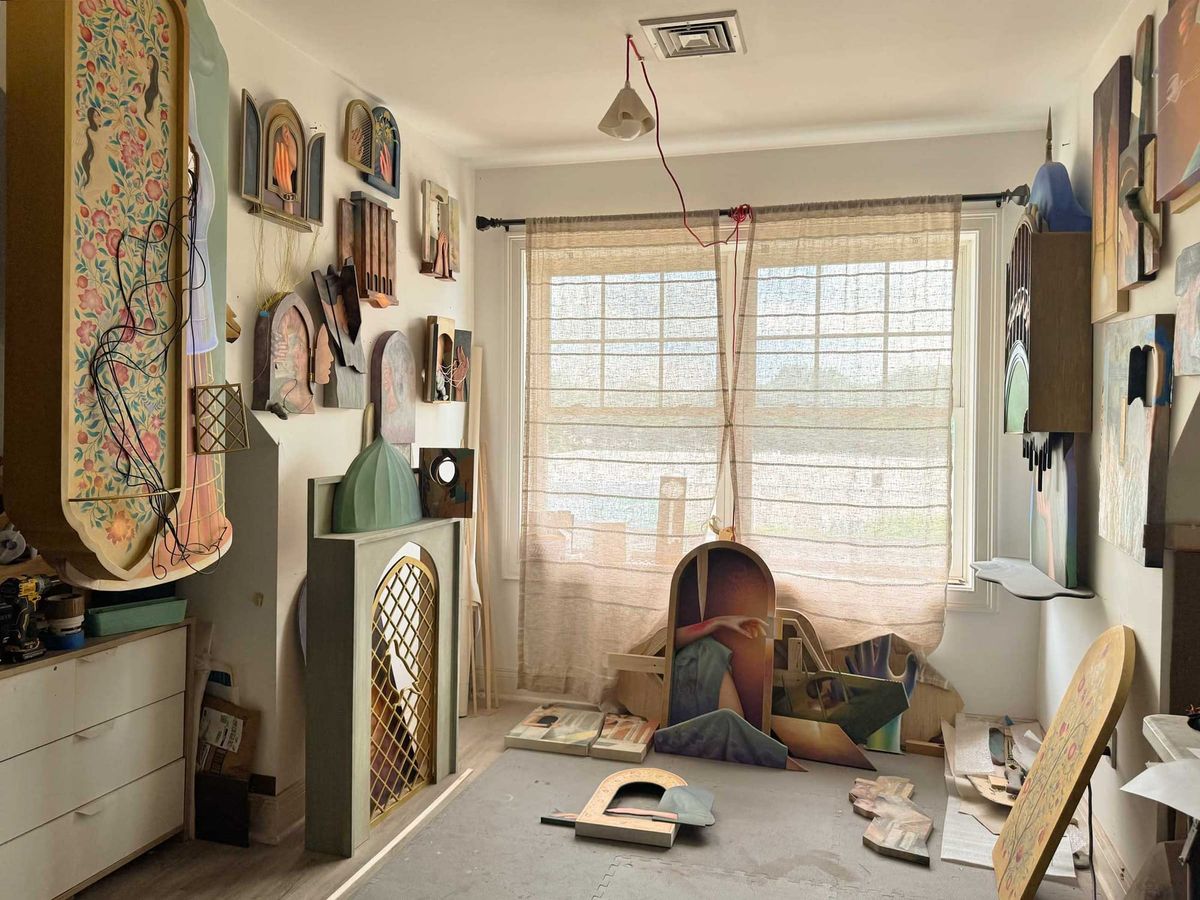
Arghavan Khosravi’s workspace is more than just a room; it is a laboratory of fabrication. For the past five years, the Stamford-based artist has occupied a loft space situated directly above her townhouse. This live/work arrangement is the crucible for her highly distinct aesthetic, which often features complex, multi-layered constructions that defy the flatness of traditional painting.
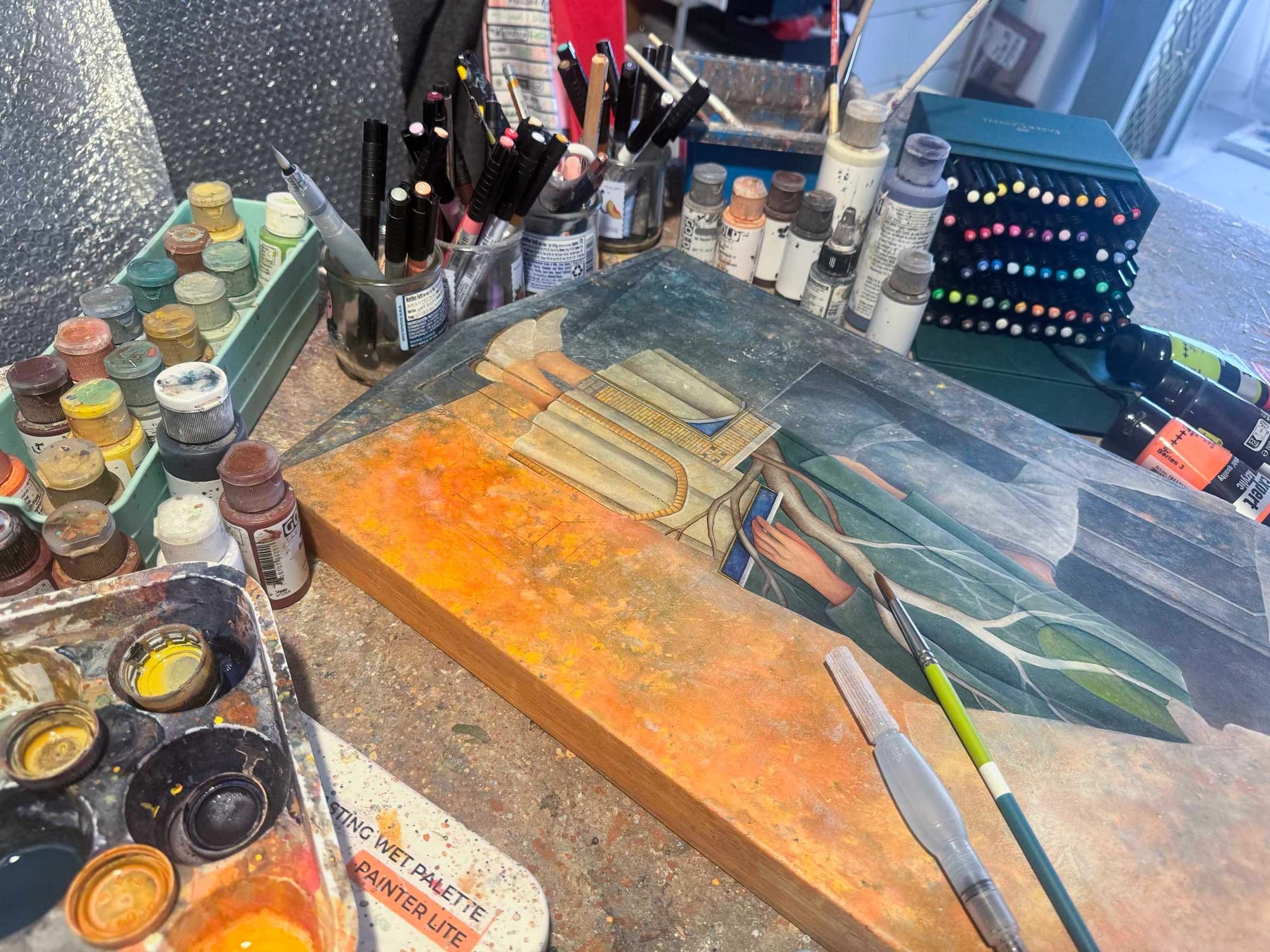
Khosravi’s work is characterized by its sculptural depth. By fabricating her own wood panels, she creates a physical architecture that her painted figures inhabit. The result is a surrealist landscape that feels simultaneously ancient and hyper-contemporary. The studio serves as the nexus of this multidisciplinary approach, housing both the delicate brushes required for fine-detail painting and the heavy-duty power tools necessary for complex carpentry.
A Day in the Life: The Chronology of Creation
The rhythm of Khosravi’s studio life is governed by a balance between intellectual engagement and manual labor. Her days typically commence with a ritualistic infusion of caffeine—a shot of espresso—paired with a deep dive into the global news cycle.
- Morning (The Analytical Phase): Khosravi begins by reviewing the previous day’s progress. She examines sketches, adjusts structural plans, and mentally prepares for the day’s technical requirements. This time is often spent in silence, allowing the artist to brainstorm without the interference of external noise.
- Midday (The Fabrication/Execution Phase): As the day progresses, the studio shifts modes. If Khosravi is in a production phase, she heads to the woodshop to finalize panel shapes. If the focus is on color and imagery, she moves to her painting station, checking on primed surfaces and beginning the intricate process of underpainting.
- Afternoon (The Rhythmic Phase): During the repetitive, physically demanding tasks—such as sanding, priming, or applying base coats—Khosravi often transitions to auditory stimulation. She favors dialogue-heavy shows or music, which help sustain her focus during the more tedious aspects of art-making.
This structure allows her to move fluidly between the roles of carpenter, engineer, and painter, a versatility that is essential to her specific brand of assemblage.
The Studio as a Catalyst: Supporting Data
The studio’s physical constraints and advantages have directly influenced the evolution of Khosravi’s body of work. Because the space is a compact loft, Khosravi had to adapt her process to fit the environment. Rather than attempting to house massive, singular canvases, she developed a method of creating larger works in separate, interlocking sections.
"The space is limited, but because my larger works are already built in separate sections—a structure that felt right for the subjects I wanted to explore—I can accommodate the scale more easily," Khosravi explains.
This necessity proved to be a stroke of creative genius. By working in sections, Khosravi gained the ability to create more complicated, sculptural, and experimental compositions. The proximity of her woodshop to her painting area acts as a force multiplier for her productivity. Unlike many contemporary artists who outsource their fabrication, Khosravi insists on doing the woodworking herself. She describes the time spent in the woodshop as "therapeutic," noting that the tactile interaction with wood, acrylic, and canvas creates a profound connection between the creator and the final object.
Connecting the Dots: Community and Geography
While Khosravi has established a productive sanctuary in Stamford, she acknowledges the geographical isolation that comes with a home-based studio outside of a major metropolitan hub. "Honestly, I have not really found an artist community near where I live," she admits.
However, the "Connecticut advantage" provides a strategic compromise. Located just an hour from Manhattan, Khosravi maintains a fluid connection to the pulse of the New York art world. She treats the city as an extension of her studio, commuting to attend exhibition openings, engage in professional networking, and stay abreast of contemporary trends.
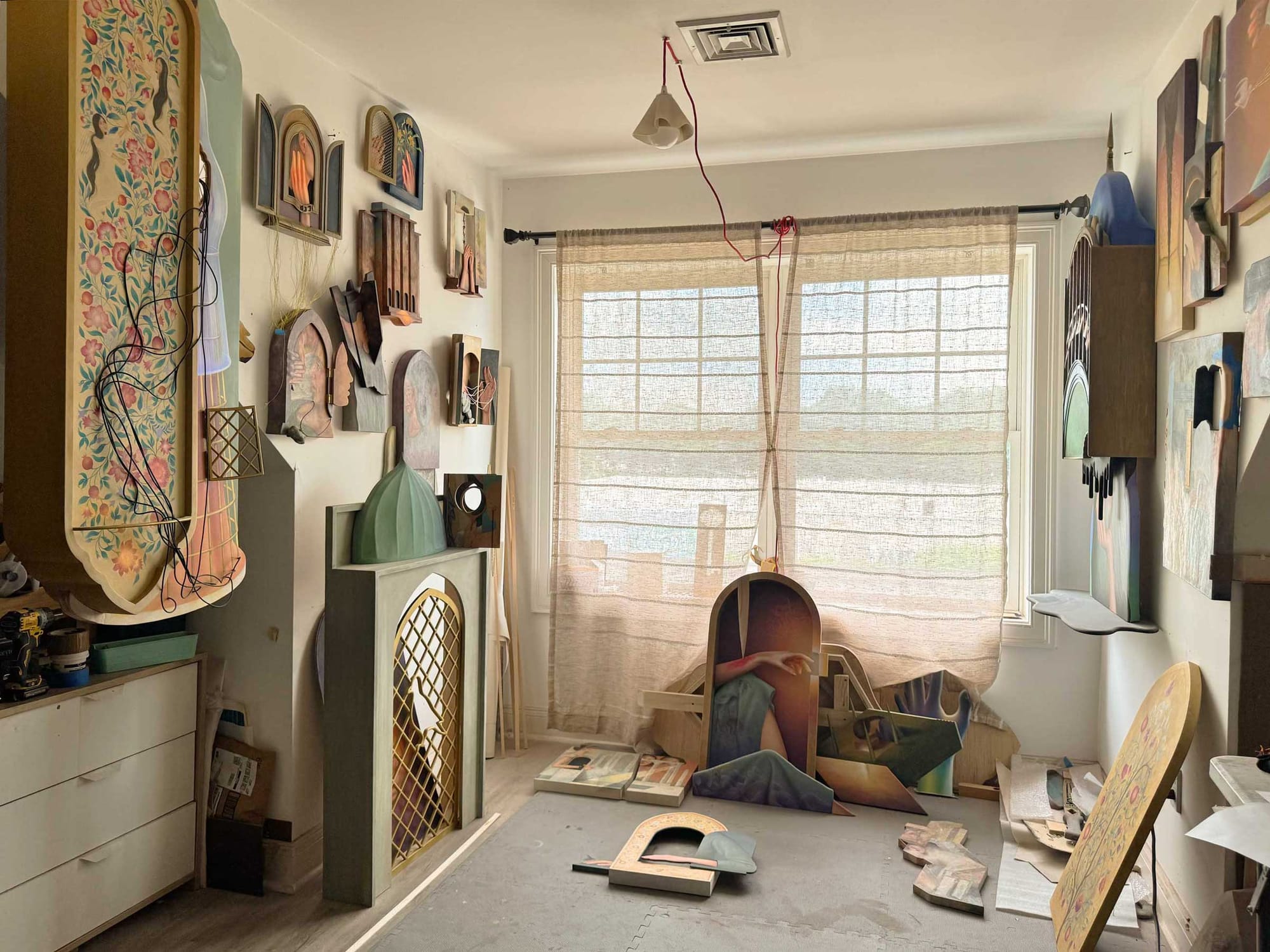
In the digital age, this physical distance is further mitigated by modern communication. Zoom studio visits, email correspondence, and a robust social media presence have allowed Khosravi to remain a relevant and active participant in the global art discourse without sacrificing the peace and flexibility of her Connecticut home.
Aspirations and Future Implications
As Khosravi looks toward the future of her practice, her reflections reveal a desire to optimize her environment to support an increasingly ambitious output. Her ideal studio remains a live/work model, but with a more pronounced architectural separation between the domestic and the professional.
The Evolution of the Workspace:
- Separation: A dedicated entrance for the studio to maintain a professional boundary.
- Scale: Increased square footage to accommodate larger storage needs and more expansive working areas.
- Exhibition: A small, on-site showroom to facilitate studio visits and professional presentations without cluttering the primary workspace.
- Tooling: An upgraded, larger woodshop to facilitate even more complex engineering and sculptural experimentation.
These desires underscore a crucial implication: Khosravi’s artistic growth is currently tethered to the physical capacity of her studio. As her work continues to garner international attention and critical acclaim, the transition from a "loft-above-the-house" setup to a more institutional-grade facility will likely be the next milestone in her career.
Official Perspective: The Regional Ecosystem
When discussing the local art ecosystem, Khosravi highlights the Aldrich Contemporary Art Museum in Ridgefield, Connecticut, as a vital cornerstone. Her appreciation for the museum goes beyond personal professional gain; she credits the institution with fostering a genuine, supportive community for artists in a region that often feels scattered.
"I really admire the way the museum supports contemporary art and Connecticut-based artists," she says. For an artist working in relative isolation, institutions like the Aldrich serve as essential hubs that validate local practices and provide the necessary scaffolding for professional growth.
Concluding Thoughts: The Joy of the Process
For Arghavan Khosravi, the studio is not merely a place of production; it is a place of profound personal freedom. Despite the occasional, inevitable visit from the "artistic block," she describes her studio as the most exciting place to be.
Her choice of materials—acrylic, canvas, and shaped wood—is a testament to her temperament. Acrylic’s rapid drying time satisfies her impatience to see results, while the labor-intensive woodworking satisfies her need for meditative, hands-on creation.
As she continues to refine her practice, Khosravi serves as a reminder that the most compelling art often emerges from a marriage of technical discipline and personal sanctuary. Whether she is in the quiet of her loft or commuting into the roar of the New York gallery scene, she remains an artist firmly in control of her craft, building her own reality—one piece of shaped wood at a time.
Do you have a workspace that fuels your creativity? Whether you are a professional in a large studio or a hobbyist working at your kitchen table, we want to hear from you. Please review our submission guidelines and share your story via this form.
 Basiran
 Muslim
 Evan Lee Salim
