

In an era defined by rapid technological shifts and deepening environmental anxieties, the role of the artist has increasingly evolved into that of a cultural cartographer—mapping the invisible forces that dictate our survival. From the industrial flowcharts of Akira Ikezoe to the cellular, microscopic visions of the late Abstract Expressionist Charles Seliger, the art world is currently grappling with how to visualize the complex, often devastating systems that govern our existence.
This week’s survey of the art landscape offers a panoramic view of how creators are utilizing humor, historical revisionism, and structural abstraction to process the "current moment."
Akira Ikezoe: The Satirist of Industrial Decay
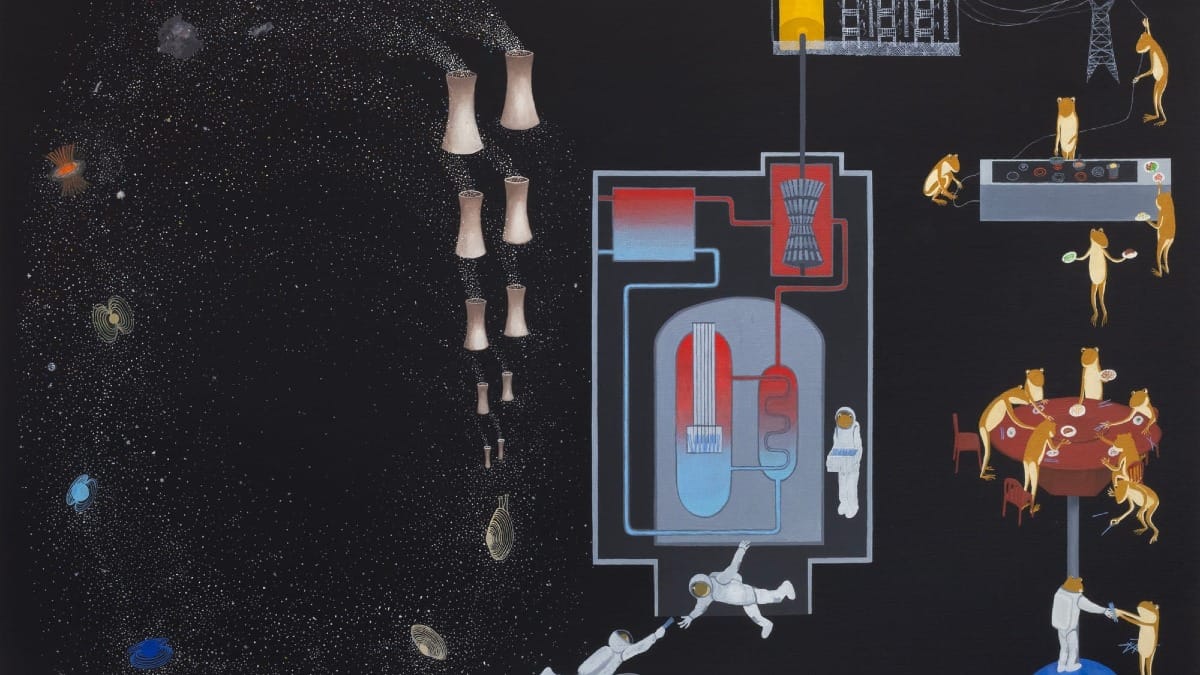
Akira Ikezoe’s recent presence at both the Whitney Biennial and Greater New York has served as a lightning rod for discussions regarding the convergence of labor, ecology, and the absurd. His paintings are instantly recognizable—schematic, densely packed compositions where frogs, robots, and bears serve as actors in a grand, mechanized tragedy.

The Genesis of "Baby Recipes"
The origins of Ikezoe’s dark humor are rooted in the visceral, mundane reality of domestic life. During a studio visit with curator Sofia Thiáu D’Amico, Ikezoe pulled back the curtain on his Baby Recipes series (2022). The series, which depicts body parts of infants as if they were culinary ingredients in a surreal, comic-style cooking guide, initially strikes the viewer as macabre. However, as Ikezoe revealed, the work was a direct output of the frustrations inherent in raising his three-year-old son.
"Frustrations around raising my three-year-old son," Ikezoe admitted, sparking a moment of genuine laughter during the interview. This laughter is a vital key to his practice. In Ikezoe’s world, the absurdity of parenting—the exhaustion, the repetitive nature of caregiving, and the bizarre physicality of early childhood—is mapped onto the larger, equally absurd, and often more catastrophic systems of resource extraction and industrial cycles.
Implications: Humor as a Strategic Vessel
Ikezoe’s work posits that we live in a state of "human-engineered catastrophe." By utilizing a cartoonish, almost cheerful aesthetic, he disarms the viewer. We are drawn into the flowchart, only to realize the "products" being manufactured are, in fact, the remnants of our own environment. His work suggests that if we cannot laugh at the encroaching end of our systems, we lose the ability to critique them.
The Unsung Architect: Charles Seliger’s Centennial Revival
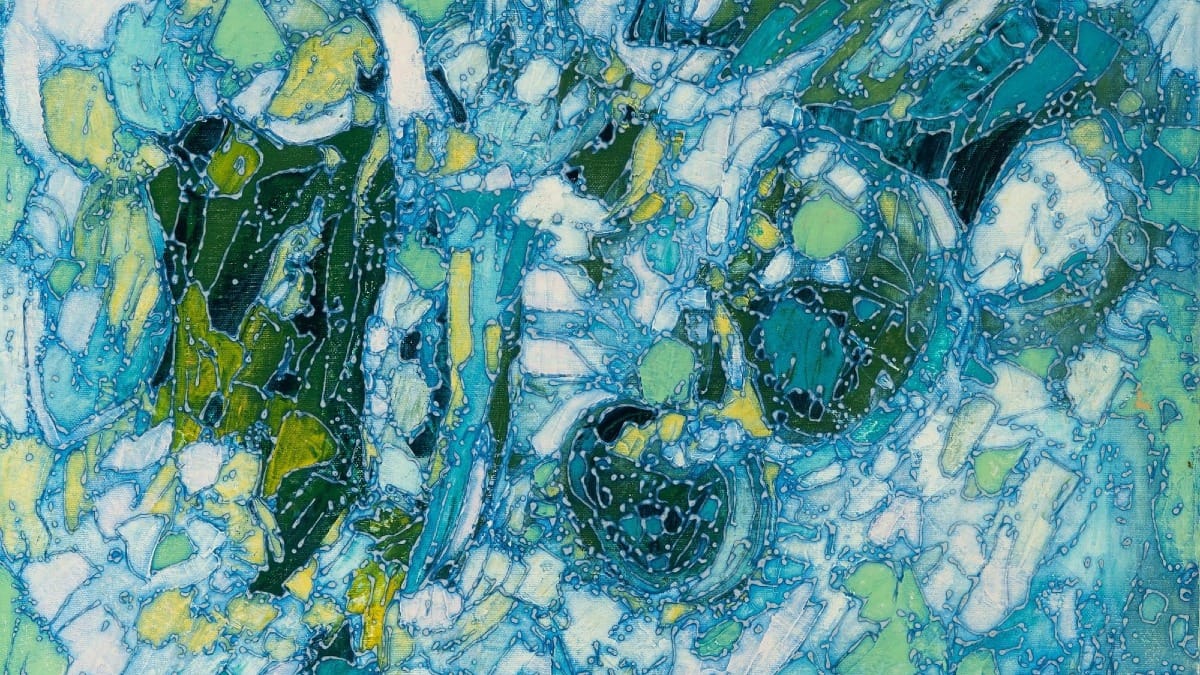
While Ikezoe looks toward the future of industrial collapse, the art world is simultaneously correcting the record of its past. At the Hollis Taggart gallery, Charles Seliger: The Structure of Matter offers a long-overdue examination of an artist who was present at the birth of Abstract Expressionism but remained perpetually outside its canon.
A Chronology of Independence
- 1945: At just 19 years old, Charles Seliger makes his mark, holding a solo exhibition at Peggy Guggenheim’s The Art of This Century gallery. He is one of the youngest figures in the nascent Abstract Expressionist movement.
- 1940s–1950s: While his contemporaries, such as Jackson Pollock and Willem de Kooning, move toward large-scale, gestural canvases, Seliger remains committed to an intimate, microscopic scale.
- 2010: Following his passing, Michael Rosenfeld presents a memorial exhibition, yet interest in his work remains niche.
- 2026: The centennial exhibition at Hollis Taggart seeks to reposition Seliger not as a minor footnote, but as a maverick who understood the "invisible architecture" of nature long before the climate crisis forced it into the public consciousness.
Supporting Data: Why Seliger Was Overlooked
Seliger’s omission from the standard AbEx narrative is a case study in how art history prioritizes scale and "macho" gestural bravado. Because he favored Surrealist automatism and intricate, cellular patterns over the bombastic, room-sized canvases that came to define the New York School, he was viewed as an outlier. Critics at the time struggled to categorize an artist who painted the "patterns governing the visual world" rather than the "struggle of the artist’s soul." Today, his work feels prophetic, mirroring the complex, fractal systems of modern biological and technological networks.
Cultural Synthesis: Arghavan Khosravi’s Familial Alchemy
While Ikezoe and Seliger deal in the mechanical and the cellular, Arghavan Khosravi explores the intersection of memory and history through a different medium: the assemblage. Her work, currently featured in A View From the Easel, synthesizes Persian miniature traditions with modern, surrealist sculpture.
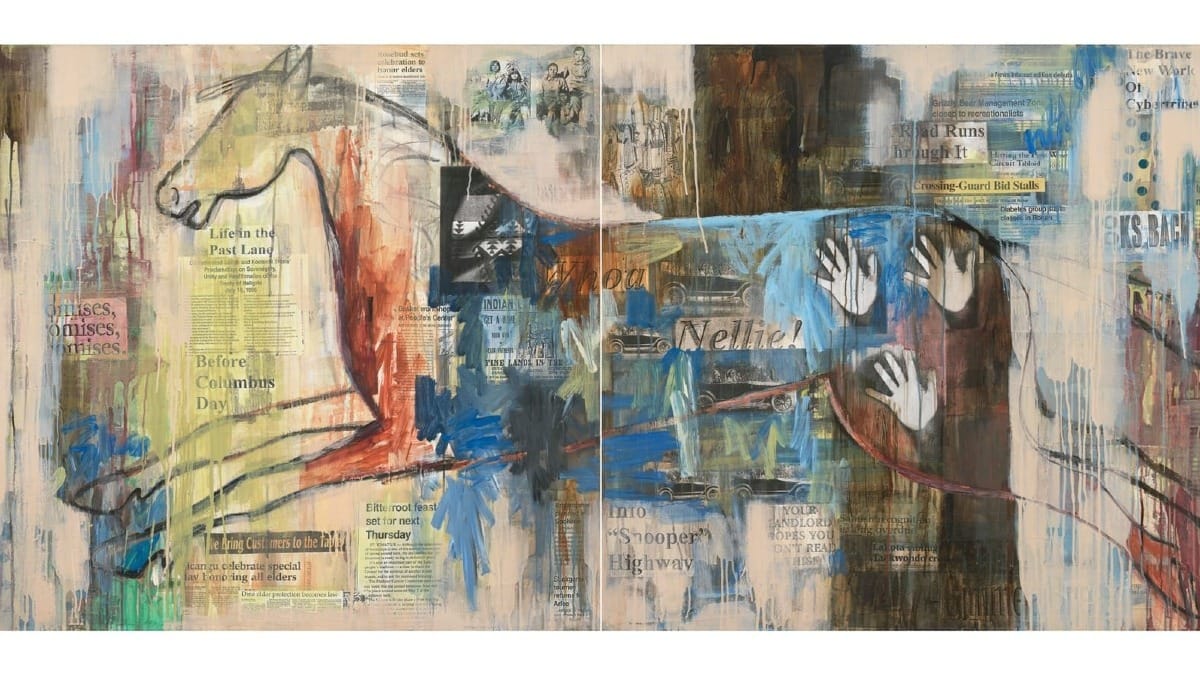
Khosravi’s paintings are not merely two-dimensional surfaces; they are physical objects. By utilizing shaped canvases and integrated wood elements, she creates a "third space" where familial memory and historical narrative collide. Her work serves as an essential counterpoint to the more clinical, system-focused art of her peers, reminding the viewer that history is not just a flowchart or a pattern—it is a lived, felt experience.
The Broader Landscape: Opportunities and Institutional Support
The art world’s commitment to fostering new voices remains robust, despite the economic pressures currently facing the sector. The announcement of the 7th VH AWARD for media artists engaged with the context of Asia highlights a growing trend in institutional support for digital and site-specific media.
Institutional Responses to Precarity
Major foundations—including the Paul & Daisy Soros Foundation, Ucross, and AICA International—have updated their fellowship and residency offerings for the remainder of 2026. These opportunities provide more than just financial relief; they provide the "intellectual shelter" required for artists to pursue long-term projects like those of Ikezoe or the historical reclamation efforts seen in the Seliger exhibition.
The Role of the "Daily Newsletter"
The proliferation of digital documentation—such as the recent focus on Cara Romero’s NDN Radical Imagination grant—reflects a shift in how art news is consumed and categorized. By moving away from centralized, monolithic art historical narratives, organizations are beginning to highlight the "radical imagination" of artists who operate outside of traditional market pressures.
Implications for the Future of Artistic Discourse
What does this collective movement suggest for the future of contemporary art?
- The Return of Narrative: After decades of conceptual abstraction, there is a visible move toward "narrative-heavy" works that utilize satire, history, and personal memoir to ground the viewer.
- Environmental Stewardship: Climate change is no longer just a "theme"; it is the medium. Whether through the industrial satire of Ikezoe or the cellular studies of Seliger, artists are increasingly obsessed with the mechanics of the planet.
- The Death of the "Art Star" Model: The current interest in Seliger and the emphasis on diverse, grant-supported voices like those of the VH AWARD winners suggest that the market is beginning to value sustained, quiet inquiry over the rapid-fire production of high-value "blue chip" objects.
As we navigate the latter half of 2026, the art world appears to be in a period of necessary recalibration. By looking back at forgotten masters like Seliger and engaging with the biting, humorous critiques of contemporaries like Ikezoe, we are learning to see the world not as it is presented to us, but as it is constructed—system by system, frog by frog, and cell by cell.
For the collector, the student, and the casual observer, the message is clear: the most important art being made today is not necessarily the loudest. It is the art that asks us to pay attention to the invisible, the discarded, and the absurd. As the pressures of the modern world mount, this capacity for focused, satirical, and empathetic observation remains our most valuable cultural asset.
 Muslim
 Evan Lee Salim
 Jia Lissa
